

Cambodia and Vietnam Launch Major Infrastructure Programs with Combined $100 Billion Investment
PHNOM PENH – Southeast Asian neighbours Cambodia and Vietnam are implementing massive infrastructure development programs that will reshape regional connectivity and economic potential, with Cambodia unveiling a $36.6 billion master plan encompassing 174 projects while Vietnam's …
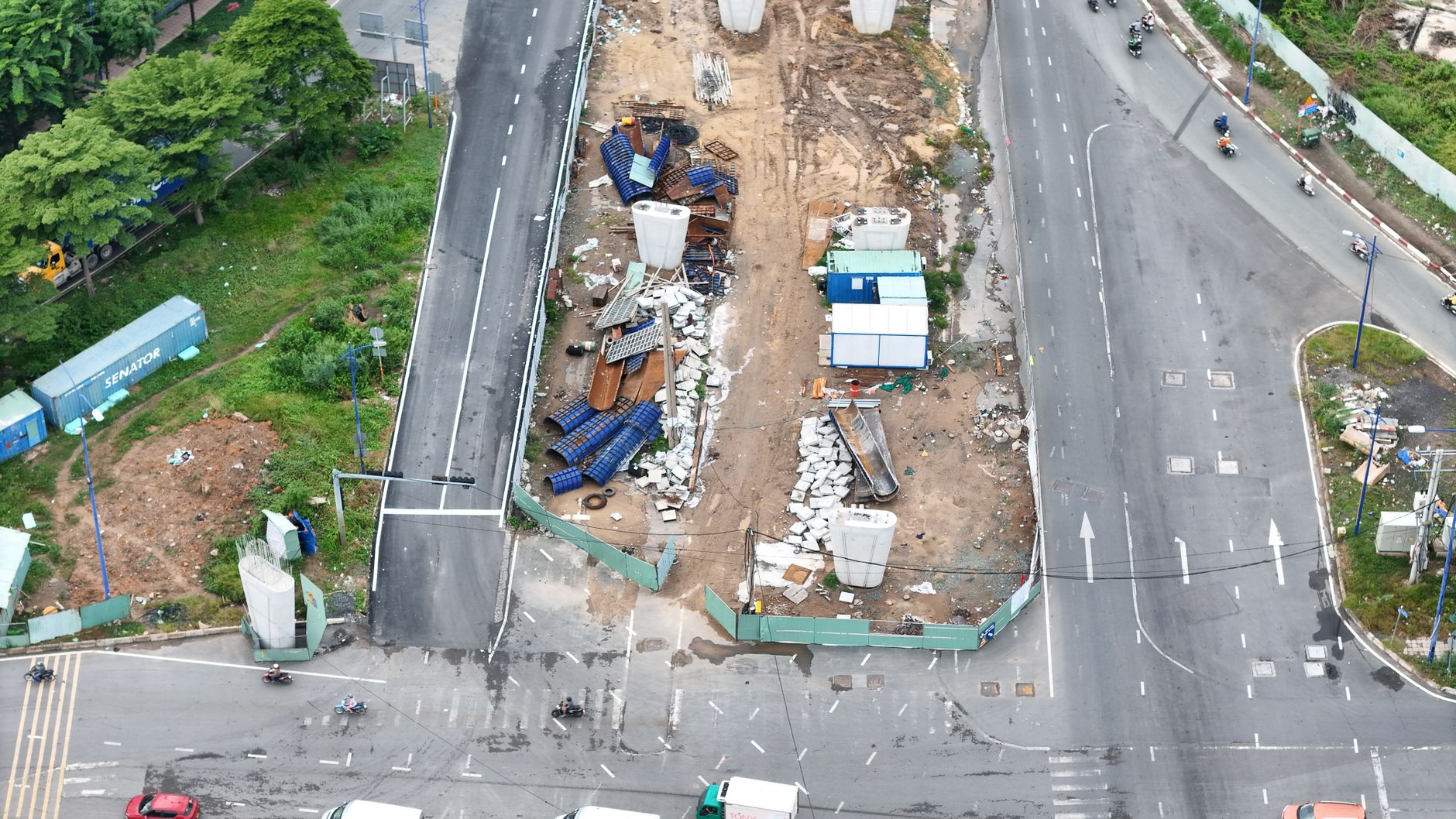
PHNOM PENH – Southeast Asian neighbours Cambodia and Vietnam are implementing massive infrastructure development programs that will reshape regional connectivity and economic potential, with Cambodia unveiling a $36.6 billion master plan encompassing 174 projects while Vietnam's construction industry reaches VND 695.60 trillion in 2024 growing at 9.8 percent annually as both countries position themselves as critical links in evolving global supply chains.
Cambodia's ambitious 174-project master plan represents the most comprehensive infrastructure initiative in the country's modern history, targeting transformation of national transportation and logistics networks within a decade. The program aligns closely with Cambodia's longstanding objective of becoming an upper-middle-income country by 2030 and achieving high-income nation status by 2050.
The construction sector has already delivered significant achievements in 2024. The Ministry of Rural Development announced completion of 271 rural road projects, constructing and improving approximately 940.71 kilometers of double-paved roads. Cambodia's rural road infrastructure now spans 50,262 kilometers total, comprising 6,723 kilometers paved roads, 1,804 kilometers concrete roads and 31,704 kilometers gravel roads.
Key accomplishments in 2024 included enhancement of 164.21 kilometers of concrete roads, 218.05 kilometers of gravel roads and construction of 12 new concrete bridges spanning combined 675 meters. These infrastructure upgrades are transforming rural transportation networks, reducing travel times and facilitating economic activities for Cambodia's rural population while enhancing access to essential services including healthcare, education and markets.
The crown jewel of Cambodia's infrastructure ambitions remains the $1.7 billion Funan Techo Canal, a 180-kilometer-long, 100-meter-wide shipping channel linking the Mekong River system at Phnom Penh directly to the Gulf of Thailand. Construction officially launched in August 2024 with completion targeted for 2028, though the project has generated ecological concerns and regional diplomatic tensions.
The canal aims to bypass the current river shipping route running through Vietnam to the sea, allowing Cambodia to retain transport revenue domestically while establishing riverside economic zones along the route potentially creating tens of thousands of jobs. Prime Minister Hun Manet characterized the project as "not just infrastructure but a nationalistic endeavor" that must be built "at all costs," reflecting its symbolic importance to national sovereignty and economic independence.
China Road and Bridge Corporation, which constructed Cambodia's first expressway completed in late 2022, broke ground on a second $1.35 billion expressway between Phnom Penh and Bavet on the Vietnamese border in 2023. When completed in 2025, it will reduce travel time from three hours to one hour, significantly boosting economic integration between Cambodia and Vietnam despite the canal's potential to redirect some trade flows.
Additional megaprojects include expressway systems linking Phnom Penh to Siem Reap and Poipet on the Thai border with combined estimated costs of $4 billion split across two phases. Railway upgrades to accommodate high-speed trains target Poipet ($1.93 billion) and Sihanoukville ($1.33 billion) lines. The master plan later envisions light rail and subway systems for Phnom Penh and parts of Siem Reap packaged together at estimated $3.5 billion.
Techo International Airport represents another transformative project. Located 20-40 kilometers south of Phnom Penh in Kandal Province, the facility is more than 90 percent complete with $1.3 billion spent through November 2024. The airport features internationally renowned design with passenger canopy resembling Cambodian jungles, patterned steel ceiling held by columns resembling tree trunks, and incorporation of greenery and water features throughout interior, courtyard and parking areas.
Vietnam's construction industry demonstrates parallel ambitions with different characteristics reflecting the country's more mature economy and larger scale. The sector is expected to grow by 9.8 percent to reach VND 695.60 trillion in 2024, with projected CAGR of 8.4 percent during 2024-2028 pushing output to VND 959.28 trillion by 2028, indicating substantial growth potential driven by government initiatives, urbanization and increasing foreign investment.
The Vietnamese government has adopted plans developing the country's road network, aiming to create nearly 5,000 kilometers of expressways and 29,795 kilometers of national highway routes by 2030. This massive investment in transportation infrastructure is expected to boost construction activity nationwide while dramatically improving connectivity across regions enabling more efficient movement of goods and people.
The North-South High-Speed Railway approved by Vietnam's National Assembly in November 2024 represents the country's most ambitious single project. With estimated investment of $67 billion, the 1,541-kilometer railway will connect Hanoi and Ho Chi Minh City, allowing trains to travel at speeds up to 350 kilometers per hour. Construction is set to commence in 2027, with operations expected by 2035, reducing travel time between the two cities from 30 hours to just five hours.
The North-South Expressway East spanning approximately 2,063 kilometers connects Lạng Sơn in the north to Cà Mau in the south. The expressway is being developed in multiple phases, with several sections already completed or under construction. This project is expected to significantly enhance connectivity and stimulate economic activities across various regions, facilitating more efficient domestic trade and distribution networks.
Foreign direct investment has served as a major catalyst for Vietnam's construction industry. In the first half of 2024, FDI inflows reached approximately VND 433.7 trillion ($18 billion), reflecting 10.9 percent year-over-year increase. India's Adani Group expressed interest in Vietnam's aviation infrastructure, particularly development of Long Thành and Chu Lai airports, highlighting Vietnam's attractiveness as a destination for international infrastructure investment.
Emphasis on sustainability is growing across both countries' construction sectors. Vietnam developers are increasingly incorporating eco-friendly materials and energy-efficient designs into new projects. Cambodia's construction projects, particularly in rural areas and tourist spots like Siem Reap, prioritize sustainable living to minimize environmental disruption despite the large proportion of land occupied by forests requiring careful development approaches.
Public-Private Partnerships are gaining importance facilitating collaboration between governments and private sectors. Vietnam's newly enacted PPP Code is expected to enable realization of high-quality infrastructure projects, with 117 PPP projects valued at PHP 2.4 trillion ($43 billion) in the pipeline as of February 2024. Cambodia is similarly exploring PPP models for major projects including ports and specialized economic zones.
Challenges remain significant for both countries. Cambodia faces concerns about debt sustainability given the scale of infrastructure commitments and reliance on foreign financing, particularly from China. Vietnam confronts skilled labor shortages driven by rapid urbanization and increased infrastructure demand, requiring substantial investment in vocational training and technical education.
Looking ahead, successful infrastructure development in Cambodia and Vietnam will determine whether both countries achieve their ambitious economic transformation goals. The massive construction programs represent strategic bets that improved physical connectivity will attract investment, facilitate trade, boost productivity and ultimately lift living standards for populations still predominantly rural despite rapid urbanization. The coming decade will reveal whether these infrastructure-led development strategies deliver the anticipated economic and social benefits.

Written by
TPC Editorial Desk
The Platinum Capital editorial desk
Articles on The Platinum Capital are produced by the TPC editorial desk with the assistance of AI tools, and edited before publication. TPC Awards profiles are based on information provided in nominations and checked against public sources. Reach out at info@theplatinumcapital.com.