

Global Semiconductor Race Intensifies as Nations Pour Billions into Quantum-Safe Communications
TAIPEI, April 5, 2026 - The global semiconductor industry is undergoing a historic reorientation toward quantum-safe communications infrastructure.…
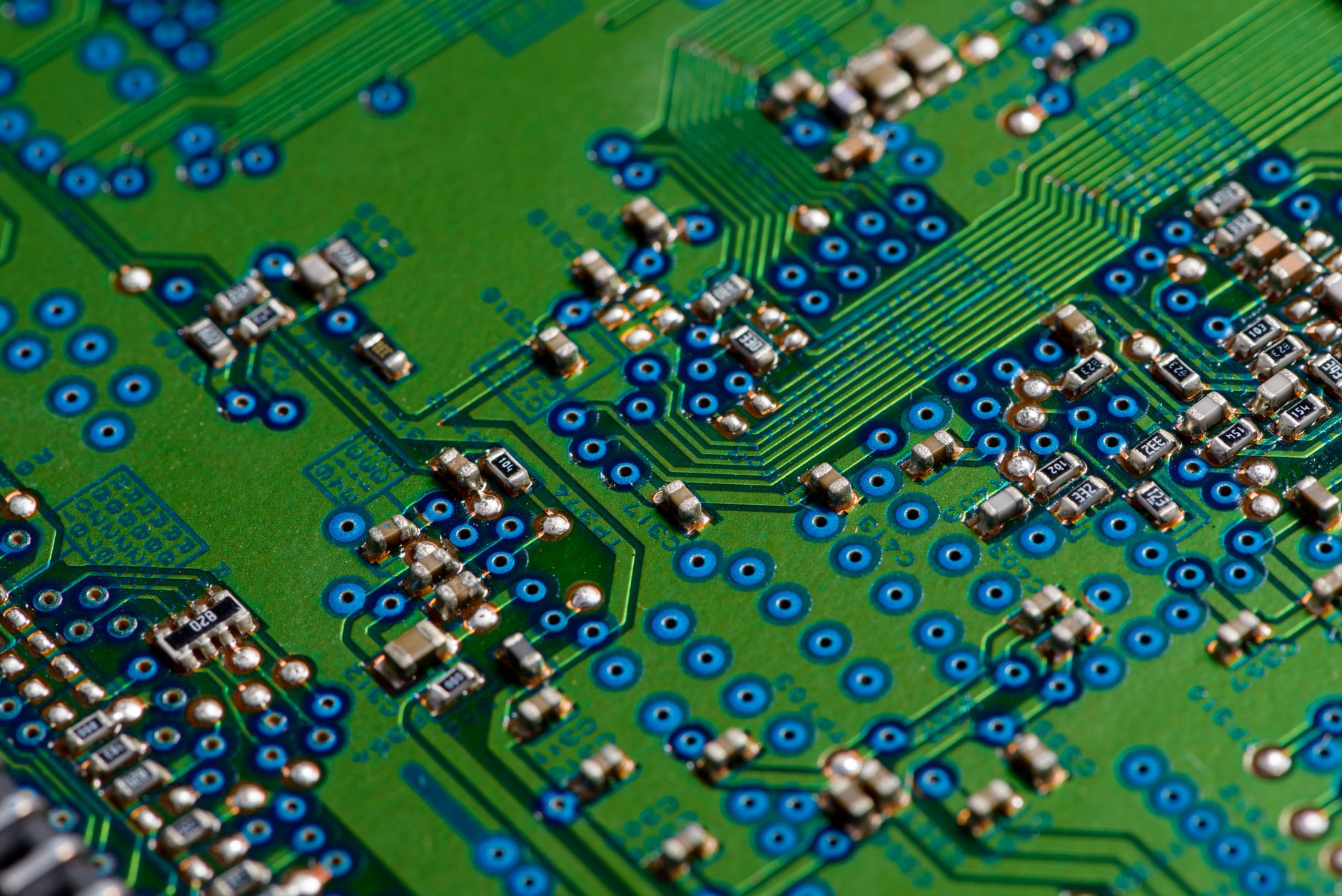
TAIPEI, April 5, 2026 - The global semiconductor industry is undergoing a historic reorientation toward quantum-safe communications infrastructure, driven by recognition that existing encryption methodologies will become vulnerable within the next five to ten years as quantum computing systems mature sufficiently to break current cryptographic standards.
Quantum Computing Inc. acquired Luminar Semiconductor in a $340 million transaction completed in March 2026, consolidating quantum security capabilities with semiconductor manufacturing expertise. The acquisition reflects accelerating consolidation within the quantum-security technology space.
Quantum Computing Inc. and telecommunications equipment manufacturer Ciena Corporation jointly demonstrated quantum-key distribution (QKD) integrated with post-quantum cryptography (PQC) at the Optical Fiber Communication Conference 2026 in Los Angeles. The demonstration showed that current communications equipment could be retrofitted with quantum-safe capabilities without requiring complete infrastructure replacement.
Post-quantum cryptography utilizes mathematical problems believed to resist attack even by sufficiently powerful quantum computers - primarily lattice-based cryptography, hash-based signatures, and multivariate polynomial systems. Major cryptographic standards bodies including NIST are finalizing PQC standards that will eventually replace RSA and elliptic-curve cryptography deployed throughout existing digital infrastructure.
The convergence of PQC and QKD represents a defense in depth strategy where dual-layer quantum-safe encryption protects communications against both quantum computing threats and potential vulnerabilities in individual cryptographic approaches. Industry analysts note that this approach allows organizations to transition gradually toward quantum-safe architectures.
The United Kingdom announced a 2 billion pound National Quantum Strategy in early 2026, positioning quantum security as a national priority comparable to nuclear energy development during the Cold War. The investment encompasses basic research in quantum physics, development of quantum-safe cryptographic standards, and establishment of quantum computing capabilities within national laboratories.
The global race toward quantum-safe communications reflects a broader geopolitical competition where nations recognizing quantum computing’s transformative potential are mobilizing substantial capital and talent. The United States, European Union, China, and several other nations are individually pursuing quantum computing and quantum-safe communications development.
The semiconductor industry is simultaneously preparing for the arrival of TeraQuOp - the theoretical point at which quantum computing systems achieve sufficient scale to break current encryption standards. Industry consensus estimates this inflection point at approximately 2035, providing a ten-year window for transitioning global communications infrastructure toward quantum-safe technologies. However, harvest now, decrypt later threats create urgency for rapid deployment.
Financial services institutions are among the most aggressive adopters of quantum-safe cryptographic measures, recognizing that transaction integrity, account security, and financial system stability could be catastrophically compromised if encryption is breached. Banks are collaborating with telecommunications providers and cybersecurity firms to assess quantum-vulnerability exposure.
Defense and intelligence agencies are similarly treating quantum-safe communications as an urgent national security imperative. The convergence of quantum computing development and quantum-safe communications deployment represents one of the most consequential technology races of the next decade, with implications spanning military capability, economic competitiveness, and the security of digital infrastructure.

Written by
TPC Editorial Desk
The Platinum Capital editorial desk
Articles on The Platinum Capital are produced by the TPC editorial desk with the assistance of AI tools, and edited before publication. TPC Awards profiles are based on information provided in nominations and checked against public sources. Reach out at info@theplatinumcapital.com.