Malaysia and Singapore Advance Renewable Energy Collaboration with 4 GW Southern Johor Corridor Development
KUALA LUMPUR – Southeast Asia's clean energy transition accelerated significantly as Malaysia announced ambitious targets to generate 70 percent of electricity from renewable sources by 2050 while Singapore imported 122.7 million kilowatt-hours of clean power in early 2025, with …
KUALA LUMPUR – Southeast Asia's clean energy transition accelerated significantly as Malaysia announced ambitious targets to generate 70 percent of electricity from renewable sources by 2050 while Singapore imported 122.7 million kilowatt-hours of clean power in early 2025, with the landmark Southern Johor Renewable Energy Corridor representing one of the world's largest renewable infrastructure projects covering 2,000 square kilometers with 4 gigawatts solar capacity.
Deputy Prime Minister Datuk Seri Fadillah Yusof, who heads the Energy Transition and Water Transformation Ministry, reaffirmed Malaysia's commitment to generating 70 percent of national electricity capacity from renewable sources by 2050 as outlined in the National Energy Transition Roadmap. Malaysia achieved 31 percent installed renewable energy capacity as of October 2025, with the 13th Malaysia Plan targeting 35 percent by 2030.
The government will expand several strategic initiatives to reach these targets, including launching the Large-Scale Solar Programme LSS 6 in early 2026, providing an additional 300-megawatt quota for biogas, biomass and small hydro under the Feed-In Tariff scheme, and introducing the Corporate Renewable Energy Supply Scheme enabling consumers to source green energy directly from producers.
The Solar ATAP Accelerated Transition Action Programme will be expanded allowing more consumers to generate their own electricity. The Community Renewable Energy Aggregation Mechanism programme enables communities to collectively produce energy through aggregated rooftop solar systems. The Low Carbon Energy Generation Programme aims to diversify non-solar renewable sources including biogas, biomass and small hydropower.
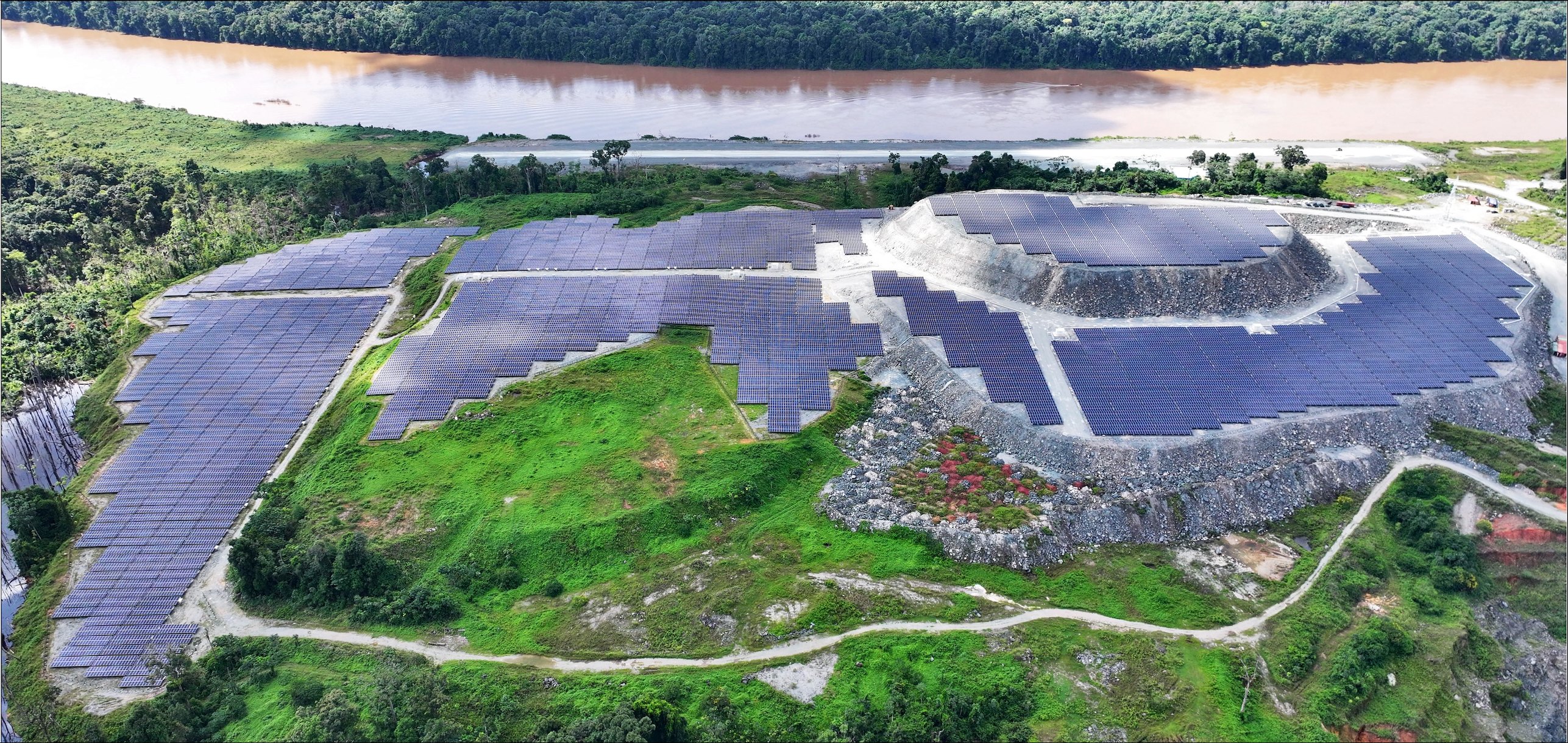
The Southern Johor Renewable Energy Corridor represents a transformative development for the region. The World Bank Group's International Finance Corporation, Permodalan Darul Ta'zim and Ditrolic Energy entered into partnership to develop one of the world's largest renewable energy corridors covering 2,000 square kilometers integrating large-scale solar power and battery energy storage totaling 5.12 gigawatt-hours capacity.
The agreement was signed during the launch of the Johor Renewable Energy Policy 2030. The collaboration defines efforts in project development, technical cooperation and potential financing to bring the renewable energy corridor to reality. The initiative supports the Johor Green Development Policy 2030 and is designed as an essential component of the Johor-Singapore Special Economic Zone masterplan.
Tham Chee Aun, Chief Executive Officer of Ditrolic Energy, described the partnership as a major milestone for Johor and Malaysia. As a local company that has become one of Malaysia's largest renewable energy developers, Ditrolic is committed to contributing to its home state. The project aims to support industrial development in Johor with clean energy and contribute to the ASEAN Power Grid initiative enabling electricity trade across Southeast Asian countries.
The project is expected to create significant economic opportunities with an estimated 125,000 job opportunities across construction, operations and maintenance activities. It will help attract foreign investment and support industrial growth while enabling cross-border energy trading. By partnering with IFC and Ditrolic Energy, the project is advancing toward providing clean energy to the Johor-Singapore economic zone and facilitating regional energy cooperation.
Singapore's renewable energy journey demonstrates that green energy is possible even facing natural disadvantages. The nation's small land size makes scaling land-intensive solutions like solar farms challenging. Low average wind speeds render wind turbines commercially unviable, while lack of major rivers and geothermal activity eliminates hydro and geothermal options. Despite these constraints, Singapore is emerging as a leader in renewable energy among ASEAN neighbors through government policy support, regional cooperation and continued innovation.
In 2022, Singapore made a trial import of 100 megawatts of hydropower from Laos via Thailand and Malaysia through the Laos-Thailand-Malaysia-Singapore Power Integration Project, initiated in 2014 through the ASEAN Economic Community and ASEAN Power Grid. As of May 2025, Singapore imported 122.7 million kilowatt-hours of clean power, comprising 0.52 percent of the country's electricity generation.
Through continued effort and collaboration, Singapore sets sights on longer-term plans including large-scale imports from Indonesia's Bulan Island and the Australia-Asia Power Link, a solar-to-hydrogen project designed to supply up to 1.75 gigawatts to Singapore. These initiatives are essential for the country's goal of importing up to 4 to 6 gigawatts of low-carbon electricity by 2035.
Singapore's renewable energy program is anchored by national-level planning under the Green Plan 2030. A key pillar is Energy Reset, aiming to transform how energy is produced, imported and consumed. The government considers hydrogen as a key research area owing to its potential as a low-carbon fuel for power generation and industry. Supported by the $5 billion Future Energy Fund, the government is studying feasibility of carbon capture technologies at waste-to-energy plants and small modular nuclear reactors believed to be safer and more economically efficient than conventional nuclear power plants.
Malaysia's renewable energy sector remains on a solid growth trajectory driven by sustained government initiatives and potential new measures aimed at spurring further investments. Maybank Investment Bank reported the renewable energy sector outlook remains robust as earnings recognition for engineering, procurement, construction and commissioning works on the 800-megawatt Corporate Green Power Program projects commence, with completion expected by end-2025.
Anticipated awards for the 2-gigawatt capacity Large Scale Solar 5 will provide further opportunities for EPCC orderbook replenishment to renewable energy pure-plays, offering strong earnings visibility beyond 2025. Assuming EPCC works value of approximately $800,000 per megawatt, Maybank estimated the 2-gigawatt capacity to be worth about $1.6 billion in EPCC works.
In 2024, several key initiatives aligned with the National Energy Transition Roadmap were introduced, including LSS5 totaling 2 gigawatts capacity, the Corporate Renewable Energy Supply Scheme and establishment of Energy Exchange Malaysia facilitating the pilot phase of renewable energy export to Singapore with 100-megawatt capacity. Looking ahead to 2025, expected momentum from national energy transition initiatives and strong contract news flow will likely boost sentiment within the renewable energy sector.
The adoption of Corporate Renewable Energy Supply Scheme is likely to gain momentum with finalization of the LSS5 project. Developers with identified land for solar assets whose bids for LSS5 are unsuccessful may pivot to CRESS as an alternative for project development, potentially generating another round of EPCC contract opportunities for the sector.
Philip Capital expressed positivity on Malaysia's renewable sector premised on continued government efforts and potential new initiatives to stimulate further investment driving renewable energy sector development. Projected aggregate sector earnings are expected to grow 63 percent in 2025, driven by robust order books bolstered by ongoing CGPP and Net Energy Metering programs.
Despite meaningful progress, Singapore faces structural and economic challenges on its path to renewable energy. The nation's power system remains heavily dependent on imported natural gas currently supplying over 95 percent of electricity. Transitioning away from this dependence while maintaining reliability and affordability requires careful planning, substantial investment and regional cooperation.
Water management also features prominently in Malaysia's sustainability agenda. The Energy Transition and Water Transformation Ministry will prioritize strengthening the National Water Policy through an integrated strategy ensuring long-term water security and positioning the sector as a new economic driver. The ministry's main focus is ensuring more integrated water management by strengthening the National Water Council as the key platform coordinating policies, strategies and implementation.
The Rancakkan MADANI Bersama Malaysiaku programme aims to raise awareness and encourage Malaysians to adopt sustainable lifestyles valuing energy and water resources. This initiative reflects government recognition that achieving ambitious renewable energy targets requires not only infrastructure investment and policy frameworks but also behavioral change and public engagement supporting the transition to cleaner energy systems.

Written by
TPC Editorial Desk
The Platinum Capital editorial desk
Articles on The Platinum Capital are produced by the TPC editorial desk with the assistance of AI tools, and edited before publication. TPC Awards profiles are based on information provided in nominations and checked against public sources. Reach out at info@theplatinumcapital.com.