
Middle East Accelerates Renewable Energy Transition with Yemen and Jordan Leading Solar Adoption
DUBAI – The Middle East and North Africa region is undergoing a fundamental energy transformation as multiple countries dramatically scale renewable power generation, with Yemen now generating 17 percent of electricity from solar sources and Jordan reaching 16 percent, demonstrat…

DUBAI – The Middle East and North Africa region is undergoing a fundamental energy transformation as multiple countries dramatically scale renewable power generation, with Yemen now generating 17 percent of electricity from solar sources and Jordan reaching 16 percent, demonstrating that clean energy adoption is gaining meaningful traction beyond traditional hydrocarbon-dependent generation mixes.
Saudi Arabia has established one of the world's most ambitious renewable energy targets, aiming for 50 percent of electricity generation from renewable sources by 2030. While the Kingdom remains in early implementation stages with just 1.4 percent renewable share in its 2023 electricity mix, it is rapidly mobilizing resources through a series of large-scale tenders for solar, wind and battery capacity that have already created a substantial project pipeline.
These procurement initiatives drove an estimated more than 16 gigawatts of solar photovoltaic imports from China during 2024 alone, reflecting the Kingdom's determination to leverage abundant solar resources and establish itself as a major clean energy producer. The Public Investment Fund is backing giga-projects like NEOM, which integrates renewable generation with an $8.4 billion green hydrogen facility designed to position Saudi Arabia as a global hydrogen export leader.
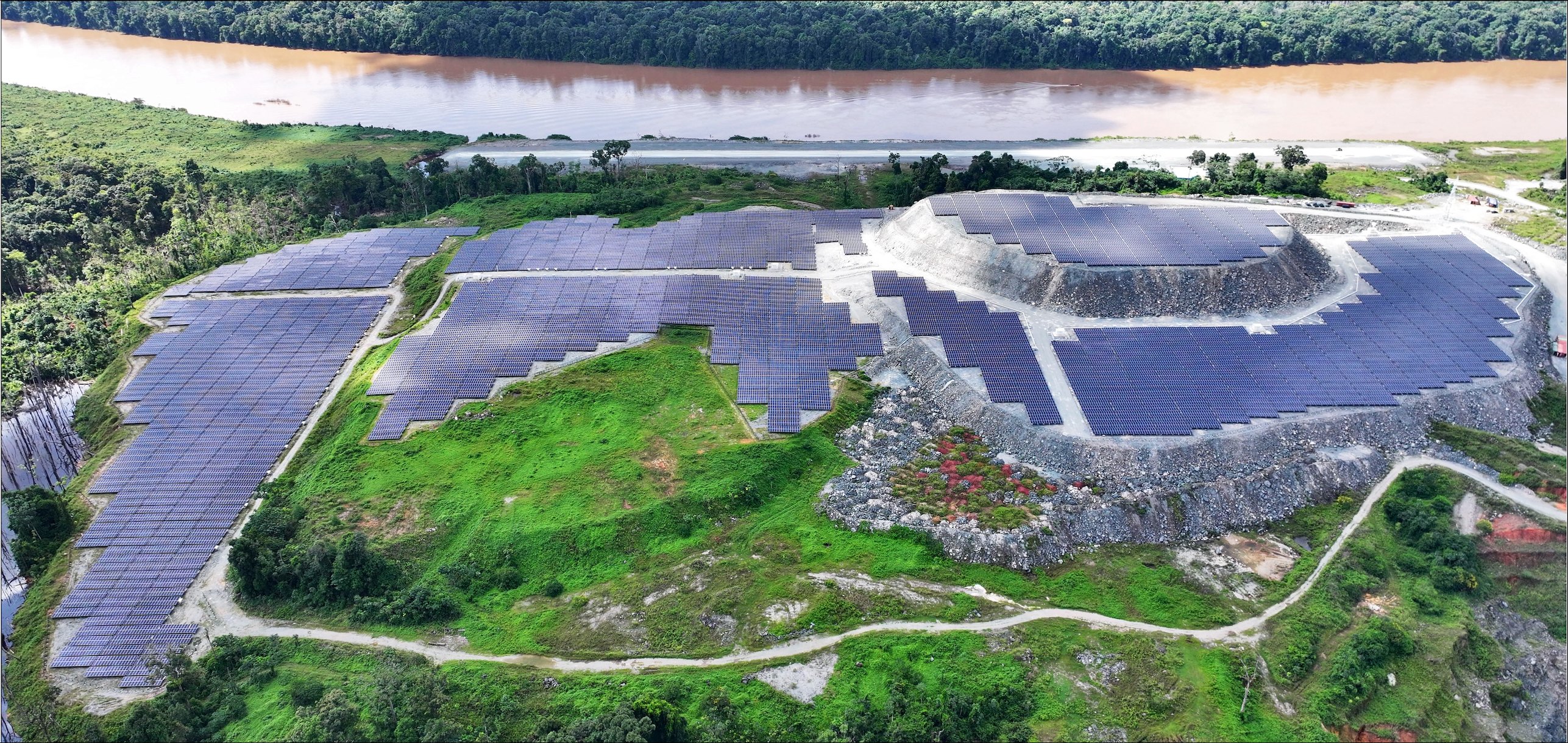
Beyond NEOM's green hydrogen megaproject, Saudi Arabia has launched multiple large-scale solar developments including the Al Shuaibah photovoltaic plant approaching 2.6 gigawatts capacity, the Ar Rass 2 Solar PV Park targeting approximately 2 gigawatts and the Al Kahfah Solar PV Plant at 1.425 gigawatts. In 2024, the government announced a package of seven renewable projects – five solar and two wind – worth $8.3 billion that will add 15 gigawatts of capacity by 2028.
Qatar's National Vision 2030 emphasizes solar investments including the 800 megawatt Al Kharsaah plant completed in partnership with TotalEnergies and Marubeni. The facility provides approximately 10 percent of the country's peak power demand and symbolizes Qatar's strategy to diversify beyond liquefied natural gas while maintaining its position as a major energy exporter.
Oman has announced plans to reach net zero emissions by 2050, focusing heavily on green hydrogen development in Duqm and Salalah. The Sultanate is leveraging abundant solar resources combined with strategic export infrastructure to position itself as a significant hydrogen producer targeting 500,000 barrels of oil equivalent per day production outside traditional hydrocarbon sectors by 2030.
Egypt, already a regional leader in wind and solar deployment, aims to source 42 percent of electricity from renewables by 2035. Major developments include the 1.6 gigawatt Benban Solar Park near Aswan – one of Africa's largest solar installations – alongside substantial Gulf of Suez wind farm expansions supported by international financing.
At COP27, Egypt signed eight hydrogen memorandums of understanding reflecting ambitions to become a regional hydrogen hub. These agreements included plans for an eight billion dollar hydrogen plant in the Suez Economic Zone where Masdar is also planning a mega hydrogen project. Egypt's strategic location between Europe and Africa positions it advantageously for exporting low-carbon energy products.
Jordan continues implementing major utility projects within the kingdom to reach its target of 3 gigawatts renewable capacity by 2030, building on existing achievements including the Tafila Wind Farm and distributed solar installations that now meet over 20 percent of power demand from renewable sources. Although regional tensions have delayed important cross-border initiatives involving Israel, once conflicts subside it will be critical to resume collaborative projects.
Morocco's national roadmap on green hydrogen envisions a local market of 4 terawatt-hours and export market of 10 terawatt-hours by 2030, requiring construction of 6 gigawatts of new renewable capacity. Morocco, UAE and Jordan are spearheading regional trends to develop green energy ecosystems where renewable electricity powers manufacturing of intermediate and finished goods for export including green fertilizers, metals and mobility products.
Egypt, Saudi Arabia and other nations have taken initial steps toward similar green energy ecosystem development. The formation of these integrated value chains has started catalyzing widespread renewable adoption across MENA as utility-scale infrastructure development becomes anchored to diverse offtake markets with corresponding storage and transportation mechanisms.
Nuclear power generation is poised to expand significantly as countries seek reliable, affordable, low-emissions energy sources enhancing security and grid stability. Currently five reactors operate in the region including four in UAE commissioned within the past five years. Construction is underway on five additional reactors – four in Egypt and one in Iran – while Saudi Arabia advances plans for its first nuclear units. Nuclear capacity is projected to triple by 2035 to reach 19 gigawatts.
Electricity consumption in Arab countries is forecast to increase 3.5 percent to 1,296 terawatt-hours by end of 2025, with Saudi Arabia, Egypt, UAE, Algeria and Kuwait accounting for 74 percent of regional consumption. Generated electricity is projected to exceed 1,754 terawatt-hours by 2030, requiring substantial infrastructure investment and careful fuel supply planning.
New digital infrastructure including data centers alongside growing interest in producing hydrogen for export are projected to be significant sources of rising electricity demand. As power demand increases and MENA's generation mix diversifies, ensuring electricity security remains essential. Integrating more solar photovoltaic and wind generation requires robust flexible power systems, modern grids, regional interconnections and advanced management capabilities.
Egypt and Saudi Arabia signed formal agreements in October 2024 for electricity exchange through a high-voltage interconnection project, though the June 2025 timeline for operationalizing Phase I transferring 1,500 megawatts was not met. Phase II completion was originally scheduled for early 2026, expanding capacity to 3,000 megawatts with total investment from both countries remaining at $1.8 billion.
Egypt and Greece have reaffirmed commitment to the GREGY Interconnector, a strategic undersea cable project that will transmit 3,000 megawatts of renewable energy from Egypt to Europe via Crete. Backed by the European Union's Global Gateway initiative, the project is expected to be operational by 2030 with an estimated cost of $4.5 billion. Egypt is also advancing plans for a second interconnector with Italy at proposed 3,000 megawatt capacity.
The Industrial Transition Accelerator announced a pivotal partnership with Egypt's Industrial Modernization Center to fast-track clean industrial projects across MENA. This alliance aims to accelerate sustainable industry shifts by promoting decarbonization and reducing carbon emissions in high-emitting sectors including aluminum, cement, chemicals, steel, aviation and shipping.
Despite progress, the region continues facing challenges. If diversification strategies fall short and fossil fuels continue dominating electricity mixes, demand for oil and gas would rise by over 25 percent by 2035. In such scenarios, more than 80 percent of additional oil demand would concentrate in Iran, Iraq, Kuwait, Lebanon and Saudi Arabia while over 60 percent of extra natural gas demand would occur in Egypt, Saudi Arabia and UAE.
This trajectory would reduce oil and gas export revenues by $80 billion in 2035 and raise import bills by $20 billion while carbon dioxide emissions would continue rising. Building on momentum catalyzed partly by UAE's COP28 leadership in 2023, eight MENA countries have set net-zero targets while 14 countries have joined the Global Methane Pledge committing to reduce global methane emissions by at least 30 percent from 2020 levels by 2030.
The energy transition presents both challenges and opportunities for MENA countries. Success will require balancing immediate energy needs with long-term sustainability goals, managing fiscal impacts of reduced hydrocarbon revenues, developing workforce skills for new energy technologies and attracting investment for both conventional and renewable energy infrastructure. The region's energy choices in coming years will significantly influence both its economic trajectory and contribution to global climate objectives.

Written by
TPC Editorial Desk
The Platinum Capital editorial desk
Articles on The Platinum Capital are produced by the TPC editorial desk with the assistance of AI tools, and edited before publication. TPC Awards profiles are based on information provided in nominations and checked against public sources. Reach out at info@theplatinumcapital.com.