
Mastercard and Tencent: What Their Agentic Payments MoU Means for Cross-Border Commerce
Mastercard and TenPay Global, Tencent's cross-border payment platform, have signed a memorandum of understanding focused on agentic payments — a model in which AI systems make spending decisions autonomously within predefined parameters, without human authorisation of each individual transaction — marking a structural shift in how cross-border transactions may be authorised, routed, and settled. The agreement unites Mastercard's decades of experience in network security, tokenisation, and cross-border clearing standards with Tencent's high-volume micro-transaction infrastructure and an acceptance footprint spanning more than two hundred countries and territories, though both companies face substantial regulatory and geopolitical scrutiny over questions of liability, data sovereignty, and national security that existing financial frameworks were not designed to address.…

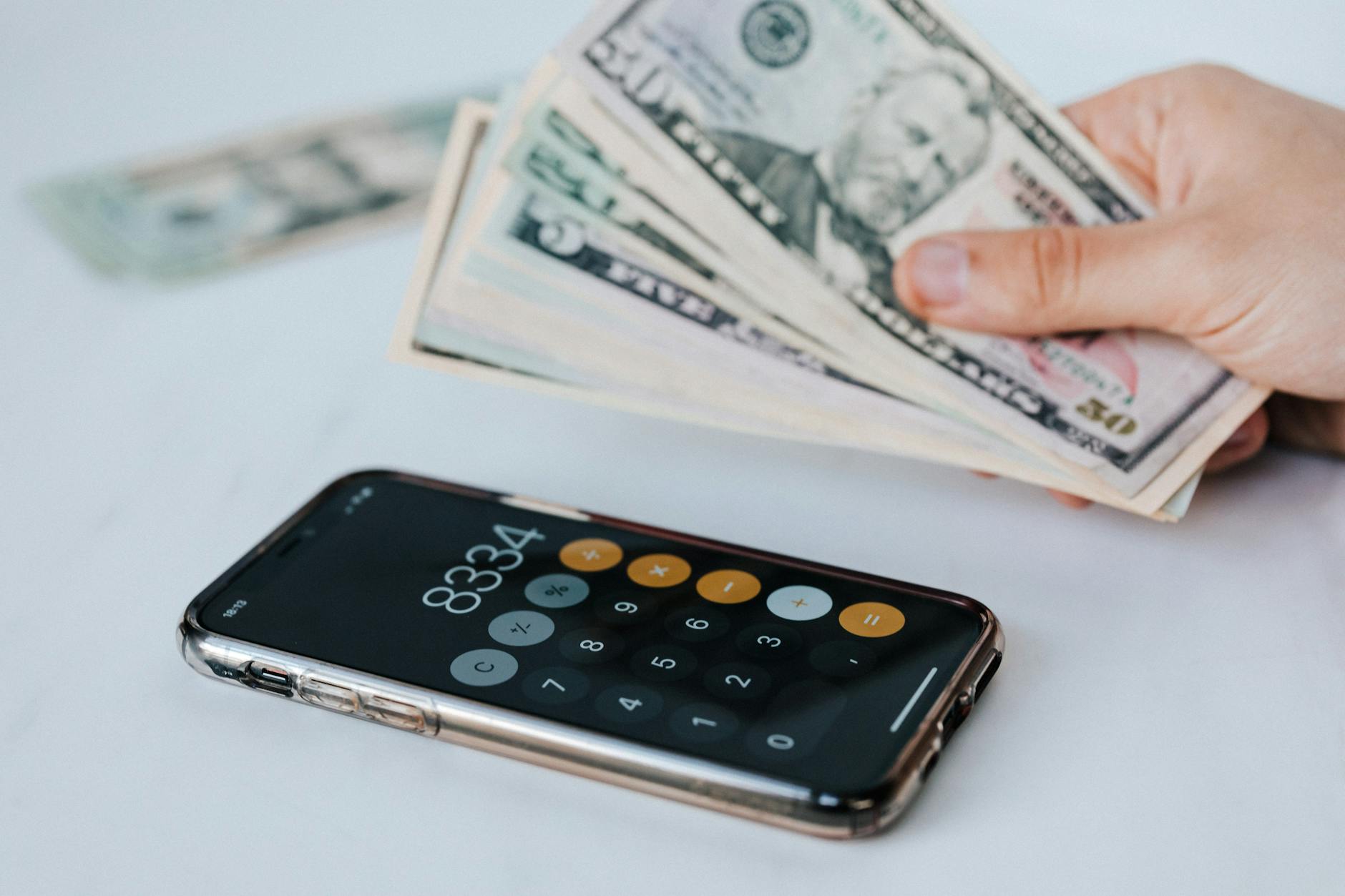
Photo: Vitaly Gariev / Pexels
When two of the world's most consequential payment networks start speaking the same language about autonomous, agent-driven commerce, the financial industry pays attention. The memorandum of understanding reportedly signed between Mastercard and TenPay Global, Tencent's cross-border payment platform, on the subject of agentic payments is more than a bilateral corporate handshake. It signals a structural shift in how cross-border transactions may be authorised, routed, and settled in an era where AI systems increasingly act on behalf of human consumers and businesses. The agreement sits at the intersection of two distinct but complementary payment ecosystems — and what it portends for merchants, regulators, and the millions of people whose money moves across borders every day deserves serious examination.
The Architecture of Agentic Payments
First, what are agentic payments, exactly? Unlike conventional digital transactions — where a human initiates a purchase, confirms credentials, and authorises a transfer — agentic payments involve AI systems making spending decisions autonomously within predefined parameters set by users or enterprises. A travel booking agent might simultaneously reserve flights, hotels, and ground transport, initiating multiple payments across multiple currencies without a human approving each individual step. An enterprise procurement system might reorder inventory, settle supplier invoices, and hedge currency exposure in a single automated sequence. No human in the loop. That is a significant shift.
The technical and compliance challenges this model introduces are substantial. Each autonomous transaction must carry verifiable intent from its human principal, satisfy anti-money-laundering obligations, and clear fraud detection systems built for human behaviour rather than machine-generated spending patterns. That Mastercard and TenPay Global are reportedly tackling these challenges together speaks to both the ambition and the complexity of what they are attempting. Mastercard brings decades of experience in network security, tokenisation, and cross-border clearing standards. Tencent brings the infrastructure of one of the world's most deeply embedded super-app ecosystems, through which a substantial share of domestic consumer spending in China already flows.
Mastercard's Position in the Agentic Moment
Mastercard has spent several years repositioning itself — not merely as a card network, but as a broader payments technology company. Its investments in cybersecurity, real-time payment infrastructure, and open banking connectivity have pushed its relevance well beyond the plastic rectangle. The company has also moved deliberately into the question of how AI interacts with financial authorisation. Its work on what it has described publicly as agent-compatible payment frameworks — systems that can verify the identity and authority of an AI acting on a person's behalf — puts it ahead of most traditional payment incumbents in this specific area.
The strategic logic of engaging TenPay Global is straightforward from Mastercard's side. China represents one of the largest concentrations of digital payment activity on earth, and TenPay Global, Tencent's cross-border payment platform, reaches an enormous user base. Mastercard's direct retail presence in China has historically been constrained by regulatory and competitive realities. A technical partnership on agentic infrastructure could open avenues that conventional card-network expansion simply has not.
Tencent's Global Ambitions and the Cross-Border Opportunity
For Tencent, the calculus runs in a complementary direction. TenPay Global has chased international acceptance for years, targeting Chinese travellers and diaspora communities spending outside mainland China. But agentic commerce opens a different and potentially more lucrative avenue: enabling Chinese businesses and consumers to participate in AI-mediated global commerce where the payment layer is invisible, embedded, and instantaneous.
Tencent's financial technology division has invested heavily in infrastructure built to process high volumes of micro-transactions — precisely the pattern that agentic AI systems tend to generate. An AI agent managing a small business's global supplier relationships might execute dozens of small cross-border transfers daily. That suits the architecture TenPay Global has refined and is now pushing internationally. The MoU with Mastercard gives Tencent a credible network partner whose acceptance footprint spans more than two hundred countries and territories. For a brand with limited recognition in many of those markets, that matters.
Regulatory Complexity and the Question of Trust
No assessment of this agreement is complete without confronting the regulatory terrain it must pass through. Agentic payments raise genuinely novel questions for financial regulators worldwide. If an AI system initiates a fraudulent or erroneous transaction, who bears liability — the AI developer, the payment network, the user who set the agent's parameters, or the institution that cleared the funds? Existing frameworks were not designed with machine-initiated spending in mind. Both Mastercard and Tencent will need to work closely with regulators across multiple jurisdictions to establish guardrails that give consumers and merchants confidence. That work has barely begun.
Then there is the geopolitical dimension. A partnership between a Chinese technology company and an American payment network does not emerge in a vacuum. It arrives during a period of considerable tension between the two countries over technology standards, data sovereignty, and financial infrastructure. The MoU will face scrutiny not just from financial regulators but from national security reviewers in multiple jurisdictions. Both companies will need to demonstrate that the arrangement strengthens — rather than complicates — the integrity of cross-border financial flows. Few outside specialist policy circles have fully reckoned with how exposed this kind of deal is to that scrutiny.
What This Means for the Future of Cross-Border Commerce
Taken in context, the Mastercard-TenPay Global agreement reflects a broader industry recognition that payment infrastructure for the next decade will need to be rebuilt — or at least substantially adapted — for a world where AI agents are routine participants in economic activity. Merchants, fintechs, and enterprises that start preparing for agentic commerce now are likely to be better positioned than those waiting for standards to fully settle before they act.
The partnership also carries implications for smaller economies and emerging markets sitting between the two companies' primary spheres of influence. If a shared technical standard for agentic cross-border payments emerges from this collaboration, it could become a de facto global norm — shaping how developers build AI agents and how banks clear the transactions those agents generate. The commercial interests of both organisations are obvious. But the broader effect — a more seamless, verifiable, and trustworthy architecture for autonomous commerce — could ultimately serve participants far beyond their immediate customer bases.
The Friday Digest
Enjoyed this? Get the week's top business stories, every Friday.
Free. One email a week. Unsubscribe in one click.

Written by
TPC Editorial Desk
The Platinum Capital editorial desk
Articles on The Platinum Capital are produced by the TPC editorial desk with the assistance of AI tools, and edited before publication. Profiles are based on information provided by the subject and checked against public sources. Reach out at info@theplatinumcapital.com.