UAE's Emerging Founders: Beyond Real Estate and Trading
As a new generation of Emirati entrepreneurs quietly dismantles the assumption that Gulf ambition begins and ends with property and commodities, the UAE is producing a cohort of founders building scalable, technology-driven ventures that are attracting serious attention from sovereign wealth managers and institutional capital alike. Understanding where this talent is concentrating — and which sectors are generating defensible, compounding returns — has become an essential exercise for any capital allocator with meaningful exposure to the region.…
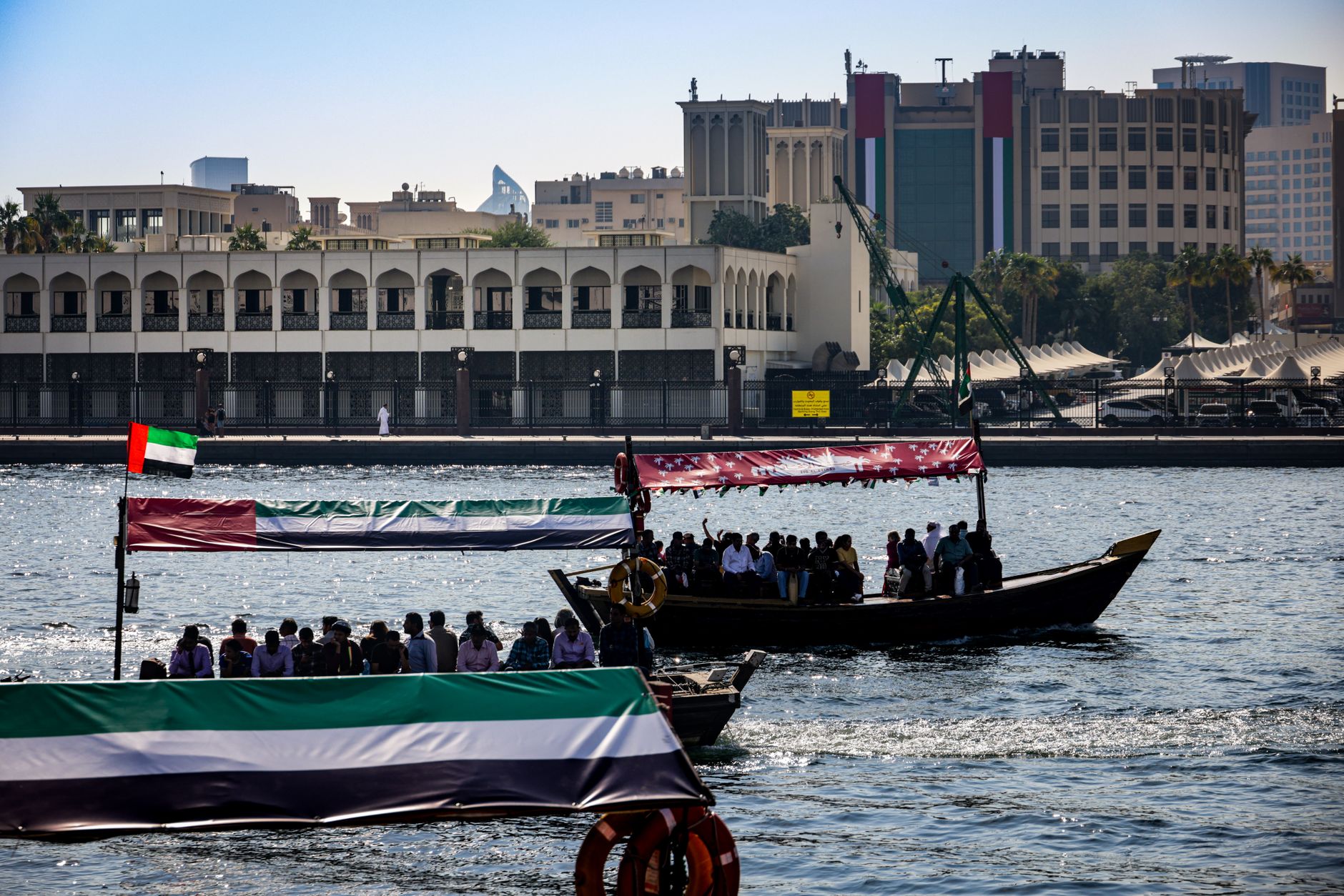
For decades, the default image of Emirati entrepreneurship has been anchored in two industries: real estate and trading. The logic was sound — land was scarce and valuable, trade routes were ancient and profitable, and the regulatory architecture of the UAE rewarded both. But something has shifted, quietly and deliberately, in the years since Vision 2021 gave way to the more ambitious contours of the UAE Centennial 2071 plan. A new generation of founders — Emirati and UAE-based alike — is building technology companies, financial platforms, health-tech ventures, and sustainability-driven businesses that are beginning to attract serious institutional attention. The story of UAE capital in 2026 is no longer just about who owns which tower on Sheikh Zayed Road.
A Structural Shift in Where Ambition Is Going
The numbers are beginning to reflect what many in private capital circles have sensed for some time. UAE-based technology startups raised approximately $2.3 billion in disclosed venture funding across 2025, with fintech, health-tech, and B2B SaaS collectively accounting for more than 60 percent of total deal volume, according to data tracked by MAGNiTT. More telling than the headline figure is who is actually writing the pitch decks. An increasing proportion of founders hold Emirati or Gulf nationality — a demographic that was conspicuously absent from early-stage startup tables as recently as five years ago. Family offices across the GCC are beginning to treat these founders not as curiosities, but as credible allocation targets. That is a significant shift.
What has changed is not just appetite, but infrastructure. The Abu Dhabi Global Market and Dubai International Financial Centre have each refined their startup and founder-facing frameworks to the point where incorporating and operating a scalable business no longer requires a foreign sponsor structure or a network of intermediaries. ADGM's Innovation Hub has onboarded over 200 active tech ventures since its expansion in 2024. DIFC reported that its regulated fintech cohort grew by 34 percent year-on-year in Q1 2026. These are not vanity statistics. They reflect a genuine deepening of the ecosystem — the kind that takes years to build and tends to accelerate once it reaches critical mass.
Capital Is Arriving From Unexpected Directions
The opening of Vista Equity Partners' first Middle East office in Abu Dhabi in May 2026 was not incidental. Robert F. Smith's $100 billion-plus AUM platform did not establish a Gulf presence to serve existing clients. It came to source deals. Vista's Abu Dhabi positioning sends a clear signal: global growth equity is now treating the Emirates as a deal origination hub, not merely a capital-raising destination. For UAE-based founders building enterprise software or recurring-revenue businesses, that distinction matters enormously. It means a well-structured company with clean financials and a defensible market position in the Gulf or broader MENA region can now access the kind of institutional US growth equity that was previously only available after a Silicon Valley detour. Few founders outside the region have fully processed what that means. They should.
Sovereign capital is also moving with more precision. Mubadala and ADQ have both signalled stronger mandates toward backing early-growth companies with Gulf operational roots, rather than simply co-investing in international funds. For Emirati founders who have historically struggled to bridge the gap between angel funding and Series B without leaving the region entirely, this represents a structural change in what is actually available to them.
The Sectors Drawing Serious Money
Three sectors are generating the most concentrated founder activity among UAE-based entrepreneurs in 2026. The first is climate and clean energy infrastructure — not at the utility scale, but in the commercial and industrial segment. Companies building smart energy management systems, green building certification services, and carbon tracking platforms are finding willing customers in both the private sector and government-linked entities. The UAE's COP28 commitments created procurement pressure that has since translated into real revenue for B2B climate-tech founders. That pipeline is not theoretical. It is already converting.
The second is financial services infrastructure. With the UAE now formally integrated into multiple cross-border payment corridors — including the Arab Monetary Fund's Buna platform and bilateral digital currency arrangements — there is meaningful market space for companies building compliance technology, treasury management tools, and embedded finance solutions targeted at SMEs operating across GCC-Africa and GCC-South Asia trade routes. These are not consumer fintech plays. They are infrastructure businesses with high switching costs and defensible margins. The numbers tell a complicated story of regional fragmentation that is slowly, profitably, being resolved.
The third sector, less discussed in public forums but increasingly visible in private conversations, is healthcare technology. The UAE's rapidly ageing expatriate population and the government's push toward preventive care have created genuine demand for digital health platforms, remote diagnostic services, and chronic disease management tools. Several founders in this space have recently completed Series A rounds in the $15 to $30 million range, backed by a combination of regional family offices and international health-focused funds. The deal flow is quiet. The conviction behind it is not.
What the Africa Parallel Reveals
There is an instructive parallel worth examining. Tony Elumelu's deployment of $16 million across 3,200 African entrepreneurs in the first quarter of 2026 — and his subsequent appointment by President Macron to lead France's Africa Impact Coalition — illustrates what happens when a credible private capital figure systematically builds an entrepreneurial ecosystem over time. The Tony Elumelu Foundation did not produce results overnight. It built pipelines, cohorts, and alumni networks that eventually gave African early-stage founders access to mentorship, capital, and visibility they could not have obtained individually. The compounding effect took years. The results are now undeniable.
The UAE has the capital base to replicate this model with far greater velocity. What it requires is founder-focused conviction from family offices that have historically been structured around asset preservation rather than venture-style risk. Several multi-generational Emirati families are currently reconsidering their allocation frameworks. Those conversations are quiet. Their implications will not be.
The View From Here for Investors and Family Offices
For principals managing private capital across the Gulf, the practical read is straightforward: the window to back UAE-based founders at early and growth stages is open now, before international institutional capital fully prices in the region's structural advantages. A GCC-headquartered B2B technology company with $5 to $20 million in annual recurring revenue, operating across markets in the Gulf, Egypt, or Sub-Saharan Africa, sits in a category that is currently undervalued relative to comparable businesses in Southeast Asia or Eastern Europe. Family offices in Riyadh, Doha, and Abu Dhabi that move with informed conviction over the next 24 months will be writing very different portfolio narratives by the end of the decade. The founders are already building. The only open question is whether the capital is ready to meet them where they are.
Written by
Khalid Al-Rashidi
Gulf & Middle East Correspondent · Emerging & Strategic Wealth
Khalid covers the family offices, luxury operators, and strategic capital moving across the GCC and wider Arab world — often before the rest of the region notices. He's spent years tracking how Gulf wealth structures itself for the next generation, from residency programmes to private aviation. Based between Dubai and Riyadh. Reach out at khalid.al-rashidi@theplatinumcapital.com.