Collecting Art in the Gulf: Galleries, Fairs and New Museums
The Gulf has transformed from a region once dismissed as peripheral by the global art establishment into a central force in contemporary collecting, underwritten by landmark institutions including the Louvre Abu Dhabi, the forthcoming Guggenheim Abu Dhabi — set to become the largest Guggenheim museum in the world — and Qatar's expanding museum ecosystem overseen by Qatar Museums. This institutional foundation is reinforced by a maturing commercial infrastructure, from Art Dubai's internationally recognised fair programme to the private gallery district of Alserkal Avenue, where Hauser & Wirth and Pace have opened or expanded regional presences, reflecting a collector base whose purchasing depth and sophistication the international market long and chronically underestimated.…

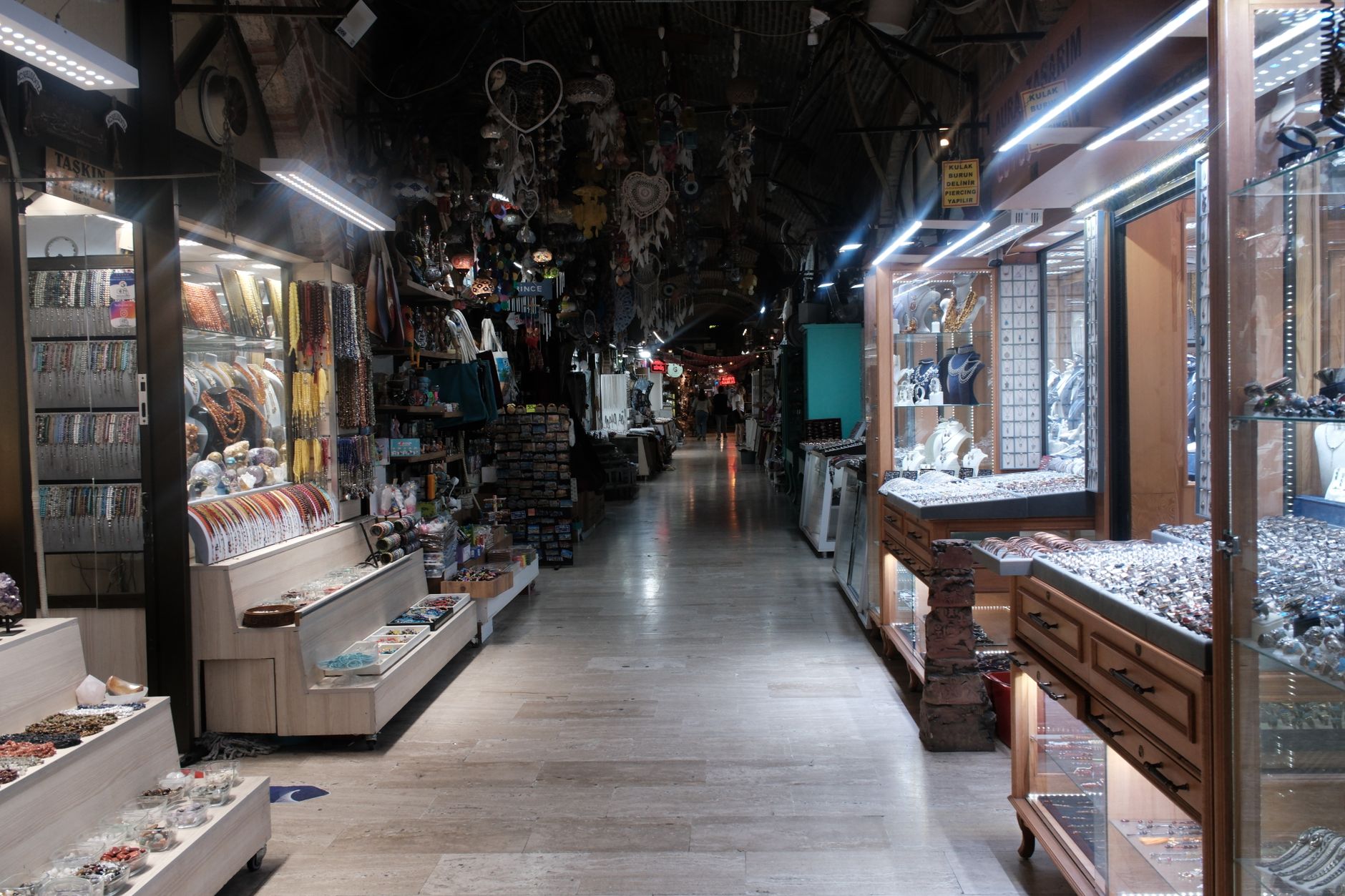
Photo: Yura Forrat / Pexels
Something remarkable is unfolding across the Arabian Peninsula. Within a generation, a region the global art establishment once dismissed as peripheral has planted itself at the centre of contemporary collecting, institutional development, and cultural patronage. The Gulf's shift from oil economy to cultural economy is not rhetorical. You can see it in the architecture rising along Saadiyat Island, in the packed vernissages of Art Dubai, and in the growing seriousness with which international gallerists, auction houses, and curators now approach the region. What drives this shift, and who shapes it, is worth unpacking.
The Infrastructure of Ambition
No serious account of Gulf collecting starts without reckoning with the institutional investment that made it possible. Abu Dhabi's Saadiyat Island Cultural District is the most concentrated expression of that ambition. The Louvre Abu Dhabi, which opened in 2017, introduced a genuinely cross-civilisational curatorial model to the region — one that places Gulf collecting inside a universal narrative of human creativity rather than a narrowly regional one. The forthcoming Guggenheim Abu Dhabi, long anticipated and now progressing toward completion, promises to extend that reach into contemporary and modern art at a scale that will make it the largest Guggenheim museum in the world. Natural history and Zayed national museum projects on the same island make clear the ambition runs well beyond fine art into something closer to a comprehensive cultural infrastructure.
Qatar has taken a parallel, if distinct, approach through Qatar Museums, the state body overseeing an expanding portfolio that includes the Museum of Islamic Art, the National Museum of Qatar — designed by Jean Nouvel and opened in 2019 — and the more experimentally minded Mathaf: Arab Museum of Modern Art. The cumulative effect is a museum ecosystem capable of hosting, contextualising, and generating serious scholarly and curatorial discourse. This is not collecting for prestige. It is building the architecture of a cultural capital.
The Fair Circuit and Its Commercial Logic
The museums supply cultural legitimacy. The fairs supply liquidity and visibility. Art Dubai, held annually at Madinat Jumeirah, has grown from a regional curiosity into a genuinely international fair, drawing galleries from across Europe, Asia, and the Americas alongside its core roster of Middle Eastern and South Asian exhibitors. Its programming — dedicated sections for modern works, gallery presentations, and a commissions programme — reflects the ambitions of an event that knows its audience is increasingly sophisticated and internationally mobile. That is a significant shift from where it started.
The fair's particular contribution has been to function as a meeting point between Gulf collectors, substantial in number and often private in temperament, and an international market that chronically underestimated their purchasing depth. Galleries report sustained commercial engagement from Gulf buyers well beyond fair week, suggesting Art Dubai operates as a catalyst for longer relationships rather than a simple transaction venue.
Abu Dhabi Art, held at Manarat Al Saadiyat and tied to the capital's cultural calendar, occupies a complementary position — more intimately scaled and closely aligned with the institutional developments on Saadiyat Island, offering collectors a moment of reflection alongside commerce.
The Collector Base: Private Depth and Evolving Taste
Gulf collecting gets discussed in institutional terms partly because individual collectors in the region have traditionally kept a discretion their counterparts in New York or London rarely bother with. That discretion should not be mistaken for shallow engagement. A generation of Gulf collectors — Qatari, Emirati, Kuwaiti, and Saudi — has built holdings of considerable range and depth, spanning Islamic art, modern Arab masters, and significant positions in the global contemporary market.
Saudi Arabia may be the most consequential emerging chapter. Vision 2030, the kingdom's economic and social reform programme, carries a substantial cultural dimension: new museums, a revived performance arts sector, deliberate efforts to cultivate domestic creative industries. The Royal Commission for AlUla has reframed one of the region's most extraordinary archaeological sites as a destination for art, heritage, and cultural tourism simultaneously, attracting international artists and institutional partnerships of real weight. For collectors and gallerists paying attention, Saudi Arabia's domestic market is no longer a footnote. Few outside the region have fully absorbed what that means.
Galleries and the Question of Permanence
International galleries have debated for years whether the Gulf can sustain a commercial gallery ecology beyond the fair circuit. The evidence is increasingly pointing one way. Established local galleries within Dubai's Alserkal Avenue — a creative district that has matured into a credible hub for emerging and established practitioners — have shown that consistent programming, artist development, and collector education can build genuine communities of engagement. Alserkal Avenue, developed through private initiative, now houses dozens of galleries, studios, and arts organisations. It has become a reference point for how private cultural infrastructure can function in a city not built around traditional arts districts.
International galleries including Hauser & Wirth, Pace, and others have opened or expanded their regional presences, judging that the collector base and institutional environment now warrant sustained commitment rather than periodic visits. Their presence, in turn, validates the market for collectors who previously made acquisitions primarily through travel to London, New York, or Basel.
What Comes Next
The Gulf art world now faces the challenges of maturity rather than those of arrival. Provenance standards, artist-collector relationships, the depth of local critical discourse, and the long-term viability of fair-dependent commercial models are live and legitimate concerns within the sector itself. The most thoughtful participants in the region acknowledge them without defensiveness. That, too, is a sign of a market growing up.
What is beyond serious dispute is that the Gulf has become a force in global art that London, New York, and Paris can no longer treat as a subsidiary market. The museums are real. The collections are deep. The fairs are commercially substantive. The collector base grows in sophistication each year. For anyone serious about where art collecting heads in the second quarter of the twenty-first century, the Gulf is not a curiosity. It is a central chapter.

Written by
TPC Editorial Desk
The Platinum Capital editorial desk
Articles on The Platinum Capital are produced by the TPC editorial desk with the assistance of AI tools, and edited before publication. Profiles are based on information provided by the subject and checked against public sources. Reach out at info@theplatinumcapital.com.