

Gulf Heirs Choosing Venture Capital Over the Family Business
Across the Gulf's most storied merchant dynasties, a quiet but consequential shift is reshaping the region's economic architecture, as heirs who once assumed their place behind the family desk are instead deploying inherited capital into venture portfolios spanning fintech, deep tech, and climate innovation. For the patriarchs and matriarchs who built empires on real estate, trading, and hydrocarbons, this generational pivot represents far more than a change in asset allocation — it signals a fundamental renegotiation of legacy, risk appetite, and what it means to carry a family name forward in the 21st century.…

Across the Gulf, a quiet generational negotiation is underway — one that will determine not just who inherits the family business, but whether the family business itself remains the defining vehicle of wealth creation for the next thirty years. The answer emerging from Riyadh boardrooms, Dubai co-working spaces, and Doha family councils is nuanced and, for some patriarchs, deeply unsettling: the heirs are interested, but they are not arriving at the inherited desk. They are building their own tables — in venture capital, deep technology, and emerging market startups — and redefining what loyalty to the family legacy actually means.
The Succession Question Becomes a Strategy Question
Forbes Middle East's Top 100 Arab Family Businesses ranking for 2026 offered a rare public window into the health of Gulf dynastic enterprise. Abdul Latif Jameel claimed the top position. That result reflects decades of deliberate diversification — far beyond its Toyota distribution origins — into renewable energy, fintech, and international mobility operations now active across seven new markets including the United Kingdom, Australia, and South Africa.
What makes the Jameel story instructive right now is not the ranking. It is the structure behind it. The group runs simultaneously on two generational tracks: second-generation leaders — Mohammed Jameel as Chairman, Fady Jameel as Vice Chairman (International), and Hassan Jameel as Vice Chairman (Saudi Arabia) — alongside third-generation executives already carrying operational authority across its diversified subsidiaries. A controlled, deliberate handover. It is also the exception, not the rule.
For most Gulf family businesses, succession is nothing like this choreographed. When the Abu Dhabi Chamber of Commerce and Industry launched the Abu Dhabi Family Businesses Council in December 2024, it identified succession planning as the council's first and most urgent priority. That is a telling signal. Even in one of the world's most capital-rich cities, the mechanics of intergenerational transfer remain unresolved for the majority of founding families. Gulf-based family enterprise advisers estimate that fewer than 30 percent of GCC family businesses have a formalised succession plan in place — one that has actually been stress-tested against the interests and ambitions of the next generation.
Venture Capital as an Identity Statement
What has shifted in the past five years is not simply that heirs are choosing venture capital. It is why they are choosing it — and what they are saying by doing so.
For many second and third-generation Gulf inheritors, launching or joining a venture fund is simultaneously a financial strategy, a professional identity, and a declaration of independence that stops well short of severing family ties. A son who launches a USD 50 million early-stage fund focused on Gulf fintech or African agritech is not abandoning the family business. In his own framing, he is extending its reach into sectors the founding generation never touched — while building a track record that is unambiguously his own. That distinction matters enormously to this cohort.
The numbers bear this out. The UAE alone recorded over USD 1.2 billion in venture capital deployed in 2024, with a growing share of that capital originating from family office-adjacent vehicles run by individuals under forty. Saudi Arabia's Vision 2030 ecosystem has accelerated the dynamic further — programmes such as the National Technology Development Program are actively cultivating a class of young Saudi founders and investors who happen to carry prominent surnames. In Qatar, analysts tracking the family enterprise sector have spotted a clear divergence between legacy holding structures — Power International Holding, led by brothers Motaz and Ramez Al Khayyat and ranked seventh among Arab family businesses in 2026, is the obvious example — and younger, entrepreneurially-led vehicles growing faster precisely because they carry fewer legacy commitments. These newer structures can price in long-term structural bets that a publicly visible conglomerate simply cannot afford to make. Few outside the region have noticed. They should.
The Institutional Response: Frameworks for a Frictionless Transition
Gulf institutions are not sitting still. The Family Business Council Gulf — the region's principal non-profit dedicated to family enterprise continuity — recently announced a significant leadership transition of its own. Sheikha Hind Bahwan takes the chair. Hassan Jameel, already Vice Chairman of Abdul Latif Jameel, assumes the role of Vice Chairman at the FBCG. The symbolism is intentional.
Placing a next-generation figure of Hassan Jameel's stature in a governance role at the region's most prominent family business institution sends an unambiguous message: the frameworks being built for succession are being shaped, in part, by the very generation they are designed to serve. That is a significant shift.
It matters because the institutional conversation has historically been founder-dominated — senior advisers viewing venture capital ambitions with barely concealed wariness, treating them as a distraction from operational responsibility rather than a complementary asset. The emerging consensus, reflected in FBCG programming and in conversations at the Abu Dhabi Family Businesses Council, runs differently. A next-generation heir who builds genuine venture expertise — deal sourcing, portfolio construction, fund governance — acquires skills that translate directly into better stewardship of a diversified family holding. The real question is whether the transition can be structured so that the venture chapter and the inheritance chapter remain legible to each other, rather than pulling in opposite directions.
Beyond the Gulf: A Pattern Repeating Across Emerging Markets
The Gulf story is the most visible version of something playing out from Lagos to Jakarta. In Nigeria, second-generation scions of conglomerate families are backing fintech infrastructure startups that compete — indirectly, but unmistakably — with the financial services arms of their own family groups. In Indonesia and Malaysia, heirs to plantation and property empires are seeding climate technology funds that carry an implicit critique of the extractive models that built the family fortune. In Kazakhstan, where family-linked wealth sits heavily in energy and mining, younger principals are moving into digital assets and regional logistics with an urgency driven partly by geopolitical exposure and partly by genuine entrepreneurial conviction.
What connects these stories is not rebellion. It is repositioning. The founding generation built wealth in decades when capital scarcity and market access were the primary moats. Their heirs are operating in an environment where deal flow is global, information is cheap, and competitive advantage lives in speed, networks, and the appetite to absorb early-stage risk. Venture capital, for this cohort, is not a departure from wealth preservation. It is their version of it.
What This Means for Family Offices and Private Investors
For family office principals and private investors watching this unfold, the practical implications are direct. Co-investment opportunities with next-generation Gulf venture vehicles are multiplying, and the terms are often more attractive than institutional fund structures — particularly for investors who bring sector expertise or regional market access alongside capital. The numbers tell a complicated story on returns, but the access alone commands attention.
The bifurcation between legacy holding companies and next-generation venture arms within the same family group also creates distinct risk and return profiles that sophisticated LPs are only beginning to price correctly. That gap will not last. Third, and perhaps most consequentially, the families that manage this transition well — giving heirs genuine authority within structured frameworks rather than forcing a binary choice between the venture world and the boardroom — will compound across generations. Those that do not will find their most capable heirs have built something formidable elsewhere. By the time that conversation about loyalty comes around, it will be considerably harder to have.
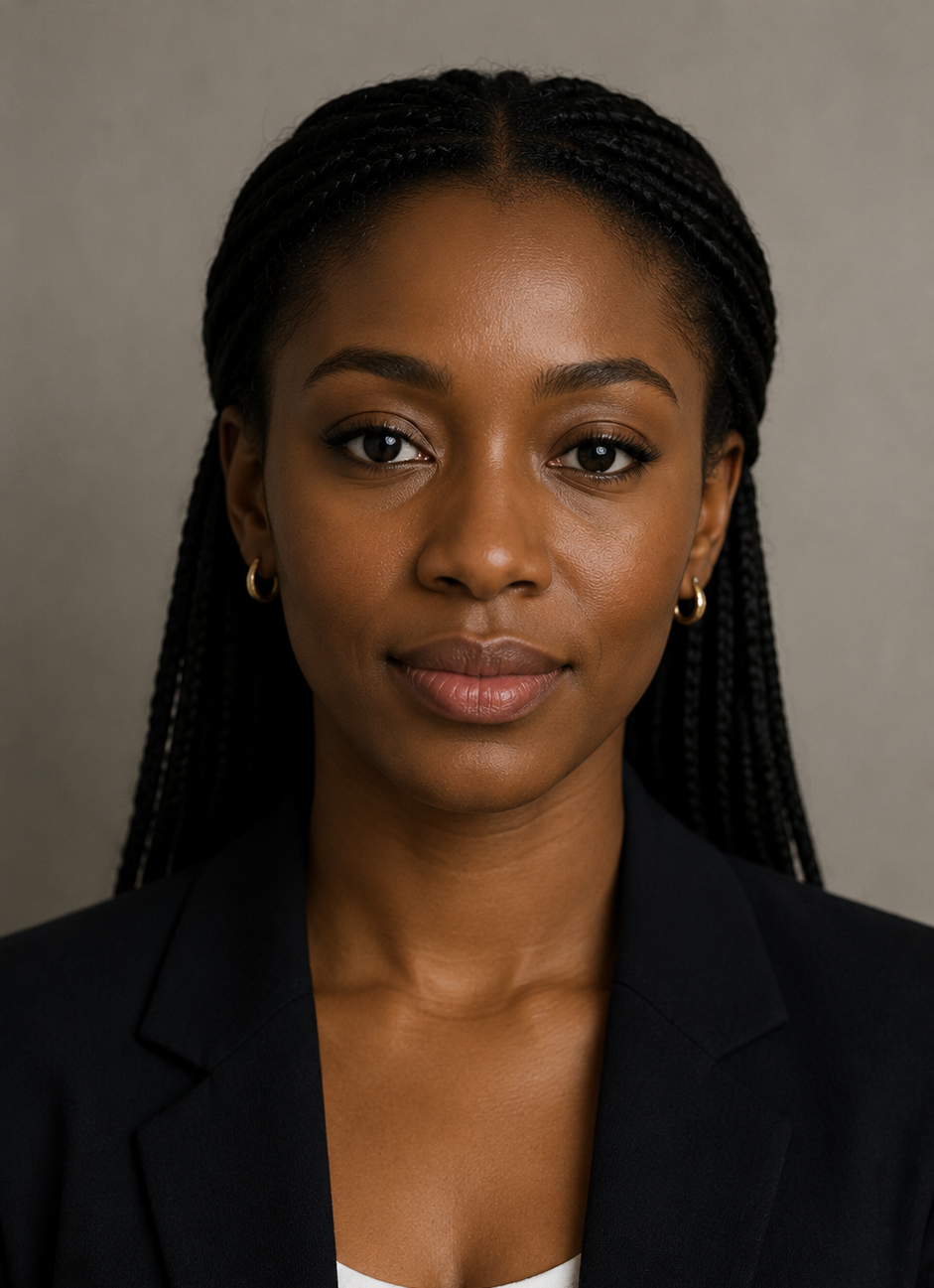
Written by
Amara Osei
Africa & Emerging Markets Correspondent · Philanthropy & Next Generation
Amara covers the philanthropists, foundation founders, and next-generation leaders building wealth and influence across Africa, Southeast Asia, and Central Asia. She has a particular eye for the family businesses handing the reins to a generation educated abroad and building at home. Based in Nairobi. Reach out at amara.osei@theplatinumcapital.com.