

Kazakhstan's Young Business Leaders Transforming Family Enterprises
Across Kazakhstan's rapidly evolving economic landscape, a new cohort of Western-educated heirs and homegrown entrepreneurs are steering century-old family conglomerates toward digital diversification, sustainable investment, and cross-border expansion with a sophistication that is drawing serious attention from Gulf sovereign wealth funds and European private equity alike. Their ascent signals not merely a generational transition in ownership, but a fundamental recalibration of how Central Asian family capital positions itself within the emerging architecture of global trade corridors.…
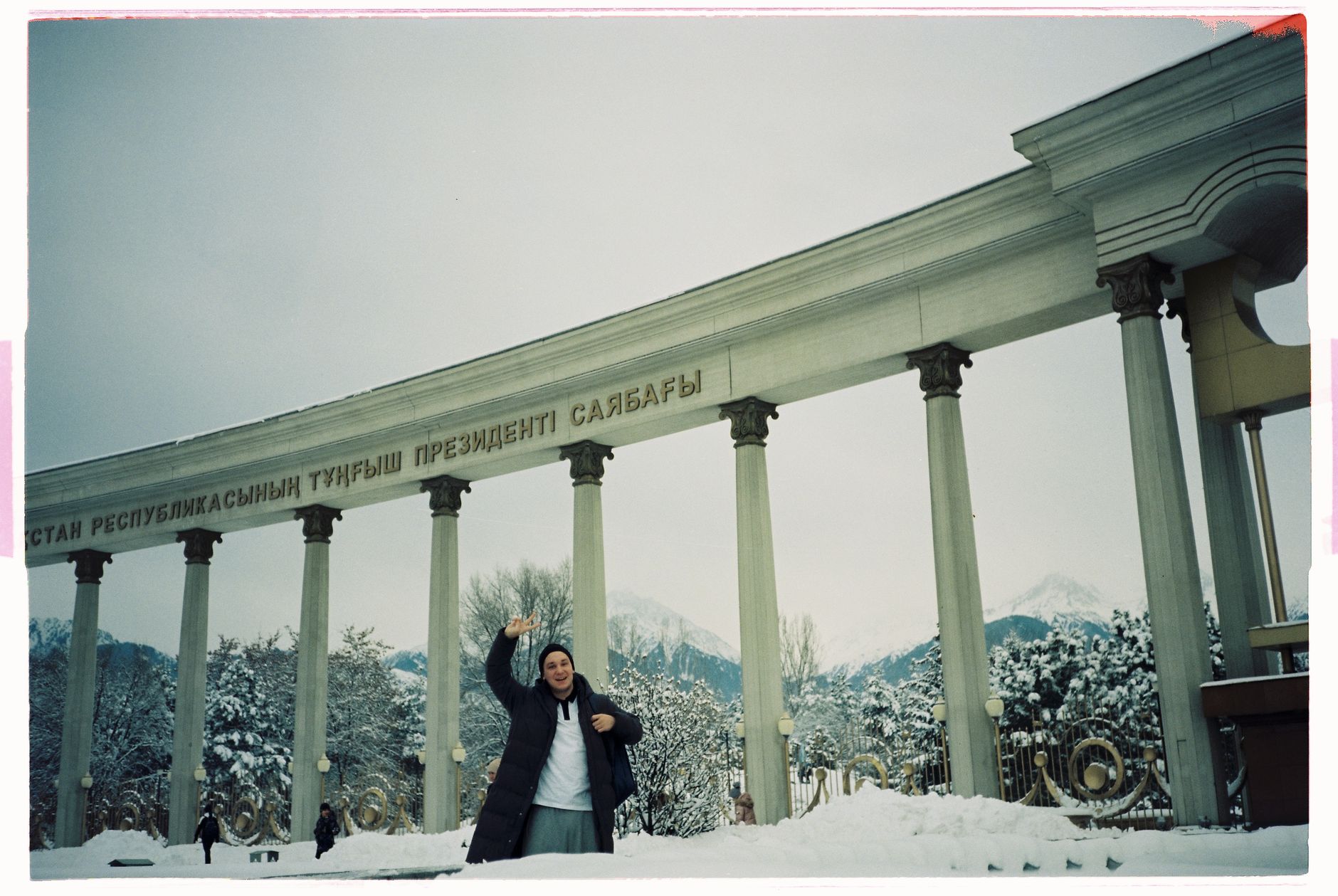
Across Kazakhstan's sprawling industrial heartland and its increasingly sophisticated financial centres in Almaty and Astana, something consequential is happening quietly. The sons and daughters of men who built fortunes during the post-Soviet privatisation wave of the 1990s are stepping into operational roles — arriving with international MBAs, digital fluency, and a markedly different appetite for risk. This is not a story of inheritance. It is a story of reinvention, and it is moving faster than most outside observers have recognised.
The Succession Moment Has Arrived
Kazakhstan's family-owned enterprises account for a significant share of the country's non-extractive economy, spanning construction, agribusiness, retail, logistics, and financial services. Most were built by founders now in their sixties and seventies — men who operated in an environment defined by political proximity, resource cycles, and relationship-based dealmaking. Their successors are inheriting businesses worth, in many cases, between USD 50 million and USD 500 million. Mid-market enterprises. Large enough to matter regionally. Not yet structured to compete internationally without serious change.
The timing tracks a broader regional pattern. In the Gulf, Forbes Middle East's 2026 ranking of the Top 100 Arab Family Businesses confirmed that the most durable dynasties — from Saudi Arabia's Abdul Latif Jameel, led by Chairman Mohammed Abdul Latif Jameel, to the UAE's Al-Futtaim Group under Vice Chairman and CEO Omar Abdullah Al Futtaim — built their staying power by professionalising governance before scale became a liability. Kazakhstan's emerging business families are studying these models closely. Several have already launched formal succession programmes with international advisory firms based in Dubai and Singapore.
From Trading Houses to Diversified Holdings
The structural transformation driven by Kazakhstan's next generation follows a recognisable path: consolidate fragmented family assets under a single holding structure, bring in independent board members, separate family liquidity from operational capital. Clean, logical steps. What makes the Kazakhstani context distinct is the speed — compressed against a backdrop of the government's ongoing privatisation agenda and Astana's ambition to establish itself as a regional financial hub through the Astana International Financial Centre.
Many of the younger principals — educated at IE Business School in Madrid, London Business School, and KIMEP University in Almaty — are restructuring businesses that previously operated as loose collections of subsidiaries under informal family oversight. The move toward holding company models with defined family constitutions mirrors what happened in Southeast Asia, where Indonesian and Malaysian family conglomerates spent the 2010s rebuilding governance after the 1997 Asian financial crisis exposed how fragile informal structures really were. Kazakhstan's next generation is compressing roughly a decade of that regional learning into a much shorter reform window. That is a significant shift.
The "Independent Venture" Model Takes Hold
Watch this trend carefully. Across Kazakhstan's next-generation business community, a clear preference has emerged: prove yourself independently before taking the family helm. In the UAE, family office advisers describe younger heirs launching what they increasingly call "legacy brands" — independent businesses backed by family capital but kept operationally separate, letting the next generation build credibility without putting the family's established reputation on the line.
Kazakhstan shows the same pattern. Younger family members are deploying between USD 2 million and USD 15 million into early-stage technology, agri-tech, and logistics ventures, frequently alongside international co-investors. Almaty has seen a measurable uptick in family-backed venture activity since 2023, with particular appetite for fintech infrastructure, digital health platforms, and supply chain technology serving Central Asian trade corridors — sectors that sit squarely on Kazakhstan's strategic axis between China, Russia, and European markets. These ventures do two things simultaneously: generate returns and build the operational track record the next generation will need when they formally take control.
Philanthropy as a Governance Signal
There is a subtler shift worth examining. Among Kazakhstan's wealthier family enterprises, the next generation is deliberately redefining how business families present themselves publicly — and philanthropy has become a governance signal as much as a social commitment. Founding-generation patriarchs typically kept philanthropic activity quiet and locally transactional. Their successors are establishing structured foundations and aligning giving with internationally recognisable frameworks, including the UN Sustainable Development Goals and education access initiatives.
This carries real strategic weight. In the Gulf, Qatar's Power International Holding — led by brothers Motaz and Ramez Al Khayyat and recently ranked seventh among Arab family businesses — has demonstrated how a family enterprise's public positioning, including its community and social investments, directly strengthens its ability to win sovereign-scale contracts. The group's USD 11 billion infrastructure mandate in Syria in 2025 went to a firm with both technical capability and the reputational architecture to operate at that level. Kazakhstan's next generation has absorbed this lesson: structured philanthropy, transparent governance, and professional branding are not soft considerations. They are commercial infrastructure.
What Investors and Family Offices Should Watch
For private investors, family office principals, and regional fund managers, Kazakhstan's generational transition represents a specific and time-sensitive opening. As family enterprises formalise their structures, many are actively seeking minority equity partners, co-investors for expansion into adjacent markets, and advisory relationships with Gulf and Southeast Asian family offices that have been through comparable transitions. The window for entering these relationships at early-stage valuation is narrowing. Few outside the region have noticed. They should.
Kazakhstan's GDP reached approximately USD 261 billion in 2024, and the non-oil private sector — where family enterprises are most concentrated — is growing at a rate that consistently outpaces the extractive economy. The AIFC, modelled in part on the Dubai International Financial Centre, gives cross-border investment structures a legally familiar framework that Gulf and international investors will recognise immediately. Several Kazakhstani family offices have already established dual presences in Almaty and Dubai, drawn by the gravitational pull of Gulf capital markets and the concentration of family office expertise the UAE has built over the past decade.
What Kazakhstan's young business leaders are building extends well beyond a new chapter for their families. They are constructing the institutional foundations of a private sector their country will depend on as it works to reduce its historic reliance on commodity revenues. The numbers tell a complicated story — but the direction is clear. The families that complete this transition successfully over the next five to seven years will not only dominate Kazakhstan's domestic economy. They will emerge as credible partners for sovereign wealth funds, development finance institutions, and international private equity across the broader Central Asian corridor. For those positioned to engage now, the conversation has already started.
Written by
Amara Osei
Africa & Emerging Markets Correspondent · Philanthropy & Next Generation
Amara covers the philanthropists, foundation founders, and next-generation leaders building wealth and influence across Africa, Southeast Asia, and Central Asia. She has a particular eye for the family businesses handing the reins to a generation educated abroad and building at home. Based in Nairobi. Reach out at amara.osei@theplatinumcapital.com.