
Maersk: Q3 Results and Upgraded 2026 Guidance Show What Global Trade Flows Mean for Shippers
A.P. Møller-Maersk's third-quarter 2026 results and upgraded full-year guidance signal durable demand across global trade corridors, underpinned by the ongoing Red Sea disruptions that have rerouted vessels around the Cape of Good Hope, tightening effective capacity and sustaining elevated freight rates even as underlying volume growth has remained modest. The Danish shipping giant's diversified revenue base — spanning warehousing, customs brokerage, air freight, and last-mile delivery alongside its core container operations — has delivered a degree of earnings stability that lends its guidance revisions unusual credibility as forward indicators for the broader logistics complex, from port operators and rail companies to warehouse REITs and packaging manufacturers.…

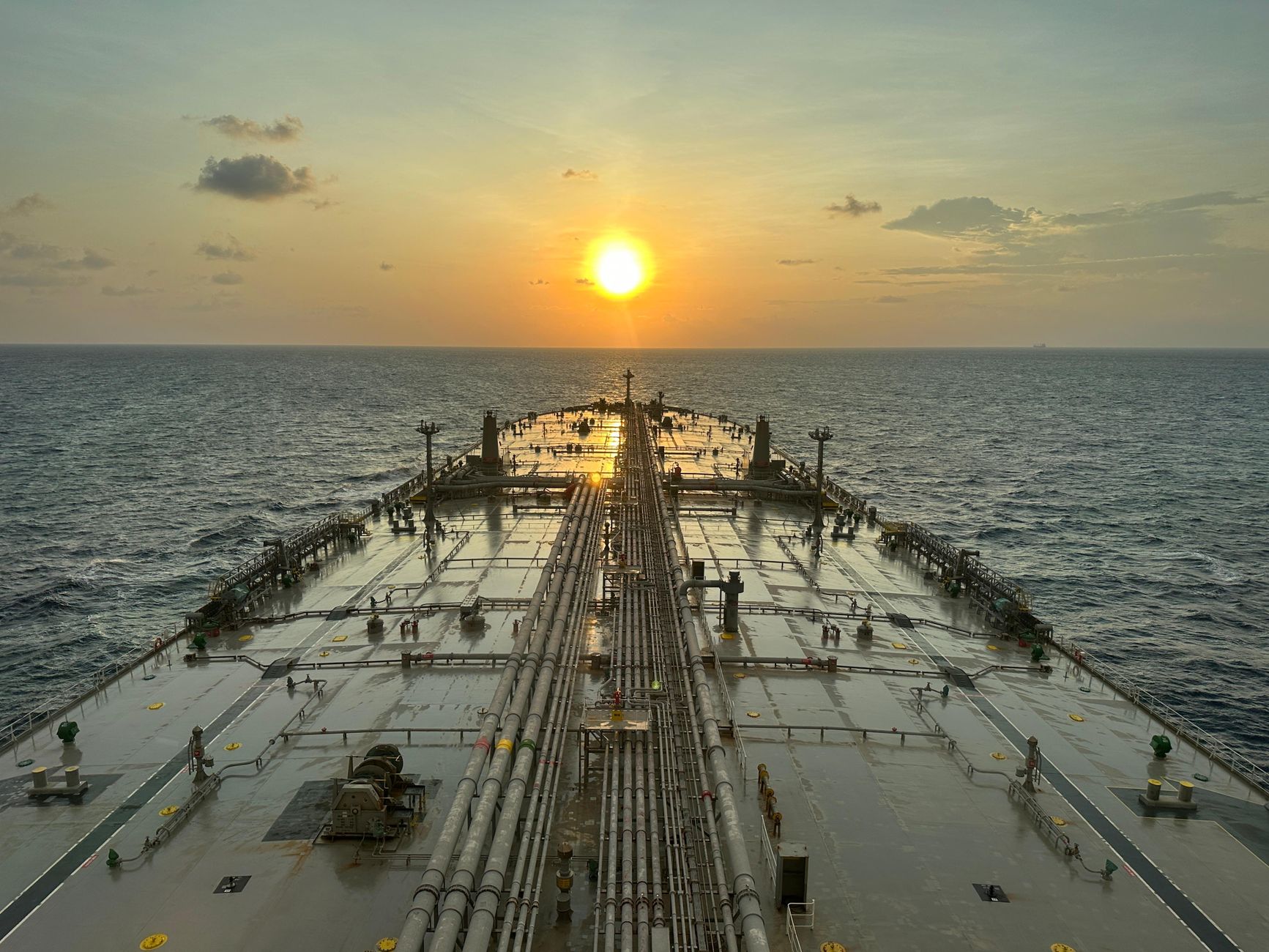
Photo: Andrey Matveev / Pexels
When one of the world's largest container shipping companies speaks, freight markets listen. A.P. Møller-Maersk, the Danish maritime and logistics giant, dropped its third-quarter 2026 results this week alongside an upgraded full-year guidance that caught the attention of traders, economists, and supply chain executives in equal measure. Maersk has long served as an unusually reliable proxy for global commerce. In a moment defined by geopolitical friction and shifting trade corridors, its financial performance offers something genuinely rare: a data-rich window into the actual velocity and direction of world trade.
Reading the Results as a Macro Signal
Few companies occupy the position Maersk does in global commerce. As operator of one of the world's largest container fleets, its revenue lines function as a live readout on merchandise trade across the Atlantic, the Pacific, and the increasingly contested corridors of the Indian Ocean. Rising freight rates reflect real demand pressure — factories ordering components, retailers restocking shelves, manufacturers responding to consumer signals. Softening volumes tell the same story in reverse. The Q3 2026 results, then, carry weight well beyond the company's own balance sheet.
The upgraded full-year guidance signals that Maersk's leadership has seen something durable in demand patterns — not a seasonal blip. That matters, because guidance revisions in shipping tend to be conservative. The industry is still scarred by the violent boom-bust cycle that followed the pandemic. Choosing to revise upward suggests genuine confidence in the structural foundation of current volumes. Port authorities, logistics firms, and industrial companies mapping their own capital expenditure cycles will take note.
The Freight Rate Environment and What Drives It
Getting rates right in 2026 has demanded real strategic agility from Maersk. The prolonged Red Sea disruptions, which forced carriers to reroute vessels around the Cape of Good Hope starting in late 2023, added significant sailing distances and transit time to Asia-Europe trade lanes. Those longer voyages tightened effective capacity across the industry, pushing rates higher even as underlying volume growth stayed modest. That is a significant shift in how the market's supply-demand balance actually works.
Maersk's decision to adjust network routing in response to those security conditions reflected a broader philosophy the company has pursued in recent years: treat shipping not as a standalone commodity service but as one integrated piece of a wider logistics offering. The investments it has made in warehousing, customs brokerage, air freight, and last-mile delivery are designed precisely to buffer the company against the pure rate volatility that has historically made container shipping one of the least predictable industries in which to invest.
The Q3 results suggest that strategy is working. Spot rate movements remain as volatile as ever, but Maersk's diversified revenue base delivers a degree of stability that pure-play container carriers simply cannot replicate. That stability makes its guidance revisions more credible as forward indicators — not just for the company, but for the sector.
Geopolitical Complexity and Trade Route Realignment
The geopolitical backdrop in late 2026 is complicated, to put it mildly. Sustained friction between the United States and China over technology exports, tariffs, and Taiwan has not killed global trade flows — it has redirected them. Manufacturing investment has migrated, in varying degrees, to Vietnam, Mexico, India, and other economies positioned to benefit from the friendshoring trend. For Maersk, that reshaping of sourcing patterns cuts both ways: some traditional lanes see softer volumes while new corridors — particularly those connecting South and Southeast Asia to European and North American markets — have grown sharply in strategic importance. Few outside the logistics industry have fully registered how significant that reorientation has become.
Maersk's terminal investments and port partnerships across these emerging corridors place it reasonably well to capture that redirected commerce. The company has long understood that controlling the nodes of the network — the ports, the inland depots, the customs clearance points — delivers leverage that raw vessel capacity cannot. As trade geographies keep shifting, that node-based strategy looks increasingly durable.
Maersk's Decarbonisation Commitments in a Commercial Context
Any honest account of Maersk's current trajectory has to address its decarbonisation programme, which remains one of the most ambitious in maritime history. The company has committed to net-zero greenhouse gas emissions across its operations and has ordered a substantial fleet of vessels capable of running on green methanol — a fuel that is still expensive and in limited supply, but one Maersk has actively worked to secure through agreements with producers across multiple continents.
These commitments are not window dressing. They are becoming commercially material. Major retail and manufacturing customers — especially those headquartered in Europe — face their own emissions reporting obligations and are under real pressure from regulators and shareholders to show that their supply chains meet credible environmental standards. Maersk's ability to offer lower-emissions shipping options is now a genuine differentiator in contract negotiations, particularly with large shippers who might otherwise reduce freight procurement to a pure price exercise.
Read in that light, the upgraded 2026 guidance is not simply an earnings story. It reflects a company that placed long-term bets on decarbonisation and integrated logistics and is now watching those bets generate measurable commercial returns.
What Shippers and Markets Should Take From This
For the broader shipping community — manufacturers, retailers, commodity traders — Maersk's results carry a blunt practical message. The conditions that have supported elevated freight rates in 2026 have not gone away. Red Sea disruptions, whatever diplomatic progress may come, continue to affect effective capacity. Demand from key consuming economies has held at levels sufficient to absorb available supply without the brutal surplus that defined the post-pandemic correction of 2023.
For financial markets, Maersk remains one of the most informative single equities in global transport. Its guidance revisions function as forward earnings signals for the entire logistics complex — from port operators and rail companies to warehouse REITs and packaging manufacturers. The Q3 results are more than a quarterly earnings update. They are a considered statement about the direction and durability of global trade itself, issued by the company better placed than almost any other to know.

Written by
TPC Editorial Desk
The Platinum Capital editorial desk
Articles on The Platinum Capital are produced by the TPC editorial desk with the assistance of AI tools, and edited before publication. Profiles are based on information provided by the subject and checked against public sources. Reach out at info@theplatinumcapital.com.