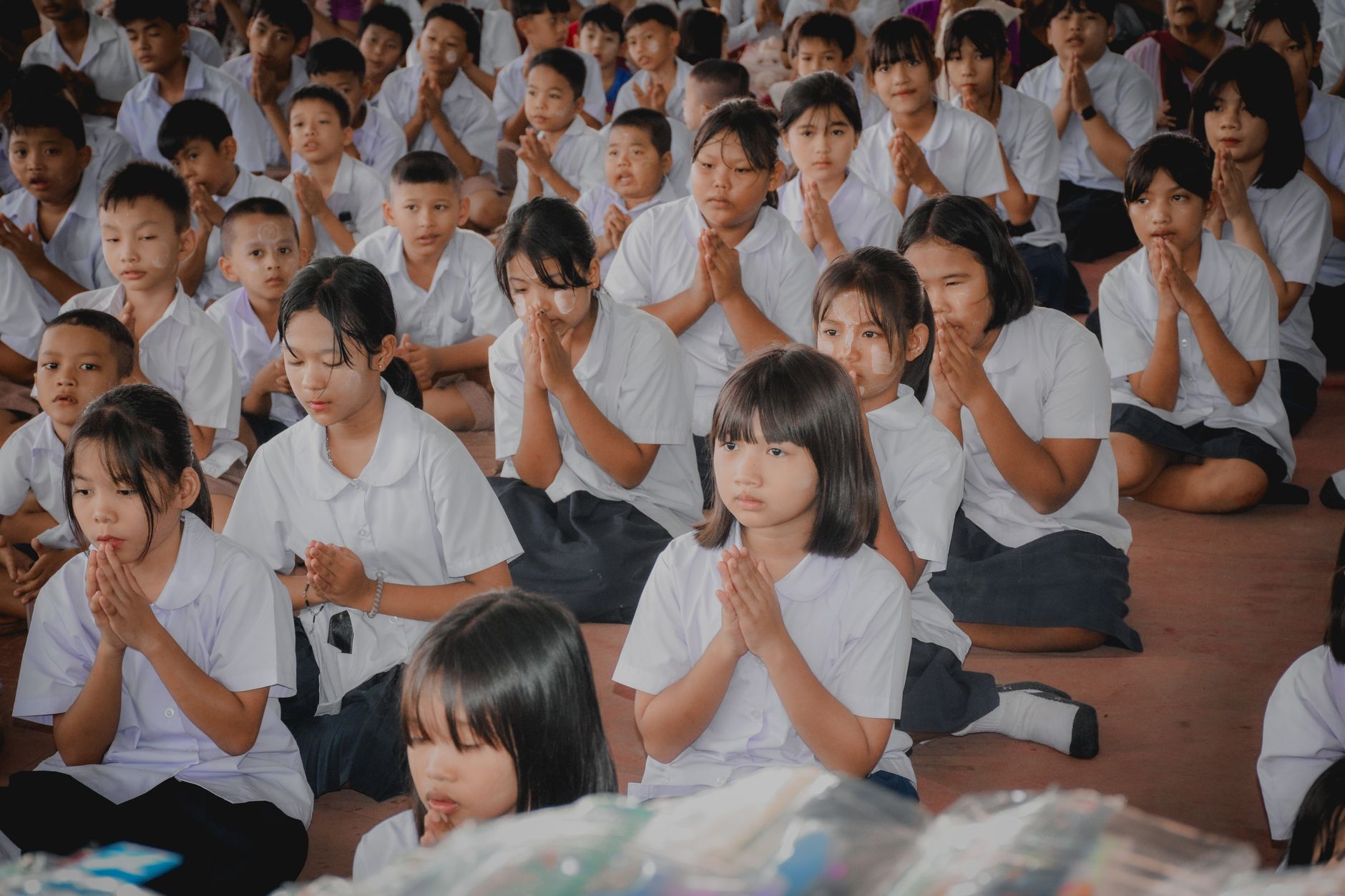

Qatar's Next Generation: Educated Abroad, Building at Home
Qatar's next generation of leaders — shaped by degrees from Oxford, Harvard, and the London School of Economics — are returning home not as inheritors of wealth, but as architects of a post-hydrocarbon economy, channeling sovereign capital into technology, culture, and infrastructure with a sophistication that commands global attention. For investors and family offices tracking the Gulf's long-term trajectory, this cohort represents something rare: institutional ambition fused with generational urgency, operating within one of the world's most strategically coordinated national visions.…

Something significant is happening inside Qatar's private economy, and it is happening quietly. Across Doha's family boardrooms, a new generation is coming home — not with the tentative deference of heirs-in-waiting, but with the confidence of professionals who spent years at LSE, Wharton, Sciences Po, and Georgetown, and who are now deploying that training into some of the Gulf's most ambitious commercial and philanthropic undertakings. This is not succession in the traditional sense. It is transformation dressed in the language of continuity.
The Return: From Campus to Capital
Qatar's next generation of business leaders is arguably the most internationally credentialed cohort the Gulf has ever produced. State scholarships, family investment, and Qatar Foundation's Education City — which hosts branch campuses of Carnegie Mellon, Georgetown, and Northwestern — have sent hundreds of young Qataris abroad to study finance, engineering, urban development, and public policy. The return rate, once a genuine anxiety among Gulf governments, has shifted markedly. Qatar's stable regulatory environment, the post-World Cup economic momentum, and a deliberate government push toward economic diversification have made homecoming not just appealing but strategically rational.
The results are already measurable. Power International Holding, one of the country's most significant privately held conglomerates, secured two infrastructure contracts in Syria in 2025 alone worth a combined $11 billion. That is not simply a reflection of geopolitical repositioning. It signals the operational confidence of a group where younger leadership is increasingly visible in cross-border deal execution. The group's expansion across construction, hospitality, and industrial sectors mirrors the ambitions of Qatari next-gen leaders who have identified the Arab world's reconstruction markets as their generation's defining commercial opportunity.
Beyond the Family Business: The Rise of Independent Platforms
What makes Qatar's generational transition particularly striking in 2025 and 2026 is the emergence of independent ventures alongside — rather than simply within — established family structures. The pattern is familiar from next door. In the UAE, figures such as Tariq Al Futtaim and the Al Ghurair heirs Abdul Aziz and Saood have launched standalone investment platforms; Hattan and Phoenix Capital represent a new institutional appetite among the Gulf's younger private wealth holders. Qatar's next generation is building comparable vehicles, with a growing number of privately held platforms being quietly established in Doha and, in some cases, registered through the Qatar Financial Centre.
The QFC has become a genuine enabler here. Designed to attract international capital and professional services firms, it has also begun functioning as an incubator for domestic family office formation. Dubai's DIFC recorded approximately 200 new family office registrations in 2024 — a 33% year-on-year increase. Qatar's QFC is starting to attract similar structures, particularly among families seeking to separate patriarchal legacy assets from younger-generation growth portfolios. The logic is both financial and cultural: preserve the reputation and continuity of the founding enterprise while giving younger members the autonomy to pursue higher-risk, higher-return mandates in technology, sustainability, and private credit. Few outside the region have paid close attention to this structural shift. They should.
Education as Strategic Capital
The educational profile of this cohort is not incidental. It is architecturally important to how Qatar's family businesses are being restructured. Heirs returning with MBAs from INSEAD or master's degrees in urban economics from UCL bring frameworks their predecessors simply did not possess at equivalent career stages. Governance reform is among the most visible outputs. Family constitutions, independent board appointments, and professional CEO mandates are becoming standard practice among Qatar's mid-tier family groups — many of whom are quietly preparing for generational transfers valued between $500 million and $3 billion.
Qatar Foundation remains the most significant institutional expression of this philosophy. Its commitment to translating education into economic output — through research parks, incubators, and commercialisation programmes — has built an infrastructure that next-generation Qataris can use to bridge academic formation and market entry. Several Education City alumni now hold senior roles inside family-owned entities in real estate development, financial services, and logistics. A small but growing number have launched technology-focused startups with institutional backing from Qatar Development Bank. The pipeline is real.
Philanthropy and the Influence Agenda
Among Qatar's wealthiest families, the next generation is also rewriting how philanthropic capital gets deployed — and what it is meant to signal. Previous generations favoured large-scale donations to mosques, hospitals, and named buildings. Younger Qataris are gravitating toward something more deliberate: venture philanthropy models, impact investing with measurable outcomes, and international partnerships designed to project soft influence across the Muslim world, Africa, and Southeast Asia. This reflects both the global sensibility acquired abroad and a sharp awareness of Qatar's outsized diplomatic footprint relative to its population of 300,000 nationals.
The numbers tell a complicated story. The Forbes Middle East Top 100 Arab Family Businesses ranking for 2026 places ten Qatari companies among the GCC's 86 entries. Qatar's private sector already punches well above its weight. The next generation's task is not to build from scratch — it is to deepen, diversify, and internationalise what already exists, applying ESG frameworks, technology integration, and professional governance to businesses that generate billions in annual revenue but have historically operated with limited external scrutiny or structured succession planning.
What This Means for Investors and Partners
For family offices, institutional investors, and professional services firms operating across the Gulf, Qatar's generational shift opens a specific and underserved opportunity. The next-generation Qatari principal is typically more open to co-investment structures, LP relationships with international managers, and genuine advisory engagement than their parents were. That is a significant shift. They are also more likely to look beyond traditional markets — toward Kenya, Indonesia, Kazakhstan, and Morocco, where Qatari sovereign and private capital is increasingly active, and where younger leaders are themselves building influence at similar career stages.
The families best positioned over the next decade will be those that formalise this transition now — not by simply handing over titles, but by building governance structures capable of channelling the next generation's ambition without fracturing the foundations their predecessors spent a lifetime constructing. In Qatar, that work is already well underway. The question is no longer whether the next generation is ready. The question is how large they intend to build.
Written by
Amara Osei
Africa & Emerging Markets Correspondent · Philanthropy & Next Generation
Amara covers the philanthropists, foundation founders, and next-generation leaders building wealth and influence across Africa, Southeast Asia, and Central Asia. She has a particular eye for the family businesses handing the reins to a generation educated abroad and building at home. Based in Nairobi. Reach out at amara.osei@theplatinumcapital.com.