

Rising Executives Under 45 Reshaping Gulf Financial Services
A new cohort of financially sophisticated executives, many educated across London, New York, and Abu Dhabi, are dismantling decades-old hierarchies within Gulf banking and asset management, deploying technology-driven strategies that are attracting sovereign wealth attention far beyond the region. Their ascent signals not merely a generational shift in leadership, but a fundamental reordering of how capital is structured, governed, and grown across one of the world's most consequential financial corridors.…

A generational shift is quietly reshaping the Gulf's financial services sector. Across the UAE, Qatar, Saudi Arabia, and Bahrain, a cohort of executives under the age of 45 is moving into positions of genuine institutional weight — not as heirs waiting in antechambers, but as architects of new capital structures, governance models, and investment platforms. Their influence is measurable. Their mandates are real. And the wealth they are stewarding — or building independently — is substantial.
The Architecture of a New Generation
Start with the numbers. Family businesses account for 90% of the GCC's private sector, contribute approximately 60% of regional GDP, and employ more than 80% of the private sector workforce. That is not a footnote — it is the foundation upon which the next generation of Gulf financial executives is building. When leadership shifts within these structures, the consequences ripple across banks, investment platforms, sovereign-adjacent funds, and entire industry verticals. The scale of that transmission is something many outside the region consistently underestimate.
The most visible institutional signal came in November 2024, when the Family Business Council Gulf announced its new leadership at its 11th Annual Summit in Doha, co-hosted by the Alfardan Group. Sheikha Hind Bahwan — a figure with deep credentials in technology and business — was appointed Chairman, while Hassan Jameel of the Abdul Latif Jameel dynasty assumed the Vice Chairmanship. The summit's theme, "Envision, Embrace & Empower," was not incidental. It reflected a deliberate institutional posture: the FBCG is now led by individuals who represent the transition, not merely advocate for it. For family offices and private investors operating across the GCC, the governance conversation has moved from theoretical to operational. That is a significant shift.
Legacy Brands and the Rise of Independent Capital Platforms
One of the most consequential structural developments of 2025 is what Obediah Ayton, chairman of the Family Office Summit, has termed the "legacy brand" phenomenon. Younger heirs from established Gulf dynasties are launching independent investment vehicles — backed by family capital but operating under distinct identities — specifically to pursue opportunities their principal family businesses cannot or will not chase without reputational exposure. The logic is clean. The execution is increasingly serious.
The examples are instructive. Tariq Al Futtaim, of the Al Futtaim Group, has established his own private investment platform, operating separately from the conglomerate's core retail and real estate verticals. Abdul Aziz and Saood Al Ghurair launched Hattan, a holding company that positions the next generation of that family as active deal-makers in their own right rather than custodians of legacy assets. Abdulla Saeed Juma Al Naboodah has taken a similar route with Phoenix Capital, an investment company that gives the family's next generation room to build an independent track record in private markets.
These are not vanity projects. They are calculated capital allocation decisions that reflect a sophisticated understanding of how family wealth compounds — not just through inheritance, but through entrepreneurial execution. The data supports the momentum: approximately 200 family offices were established in Dubai's DIFC in 2024 alone, representing 33% year-on-year growth. Dubai now hosts more than 800 family-related financial structures, with the UAE accounting for 75% of all Middle East family offices. For private investors considering co-investment or partnership opportunities, these emerging platforms represent access points that simply did not exist five years ago.
Financial Services as the Central Battleground
The legacy brand movement spans sectors from technology to hospitality. But financial services has emerged as the primary arena where under-45 Gulf executives are staking their professional reputations. The reasons are structural, not incidental. Regional banking assets across the GCC exceeded USD 4 trillion in 2024. The accelerating privatisation agendas in Saudi Arabia and Abu Dhabi are generating deal flow that demands sophisticated financial intermediation. Younger executives who understand both the family capital ecosystem and institutional markets now occupy a rare intersection. Few others do.
In Saudi Arabia, the Vision 2030 programme continues to drive executive demand across asset management, project finance, and capital markets. Riyadh has made a pronounced effort to recruit and elevate Saudi professionals under 40 into senior roles within domestic banks and the growing roster of licensed international asset managers. The Public Investment Fund's ecosystem of subsidiary entities has functioned as a training ground for a generation of Saudi financial executives who are now, in their late thirties and early forties, building independent mandates or moving into private capital roles. Watch that cohort carefully.
In the UAE, the DIFC and ADGM regulatory frameworks have allowed a generation of executives to build credible financial services careers within world-class institutional environments without leaving the region. The result is a cohort with global technical standards and deep regional network capital — a combination that is genuinely rare and increasingly sought by international firms entering Gulf markets. The old assumption that regional talent would always migrate outward no longer holds.
Governance, Sustainability, and the Institutional Maturity Shift
What distinguishes the current generation of Gulf financial executives from their predecessors is not ambition — the Gulf has never lacked that — but governance fluency. Executives under 45, educated at institutions in the United Kingdom, United States, or France, and seasoned across both regional and international financial environments, are bringing a more structured approach to family enterprise governance, ESG integration, and succession planning. That combination is new. It matters.
Hassan Jameel's appointment at the FBCG illustrates the point. His public commitments to innovation and sustainability are not merely reputational positioning — they reflect a broader recalibration in how next-generation leaders within GCC family businesses think about long-term value creation. The families that will define the Gulf's private wealth ecosystem in 2035 are already making governance decisions today that will determine whether they remain relevant or get left behind.
For philanthropists and foundation founders across the region, this shift carries its own implications. A more governance-literate generation of family business leaders is far more likely to formalise philanthropic structures, engage seriously with impact measurement frameworks, and pursue strategic partnerships with international development institutions — opening capital channels that extend well beyond traditional charitable giving.
What This Means for Private Capital Across the Region
For family office principals, private investors, and institutional partners with exposure to Gulf markets, the generational transition underway is not a risk to be managed. It is a realignment to be understood and engaged — directly, and soon. The executives now ascending into senior financial services roles across the UAE, Qatar, Saudi Arabia, and Bahrain carry a combination of institutional credibility, family network access, and independent deal-making capability that previous generations rarely held simultaneously. That combination does not stay available for long.
The smart capital in the room is already identifying these individuals early — not at the moment they make headlines, but in the years before. The platforms they are building now, the governance structures they are putting in place, and the institutional relationships they are cultivating will define the Gulf's private financial architecture for the next two decades. Those who engage with this generation on its own terms, rather than waiting for it to conform to inherited expectations, will find themselves at the centre of one of the most consequential wealth transitions in the world right now. Those who wait will be reading about it later.
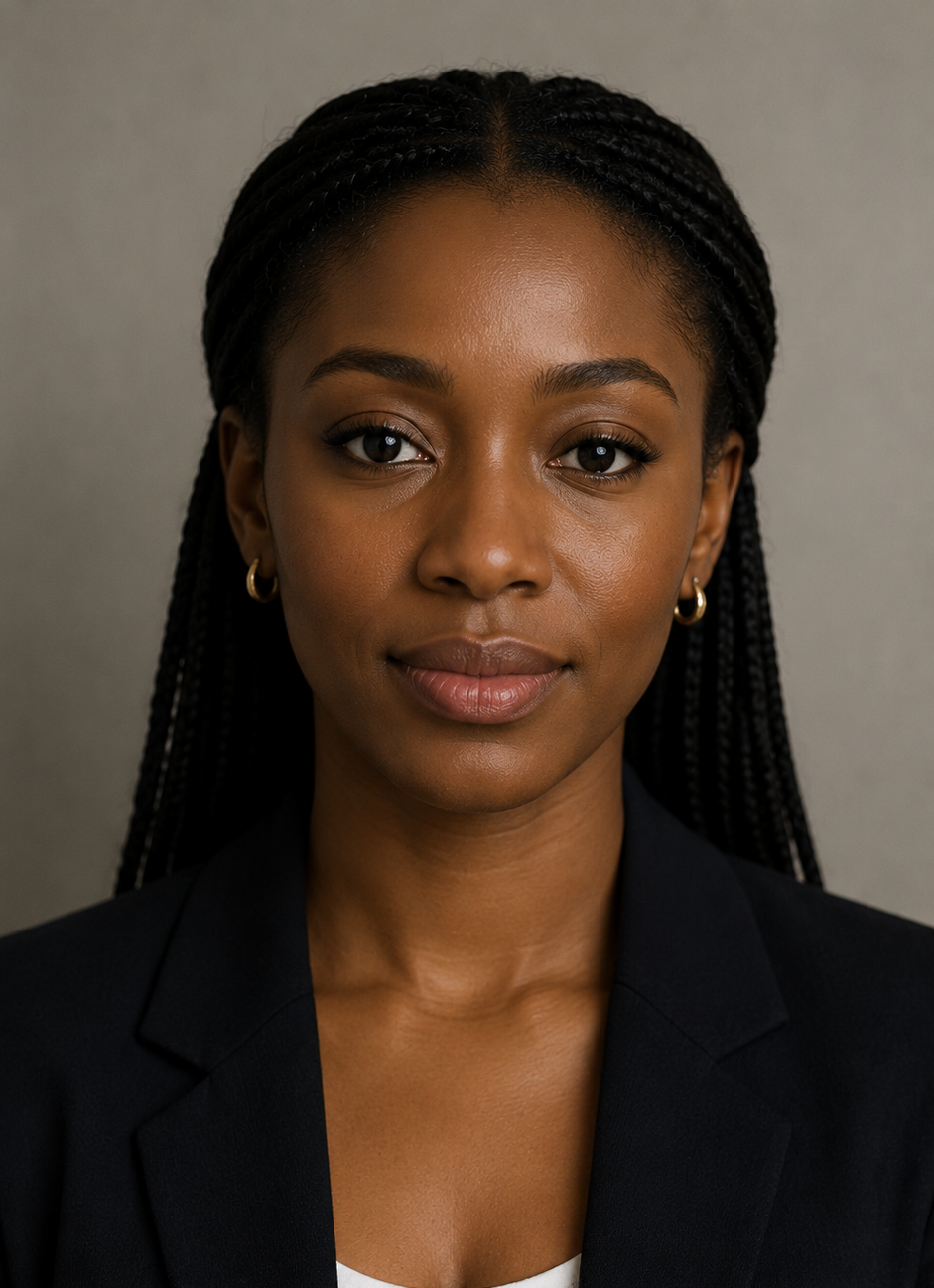
Written by
Amara Osei
Africa & Emerging Markets Correspondent · Philanthropy & Next Generation
Amara covers the philanthropists, foundation founders, and next-generation leaders building wealth and influence across Africa, Southeast Asia, and Central Asia. She has a particular eye for the family businesses handing the reins to a generation educated abroad and building at home. Based in Nairobi. Reach out at amara.osei@theplatinumcapital.com.