UAE's Impact Investors: Profit With Purpose in the Gulf
The United Arab Emirates is quietly reshaping the landscape of impact investing in the Middle East, channelling sovereign wealth and private capital into ventures that demand measurable social and environmental returns alongside competitive financial performance. This emerging cohort of purpose-driven investors is demonstrating that the Gulf's ambitions extend far beyond hydrocarbon wealth, positioning the UAE as a serious force in the global movement to align capital markets with sustainable development objectives.…
UAE's Impact Investors: Profit With Purpose in the Gulf
When Sheikh Mohammed bin Rashid Al Maktoum announced the Dubai Social Agenda 33 in late 2023, few observers expected the ripple effects to reach so deep into the emirate's private capital markets. But here we are. By mid-2026, the UAE has established itself as the Middle East's most consequential hub for impact investing — a jurisdiction where family offices, sovereign-adjacent funds, and a new generation of Emirati entrepreneurs are pouring billions into ventures that blend commercial returns with measurable social and environmental outcomes.
The numbers tell an unambiguous story. According to the Gulf Impact Investing Forum's 2026 annual survey, impact-aligned assets under management across the UAE hit $14.2 billion in the first quarter of 2026, up from an estimated $8.7 billion in 2024. That growth rate — roughly 63 per cent over two years — dwarfs the global average tracked by the Global Impact Investing Network, which recorded 19 per cent growth over the same period. The question is no longer whether the Gulf takes impact investing seriously. It's whether its model can be exported to other emerging markets.
Family Offices Rewrite the Playbook
The engine behind much of this capital reallocation is the UAE's dense ecosystem of family offices. Abu Dhabi's Lunate Capital, the investment firm spun out of the Al Mubadala family's private holdings, has committed $600 million to climate-focused infrastructure across the Gulf Cooperation Council states and Sub-Saharan Africa since its founding. In February 2026, Lunate announced a partnership with Kenya's M-KOPA to finance distributed solar systems for 500,000 off-grid households in East Africa — a deal structured to deliver mid-teens internal rates of return while displacing an estimated 1.2 million tonnes of carbon dioxide annually.
Dubai-based BECO Capital, one of the region's earliest venture firms to adopt impact screening, closed its fourth fund at $250 million in January 2026 with a mandate spanning fintech, healthtech, and climate adaptation across MENA and South Asia. Managing partner Dany Farha has been blunt about the commercial logic: "We don't invest in impact despite returns. We invest in impact because of returns. The demographic and infrastructure deficits across our target markets create structural alpha for founders solving real problems."
Then there's the Al Ghurair family's ABDULLA AL GHURAIR Foundation. Historically focused on education grants, it pivoted in 2025 toward blended finance vehicles that pair philanthropic capital with institutional money. Its $180 million Education Outcomes Fund, launched in partnership with the Islamic Development Bank, finances vocational training programmes in Egypt, Jordan, and Pakistan, with returns tied to verified employment outcomes. The fund reported a 92 per cent job placement rate in its first cohort, beating its own target by eleven percentage points. That is not a rounding error.
Regulatory Infrastructure Catches Up
The UAE's regulatory bodies have moved with atypical speed to create frameworks that support — rather than merely tolerate — impact capital. The Abu Dhabi Global Market introduced its Sustainable Finance Regulatory Framework 2.0 in March 2026, which for the first time provides a legal definition of "impact fund" distinct from broader ESG categories. The framework requires independent verification of impact metrics by accredited third parties, a measure designed to combat the greenwashing that has plagued impact claims in European and North American markets.
The Dubai International Financial Centre followed with complementary rules in April, offering a 50 per cent reduction in licensing fees for fund managers who meet its impact criteria and submit to annual audits by firms such as BlueMark or the Global Steering Group for Impact Investment's accredited assessors. The incentive is working. Since the fee reduction took effect, 23 new impact-focused managers have registered in the DIFC, according to data from the centre's innovation hub.
Both regulators have also aligned their taxonomies with the Islamic finance principles that govern a significant portion of Gulf capital. That matters. Shariah-compliant impact sukuk issuance in the UAE reached $3.1 billion in 2025, and early 2026 figures suggest the full-year total will surpass $4 billion. The convergence of Islamic finance's prohibition on harmful industries with impact investing's additionality requirements has created what scholars at the Mohammed Bin Rashid School of Government call "a natural philosophical alignment that Western frameworks have struggled to replicate." Few outside the region have noticed.
Sovereign Wealth Funds Set the Tone
Family offices provide agility. The UAE's sovereign wealth funds provide scale. Mubadala Investment Company allocated $2 billion to its climate and transition portfolio in 2025, with a stated target of $5 billion by 2028. Its subsidiary Masdar, already one of the world's largest renewable energy developers, is now structuring co-investment vehicles that allow private wealth clients to participate in utility-scale solar and wind projects across Central Asia and North Africa with minimum tickets as low as $5 million.
The Abu Dhabi Investment Authority, traditionally reticent about public commitments, disclosed in its 2025 annual review that 8 per cent of its estimated $990 billion portfolio now falls under its "sustainable and impact" classification. Do the maths: that implies roughly $79 billion in aligned assets, making ADIA one of the world's largest de facto impact allocators — even if it eschews the label. That is a significant shift.
Challenges and the Road Ahead
For all its momentum, the UAE's impact investing ecosystem faces genuine obstacles. Talent is scarce. A 2026 survey by recruitment firm Heidrick & Struggles found that only 340 professionals across the Gulf hold both CFA charters and recognised impact measurement credentials, against an estimated demand for more than 900. Several fund managers interviewed for this article cited the difficulty of sourcing deal flow in frontier markets where legal systems, data infrastructure, and exit pathways remain underdeveloped.
There is also the additionality question — whether capital labelled as "impact" is genuinely catalysing outcomes that would not have occurred otherwise, or merely relabelling investments that commercial logic would have justified regardless. Critics point to renewable energy projects in markets where solar is already the cheapest source of electricity. Their argument: true impact capital should flow toward harder, less commercially obvious problems — water scarcity, mental health infrastructure, biodiversity loss in marine ecosystems. It's a fair point.
Yet the direction of travel is clear. The UAE has assembled a rare combination: regulatory clarity, deep pools of patient capital, cultural alignment through Islamic finance, and geographic proximity to the emerging markets where impact opportunities are most concentrated. As Sheikha Shamma bint Sultan bin Khalifa Al Nahyan, founder of the Aurora50 initiative promoting board diversity and sustainable governance, put it at the Abu Dhabi Finance Week in April: "The Gulf has spent decades investing in the world's growth. Now we are learning to invest in the world's resilience. That is not charity. That is strategy."
For global allocators watching from London, New York, and Singapore, the UAE's experiment offers both a template and a competitive challenge. Impact investing in the Gulf is no longer an aspiration. It is an asset class — and a fast-growing one at that.
Written by
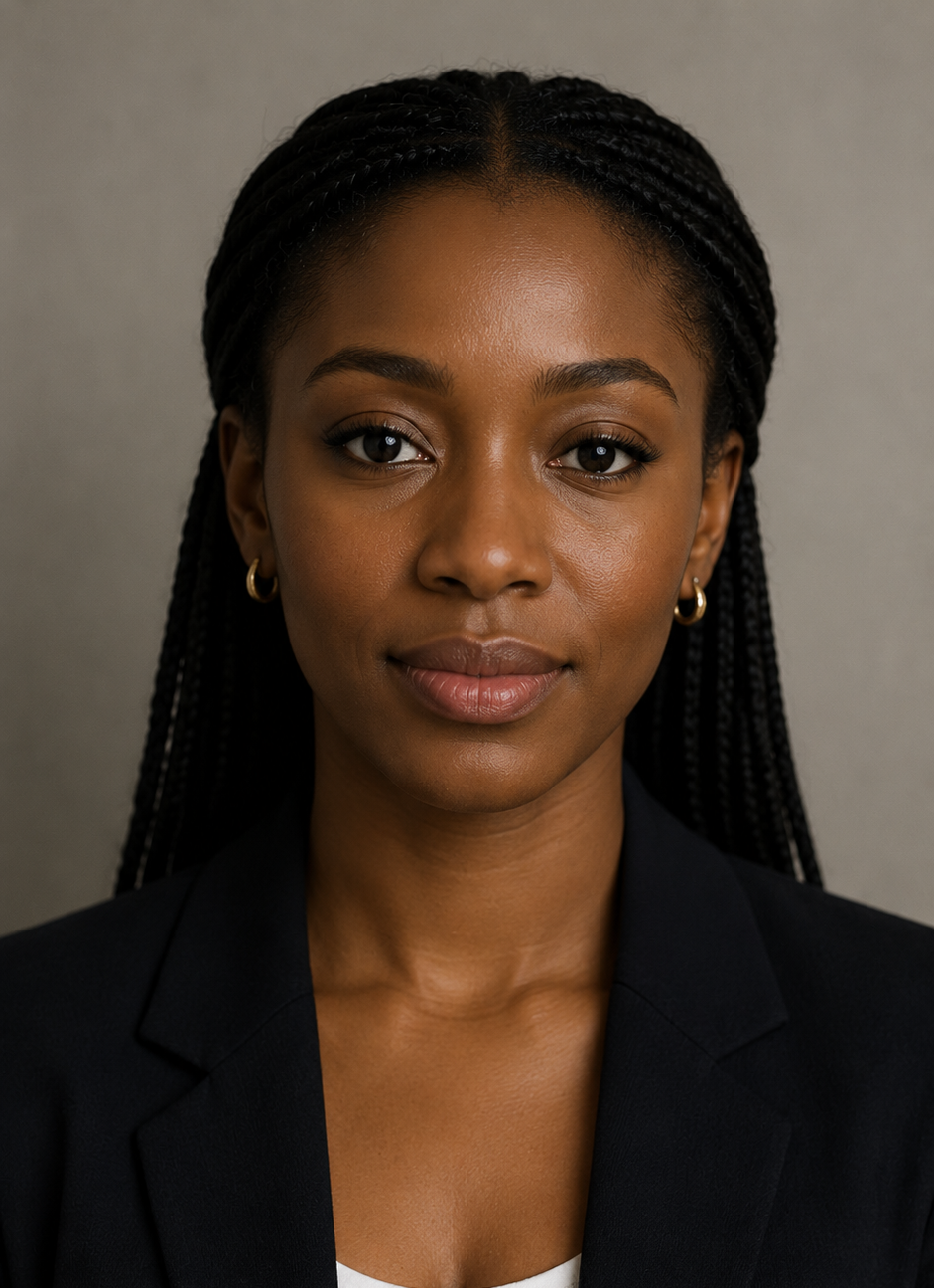
Amara Osei
Africa & Emerging Markets Correspondent · Philanthropy & Next Generation
Amara covers the philanthropists, foundation founders, and next-generation leaders building wealth and influence across Africa, Southeast Asia, and Central Asia. She has a particular eye for the family businesses handing the reins to a generation educated abroad and building at home. Based in Nairobi. Reach out at amara.osei@theplatinumcapital.com.