

Private Residences and Branded Apartments: The Gulf's New Status Asset
The proliferation of branded residences across the Gulf has transformed luxury real estate from a mere property investment into a curated lifestyle proposition, with operators such as Four Seasons, Dorchester Collection and Armani attaching their imprimatur to developments that command premiums of 30 to 60 per cent above comparable unbranded stock. For ultra-high-net-worth buyers in Riyadh, Dubai and Doha, these residences now function as portable status markers whose value is underwritten not by bricks and mortar alone but by the global cachet of the brand itself.…
Private Residences and Branded Apartments: The Gulf's New Status Asset
A four-bedroom penthouse at the Bulgari Lighthouse in Dubai's Jumeirah Bay sold for AED 250 million ($68 million) in early 2026. It barely registered as a headline. In a market where branded residences have become the default currency of ultra-high-net-worth identity, nine-figure deals now land with a shrug. Several closed in the first quarter alone. But beneath the nonchalance lies a structural shift in how Gulf-based wealth holders allocate capital: the branded residence is no longer a discretionary luxury purchase. It has become a core portfolio asset, sitting alongside sovereign bonds and private equity stakes on family office balance sheets.
Globally, the branded residential sector has expanded to more than 780 schemes across 100 cities, according to Savills' 2026 Global Branded Residences Report. But nowhere is the concentration denser or the appetite more voracious than in the Gulf Cooperation Council states, which now account for roughly 28 percent of all branded residential units either completed or in active development worldwide. Dubai alone hosts over 90 branded schemes. Abu Dhabi, Riyadh, and Doha are accelerating at pace.
The Premium Calculus: Why Brands Command 35 Percent Above Market
The economics work for developers and buyers alike. Knight Frank's 2026 Wealth Report found that branded residences in Dubai command an average premium of 35 percent over comparable non-branded properties — a figure that rises to 55 percent for marques such as Aman, Four Seasons, and Dorchester Collection. In Riyadh, where the branded segment remains young but growing fast, premiums hover around 25 percent. Saudi developers and international hospitality groups see that gap as a pricing inefficiency ripe for correction.
For buyers, the premium purchases something intangible but quantifiable in resale data: brand equity as a hedge against depreciation. Branded units in established Gulf towers have delivered capital appreciation of 12 to 18 percent annually over the past three years, outperforming the broader prime residential index in Dubai by approximately 400 basis points, according to CBRE Middle East's Q1 2026 analysis. The service wrapper — concierge, housekeeping, wellness programming, private dining — provides ongoing utility. But the investment thesis rests on scarcity and name recognition in a market where both matter enormously.
Riyadh's Ascent: Vision 2030 Meets Hermès and Armani
Saudi Arabia's entry into branded residences has been characteristically ambitious. ROSHN, the PIF-backed real estate developer, confirmed in February 2026 a partnership with Armani/Casa for a 200-unit residential tower in Riyadh's new financial district, with prices starting at SAR 15 million ($4 million) for two-bedroom configurations. Separately, Rua Al Madinah Holding is advancing a Four Seasons Private Residences development adjacent to the Prophet's Mosque in Medina, targeting a late 2027 completion date. That project has attracted significant interest from Southeast Asian and South Asian family offices seeking properties with both spiritual and financial significance. Few outside the region have noticed.
The Kingdom's General Authority for Statistics recorded 42,000 new high-net-worth expatriate residents in 2025, many drawn by the Premium Residency programme and zero-income-tax regime. These arrivals — disproportionately concentrated in finance, technology, and consulting — represent a built-in demand pool for branded living. Dar Al Arkan, which has already delivered the Trump International Golf Club residences in Damac Hills, is now developing a 250-unit Pagani-branded tower in Riyadh's King Abdullah Financial District. Reported sell-through hit 70 percent within 60 days of launch.
Family Office Strategy: Real Assets with a Lifestyle Wrapper
The move toward branded residences reflects a broader reorientation among Gulf family offices. A 2026 survey by Campden Wealth, conducted in partnership with Lombard Odier, found that 61 percent of Middle Eastern single-family offices increased their allocation to "lifestyle-linked real assets" over the past 18 months. That is a significant shift. The category encompasses branded residences, vineyard estates, and marina berths — tangible holdings that serve dual functions as personal-use assets and stores of value.
Mohammed Al-Fahim, managing director of Abu Dhabi-based Ghitha Capital, described the rationale in terms familiar to any institutional allocator: "We treat branded residences as a sub-category of core-plus real estate. The brand relationship provides downside protection through managed services and reputational association, while the underlying real estate appreciates in line with or above prime indices." His firm holds stakes in three branded residential units across Dubai and London, carried on its books at acquisition cost with annual revaluations.
This institutional framing matters. As family offices across the Gulf professionalise — adopting governance structures, appointing CIOs, engaging third-party administrators — they are subjecting branded residences to the same due diligence as any alternative investment. Internal rates of return, exit liquidity assumptions, counterparty risk (specifically, the durability of the brand management agreement): all of it gets scrutinised with a rigour that would have been unusual five years ago.
Supply Risks and the Question of Saturation
Not every development will deliver on its promise. Dubai's sheer volume of branded schemes — with an additional 19,000 units expected to reach completion between 2026 and 2029, per JLL's latest pipeline analysis — raises legitimate questions about dilution. When every second tower carries a fashion or hospitality insignia, the premium associated with branding starts to compress. Already, lower-tier branded projects, particularly those affiliated with automotive or fashion labels that have limited hospitality expertise, are trading at narrower spreads to non-branded equivalents.
The risk is most acute at the mid-market end of the spectrum, where developers have attached brand names to projects that lack the service infrastructure, build quality, or location to justify the association. Savills' research director, Swapnil Pillai, put it bluntly: "The market is beginning to bifurcate sharply between genuine ultra-luxury branded residences with full operational integration and what are essentially conventional apartments with a logo attached." Buyers with institutional sophistication are already discriminating. Those purchasing purely on brand recognition may find themselves holding depreciating assets in an oversupplied segment.
The Next Frontier: Branded Wellness and Multigenerational Estates
The most forward-looking developers are moving beyond the hotel-branded apartment model entirely. In Abu Dhabi, Aldar Properties launched Athlon, a wellness-oriented community on Saadiyat Island, in partnership with Mayo Clinic, offering residents integrated health monitoring, longevity programming, and priority access to clinical services. The development sold AED 2.2 billion in units within its first weekend. That number suggests the next iteration of branded living will be defined not by thread counts and lobby aesthetics but by measurable health outcomes.
In Qatar, Qatari Diar is advancing plans for a multigenerational estate concept in Lusail, designed in collaboration with Amanresorts, where extended family compounds share centralised Aman-managed services. The model speaks directly to Gulf cultural preferences for family proximity and privacy, while packaging those values within a globally recognised hospitality framework.
The branded residence, in its most evolved form, is becoming an operating system for wealthy lives — a managed environment where real estate, services, health, and identity converge. For Gulf family offices and private wealth holders, the question is no longer whether to allocate to the sector. It is how to distinguish between assets that will endure and those merely trading on a name.
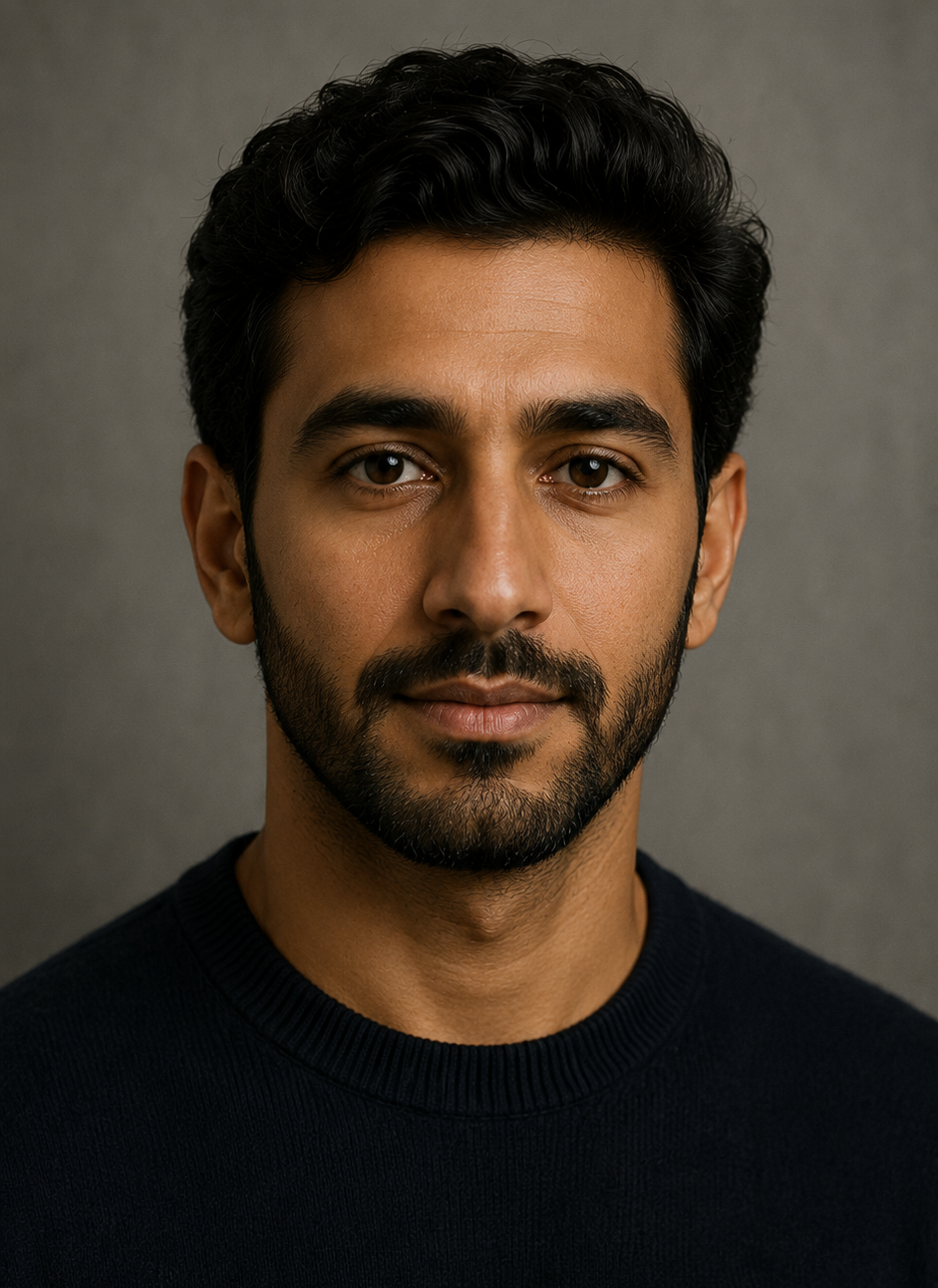
Written by
Khalid Al-Rashidi
Gulf & Middle East Correspondent · Emerging & Strategic Wealth
Khalid covers the family offices, luxury operators, and strategic capital moving across the GCC and wider Arab world — often before the rest of the region notices. He's spent years tracking how Gulf wealth structures itself for the next generation, from residency programmes to private aviation. Based between Dubai and Riyadh. Reach out at khalid.al-rashidi@theplatinumcapital.com.