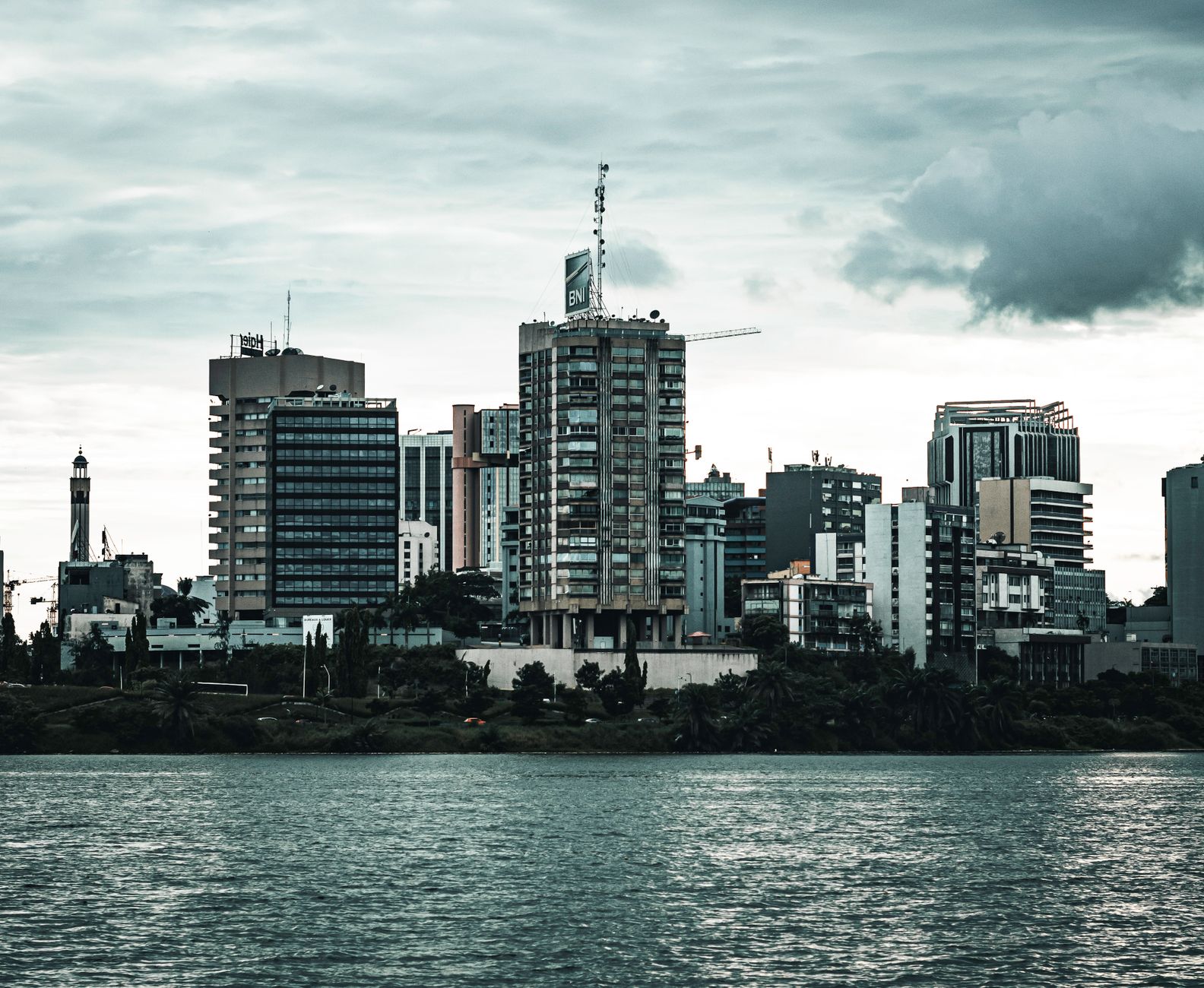

Qatar's Private Sector: The Families Building Outside the Fund
While the Qatar Investment Authority commands global attention with its sovereign billions, a constellation of powerful merchant families — the Jassims, the Mana clan, and others rooted in pre-oil trading dynasties — are quietly assembling diversified commercial empires across logistics, real estate, and financial services that increasingly operate independent of state patronage. Their growing appetite for cross-border dealmaking, from London property portfolios to Southeast Asian infrastructure, signals a maturing private sector that could ultimately prove more durable than the hydrocarbon wealth that first elevated the peninsula's fortunes.…
Qatar's Private Sector: The Families Building Outside the Fund
When the world thinks of Qatari capital, it thinks of the Qatar Investment Authority — the sovereign wealth fund that owns stakes in Volkswagen, Barclays, and half of London's skyline. But beneath the QIA's $500 billion shadow, a generation of Qatari merchant families and private-sector operators is building something arguably more consequential for the country's long-term economic identity: a diversified commercial ecosystem that doesn't depend on sovereign patronage.
In 2026, that ecosystem is hitting inflection points across logistics, technology, food production, and financial services. The families driving it — Al Mana, Al Faisal, Buzwair, Al Muftah, and others — are deploying capital with a sophistication that mirrors the sovereign fund's global ambitions but moves with the agility and risk appetite that state entities structurally cannot match.
The Al Mana Empire Expands Beyond Retail
The Al Mana Group has long been synonymous with luxury retail franchises — Zara, Hermès, Harvey Nichols — strung across the Gulf. Over the past eighteen months, though, the group has been quietly repositioning itself as a diversified conglomerate with serious stakes in technology and real estate development. Under Khalifa Al Mana and the broader family council, revenues reportedly exceeded QAR 8 billion ($2.2 billion) in fiscal 2025. Non-retail segments now account for roughly 35% of total income, up from an estimated 20% in 2022. That is a significant shift.
The group's joint venture with South Korea's Hyundai Engineering in Lusail's commercial district, announced late last year, signals an appetite for infrastructure-scale projects that would have been exclusively government-linked a decade ago. Al Mana's property development arm has also snapped up land parcels in Doha's West Bay Lagoon area, with plans for mixed-use developments totalling approximately 180,000 square metres of leasable space, scheduled for phased delivery between 2027 and 2030.
The financing structure here tells the real story. Rather than leaning on sovereign-backed credit lines, Al Mana reportedly secured $600 million in syndicated facilities from Qatar National Bank and Abu Dhabi Commercial Bank on straight commercial terms. That's a hard marker of standalone creditworthiness — and the kind of deal that would have been almost unthinkable for a Qatari family group ten years ago.
Buzwair and the Industrial Bet
Retail and property grab the headlines. But the Buzwair family's industrial holdings may represent the most strategically significant private-sector story in Qatar right now. Buzwair Group operates the country's largest independent gas manufacturing and distribution network and has invested heavily in green hydrogen infrastructure, positioning itself as a key domestic supplier as Qatar pursues its National Environment and Climate Change Strategy targets for 2030.
The company's new electrolysis facility at Ras Laffan Industrial City began commissioning in Q1 2026. Initial capacity: 25 megawatts, designed to produce approximately 3,500 tonnes of green hydrogen annually. Modest compared to QatarEnergy's mega-projects, sure. But it's the first privately funded hydrogen production asset in the country. Few outside the region have noticed. Competitors in Saudi Arabia and the UAE, where similar private-sector hydrogen ventures remain largely stuck at feasibility stage, certainly have.
Buzwair's industrial gases division also locked in a five-year supply contract with Qatar Steel in late 2025, valued at an estimated QAR 450 million, further cementing the family's grip on the country's heavy industrial supply chain.
Family Offices and the Cross-Border Capital Flow
Qatar's private wealth families are increasingly routing their capital through dedicated single-family offices registered under the Qatar Financial Centre's regulatory framework. The QFC Authority reported that family office registrations grew 40% year-on-year in 2025, with total assets under management across QFC-domiciled family offices surpassing $12 billion by December. Small relative to the QIA, yes — but this is genuine private capital formation, not sovereign allocation. The distinction matters.
Al Faisal Holding, controlled by Sheikh Faisal bin Qassim Al Thani, is the clearest example. The conglomerate spans hospitality, manufacturing, trading, and real estate across fourteen countries. It established a dedicated family office within the QFC in 2024 and has since deployed approximately $800 million into direct investments across Turkey, Egypt, and Southeast Asia. Its hotel portfolio alone, managed through subsidiary Aamal Hospitality, now encompasses over 4,200 rooms across the GCC and North Africa.
Al Faisal's playbook reflects a broader pattern among Gulf merchant families: use Doha as a regulatory and governance hub while pushing capital into higher-growth, higher-risk markets where sovereign funds face political and reputational constraints. A senior executive at one Doha-based family office, speaking on condition of anonymity, put it bluntly: "The QIA cannot invest in a mid-cap Egyptian logistics company. We can. And the returns on those bets, over a ten-year horizon, will outperform trophy assets in London."
The Policy Architecture Supporting Private Capital
Doha's policy apparatus has quietly but deliberately built out incentives for private-sector expansion. The revised Commercial Companies Law enacted in mid-2025 slashed minimum capital requirements for limited liability companies by 60% and, for the first time, permitted 100% foreign ownership in a broader range of sectors without requiring a Qatari national partner. Paradoxically, that reform benefits domestic families most — it lets them structure joint ventures with international partners on more commercially rational terms.
Qatar Development Bank's Private Sector Enhancement Programme disbursed QAR 3.2 billion in concessional financing to non-hydrocarbon SMEs and mid-cap companies during 2025. The Al Muftah Group — a diversified conglomerate spanning automotive, heavy equipment, and building materials — ranked among the largest beneficiaries, drawing approximately QAR 280 million to fund its expansion into modular construction technology licensed from a Finnish firm.
The government's National Vision 2030 targets call for the private sector to contribute 60% of GDP by the end of the decade, up from approximately 48% in 2025. Whether that target is realistic remains a live debate among economists. But the direction is unmistakable: Doha is engineering a deliberate transfer of economic weight from sovereign to private hands.
The Generational Transition Ahead
The less visible — but perhaps most consequential — dynamic inside Qatar's merchant families is generational succession. Many of the country's largest private groups were founded in the 1960s and 1970s by patriarchs who built fortunes through government construction contracts and exclusive import licenses. Their grandchildren, educated at Georgetown's Qatar campus, LSE, or Wharton, are now taking operational control. They bring fundamentally different commercial instincts.
This generation has little interest in franchise agreements and government tenders. They want proprietary technology, venture capital, and cross-border platform businesses. The emergence of Doha-based venture funds like i2 Capital and QFC-registered tech investment vehicles tied to established families suggests Qatar's next wave of private wealth creation will look far more like Singapore's family-office-driven tech ecosystem than the traditional Gulf merchant model.
The QIA will remain Qatar's most powerful financial institution for decades. No one disputes that. But the country's economic future — its resilience, its capacity to innovate, its ability to sustain prosperity beyond hydrocarbons — will increasingly be written by families whose names rarely appear in Western financial press. That gap between influence and visibility is, itself, a strategic advantage.
Khalid Al-Rashidi is a senior correspondent at The Platinum Capital covering private wealth, family enterprise, and capital flows across the Gulf and emerging markets.
Written by
Khalid Al-Rashidi
Gulf & Middle East Correspondent · Emerging & Strategic Wealth
Khalid covers the family offices, luxury operators, and strategic capital moving across the GCC and wider Arab world — often before the rest of the region notices. He's spent years tracking how Gulf wealth structures itself for the next generation, from residency programmes to private aviation. Based between Dubai and Riyadh. Reach out at khalid.al-rashidi@theplatinumcapital.com.