

The Gulf Based Indian Entrepreneurs Building Global Groups
From the trading ports of Dubai to the financial corridors of London and Singapore, a formidable generation of Gulf-based Indian entrepreneurs has quietly assembled diversified conglomerates that rival the scale and sophistication of established global dynasties. Their mastery of cross-border capital flows, deep-rooted networks spanning the Arabian Peninsula and the Indian subcontinent, and an instinctive appetite for asymmetric opportunity have positioned them not merely as regional success stories, but as architects of a new and consequential chapter in international wealth creation.…

They arrived in Dubai with ambitions the subcontinent alone could not contain. Over the past two decades, a generation of Indian entrepreneurs based across the Gulf — in Dubai, Abu Dhabi, Riyadh, and Doha — has quietly built something the world is only beginning to recognise: diversified, multi-geography business groups that rival the complexity and reach of the great Indian conglomerates, but structured for a different era. They operate where Gulf capital meets Indian operational DNA and global market access. And in 2026, with MENA M&A activity surging to $46.7 billion in the first half of the year alone, their moment has arrived.
A Foundation Built on More Than Trade
The Gulf's Indian business community has long been associated with trading houses, retail, and logistics — legitimate and often substantial enterprises. The current generation has moved emphatically beyond that. Gulf-based Indian entrepreneurs are now deploying capital into manufacturing, technology, financial services, healthcare, and real estate across multiple continents. The UAE remains their primary base, offering regulatory infrastructure, banking access, and proximity to decision-makers across the Arab world and Africa. Saudi Arabia's Vision 2030 programme has opened a second major operating environment — particularly in construction, healthcare, and consumer services, where Indian-led groups have the operational depth to compete for government-linked contracts.
What separates these groups from earlier generations of NRI businesses is deliberate internationalisation. Many have established holding structures in the DIFC or Abu Dhabi Global Market, which buys them credibility with institutional co-investors while allowing deployment into markets as diverse as Kenya, Kazakhstan, and Vietnam from a single platform. The MENA M&A surge — Q2 2026 deal value more than doubled year-on-year to $25 billion — has accelerated this, creating both exit opportunities and acquisition targets that simply did not exist five years ago.
Capital Discipline Meets Sectoral Focus
The most successful Gulf-based Indian groups share one defining characteristic: sectoral focus paired with geographic diversification. These entrepreneurs have typically anchored their groups in two or three core sectors — infrastructure and logistics, or healthcare and pharmaceuticals, or technology and real estate — then replicated that model across multiple markets. No sprawling, leverage-heavy conglomerate logic. Clean, disciplined, repeatable.
That approach has proven especially powerful in Africa. The continent's demand for infrastructure, healthcare, and manufacturing capacity mirrors exactly what the Gulf's Indian business community has spent decades executing elsewhere. Look at Aliko Dangote's latest moves — a minimum $1 billion commitment to pipeline, power, and cement infrastructure in Zimbabwe, alongside a $4.2 billion fertilizer plant agreement across East Africa. That is the scale of industrial ambition Gulf-based Indian groups are now actively seeking to match in their own sectors. Several Dubai-headquartered Indian entrepreneurs are structuring African entry strategies right now, particularly in logistics corridors and pharmaceutical distribution, where margins hold and relationships with government procurement bodies do the real work.
The DIFC Holding Structure as Strategic Infrastructure
Behind the visible businesses lies an increasingly sophisticated layer of holding company architecture. Over the past three years, Gulf-based Indian family offices have dramatically upgraded the legal and financial structures through which they manage and deploy capital. DIFC-registered holding entities, Abu Dhabi Global Market foundations, and Cayman-domiciled investment vehicles are now standard tools rather than exceptions. That structural sophistication determines everything that follows — what institutional capital a group can attract, which jurisdictions it can acquire in, and how succession gets managed without triggering fragmentation.
The trend reflects a genuine maturation. Egyptian billionaire Nassef Sawiris lifting his direct stake in Orascom Construction to 43.39% — disciplined, incremental consolidation of a core asset — offers the model that Gulf-based Indian principals are increasingly studying. The logic transfers cleanly: identify core platform assets, deepen ownership over time, use them as anchor positions around which new ventures orbit. Several Indian-led family offices operating out of Dubai are already in conversations with sovereign-linked funds in the Gulf and Southeast Asia for co-investment partnerships, particularly in infrastructure and healthcare, where deal sizes exceed what any single family group absorbs alone.
Saudi Arabia as the Next Operating Frontier
For Gulf-based Indian entrepreneurs, Saudi Arabia is simultaneously the largest opportunity and the most demanding market. The kingdom's procurement and contracting environment rewards scale, compliance, and localisation — all areas where established Indian-led groups have invested heavily. Healthcare, construction, education, and food processing each represent sectors where Indian operational expertise maps directly onto Vision 2030 gaps. Few outside the region have tracked this alignment closely. They should.
Hassan Allam Holding's acquisition of MetiPro, the engineering arm of water management group Metito, signals the kind of capability acquisition that positions a group for water infrastructure contracts across the Middle East and Africa. Gulf-based Indian construction and engineering groups are watching that deal closely — and beginning to replicate the logic. Water security, energy transition, and logistics modernisation run through nearly every GCC government's medium-term agenda. Indian entrepreneurs with track records in those sectors, and the Gulf relationships to reach government decision-makers directly, hold a structural advantage that is underappreciated from the outside. Several groups have already secured contracts in Saudi Arabia's NEOM-adjacent development zones and in Oman's Duqm Special Economic Zone, treating these not as standalone wins but as beachheads for broader regional expansion.
What This Means for Co-Investors and Family Offices Watching This Space
For institutional co-investors, sovereign funds, and family offices assessing where Gulf-based Indian groups sit in the emerging wealth architecture, headline net worth is the wrong number to watch. Governance depth matters more — whether a group has independent directors, audited consolidated accounts, and a documented succession framework. That has become the primary filter for serious institutional capital. Groups that made that investment early are now accessing deal flow and co-investment opportunities that were previously closed to them. The numbers tell a complicated story, but the direction is clear.
The pipeline ahead is substantial. The UAE and Saudi Arabia remain the region's most active outbound investors in technology, transportation, and financial services. Gulf-based Indian entrepreneurs operating within that ecosystem sit inside capital flows with no historical precedent in the region. Those who have built groups with genuine operational depth, clean holding structures, and multi-geography presence are not simply riding a favourable moment. They are building something more durable — institutional-grade business groups that will define Gulf-Indian enterprise for the next generation.
Written by
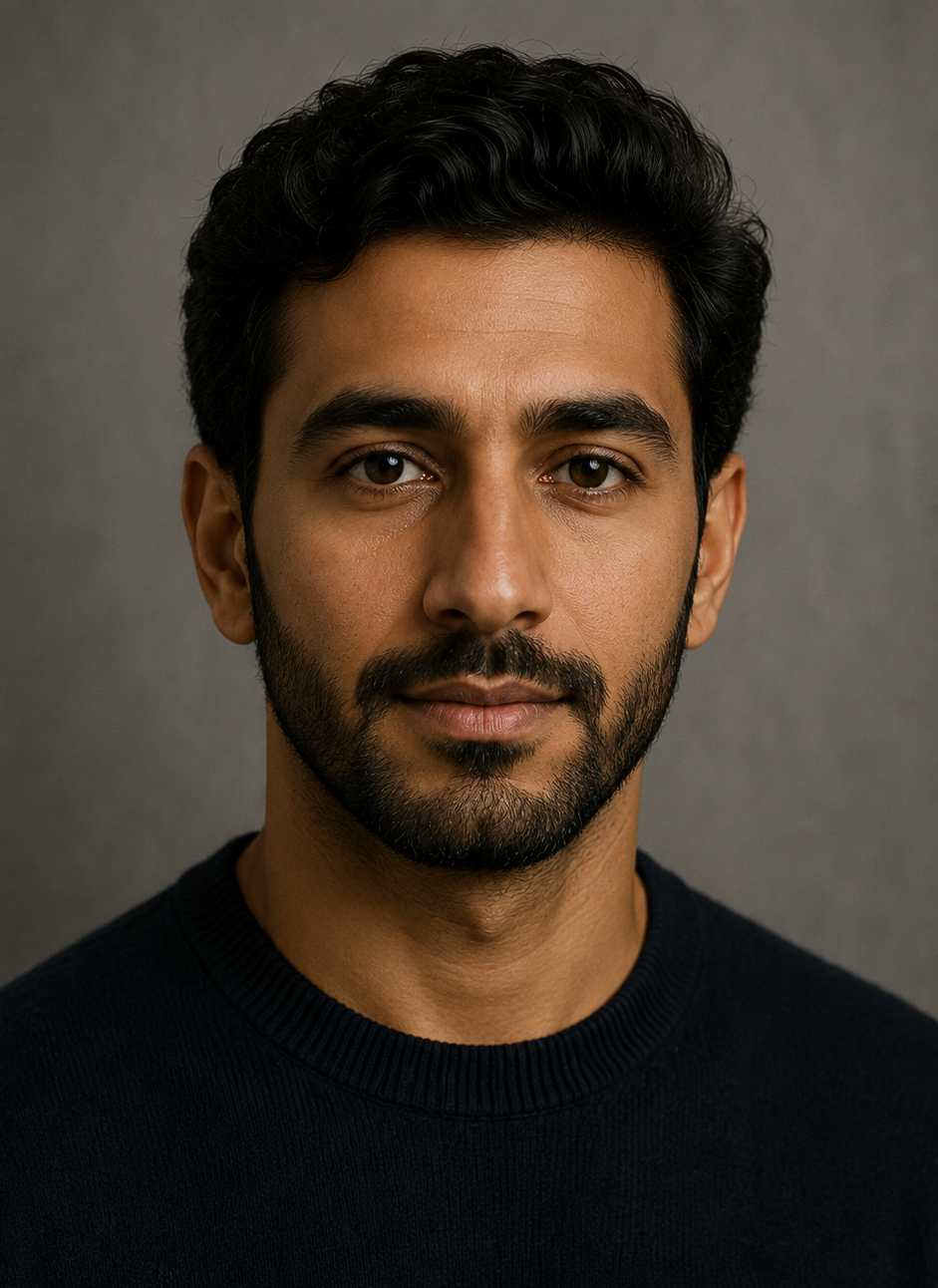
Khalid Al-Rashidi
Gulf & Middle East Correspondent · Emerging & Strategic Wealth
Khalid covers the family offices, luxury operators, and strategic capital moving across the GCC and wider Arab world — often before the rest of the region notices. He's spent years tracking how Gulf wealth structures itself for the next generation, from residency programmes to private aviation. Based between Dubai and Riyadh. Reach out at khalid.al-rashidi@theplatinumcapital.com.