

Qatar's Private Sector: The Families Building Outside the Fund
While Qatar's sovereign wealth fund commands global headlines with trophy acquisitions, a quieter revolution is unfolding among the merchant dynasties and entrepreneurial families steadily constructing diversified commercial empires across logistics, real estate, healthcare and technology. These private-sector powerhouses, many tracing their roots to the pearl-diving era, are increasingly shaping the post-hydrocarbon economy and exporting Qatari capital into frontier markets with an agility that state-backed institutions cannot easily replicate.…
Qatar's Private Sector: The Families Building Outside the Fund
The Qatar Investment Authority manages assets exceeding $500 billion, so it's tempting to assume the Gulf state's economic ambitions begin and end with its sovereign wealth fund. That assumption would be a costly analytical error. Beneath the sovereign canopy, a generation of Qatari merchant families and private conglomerates are assembling portfolios that rival mid-tier institutional investors — deploying capital across fintech, logistics, healthcare, and real estate with a speed and sophistication that deserves far greater scrutiny from global markets.
In 2026, Qatar's private sector contribution to GDP has climbed to approximately 52%, up from 47% in 2022, according to the Planning and Statistics Authority. That is a significant shift. And it didn't happen by accident. It's the direct outcome of deliberate policy under the Third National Development Strategy and the maturation of family-owned enterprises no longer content to operate as silent partners in state-led projects.
The Al-Mana Empire Extends Its Reach
No discussion of Qatari private capital is complete without the Al-Mana Group. The conglomerate, controlled by the Al-Mana family and long known for its luxury retail franchises — including Hermès, Harvey Nichols, and Zara across the Gulf — has in recent years pivoted aggressively into technology and venture investment. Through its investment arm, the group participated in a $180 million Series C round for a Saudi-based logistics technology platform in late 2025 and has taken strategic positions in at least three Dubai-headquartered AI startups focused on Arabic-language enterprise solutions.
Hussain Ibrahim Al-Mana, who oversees the group's diversification strategy, told regional media in February 2026 that "retail gave us cash flow and brand discipline, but the next thirty years belong to infrastructure that you cannot touch." The family office now allocates roughly 30% of its deployable capital outside Qatar, with a pronounced tilt toward Southeast Asian markets — particularly Indonesia and Vietnam — where it has co-invested alongside Mubadala and Temasek in cold-chain logistics ventures.
Elegancia Group and the Healthcare Bet
The Fakhroo family's Elegancia Group offers a different template. Originally a hospitality and real estate conglomerate operating hotels and residential compounds across Doha, Elegancia has spent the past three years building a healthcare vertical that now accounts for an estimated 25% of group revenues. The company's Al-Reem Medical Centre, which opened its expanded facility in Lusail City in January 2026, operates as a multi-specialty hospital with 220 beds and partnerships with Cleveland Clinic-trained specialists.
What makes Elegancia's model instructive is its financing structure. Rather than rely on government contracts or sovereign fund co-investment, the Fakhroo family funded the expansion through a combination of retained earnings, bilateral bank facilities from Qatar National Bank and Mashreq, and a modest $75 million private placement arranged through QInvest in mid-2025. That willingness to access private credit markets — still unusual among Gulf family businesses of this scale — signals a level of capital structure thinking that mirrors their Western European counterparts. Few outside the region have noticed.
Elegancia is now reportedly in discussions to acquire a 40% stake in a Jordanian hospital network, a move that would give it a foothold in one of the Middle East's most developed medical tourism corridors.
Power International Holding: The Quiet Giant
The most consequential Qatari private enterprise that global investors consistently underestimate may well be Power International Holding (PIH), the Al-Attiyah family's conglomerate. With estimated annual revenues surpassing $5 billion across construction, manufacturing, agriculture, and trading, PIH operates as a state within the private sector. Its subsidiary Redco Construction carried major infrastructure packages for the 2022 World Cup, and the group's Baladna Food Industries — Qatar's dominant domestic dairy producer, born from the 2017 blockade's supply chain emergency — now exports to 28 markets.
Baladna's IPO on the Qatar Stock Exchange in 2019 valued the company at approximately $900 million. By March 2026, its market capitalisation had grown to nearly QAR 4.8 billion ($1.3 billion), buoyed by expansion into plant-based protein lines and a joint venture with an Algerian state agricultural agency to develop dairy farming operations south of Algiers. The deal, announced in Q4 2025, involves a $200 million phased investment and reflects a broader trend: Qatari private families are turning food security — once a national vulnerability — into an export proposition.
The Family Office Boom in West Bay
The Qatar Financial Centre Authority reported that 47 new family office entities registered in 2025, bringing the total to over 180. That figure has more than tripled since 2021. While many of these serve non-Qatari families relocating from Lebanon, Egypt, and increasingly from India, a meaningful share represent Qatari families formalising what were previously informal investment activities managed through personal bank accounts and handshake partnerships.
The QFC's regulatory framework, updated in September 2025, now permits single-family offices to operate with simplified governance requirements while still accessing the centre's common law jurisdiction — a direct competitive response to Dubai's DIFC and Abu Dhabi's ADGM. Registration fees were reduced by 35%, and family offices with assets under management below $100 million are now exempt from external audit requirements for their first three years of operation.
This regulatory infrastructure matters because it's enabling a generational transfer. The sons and daughters of Qatar's merchant elite — many educated at Georgetown's Doha campus, Northwestern Qatar, or London's major business schools — are returning home with institutional investment training and an appetite for structured portfolio construction. They're hiring CIOs, building compliance functions, and engaging placement agents in London and Singapore. The old way of doing things, the handshake over coffee, is giving way to term sheets and LP agreements.
What Global Capital Should Understand
The tendency among international investors and analysts to view Qatar through the singular lens of the QIA misses a fundamental structural shift. The country's private sector is no longer derivative of state spending. It is becoming genuinely autonomous — in its capital allocation decisions, its geographic diversification, and its sectoral ambitions. Families like the Al-Manas, Fakhroos, and Al-Attiyahs are building enterprises with multi-generational time horizons that sovereign wealth funds, bound by political cycles and public accountability, cannot always replicate.
The numbers back this up. Qatar's Ministry of Commerce recorded 12,400 new commercial registrations in 2025, a 19% increase year-on-year. Private sector employment among Qatari nationals rose to 8.2% — still modest, but the highest figure on record and a metric the government is actively incentivising through the Kawader programme's expanded subsidy scheme.
For global allocators seeking exposure to Gulf growth, the listed sovereign vehicles and blue-chip state-linked enterprises remain the obvious entry points. But the more compelling story — the one with higher growth variance and deeper alignment with regional demographic and technological shifts — sits with the families building outside the fund. They are not waiting for permission. They are already deploying.
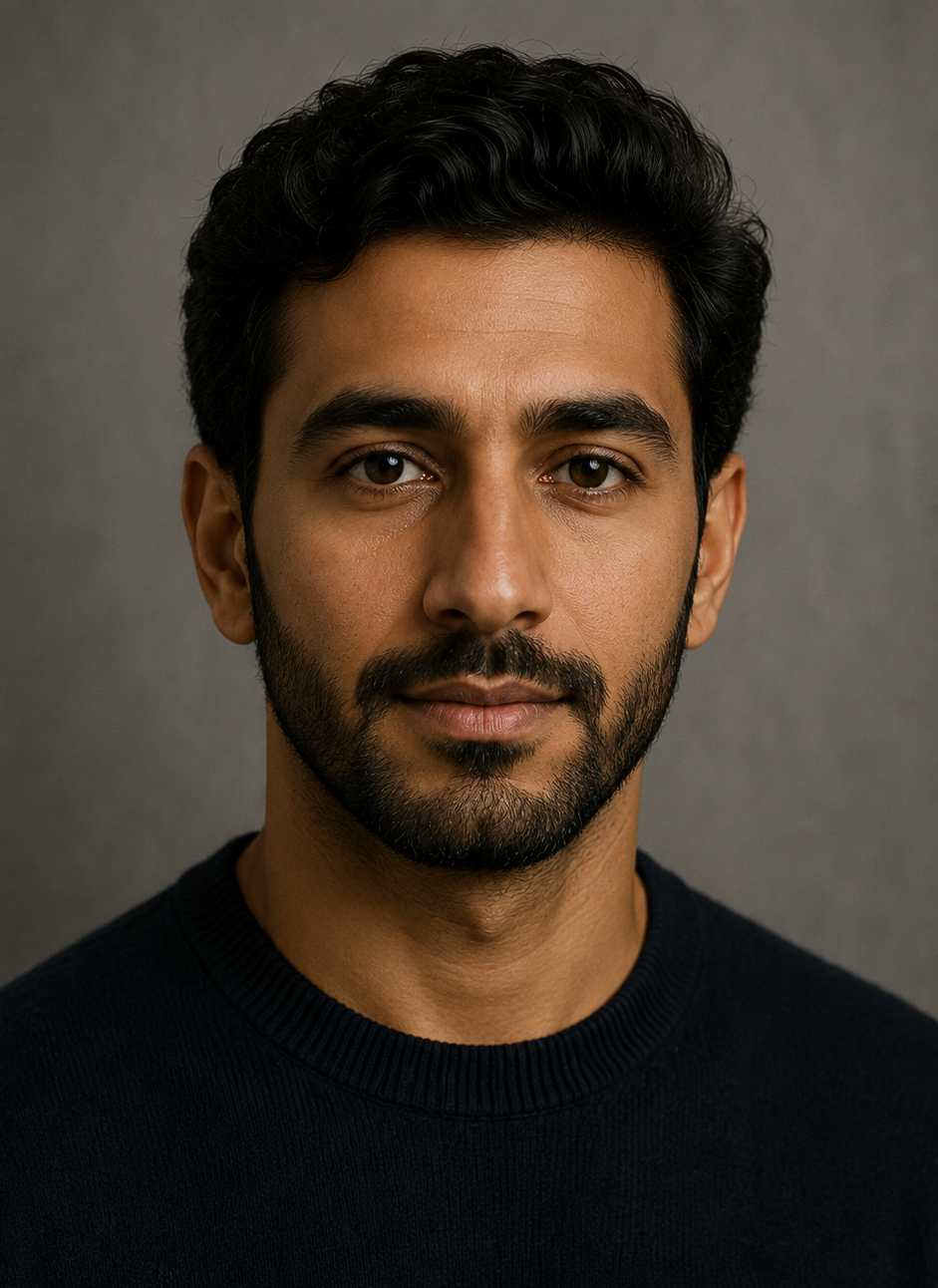
Written by
Khalid Al-Rashidi
Gulf & Middle East Correspondent · Emerging & Strategic Wealth
Khalid covers the family offices, luxury operators, and strategic capital moving across the GCC and wider Arab world — often before the rest of the region notices. He's spent years tracking how Gulf wealth structures itself for the next generation, from residency programmes to private aviation. Based between Dubai and Riyadh. Reach out at khalid.al-rashidi@theplatinumcapital.com.