

Qatar's Private Sector: The Families Building Outside the Fund
While the Qatar Investment Authority commands global attention with its sovereign wealth, a constellation of powerful merchant families — the Al Fardan, Jaidah, and Al Mana clans among them — have quietly constructed sprawling commercial empires that rival the state fund's ambitions in scope and strategic sophistication. Their diversified holdings across luxury retail, real estate, automotive distribution, and financial services represent a parallel economic architecture that is increasingly shaping Qatar's post-hydrocarbon trajectory and extending its commercial influence well beyond the Gulf.…
Qatar's Private Sector: The Families Building Outside the Fund
The Qatar Investment Authority manages assets exceeding $500 billion, so it's tempting to assume that Qatari capital begins and ends with the sovereign wealth fund. That assumption would be a serious mistake. Beneath the towering presence of the QIA, a generation of Qatari merchant families and private conglomerates are constructing commercial empires that span continents — and in 2026, their ambitions have never been more visible.
The rise of Qatar's private sector is not incidental. It's the product of deliberate policy under the National Vision 2030 framework, which has systematically encouraged non-hydrocarbon enterprise. But it's also driven by something older: the commercial DNA of families whose trading roots predate the discovery of oil. These dynasties — the Al Mana, the Buzwair, the Jaidah, the Darwish — are deploying capital with a sophistication that rivals institutional investors. And they are doing it largely on their own terms.
The Merchant Dynasties Go Global
The Al Mana Group remains perhaps the most prominent example of Qatari private capital operating at scale. With exclusive distribution partnerships spanning Zara, Mango, Harvey Nichols, and a deep portfolio of luxury automotive brands including Rolls-Royce and Lamborghini across the Gulf, the group has long functioned as a bridge between European luxury houses and Gulf consumers. In 2025 and into 2026, the Al Mana family has expanded its real estate development activity in Lusail City, Qatar's planned urban centrepiece north of Doha, where mixed-use commercial projects are absorbing billions of riyals in private investment.
Darwish Holding, meanwhile, has pushed deeper into industrial services and engineering contracting. The group runs operations across Qatar, Oman, and parts of East Africa. It rode Qatar's infrastructure boom — especially projects linked to the post-FIFA 2022 legacy development programme — to build a contracting business with annual revenues that industry analysts now estimate exceed QAR 4 billion. The strategy is vertical integration: controlling supply chains from heavy equipment procurement through to project delivery.
Jaidah Group, historically associated with automotive and heavy equipment, has pivoted toward technology and sustainability. Its partnership with Hyundai Motor Company now includes electric vehicle distribution across Qatar, aligning with the country's push toward greener transport infrastructure. The group has also made strategic investments in PropTech ventures and digital payment platforms. The signal is clear: the next generation of Jaidah leadership sees technology as the family's future growth engine.
Family Offices as Investment Vehicles
What sets Qatari private wealth apart in 2026 is the institutionalisation of family offices. The Qatar Financial Centre has actively courted them with regulatory frameworks tailored to their needs, including 100 per cent foreign ownership rights and zero corporate tax on most activities. By early 2026, the QFC reported more than 70 registered family offices and single-family investment vehicles — a figure that has tripled since 2021. That is a significant shift.
These are not passive vehicles. Qatari family offices have become active participants in global venture capital and private equity. Mannai Corporation's investment arm, for instance, has taken positions in Southeast Asian fintech companies and Indian logistics startups, reflecting a broader Gulf trend toward South-South capital flows. Wadi Holdings, associated with the Al-Attiyah family, has directed capital toward healthcare infrastructure in Sub-Saharan Africa, including a reported $120 million commitment to hospital development projects in Kenya and Rwanda announced in late 2025. Few outside the region have noticed.
The pattern is unmistakable: Qatari family capital is no longer content with local real estate and agency businesses. It is hunting for yield and strategic influence in markets that Western institutional capital has historically dominated.
The Lusail Effect and Domestic Reinvention
Domestically, Lusail City has become a crucible for private sector ambition. The planned city, designed to house some 450,000 residents and workers, represents one of the largest urban development projects in the Gulf. State-backed Qatari Diar leads the masterplan, but private Qatari developers and investors are responsible for a significant share of the commercial and residential build-out.
Companies such as Ezdan Holding — controlled by the Al Thani family branch led by Sheikh Thani bin Abdullah — have repositioned themselves following a difficult period of oversupply in the Qatari residential market between 2019 and 2022. Ezdan reported a net profit of QAR 1.2 billion for 2025, driven by improved occupancy rates and a strategic shift toward premium hospitality assets. The stock tells the story: trading at approximately QAR 1.15 on the Qatar Stock Exchange in early 2026, up from its 2020 trough below QAR 0.60.
Hospitality has been another avenue for private capital deployment. Katara Hospitality, while government-linked, competes alongside private Qatari investors who have acquired hotel assets in London, Paris, and Geneva. The Buzzwair Group's aviation and logistics operations, anchored by its industrial gases business, have expanded into aircraft ground handling services at Hamad International Airport — a textbook example of how Qatari families are capturing value from the country's position as a global transit hub.
Succession, Governance, and the Generational Shift
The hard question facing Qatari private capital is governance. Many of these conglomerates are entering their third generation of family leadership — a transition that statistically destroys more family businesses than any market downturn. The families that have survived, and thrived, are those that adopted formal governance structures: independent board members, family constitutions, and clear succession protocols.
The Al Mana Group is frequently cited as a governance exemplar, with professional management layers separating family ownership from operational decision-making. Others have been slower to adapt. Qatar's Chamber of Commerce, in partnership with the QFC, launched a family business governance initiative in 2025 aimed at professionalising succession planning across the country's approximately 1,200 significant family-owned enterprises.
Sheikh Faisal bin Qassim Al Thani, chairman of Al Faisal Holding and one of Qatar's most prominent private sector figures, has been vocal about the need for institutional rigour. His conglomerate — with interests spanning hospitality, real estate, industrial manufacturing, and education — has brought in external advisory boards and adopted IFRS-compliant reporting. Those practices remain uncommon among Gulf family businesses of comparable scale.
Beyond the Shadow of the State
Qatar's private sector will never fully escape the gravitational pull of the state. Government contracts, sovereign investment co-investment opportunities, and regulatory favour remain potent forces shaping commercial outcomes. But the direction of travel is clear. Qatari merchant families are building diversified, increasingly global businesses that derive their competitive advantage not from state patronage alone but from commercial acuity honed over decades.
The sovereign wealth fund captures the headlines. The families building outside it may ultimately capture something more durable: a private economy capable of sustaining Qatar long after the last molecule of liquefied natural gas has been shipped from Ras Laffan. For investors, partners, and competitors across emerging markets, these are the actors worth watching.
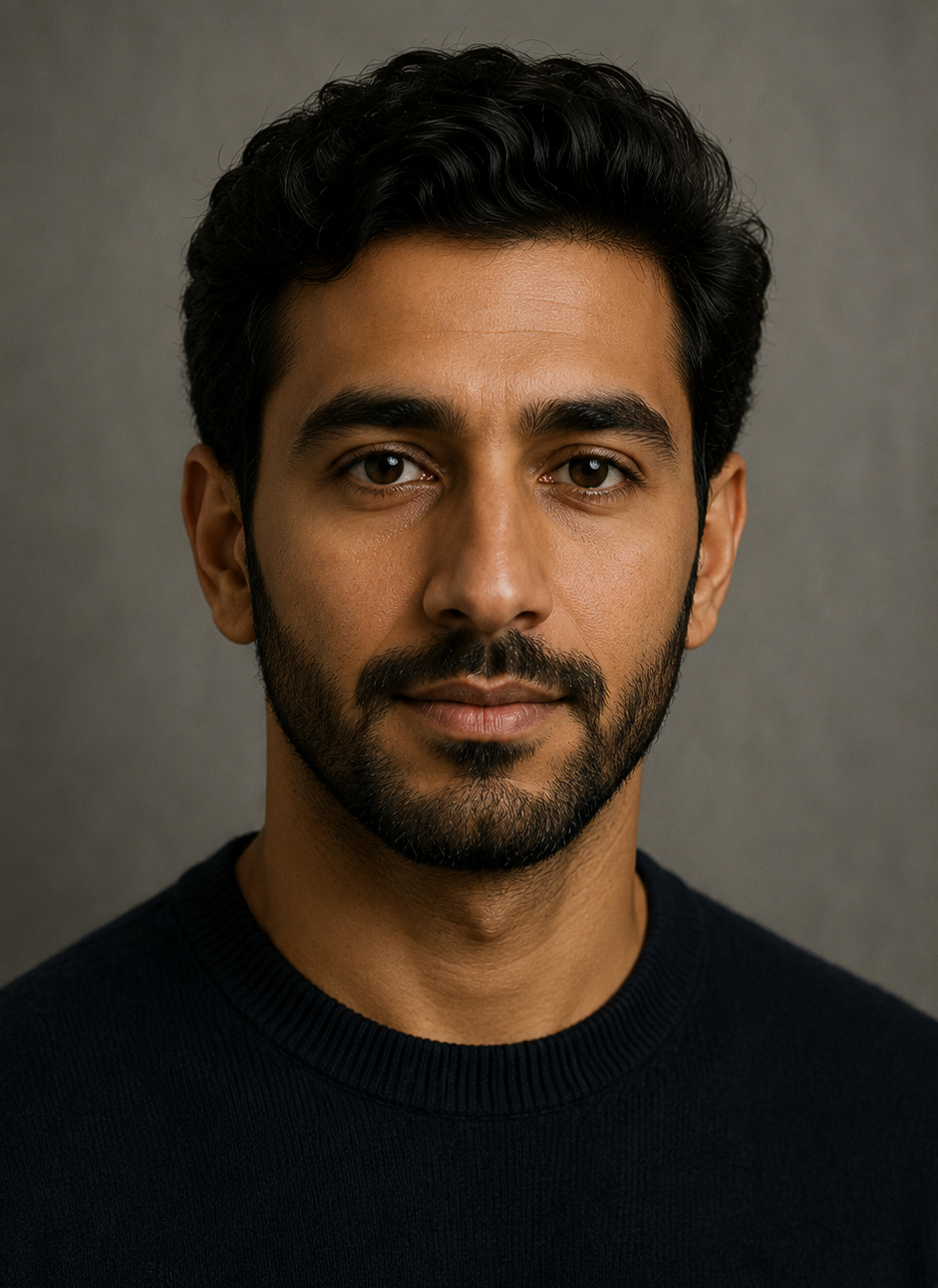
Khalid Al-Rashidi is a senior journalist at The Platinum Capital covering Emerging Wealth. He reports from Doha, Riyadh, and London.
Written by
Khalid Al-Rashidi
Gulf & Middle East Correspondent · Emerging & Strategic Wealth
Khalid covers the family offices, luxury operators, and strategic capital moving across the GCC and wider Arab world — often before the rest of the region notices. He's spent years tracking how Gulf wealth structures itself for the next generation, from residency programmes to private aviation. Based between Dubai and Riyadh. Reach out at khalid.al-rashidi@theplatinumcapital.com.