

UAE's Emerging Founders: Beyond Real Estate and Trading
The United Arab Emirates is witnessing a decisive generational shift as a new cohort of founders channels wealth into technology, healthcare and advanced manufacturing, deliberately distancing themselves from the real estate and commodity trading empires that defined their predecessors. This emerging class of entrepreneurs, many educated abroad and now repatriating both capital and ambition, is reshaping the nation's economic identity in ways that sovereign wealth funds alone never could.…
The New Guard of Emirati Enterprise
For decades, the archetype of the successful UAE-based entrepreneur was predictable: a developer with land banks in Dubai Marina or a trader moving commodities through Jebel Ali. That archetype is dying fast. A generation of founders — many of them Emirati nationals under 40 — is building technology-driven companies in sectors that would have seemed improbable in the Gulf even five years ago: computational biology, climate fintech, defence autonomy, and vertical agriculture. The capital flowing into these ventures is no longer speculative. It's strategic, institutional, and increasingly sovereign.
In the first quarter of 2026 alone, UAE-headquartered startups outside the traditional real estate and trading verticals raised approximately $1.4 billion in disclosed funding rounds, according to data compiled by Magnitt and confirmed by the Abu Dhabi Investment Office. That's a 38 per cent year-on-year increase — and it reflects a structural shift in what the Emirates actually produces, not merely what it imports and re-exports.
Deep Tech Finds Its Gulf Address
The most striking departure from the old playbook is happening in deep technology. Abu Dhabi's Technology Innovation Institute, the research arm behind the Falcon series of large language models, has spawned a cluster of spin-off ventures commercialising AI applications for Arabic-language markets. One of the most watched is Presight AI, which listed on the Abu Dhabi Securities Exchange in 2023 and has since expanded its government analytics contracts across the GCC, reporting revenues of AED 462 million for the fiscal year ending December 2025 — a 54 per cent jump from the prior period.
But Presight is the visible tip of something much bigger. Adeeb Ahamed, managing director of LuLu Financial Holdings, has diversified his fintech arm into cross-border payment infrastructure connecting South Asia and East Africa to the Gulf corridor, processing over $12 billion in remittance volume in 2025. G42, the Abu Dhabi AI conglomerate chaired by Sheikh Tahnoon bin Zayed, has turned its venture arm — G42 Expansion — into a prolific backer of founder-led companies working on climate modelling, drug discovery, and autonomous logistics across the Middle East and North Africa.
The common thread: these founders are building for export. They aren't simply servicing the domestic UAE market of 10 million residents. They're using the Emirates as a regulatory sandbox and capital base to target addressable markets spanning the Gulf, the Indian subcontinent, and sub-Saharan Africa — a combined population exceeding three billion. That is a very different ambition from anything the region has produced before.
The Family Office Pipeline
The capital architecture behind this shift is itself being rewired. The Dubai International Financial Centre reported in February 2026 that the number of single-family offices registered on its platform had reached 541, up from 390 at the end of 2024. Many of these are not passive allocators parking wealth in index funds. A growing cohort — particularly families with origins in Saudi Arabia, Pakistan, India, and Egypt — is deploying directly into pre-Series B ventures domiciled in the UAE.
The Al Tayer family, long associated with luxury automotive distribution and retail, established a dedicated venture allocation in 2025 targeting healthtech and edtech startups. The Juffali family of Saudi Arabia, operating through their DIFC-registered office, has taken anchor positions in at least three UAE-based climate technology companies, according to two people familiar with the transactions. Chimera Capital, the Abu Dhabi-based investment firm, has built a $300 million growth equity book focused on Gulf-born software companies.
What separates this moment from previous waves of enthusiasm — including the 2021–22 crypto-adjacent bubble that inflated and then deflated valuations across Dubai's startup scene — is the insistence on unit economics. Family offices burned by the Abraaj scandal and subsequent governance failures in regional private equity now conduct due diligence with a rigour that mirrors institutional limited partners in London or Singapore. Term sheets increasingly include ratchet mechanisms, board representation, and audited financial reporting requirements that would have been unusual in Gulf venture deals as recently as 2023. That is a significant shift.
Sovereign Backing With Commercial Discipline
Government policy is acting as accelerant, not architect. Abu Dhabi's Hub71 ecosystem reported that its portfolio companies generated aggregate revenues exceeding $800 million in 2025, with 67 per cent of that figure derived from customers outside the UAE. The programme's latest cohort, announced in January 2026, included a Sudanese-Emirati founder building satellite-based crop insurance for East African smallholders and a former Mubadala engineer developing solid-state battery technology for grid storage. Few outside the region have noticed.
Dubai's DIFC Innovation Hub and its adjacent venture fund, launched in partnership with the Dubai Future Foundation, committed $150 million through 2025 to companies at the intersection of financial services and artificial intelligence. The fund's most prominent bet — a Dubai-based regulatory technology firm called Sudreh that automates anti-money-laundering compliance for mid-tier banks across the MENA region — closed a $45 million Series B in November 2025 led by sovereign co-investors from Bahrain and Oman.
Mubadala, meanwhile, has shifted its venture strategy downstream. Rather than solely backing Silicon Valley names through fund-of-funds allocations, its ventures unit has taken direct positions in 14 UAE-domiciled companies since January 2025, with cheque sizes ranging from $5 million to $30 million. The mandate, according to a senior Mubadala executive speaking on condition of anonymity, is explicitly to cultivate "national champions that happen to be startups."
The Risks That Remain
The optimism deserves a cold shower. Structural constraints persist. The UAE's labour market remains overwhelmingly expatriate, and visa reforms — while meaningful — have not yet produced the critical mass of mid-career technical talent required to sustain a deep tech ecosystem without continuous importation. Engineering salaries in Dubai and Abu Dhabi now rival those in Zurich and Singapore, creating cost pressures that erode the capital efficiency advantage Gulf startups once claimed.
Exit pathways remain narrow, too. The Abu Dhabi Securities Exchange and Dubai Financial Market have welcomed technology listings, but secondary market liquidity for mid-cap tech stocks is thin compared with exchanges in New York, London, or even Mumbai. Several prominent founders have privately voiced concern that IPO windows may close if global monetary tightening persists into late 2026, leaving them dependent on private secondary sales or strategic acquisitions by larger Gulf corporates — outcomes that can dilute founder control and strategic ambition.
Then there's the geopolitical question. The UAE's regulatory flexibility — its greatest asset in attracting founders and capital — faces pressure from both Washington and Beijing. G42's 2024 decision to divest Chinese partnerships under American pressure showed how quickly the strategic calculus can shift for companies operating at the intersection of technology and sovereignty. That lesson has not been forgotten.
Still, the direction of travel is unmistakable. The UAE is producing a class of founders whose ambitions extend well beyond brokering transactions or developing land parcels. Whether the ecosystem matures into a durable innovation economy or remains a well-capitalised experiment will depend on decisions made not in the next decade, but in the next 18 months. The capital is there. The regulatory intent is clear. What remains to be proven is whether the Gulf can retain the builders, not just the money, that a genuine technology economy demands.
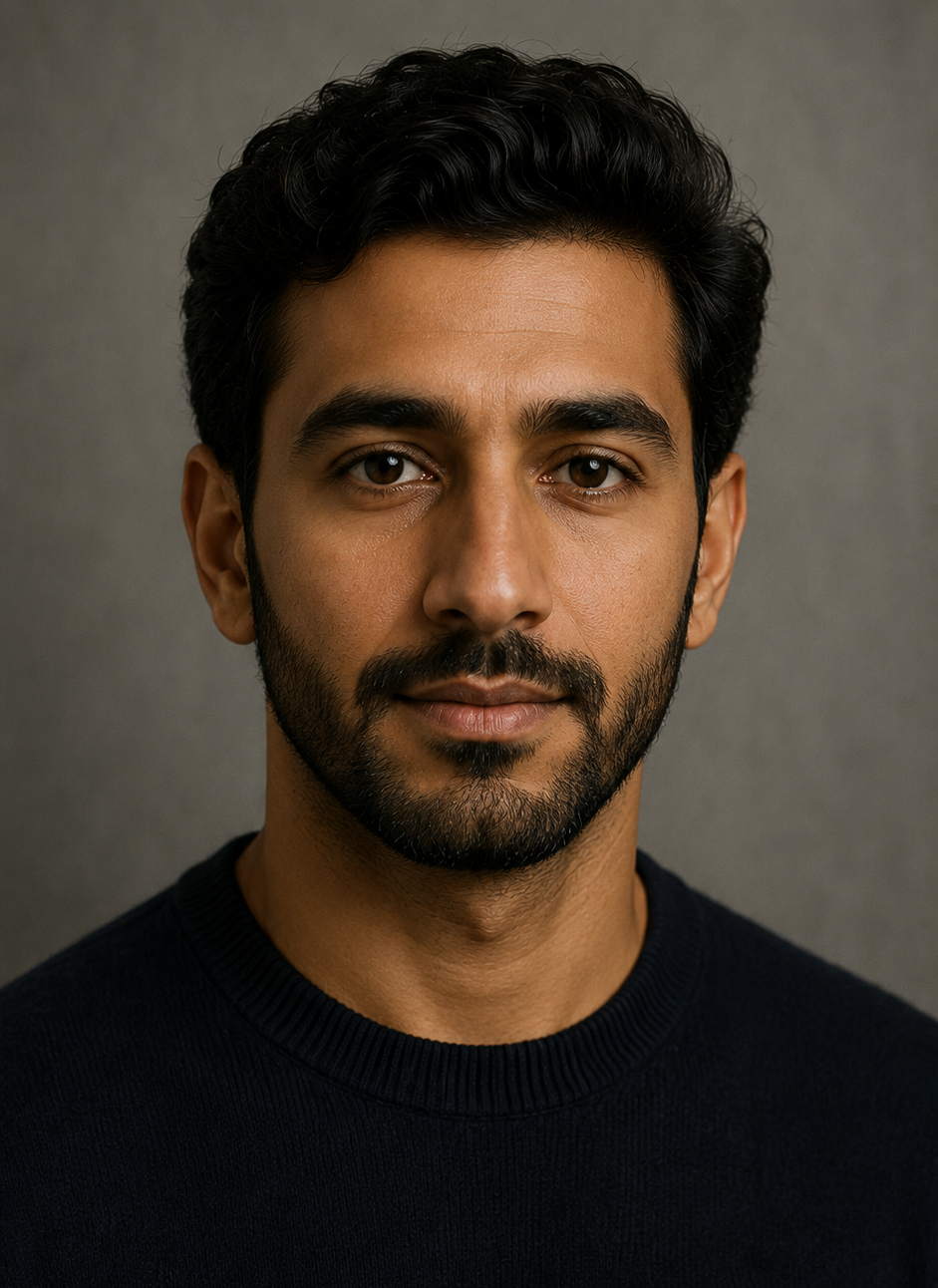
Written by
Khalid Al-Rashidi
Gulf & Middle East Correspondent · Emerging & Strategic Wealth
Khalid covers the family offices, luxury operators, and strategic capital moving across the GCC and wider Arab world — often before the rest of the region notices. He's spent years tracking how Gulf wealth structures itself for the next generation, from residency programmes to private aviation. Based between Dubai and Riyadh. Reach out at khalid.al-rashidi@theplatinumcapital.com.