

The New Saudi Entrepreneurs Reshaping Non-Oil Business
A new generation of Saudi entrepreneurs, emboldened by Vision 2030 reforms and unprecedented access to venture capital, is building formidable enterprises across fintech, entertainment, logistics and advanced manufacturing that are fundamentally redrawing the Kingdom's economic architecture. Their rapid ascent signals not merely a diversification strategy but a structural shift in how wealth is created and concentrated in the Gulf, with implications that extend well beyond the region's traditional hydrocarbon corridors.…
The New Saudi Entrepreneurs Reshaping Non-Oil Business
When Mudassir Sheikha rang the bell at the Abu Dhabi Securities Exchange in 2025 to mark Careem's secondary listing, the moment meant more than one company's capital markets strategy. It signalled something the Kingdom's economic planners had been engineering for a decade: the rise of a generation of Saudi and Saudi-adjacent founders building globally competitive enterprises entirely outside the hydrocarbon value chain. In 2026, that generation is no longer emerging. It has arrived.
The numbers back it up. Saudi Arabia's General Authority for Small and Medium Enterprises reported that SME contributions to GDP reached 35 per cent in the first quarter of 2026, up from 29 per cent in 2022. The Kingdom registered more than 264,000 new commercial licences in 2025 — a 41 per cent jump from the prior year. Non-oil GDP growth, which the International Monetary Fund projects at 4.4 per cent for 2026, is now consistently outpacing overall economic expansion. Behind these figures are specific founders, specific companies, and specific bets that deserve scrutiny.
The Fintech Vanguard
No sector illustrates the Saudi entrepreneurial shift more sharply than financial technology. Tamara, the Riyadh-based buy-now-pay-later platform founded by Abdulmajeed Alsukhan, closed a $340 million Series D round in late 2025 at a valuation exceeding $1.5 billion, making it one of the most valuable private fintech companies in the Middle East and North Africa. The company now processes more than 12 million transactions annually across Saudi Arabia, the UAE, and Kuwait, and has begun licensing discussions in Egypt and Pakistan.
Alsukhan previously worked at Careem before its $3.1 billion acquisition by Uber. He represents a pattern worth watching: operators trained in the region's first wave of venture-backed companies are now founding the second. Tamara's cap table reads like a who's who of Gulf institutional capital — Sanabil Investments, the PIF's venture arm, sits alongside Coatue Management and Checkout.com. That the company can attract both sovereign and Silicon Valley money speaks to a maturing capital formation process that was virtually nonexistent in the Kingdom five years ago. That is a significant shift.
Meanwhile, Lean Technologies, co-founded by Hisham Al-Falih, has quietly built the open banking infrastructure connecting Saudi financial institutions. Its API platform now serves more than 80 banks and fintech clients, and the company raised $67 million in a Series B round led by General Atlantic in early 2026. The Saudi Central Bank's push toward open banking regulation has created a structural tailwind, and Lean has been positioned squarely to capture it.
Consumer and Logistics Plays at Scale
Beyond fintech, Saudi founders are building serious enterprises in sectors that directly serve the Kingdom's rapidly urbanising, overwhelmingly young population. Sary, the B2B e-commerce marketplace founded by Mohammed Aldossary and Khaled Alsiari, now serves more than 150,000 small retailers and restaurants across 14 Saudi cities. The company's gross merchandise volume surpassed SAR 7 billion in 2025. Its fulfilment network — 18 warehouses spanning 420,000 square metres — rivals that of regional incumbents many times its age.
Then there's Nana. The grocery delivery platform founded by Sami Al-Helwah completed its acquisition of a controlling stake in a Turkish quick-commerce operator in the first quarter of 2026. That marked one of the first instances of a Saudi-born startup executing cross-border M&A outside the Gulf Cooperation Council. Few outside the region have noticed. The company, which counts Saudi Telecom Company's venture unit and Japan's SBI Group among its investors, now operates in three countries with annual revenues approaching $500 million.
These are not lifestyle businesses or venture-subsidised experiments. They are operationally intensive companies with real unit economics, built by founders who understand that Saudi Arabia's consumer economy — 36 million people with GDP per capita above $30,000 — offers a domestic market large enough to sustain genuine scale before any international expansion.
Family Offices as Founders, Not Just Funders
A less visible but equally consequential development: Saudi family offices are transforming from passive allocators into active company builders. The Olayan Group, long one of the Kingdom's most sophisticated multi-generational family enterprises, launched a dedicated venture studio in Riyadh in late 2025, seeding three companies in health technology and industrial automation within its first six months of operation. The Al Subeaei family office, MASIC, has deployed more than $200 million into early-stage Saudi companies since 2023, with a particular concentration in education technology and workforce development platforms aligned with Vision 2030 human capital targets.
This blurring of the line between family capital and entrepreneurship reflects a generational transfer of wealth and ambition. The sons and daughters of Saudi Arabia's trading families are not content to manage legacy real estate and agency businesses. They are founding companies, recruiting international talent, and structuring their family offices to operate with the velocity of institutional venture capital. The result is a domestic funding ecosystem less dependent on foreign capital than at any point in the Kingdom's modern economic history.
Structural Risks and Honest Questions
None of this should be read as uncritical celebration. Saudi Arabia's entrepreneurial ecosystem faces structural challenges that its most sophisticated participants readily acknowledge. Labour market restrictions, while loosening, still create friction for startups seeking to hire and retain non-Saudi technical talent. Regulatory frameworks in sectors such as insurance technology and digital assets remain works in progress, with licensing timelines that can stretch beyond 18 months. And the dominance of PIF-backed entities in sectors ranging from entertainment to logistics raises legitimate questions about competitive dynamics — specifically, whether private founders can build enduring companies in sectors where the sovereign wealth fund is simultaneously operator, regulator-adjacent, and potential acquirer.
There is also the question of exits. Tadawul has introduced a parallel market for growth companies, and the Kingdom saw 10 IPOs in 2025. But the exit environment for venture-backed companies remains narrow compared with more mature markets. Several Saudi unicorns are now approaching the stage where public listings or strategic sales become necessary to return capital to investors. The depth of buyer appetite — particularly for companies valued above $1 billion — has simply not been tested at scale.
The Decade Ahead
What's undeniable is the direction. Saudi Arabia is producing entrepreneurs who are building companies of genuine regional and, in select cases, global consequence. A large domestic market, abundant patient capital, aggressive regulatory modernisation, and a young population with high digital adoption rates — few emerging markets can match that combination. The question for the next decade is not whether Saudi entrepreneurship will grow. It will. The question is whether it can produce companies that compete on merit in international markets without the gravitational pull of sovereign subsidy. The founders profiled here would argue they already are. The markets will deliver their own verdict.
Khalid Al-Rashidi is a senior journalist at The Platinum Capital covering emerging wealth and Gulf enterprise. He reports from Riyadh and Dubai.
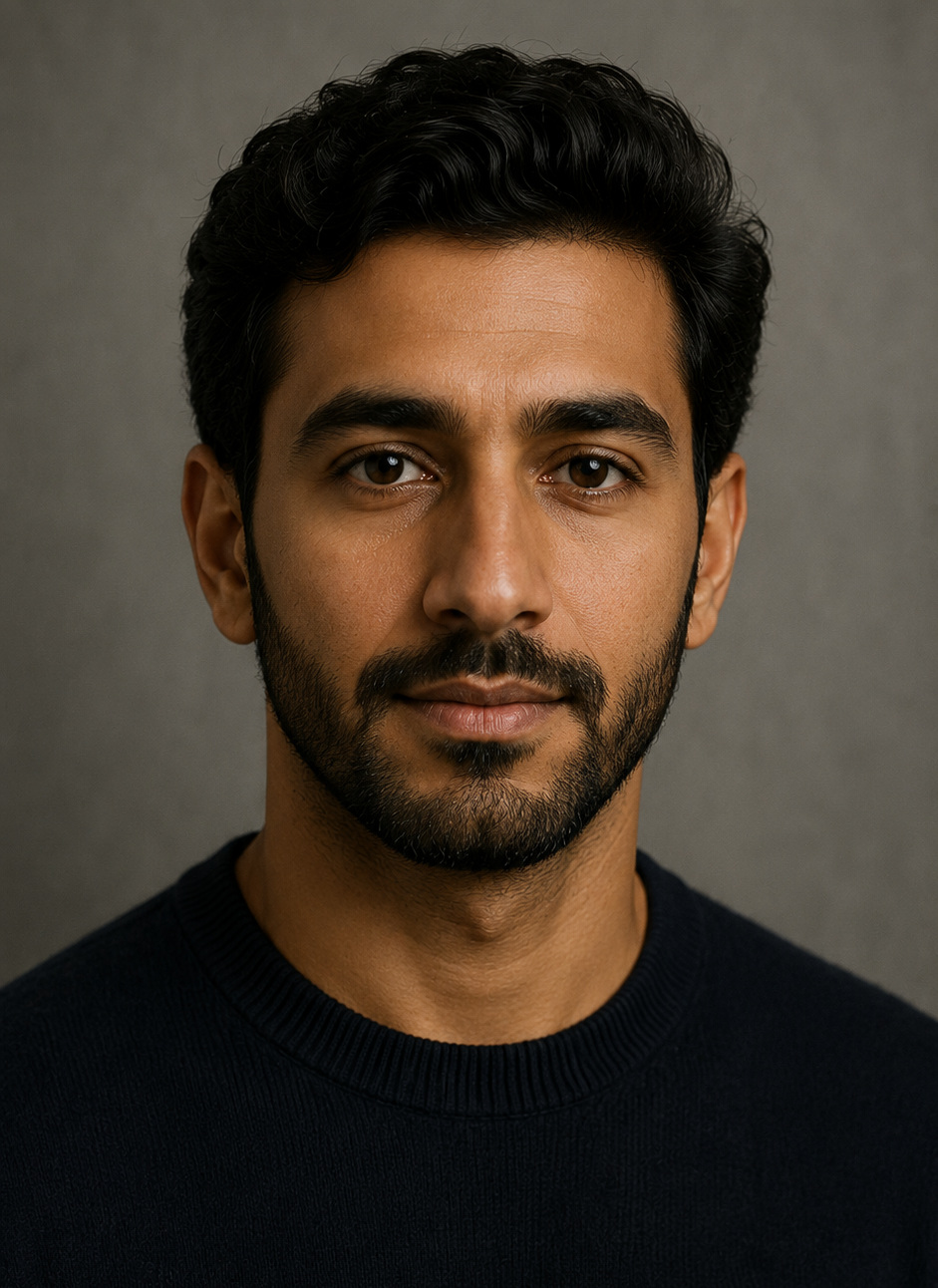
Written by
Khalid Al-Rashidi
Gulf & Middle East Correspondent · Emerging & Strategic Wealth
Khalid covers the family offices, luxury operators, and strategic capital moving across the GCC and wider Arab world — often before the rest of the region notices. He's spent years tracking how Gulf wealth structures itself for the next generation, from residency programmes to private aviation. Based between Dubai and Riyadh. Reach out at khalid.al-rashidi@theplatinumcapital.com.