

Qatar's Private Sector: The Families Building Outside the Fund
While the Qatar Investment Authority commands global attention with its sovereign wealth, a cadre of powerful merchant families — names like Al Mana, Al Fardan, and Bukhatir — are quietly constructing diversified commercial empires that span luxury retail, real estate, and financial services across the Gulf and beyond. Their growing influence represents a parallel engine of Qatari capital formation, one that operates with greater agility and fewer geopolitical constraints than the state apparatus, and whose ambitions increasingly extend well beyond the peninsula's borders.…
Beyond the Sovereign Shield
When Faisal bin Qassim Al Thani's Al Faisal Holding quietly closed a $420 million hospitality acquisition across three Southeast Asian markets in the first quarter of 2026, it barely registered in the Western financial press. That silence says a lot — not about the deal's insignificance, but about how thoroughly Qatar's private sector families have learned to operate beneath the overwhelming shadow of the Qatar Investment Authority and its $500 billion-plus portfolio.
But something is changing. As Doha accelerates its National Vision 2030 diversification targets, a cohort of Qatari family conglomerates and next-generation entrepreneurs are building commercial empires that rival mid-cap sovereign deployments in ambition, if not yet in scale. Their strategies — spanning fintech, logistics, healthcare, and real estate across the Gulf, South Asia, and sub-Saharan Africa — are rewriting assumptions about where Qatari capital flows when it isn't dressed in sovereign clothing.
The Old Guard Reinvents
Qatar's established merchant families — the Al Mana Group, Aamal Company, Al Faisal Holding, and the Darwish Holding conglomerate — historically operated as domestic anchors: automobile dealerships, construction materials, retail distribution. Their commercial DNA was forged in the pre-LNG era, when trading and contracting formed the backbone of the peninsula economy.
By 2026, these groups have undergone a metamorphosis that mirrors, in miniature, the sovereign fund's own global expansion. Aamal Company, listed on the Qatar Stock Exchange and majority-controlled by the Al Thani-affiliated Qatari Investors Group, reported consolidated revenues of QAR 3.2 billion ($878 million) for fiscal 2025. Its industrial manufacturing segment — particularly steel rebar and concrete products — now exports to Oman, Kuwait, and Iraq. CEO Rashid bin Ali Al-Mansoori told investors on the company's February 2026 earnings call that international revenue contribution had risen to 23 percent, up from 14 percent just three years prior. That is a significant shift.
The Al Mana Group, long associated with its luxury retail franchises — Zara, Harvey Nichols, and a string of automotive brands — has pivoted aggressively into technology services and logistics. Under the stewardship of Kamal and Hisham Al Mana, the group's venture arm committed $150 million in 2025 to logistics infrastructure in Saudi Arabia's Eastern Province and Bahrain, positioning for cross-border e-commerce fulfilment as the GCC Customs Union harmonisation accelerates.
Next Generation, New Geography
The reinvention of established groups matters. But the emergence of Qatari family offices as serious cross-border investors may matter more. The Wadi Holdings family office, backed by the Al-Khater family, deployed approximately $600 million across 2024 and 2025 into healthcare assets in India and Kenya, according to data compiled by the Gulf Family Business Council. Their flagship acquisition — a 34 percent stake in Bengaluru-based Aster DM Healthcare's outpatient division — signalled a thesis that Gulf family capital could capture demographic upside in high-growth markets without the governance constraints facing sovereign entities.
This geographic diversification is deliberate. Younger Qatari principals, many educated at Georgetown's Doha campus or at London and American universities, are specifically targeting markets where sovereign wealth funds face political friction or reputational scrutiny. Sub-Saharan Africa has become a particular focus. Few outside the region have noticed. The Mannai Corporation, controlled by the Al Sulaiti family and listed in Doha, expanded its IT services division into Ghana and Côte d'Ivoire in late 2025, securing government digitisation contracts worth a combined $85 million over five years.
Abdulrahman Al-Sulaiti, Mannai's head of international strategy, told The Platinum Capital that the African expansion was "fundamentally a bet on institutional modernisation. These governments need enterprise resource planning, cybersecurity, and cloud migration — exactly the capabilities we built serving Qatar's public sector during the World Cup infrastructure buildout."
Fintech and the Doha Free Zone Advantage
Qatar's Financial Centre Authority and the Qatar Free Zones Authority have together licensed 127 new financial and technology firms since January 2025 — a 40 percent increase over the preceding 18-month period. Here's what's striking: many of these entities are backed by domestic family capital rather than foreign venture funds.
QFCA-registered Hala Financial, a payments infrastructure company capitalised at $95 million, counts the Jaidah Group among its founding investors. The platform facilitates remittance flows between Qatar's 2.1 million-strong expatriate workforce and South Asian banking systems. It processed $1.3 billion in transaction volume during 2025. That positions it as a genuine competitor to established corridors dominated by Western Union and UAE-based exchange houses.
The Jaidah Group itself exemplifies the dual strategy now common among Qatar's top-tier families: maintain traditional revenue streams (the group remains Qatar's exclusive distributor for Caterpillar and Chevrolet) while aggressively seeding technology ventures. Their 2026 investment thesis, circulated to co-investors and reviewed by this publication, allocates 30 percent of new deployable capital to fintech, proptech, and climate technology. Five years ago, that figure was effectively zero.
Structural Tensions and the Sovereign Relationship
None of this unfolds in isolation from the state. Qatar's economy remains dominated by hydrocarbon revenues channelled through Qatar Energy and deployed globally through QIA. Private sector families operate within a political economy where royal patronage, government contracts, and regulatory access are deeply intertwined with commercial success.
The tension is productive, but real. When Barwa Real Estate — in which the sovereign fund holds a significant stake — announced in March 2026 that it would develop 12,000 residential units in Lusail's northern districts, several private developers complained privately that allocation of prime land parcels continued to favour state-linked entities. The Qatar Chamber of Commerce has lobbied for a revised commercial companies law that would ease foreign partnership requirements for private Qatari firms. That reform remains stalled in legislative review as of mid-2026.
Still, the direction of travel is unmistakable. QIA's own mandate has shifted toward catalytic co-investment with domestic private capital, rather than crowding it out. The sovereign fund's $1 billion Qatar Venture Fund, launched in late 2025, explicitly reserves 40 percent of its allocation for co-investments alongside Qatari family offices and private groups — an architecture designed to leverage sovereign credibility while building private sector capability.
What the Numbers Suggest
Qatar's private sector contributed 48 percent of non-hydrocarbon GDP in 2025, according to the Planning and Statistics Authority, up from 41 percent in 2020. Private fixed capital formation grew 9.2 percent year-on-year. These are not yet the figures of a fully diversified economy. But they represent something more than incremental progress.
The families building outside the fund are not replacing it. They are constructing a parallel architecture of Qatari commercial influence — one that is more nimble, more geographically distributed, and increasingly comfortable operating in markets where a sovereign balance sheet would be either unwelcome or unnecessary. In a region where the line between state and private capital has always been blurred, Qatar's merchant families are drawing it with greater clarity than at any point in the country's modern history. The returns, both financial and strategic, will determine whether Doha's diversification story gets written by one institution or by many.
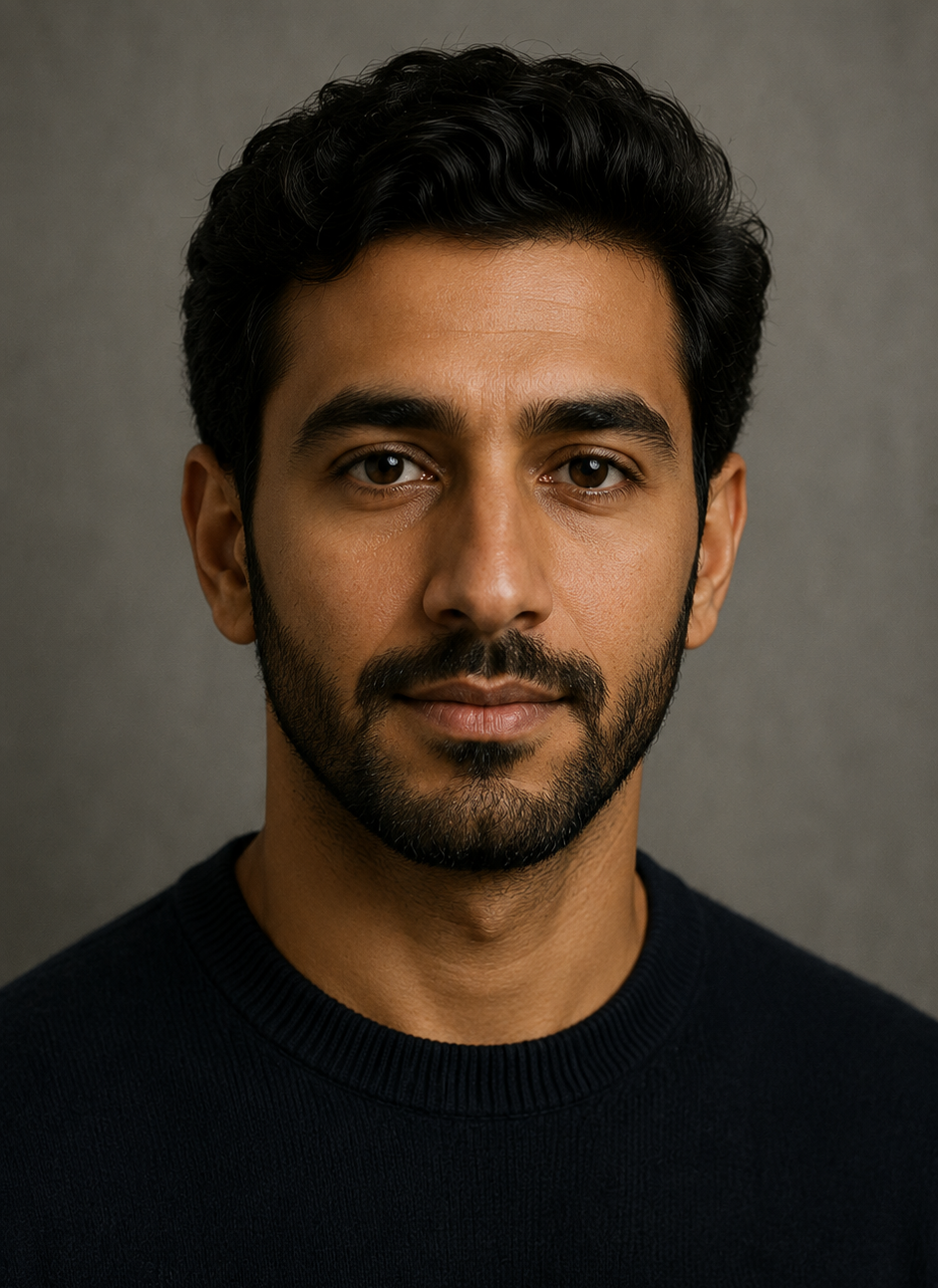
Written by
Khalid Al-Rashidi
Gulf & Middle East Correspondent · Emerging & Strategic Wealth
Khalid covers the family offices, luxury operators, and strategic capital moving across the GCC and wider Arab world — often before the rest of the region notices. He's spent years tracking how Gulf wealth structures itself for the next generation, from residency programmes to private aviation. Based between Dubai and Riyadh. Reach out at khalid.al-rashidi@theplatinumcapital.com.