

Qatar's Private Sector: The Families Building Outside the Fund
While Qatar's sovereign wealth fund commands global headlines with trophy acquisitions, a quieter revolution is unfolding among the emirate's merchant dynasties, who are deploying family capital into ventures spanning fintech, healthcare and logistics across Africa and Southeast Asia. These private empires, often operating beneath the radar of institutional investors, are rapidly diversifying beyond hydrocarbon dependence and establishing commercial footholds that may ultimately prove more durable than any single state-directed mega-deal.…
Qatar's Private Sector: The Families Building Outside the Fund
When the Qatar Investment Authority deploys capital, the world pays attention. The sovereign wealth fund's portfolio — valued at approximately $510 billion by mid-2026 — commands headlines from London's Canary Wharf to Manhattan's Hudson Yards. But a quieter, arguably more consequential story is unfolding beneath the sovereign umbrella: a generation of Qatari merchant families and private-sector dynasties are assembling commercial empires that increasingly operate independent of state patronage, and in some cases, rival the fund's ambitions in scale and sophistication.
This isn't new. Qatar's merchant class predates the hydrocarbon era. But what separates 2026 from previous decades is the velocity, geographic breadth, and institutional maturity with which private Qatari capital is now being deployed — from fintech ventures in Southeast Asia to logistics infrastructure across East Africa. Few outside the region have noticed.
The Old Guard Reinvents Itself
The Al Mana Group, one of Qatar's most established conglomerates, has spent the past eighteen months restructuring its portfolio to reduce dependence on luxury retail franchises — the business line that made it a household name across the Gulf. Under the leadership of Khalifa Al Mana and the broader family council, the group has accelerated investments in healthcare technology and cold-chain logistics, committing an estimated $400 million to new ventures since late 2024. A joint venture with India's Ecom Express, announced in February 2026, positions the group to capture last-mile delivery demand across Qatar, Oman, and Kuwait as GCC e-commerce penetration approaches 14% of total retail.
The Al Fardan Group has made an equally aggressive pivot. Synonymous with jewellery and marine services for decades, the family has thrown its weight behind real estate development and hospitality. Its Alfardan Properties division delivered 1,200 residential units in Lusail City during the first quarter of 2026, capitalising on sustained demand from the post-World Cup expatriate influx. Mohammed Alfardan, the group's chairman, told investors at the Doha Forum in January that non-jewellery revenues now account for 62% of consolidated turnover, up from roughly 40% in 2021. That is a significant shift.
A New Generation of Family Offices
What sets the current moment apart is the emergence of formally constituted single-family offices among Qatar's elite — structures that were rare even five years ago. The Mannai Corporation's founding family, the Alfardan-Mannai branch, established a Singapore-based family office in 2025 with an initial allocation of $750 million, focused on growth equity in climate technology and digital infrastructure across ASEAN markets. The move followed regulatory incentives introduced by the Monetary Authority of Singapore under its Variable Capital Company framework, which has attracted at least fourteen Gulf-origin family offices since 2023.
Then there's Wadi Al Sail Capital. The Doha-headquartered multi-family office, launched in mid-2025 by former Qatar Financial Centre executives, now manages approximately $1.2 billion for seven Qatari families. Its investment thesis is deliberately contrarian: heavy allocation to frontier markets including Uzbekistan, Côte d'Ivoire, and Bangladesh, where the office has taken significant positions in mobile banking platforms and agricultural processing facilities. Managing Partner Nasser Al-Hajri has publicly stated that his clients seek "returns uncorrelated to hydrocarbon cycles and Washington's interest rate decisions." That kind of language would have been unthinkable from Gulf principals a decade ago.
Construction, Contracting, and the National Vision
Qatar's National Vision 2030, now entering its final implementation phase, has created enormous opportunities for domestic private contractors who once operated in the shadow of international firms. Al Jaber Engineering, Power Holding International, and Galfar Al Misnad have collectively secured contracts worth over QAR 18 billion ($4.9 billion) in 2025-2026, spanning metro line extensions, water treatment facilities, and the North Field Expansion's downstream infrastructure.
The Al Misnad family's diversified interests deserve particular scrutiny. Beyond contracting, the family has built a significant position in industrial manufacturing through its Al Misnad Holding Company, which now operates steel fabrication plants in Qatar and Oman with combined annual capacity exceeding 220,000 metric tonnes. The holding company's recent acquisition of a 35% stake in a Turkish precast concrete manufacturer signals ambitions to become a regional building materials champion — a strategy that mirrors the trajectory of Saudi Arabia's Binladin Group before its restructuring. Whether it ends differently remains to be seen.
Financial Services: The Final Frontier
Perhaps the most telling indicator of private-sector maturation is the push into financial services. Masraf Al Rayan, Qatar's largest Sharia-compliant bank by assets following its 2024 merger integration, counts several prominent merchant families among its strategic shareholders. But newer entrants are challenging the established order. Dukhan Bank's private banking division reported a 28% increase in assets under management during 2025, reaching QAR 42 billion, driven largely by demand from business-owning families seeking succession planning and cross-border wealth structuring.
The Qatar Financial Centre Authority reported in March 2026 that 23 new wealth management and advisory firms had registered in the preceding twelve months — a 40% increase year-on-year. Several of these entities are backed directly by Qatari families seeking to institutionalise their own capital management while offering services to peers. Families building infrastructure to serve families. This self-referential ecosystem represents a structural break from the era when Goldman Sachs and UBS held near-monopoly advisory positions with Gulf principals.
Risks and Reckonings
None of this expansion comes without hazard. Concentration risk remains acute: many Qatari family businesses still derive 30-50% of revenues from government contracts, creating vulnerability to fiscal consolidation should LNG revenues soften. Corporate governance standards, while improving, lag behind international benchmarks. Few family conglomerates publish audited financials voluntarily, and board independence remains the exception rather than the norm.
Succession planning presents another structural challenge. Qatar's merchant elite is generationally young — many founding patriarchs remain active in their sixties and seventies — but the transfer of control to Western-educated heirs trained in private equity and venture capital carries its own tensions. The cultural negotiation between preserving family legacy and adopting institutional best practice will determine whether these enterprises endure or fragment. Nobody has a clean answer yet.
Still, the direction of travel is unmistakable. Qatar's private sector is no longer a supporting actor to the sovereign wealth fund's global portfolio. It is building its own stage — one deal, one family office, one frontier market bet at a time. For investors and partners seeking exposure to Gulf dynamism beyond the sovereign layer, these families are becoming the essential counterparties.
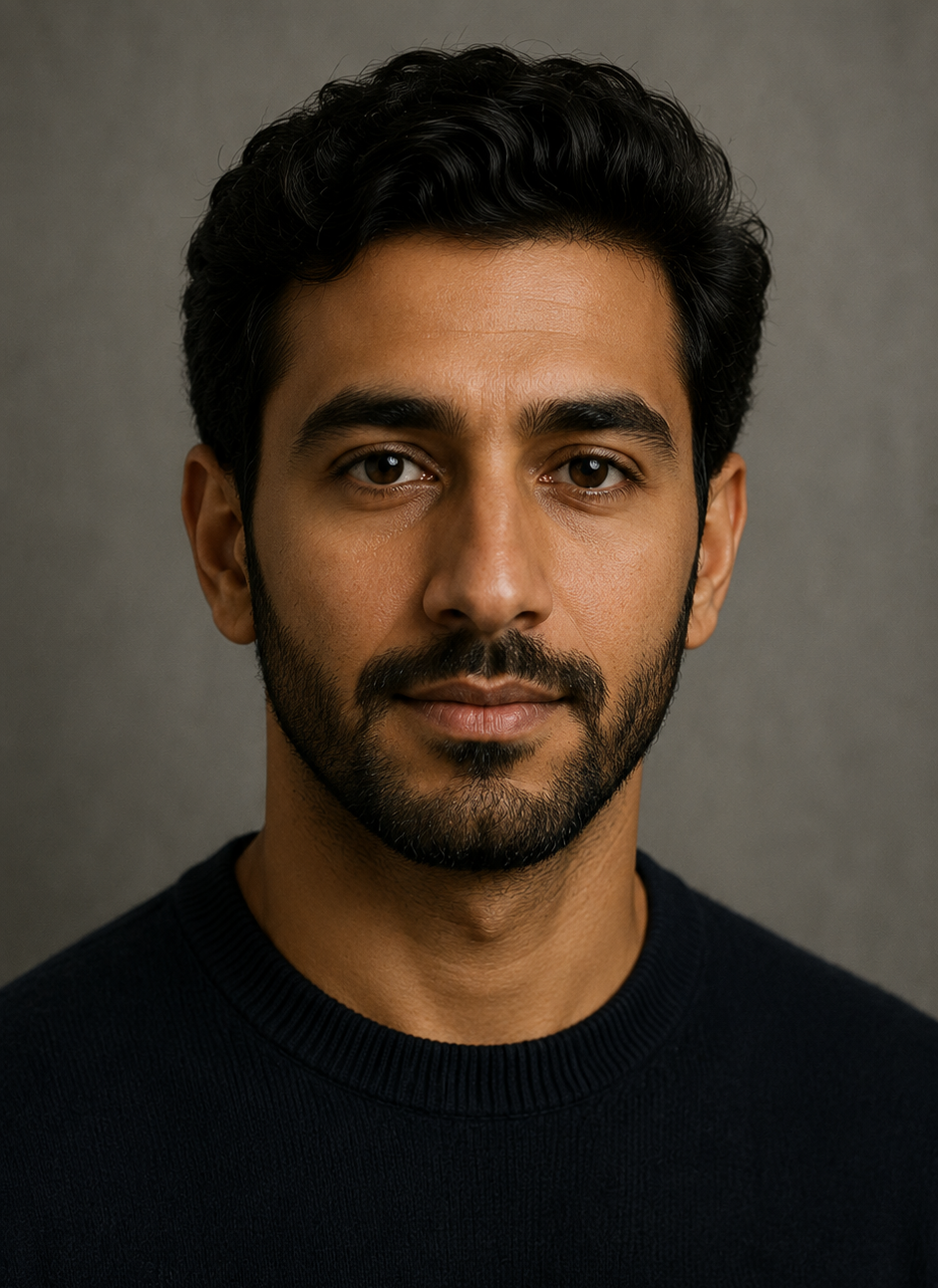
Written by
Khalid Al-Rashidi
Gulf & Middle East Correspondent · Emerging & Strategic Wealth
Khalid covers the family offices, luxury operators, and strategic capital moving across the GCC and wider Arab world — often before the rest of the region notices. He's spent years tracking how Gulf wealth structures itself for the next generation, from residency programmes to private aviation. Based between Dubai and Riyadh. Reach out at khalid.al-rashidi@theplatinumcapital.com.