

Qatar's Private Sector: The Families Building Outside the Fund
While the Qatar Investment Authority commands global headlines with its sovereign wealth, a constellation of powerful merchant families — the Al Fardan, Al Mana, and others — have quietly constructed sprawling commercial empires that rival the fund's influence across real estate, luxury retail, and regional finance. Their entrepreneurial ascent represents an increasingly significant and independent pillar of Qatari economic power, one that is diversifying beyond hydrocarbon patronage and reshaping the Gulf's private capital landscape on its own terms.…
Qatar's Private Sector: The Families Building Outside the Fund
When the Qatar Investment Authority manages assets north of $500 billion, it is easy to assume that Doha's economic story begins and ends with the sovereign wealth fund. That assumption would be wrong. Beneath the sovereign canopy, a generation of Qatari merchant families and private conglomerates is assembling portfolios of striking ambition — across logistics, fintech, healthcare, and food production — often with less fanfare but no less strategic intent than the state apparatus itself.
In 2026, as Qatar accelerates its National Vision 2030 diversification targets, the private sector's contribution to non-hydrocarbon GDP has crossed 55%, according to the Planning and Statistics Authority's Q1 figures. The families driving that shift are not merely beneficiaries of government contracts. They are building autonomous enterprises with regional and global reach, and in the process, they are reshaping what Qatari capitalism actually looks like.
The Al Mana Empire Expands Its Bet on Healthcare and Hospitality
The Al Mana Group, one of Qatar's most diversified family conglomerates, has long been synonymous with luxury retail — its partnerships with Zara, Hermès, and Harvey Nichols made it the dominant force in Doha's consumer market. But under the stewardship of Khalifa Al Mana and the broader family council, the group's 2025-2026 strategy has tilted decisively toward healthcare and managed hospitality.
In February 2026, Al Mana Healthcare opened its third multispecialty clinic in Lusail City, with plans for a 200-bed private hospital by 2028 — a project valued at approximately QAR 1.2 billion ($330 million). The family has hired senior executives from Cleveland Clinic Abu Dhabi and Mediclinic International to build out the operational framework. This is not philanthropy dressed as business. It is a calculated play on Qatar's healthcare spending, which the Ministry of Public Health projects will reach $12.8 billion annually by 2028, with private providers expected to absorb a growing share.
Simultaneously, the group's hospitality arm has taken management control of three boutique hotel properties in Doha's Msheireb district, pivoting away from franchise models toward proprietary brands. The move mirrors a broader Gulf trend — Emirati family offices have pursued similar strategies through Jumeirah and Rotana — but it represents something new for Qatar's private sector players, who have historically deferred to international operators. That is a significant shift.
Powerhouse Ventures and the Rise of Qatari-Led Tech Capital
The most significant structural change in Qatar's private wealth ecosystem may be the emergence of homegrown venture capital. Powerhouse, the family office investment vehicle associated with the Al-Attiyah family, closed its second technology fund at $180 million in March 2026, with commitments focused on fintech, climate tech, and logistics software across the Gulf and South Asia.
The fund's portfolio already includes stakes in Wahed Invest, the Islamic digital wealth platform that surpassed $3 billion in assets under management earlier this year, and CareemPay's merchant services division. More recently, Powerhouse led a $22 million Series B round into Karwan, a Karachi-based last-mile delivery platform that has expanded into Saudi Arabia's Eastern Province — a corridor that Qatari investors increasingly view as an extension of their own commercial geography. Few outside the region have noticed.
What distinguishes Powerhouse from the sovereign-adjacent technology investments made through QIA or Qatar Development Bank is the speed of deployment and the appetite for earlier-stage risk. "The state funds are excellent at writing $100 million checks into proven platforms," said Nadia Habib, a partner at Gulf Capital Advisors in Doha. "What families like the Al-Attiyahs are doing is filling the gap between seed and growth — and they are doing it with conviction capital, not committee capital."
Food Security as a Family Business
The blockade imposed on Qatar by its Gulf neighbours between 2017 and 2021 left deep scars on the national psyche around food security. The state responded with Baladna, the dairy giant that went from emergency project to publicly listed company. But private families have built their own parallel infrastructure with far less visibility.
The Bin Khalid Group, a mid-sized conglomerate with roots in trading and construction, has invested approximately QAR 800 million ($220 million) since 2022 into controlled-environment agriculture — hydroponic and vertical farming operations that now supply roughly 8% of Qatar's domestically produced vegetables, according to the Ministry of Municipality's agricultural output data for 2025. Their flagship facility in Al Khor spans 45,000 square meters, uses Dutch greenhouse technology licensed from Priva, and produces over 3,500 tonnes of tomatoes, cucumbers, and leafy greens annually.
In January 2026, Bin Khalid signed an export agreement with Lulu Group International to supply fresh produce to hypermarkets in Oman and Bahrain. That deal is worth pausing on: it transforms what began as a domestic food security hedge into a revenue-generating export business. The economics remain challenging. Desalination-dependent water costs and energy inputs mean margins are thin compared to traditional agriculture. But the strategic value, combined with implicit government support through subsidized land leases, makes the long-term calculus favorable.
Generational Transition and Governance Reform
The sophistication of these private-sector moves reflects something deeper: a generational transition that is altering how Qatari family businesses govern themselves. The Qatar Financial Centre Authority reported in its 2025 annual review that 34 Qatari family offices have now formally registered under its regulatory framework, up from just 11 in 2021. Registration brings reporting obligations, compliance standards, and — critically — a degree of institutional discipline that many merchant families previously resisted.
Several prominent families, including the Al Fardan Group and the Mannai Corporation shareholders, have appointed independent board members and established family constitutions that separate ownership from operational management. Mannai's 2025 annual report disclosed for the first time a formal succession protocol and an independent audit committee chaired by a non-family professional. Small steps by the standards of Western corporate governance, yes. But significant in a market where patriarchal authority has traditionally been absolute.
The question that hangs over all of this is whether Qatar's private sector can sustain its momentum independently of state patronage. Government procurement, advantageous land allocations, and preferential financing through Qatar Development Bank remain essential enablers. Yet the direction of travel is unmistakable: a cohort of Qatari families is building enterprises designed to survive — and profit — on their own terms. The sovereign fund will always dominate the headlines. The families building outside it may ultimately matter more to Qatar's economic resilience.
Khalid Al-Rashidi is a senior journalist at The Platinum Capital covering emerging wealth, family offices, and private capital across the Gulf states.
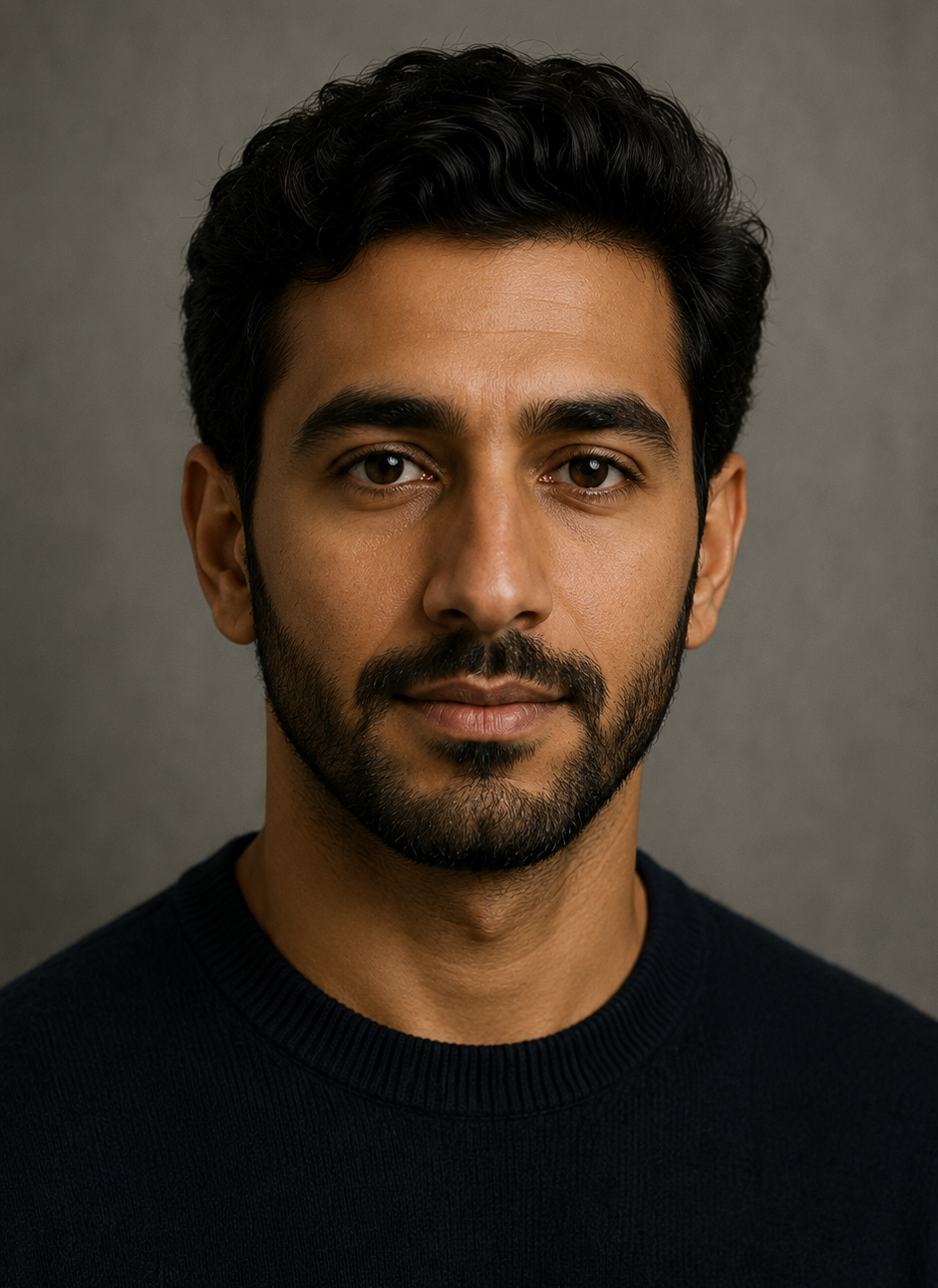
Written by
Khalid Al-Rashidi
Gulf & Middle East Correspondent · Emerging & Strategic Wealth
Khalid covers the family offices, luxury operators, and strategic capital moving across the GCC and wider Arab world — often before the rest of the region notices. He's spent years tracking how Gulf wealth structures itself for the next generation, from residency programmes to private aviation. Based between Dubai and Riyadh. Reach out at khalid.al-rashidi@theplatinumcapital.com.