Wealthy Women in the Gulf Leading Charitable Initiatives
Across the Gulf states, a growing cohort of high-net-worth women is reshaping the philanthropic landscape by channeling substantial private wealth into education, healthcare, and social enterprise, often bypassing traditional institutional frameworks to drive measurable impact. Their strategic approach to giving, which increasingly mirrors the rigour of venture capital, is not only accelerating development outcomes but also redefining the role of women as economic power brokers in the region.…
The Gulf's Quiet Revolution: Wealthy Women Reshape Regional Philanthropy
When Sheikha Bodour bint Sultan Al Qasimi launched the Kalimat Foundation's latest literacy programme across refugee camps in Jordan and Lebanon earlier this year, it marked more than a humanitarian gesture. It signalled the acceleration of a trend that has been building across the Arabian Gulf: women of extraordinary private wealth are no longer content to write cheques from the margins. They are architecting philanthropic strategies with the same rigour and ambition that defines the region's sovereign wealth funds.
Across the six nations of the Gulf Cooperation Council, female-led charitable initiatives have grown by an estimated 34 per cent since 2023, according to data compiled by the Pearl Initiative and Cambridge Associates. In 2026, the figure is expected to surpass $2.8 billion in direct giving and impact investments — a sum that places Gulf women among the most consequential philanthropic actors in the emerging world. This is not incremental change. It is a structural shift in how wealth, gender, and social responsibility collide in one of the planet's most capital-rich corridors.
Family Offices as Philanthropic Engines
The rise of female-led giving in the Gulf cannot be separated from the transformation of the region's family office ecosystem. A 2025 report from Lombard Odier estimated that more than 1,200 single-family offices now operate across the GCC, with combined assets exceeding $800 billion. Women occupy decision-making roles — as principals, next-generation leaders, or dedicated philanthropic officers — in roughly one in five of these entities, up from fewer than one in ten a decade ago. That is a significant shift.
In Saudi Arabia, the Olayan Financing Company, one of the kingdom's most storied family conglomerates, has seen Lubna Olayan's legacy continue to shape giving strategy even as a new generation assumes operational control. The family's philanthropic arm directed more than $120 million toward education and healthcare initiatives between 2024 and early 2026, with particular emphasis on women's vocational training in the Kingdom's less developed southern provinces. In the UAE, the Al Rostamani family office has expanded its social impact portfolio under the guidance of female family members who have channelled resources into mental health infrastructure — a cause that remains desperately underfunded across the Middle East.
What sets these efforts apart from traditional Gulf philanthropy is intentionality. Previous generations favoured mosque construction and zakat-driven giving — important but often diffuse. Today's wealthy women deploy theory-of-change frameworks, hire dedicated impact measurement teams, and demand accountability metrics that mirror private equity due diligence. The difference is striking.
Saudi Vision 2030 and the Formalisation of Female Giving
Saudi Arabia's sweeping reform agenda has provided both licence and infrastructure for women to operate more visibly in philanthropic circles. The kingdom's Non-Profit Sector Stimulation Law, updated in late 2024, streamlined the registration of charitable foundations and explicitly encouraged private sector participation. By the first quarter of 2026, the Saudi Ministry of Human Resources reported that 41 per cent of newly registered non-profit entities had at least one female founder. That figure would have been unthinkable five years ago.
Princess Reema bint Bandar Al Saud, Saudi Arabia's ambassador to the United States, has played a central role in connecting Gulf female philanthropists with international counterparts, facilitating knowledge exchanges with the Bill & Melinda Gates Foundation and the Rockefeller Philanthropy Advisors. Meanwhile, Rania Nashar, formerly the first female chief executive of Samba Financial Group, has turned her attention to structuring blended finance vehicles that combine charitable capital with commercial returns for education technology ventures across MENA.
The Professional Women's Network Riyadh chapter, established in 2025, now counts more than 300 members, many of whom manage personal or family giving budgets exceeding $5 million annually. Their collective focus has moved toward systemic issues: early childhood development, climate adaptation in coastal communities, and digital inclusion for women in rural areas.
Kuwait, Qatar, and the Cross-Border Dimension
The phenomenon stretches well beyond Saudi Arabia and the Emirates. Few outside the region have noticed. In Kuwait, Sheikha Hussah Sabah al-Salem al-Sabah's Dar al-Athar al-Islamiyyah foundation has broadened its mandate from cultural preservation to funding arts-based therapy programmes for displaced populations, committing $18 million in 2025-2026 grants. The foundation's model — pairing Kuwaiti capital with operational expertise from international NGOs such as Médecins Sans Frontières — has been cited by the Brookings Institution as a template for Gulf-origin cross-border philanthropy.
Qatar's Sheikha Moza bint Nasser remains the region's most prominent female philanthropic figure. Her Education Above All foundation announced in January 2026 that it had enrolled its 16 millionth out-of-school child globally, with $340 million in cumulative commitments since 2012. But beneath this headline figure lies a growing network of Qatari women — many of them entrepreneurs who built wealth through Doha's real estate and technology sectors — directing capital toward causes that carry personal resonance. The Qatar Foundation's Social Development Center reported a 28 per cent year-on-year increase in female-initiated community projects in 2025, spanning elder care, autism support services, and environmental conservation in the Gulf's fragile marine ecosystems.
Challenges and the Road Ahead
For all the momentum, real obstacles remain. Transparency is a persistent constraint: many Gulf family offices operate with minimal public disclosure, making it hard to quantify the full scale of female-led giving. Cultural expectations around modesty mean some of the region's most generous women philanthropists actively resist media attention, which complicates efforts to build peer networks and inspire others to follow.
Then there is the efficiency problem. A 2026 analysis by Boston Consulting Group's Centre for Public Impact found that while the volume of Gulf philanthropic capital has surged, only 22 per cent of charitable foundations in the GCC conduct rigorous post-programme impact evaluations. The professionalisation of giving infrastructure — governance boards, grant-making protocols, independent audits — remains uneven, particularly outside the largest family offices.
Yet the trajectory is unmistakable. UBS's Global Wealth Report, published in May 2026, estimated that women in the GCC will control approximately $700 billion in personal wealth by 2030, driven by inheritance transfers, entrepreneurial activity, and expanding access to capital markets. If even a fraction of that wealth flows into structured philanthropy, the implications for health, education, and social mobility across the Middle East and North Africa will be profound.
The women leading this shift are not waiting for permission. They are deploying capital with precision, building institutions designed to outlast individual lifetimes, and redefining what it means to exercise power in a region where philanthropy has historically been a male preserve. The Gulf's charitable sector will look fundamentally different within a decade. The women shaping it already know this — they are the ones drawing the blueprints.
Written by
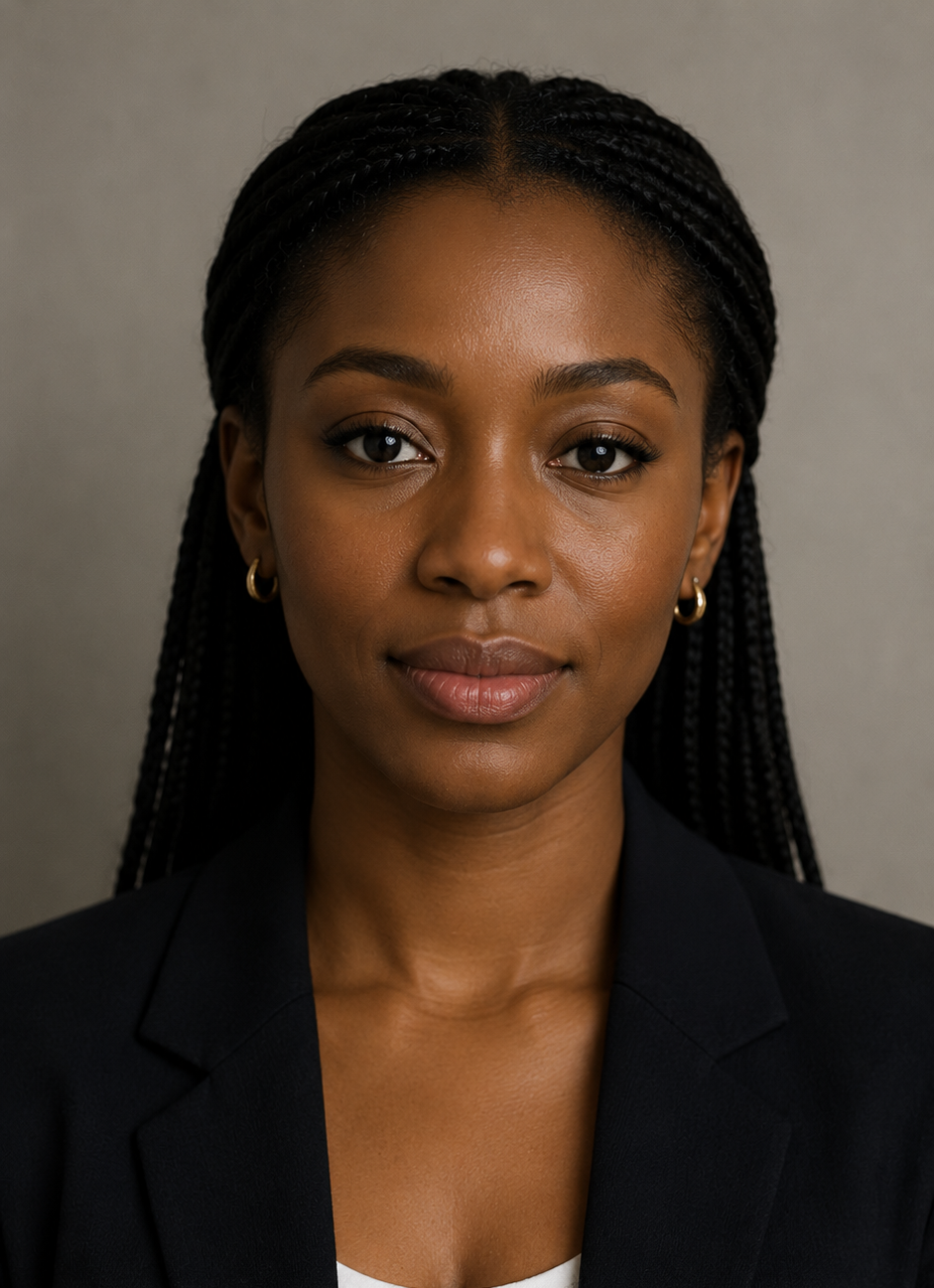
Amara Osei
Africa & Emerging Markets Correspondent · Philanthropy & Next Generation
Amara covers the philanthropists, foundation founders, and next-generation leaders building wealth and influence across Africa, Southeast Asia, and Central Asia. She has a particular eye for the family businesses handing the reins to a generation educated abroad and building at home. Based in Nairobi. Reach out at amara.osei@theplatinumcapital.com.