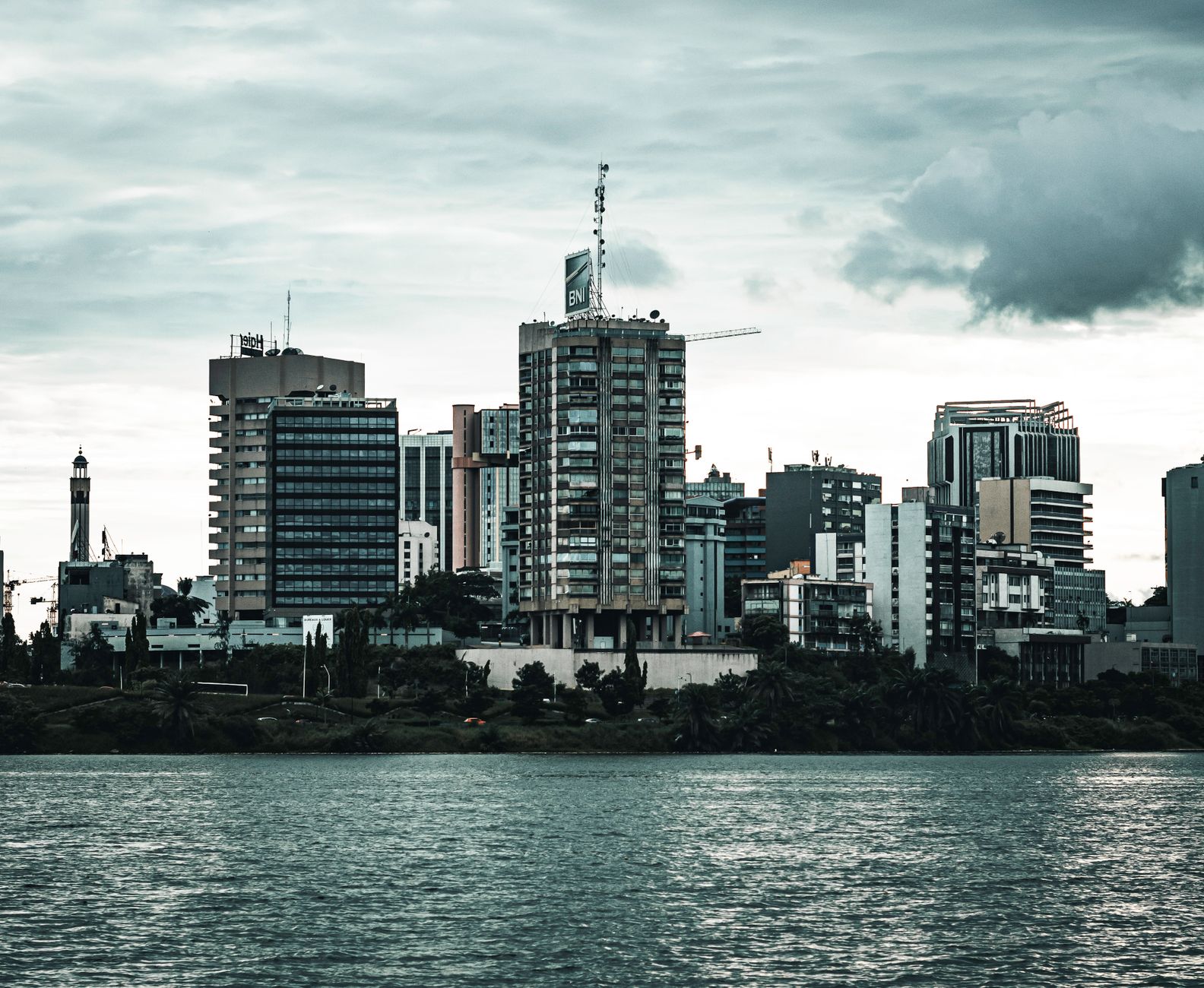

Bahrain's Financial Hub Ambitions and the Families Driving It
Bahrain's longstanding ambition to position itself as the Gulf's preeminent financial gateway has been shaped less by sovereign wealth directives than by a tight network of merchant families whose commercial interests predate the oil era and now extend deep into fintech, Islamic finance and cross-border capital flows. Understanding the Al Moayyed, Kanoo and Jawad dynasties, among others, is essential to grasping how the kingdom's regulatory architecture and economic diversification strategy are as much products of private dynastic influence as they are of state design.…
The Small Kingdom With Outsized Ambitions
When Bahrain's Crown Prince and Prime Minister, Salman bin Hamad Al Khalifa, stood before investors at Davos in January 2026 and declared that the kingdom would double its financial services sector's contribution to GDP by 2030, the reaction in Gulf finance circles was notably muted. Bahrain has been making such proclamations for decades. But this time, the numbers suggest something different is happening. The Central Bank of Bahrain reported that financial services contributed 17.4% of GDP in 2025, up from 16.1% in 2023, making it the highest proportion of any Gulf state. More telling is the composition of that growth, which has shifted decisively toward private wealth management and family office infrastructure — a pivot driven not by government decree alone, but by the dynastic commercial families who have quietly repositioned the kingdom as their operational base.
The Regulatory Architecture That Money Follows
Bahrain's competitive edge has never been its size or its hydrocarbon reserves, which are modest compared to its neighbours. It has instead leveraged regulatory sophistication — a strategy that the Central Bank of Bahrain and the Economic Development Board have accelerated under the Financial Services Development Strategy 2022-2027. In March 2026, the CBB introduced its updated Family Office Framework, a regulatory category that allows single and multi-family offices to establish with streamlined licensing, reduced capital requirements of as little as $250,000 for advisory-only structures, and a tax environment that remains at zero percent on personal income and capital gains.
The framework was not designed in a vacuum. It was constructed in explicit competition with Dubai International Financial Centre and Abu Dhabi Global Market, both of which have attracted hundreds of family offices since 2020. But Bahrain's pitch is different: lower operational costs — office space in Bahrain Financial Harbour runs approximately 40% cheaper than DIFC — paired with a regulatory regime that Gulf families perceive as less opaque. "Bahrain's regulators actually pick up the phone," one advisor to a Saudi family office told The Platinum Capital. "In the larger centres, you are a number. Here, you are a relationship."
By the first quarter of 2026, the CBB had licensed 47 family offices, up from 29 at the end of 2024. Those figures pale against Dubai's estimated 700-plus family offices. But the average assets under management per Bahraini-licensed entity — roughly $380 million — suggest that these are not shell structures but operational wealth management vehicles with real capital deployment mandates. That is a meaningful distinction.
The Families Reshaping the Kingdom's Financial Identity
The most consequential driver of Bahrain's financial hub ambitions is not a government ministry but a constellation of Gulf merchant families who have chosen the kingdom as their strategic node. The Kanoo family, whose diversified conglomerate Yusuf bin Ahmed Kanoo Group generates estimated revenues exceeding $1.5 billion annually across logistics, industrial services, and travel, has expanded its family office operations through Bahrain, establishing a dedicated investment arm focused on private credit and Southeast Asian infrastructure. Ahmed Ali Kanoo, a fourth-generation principal, has been vocal about Bahrain's advantages for families seeking to professionalise governance without surrendering control to institutional gatekeepers.
The Al Zayani family, operators of the Ithmaar Holding group and significant stakeholders in Bahraini Islamic finance, have similarly consolidated wealth planning functions in Manama. Their move in late 2025 to restructure Ithmaar's asset management division into a dedicated multi-family office platform — reportedly serving five to seven Gulf families with combined assets north of $2 billion — sent a clear signal. Bahrain's Islamic finance expertise could be married to family wealth structuring in ways that secular financial centres cannot easily replicate. That is a significant competitive wedge.
Saudi families, too, are part of the equation. At least a dozen family groups from the Eastern Province — historically connected to Bahrain through the King Fahd Causeway's daily traffic of 40,000-plus vehicles — have established investment holding companies in Bahrain since 2024, according to the Bahrain Chamber of Commerce. The Olayan Group, while headquartered in Riyadh, has maintained significant Bahraini operations through its banking interests, and several smaller but substantial Saudi trading families have followed, attracted by Bahrain's 100% foreign ownership provisions and its bilateral investment treaties with 31 countries. Few outside the region have noticed.
Fintech and Digital Assets as a Second Engine
Bahrain has also pursued a parallel strategy that complements its family wealth play: positioning itself as the Gulf's most permissive regulated environment for digital assets and fintech. Rain Financial, the first cryptocurrency exchange licensed by a Gulf central bank, has operated from Bahrain since 2019 and by early 2026 reported cumulative trading volumes exceeding $2.5 billion. The CBB's crypto-asset module, updated in 2025, now permits licensed entities to offer tokenised securities — a development that several family offices have begun exploring for real estate and private equity holdings.
Tarabut Gateway, the open banking platform that raised $32 million in its Series A and has since expanded its data infrastructure across the GCC, chose Bahrain as its headquarters precisely because of regulatory receptivity. CEO Abdulla Almoayed has noted publicly that Bahrain's sandbox regime allowed the company to test products with live banking data in ways that would require years of negotiation in larger markets. For family offices seeking exposure to fintech infrastructure — rather than merely using fintech products — Bahrain offers a proximate dealflow that Abu Dhabi and Riyadh are still constructing.
The Structural Risks That Cannot Be Ignored
For all its regulatory agility, Bahrain carries structural vulnerabilities that temper the optimism. The kingdom's sovereign credit rating sits at B+/B1 — deep in speculative territory — reflecting a fiscal position that remains dependent on Gulf neighbours' support. The $7.5 billion aid package from Saudi Arabia, the UAE, and Kuwait, extended in 2018, provided a lifeline, and Bahrain's Fiscal Balance Programme has reduced the deficit from 10% of GDP in 2020 to approximately 4.8% in 2025. Progress, yes. But sovereign fragility introduces counterparty risk into every financial licence the kingdom issues. Family offices managing multi-generational wealth must weigh operational convenience against the scenario in which Bahrain's fiscal pressures trigger capital controls or regulatory instability — however remote that possibility currently appears.
Talent depth is another constraint. Bahrain's Bahrainisation requirements mandate that financial firms employ a minimum percentage of nationals, currently 70% for retail banking and 50% for investment firms. The policy has produced a capable local workforce, but the specialised skills required for complex family wealth structuring — cross-border tax optimisation, fiduciary governance, alternative asset administration — remain scarce. Several family offices interviewed by The Platinum Capital reported relying on advisors based in London and Geneva, using Bahrain as a booking centre rather than a fully autonomous decision-making hub. That gap matters.
Yet the trajectory is unmistakable. Bahrain's financial ambitions are no longer aspirational rhetoric delivered at investment conferences. They are being underwritten by the capital, the networks, and the generational planning imperatives of Gulf families who have decided that smaller can, in fact, be better. Whether the kingdom can sustain this momentum against better-resourced competitors will depend less on government strategy than on whether those families continue to find what they came for: discretion, proximity, and a regulator willing to build the rules around them.
Written by
Khalid Al-Rashidi
Gulf & Middle East Correspondent · Emerging & Strategic Wealth
Khalid covers the family offices, luxury operators, and strategic capital moving across the GCC and wider Arab world — often before the rest of the region notices. He's spent years tracking how Gulf wealth structures itself for the next generation, from residency programmes to private aviation. Based between Dubai and Riyadh. Reach out at khalid.al-rashidi@theplatinumcapital.com.