Ivory Coast Business Elite: A Francophone Africa Growth Story
Ivory Coast has quietly emerged as one of sub-Saharan Africa's most compelling investment narratives, with a business elite forging sophisticated cross-sector alliances across agribusiness, infrastructure, and digital finance that are reshaping the country's economic architecture with striking discipline and ambition. For family offices and sovereign capital seeking frontier exposure without frontier risk, the Ivorian growth story offers a rare convergence of political stability, demographic momentum, and an increasingly cosmopolitan entrepreneurial class that understands both Paris boardrooms and Abidjan street-level opportunity.…
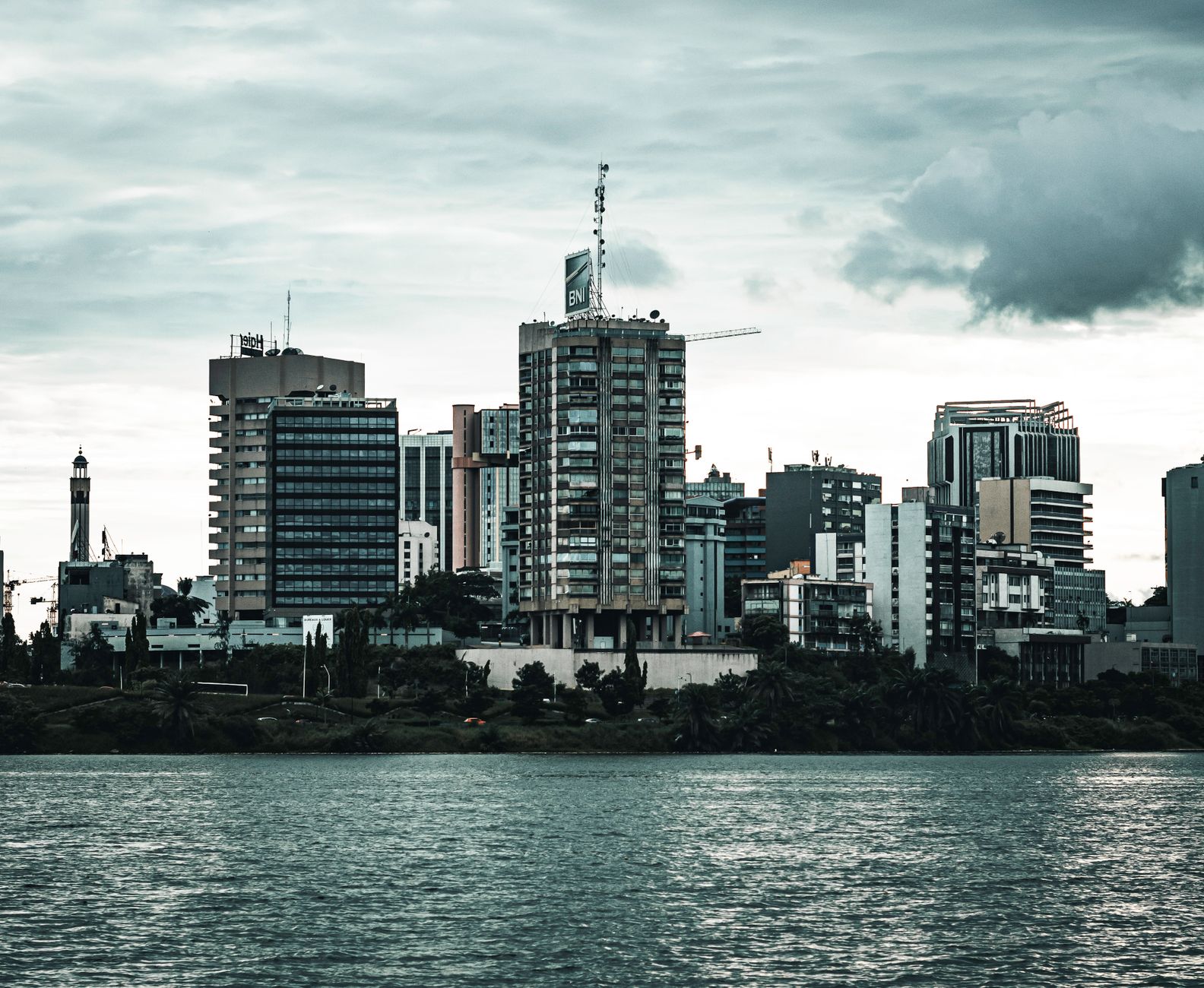
While global financial media trains its lens on Lagos, Nairobi, and Cairo, a quieter but increasingly consequential story has been building along the Gulf of Guinea. Ivory Coast — or Côte d'Ivoire, as its business elite insist it be named — has spent the better part of a decade assembling the institutional and entrepreneurial infrastructure of a genuinely modern economy. GDP growth has run above 6% annually. The cocoa sector generates over $4 billion in export revenues. The banking system has, without much fanfare, become the most sophisticated in Francophone sub-Saharan Africa. The country is now producing a new generation of wealthy, globally oriented business principals whose influence extends well beyond Abidjan. For family offices, Gulf sovereign investors, and private capital principals scanning frontier opportunity, the Ivorian story demands serious attention.
The Foundations: Why Abidjan Became Francophone Africa's Quiet Capital Market
Abidjan hosts the Bourse Régionale des Valeurs Mobilières — the BRVM — the common stock exchange for eight West African nations operating under the UEMOA monetary union. Market capitalisation is now approaching $18 billion, with over 45 listed companies. That makes the BRVM the single largest pool of formal equity capital in Francophone Africa. Full stop.
Unlike Nairobi or Lagos, the exchange operates in CFA francs — a currency pegged to the euro and managed in coordination with the French Treasury. The political debates around that arrangement are real and worth having. But for investors who need monetary stability before they will write a serious cheque, the CFA delivers. Inflation in Côte d'Ivoire has remained meaningfully below that of its anglophone peers throughout 2025 and into mid-2026. Ivorian business families are holding a preserved capital base that entrepreneurs in Nigeria or Ghana cannot always claim. That stability did not happen by accident. It is the bedrock on which wealth here gets built.
The Emerging Titans: Who Is Building Wealth in Côte d'Ivoire
The most prominent name in Ivorian private business remains the Fadiga family, whose holdings span insurance, real estate, and agro-processing. But the more revealing story sits one tier below the familiar surnames. A new cohort of entrepreneurs — many educated in France, Canada, or the United States and returning with both capital and networks — have built businesses in logistics, financial technology, and consumer goods that are now pulling institutional interest.
Jean-Louis Billon, founder of the SIFCA Group and a former government minister, remains the clearest reference point for what integrated agribusiness at scale actually looks like in this region. SIFCA's palm oil and rubber operations generate revenues exceeding $1 billion annually across five West African countries. That is not a project. That is a platform.
More recently, the digital economy has produced names like Olivier Pla and the founders of CinetPay — an Abidjan-based payments infrastructure company processing hundreds of millions of dollars in mobile money transactions annually across the continent. These are not startups in the romantic, venture-capital-pitch-deck sense. They are operational businesses with genuine revenue, serving real markets, solving real problems.
Continental Momentum: The Benhamadi Signal and What It Means
The broader Francophone Africa investment moment is best illustrated by what is happening just north of the Sahara. Pay attention to this one.
In late June 2026, Algerian billionaire Abderrahmane Benhamadi's Condor Electronics — one of North Africa's largest home appliances manufacturers — formalised export agreements with distribution partners in Rwanda and Tanzania at the 57th edition of the Algiers International Fair. Algeria's Minister of Foreign Trade Kamel Rezig was present for the signing. This was Condor's most decisive push into sub-Saharan Africa to date, and the strategic logic behind it is identical to what drives Ivorian business expansion: rising urban incomes, a growing middle class, and accelerating electricity access are producing durable consumer demand with real longevity.
Abidjan's business elite has been watching Condor's East Africa move closely. It validates something they have believed for years — that African industrial capital, not just foreign capital, will write the continent's next economic chapter. Several Ivorian family offices are already evaluating logistics and distribution partnerships designed to plug into these emerging continental supply chains. Few outside the region have noticed. They should.
Gulf Capital and the Abidjan Connection
The relationship between Gulf sovereign wealth and West Africa is no longer abstract or aspirational. The UAE's Abu Dhabi sovereign vehicles have held positions in African agricultural infrastructure for several years. Saudi Arabia's Public Investment Fund has signalled a clear intent to deepen its continental presence through the Saudi-Africa Summit framework. These are not press release commitments. Capital is moving.
For Ivorian business families, this represents a genuine opening — and the timing is not coincidental. Ivory Coast controls approximately 40% of global cocoa supply. That fact sits directly inside Gulf food security programmes and the sovereign mandates that fund them. Several Abidjan-based trading and processing houses have already received exploratory approaches from Gulf family offices and sovereign-aligned entities seeking upstream exposure to the cocoa value chain.
The numbers tell a complicated story. The MENA M&A market recorded $46.7 billion in deal value across 390 transactions in the first half of 2026 alone — with Q2 deal value more than doubling year-on-year to $25 billion, according to EY. That is a significant shift. It reflects a Gulf capital base that is actively seeking diversified placement across asset classes and geographies. Côte d'Ivoire, with its stable currency, functioning exchange, and commodity depth, is better positioned than almost any other Francophone African market to absorb meaningful allocations from that pool.
What Sophisticated Investors Should Watch
For private capital principals and family office managers evaluating Côte d'Ivoire seriously, three vectors warrant immediate attention.
First, the infrastructure buildout. The government's National Development Plan has committed over $27 billion to transport, energy, and urban infrastructure through 2030. The private co-investment opportunities embedded in that programme remain significantly undercapitalised by international standards. That gap will not stay open indefinitely.
Second, the agro-industrial transformation play. The government is aggressively incentivising a shift from raw cocoa export toward processed product through targeted tax policy. For investors who position early, that policy direction represents a generational margin expansion opportunity. The window exists now because most international capital has not yet priced it in.
Third — and perhaps most consequential for family offices specifically — the succession dynamics within Abidjan's first-generation business families are beginning to crystallise. Next-generation principals, often holding dual French and Ivorian citizenship and carrying strong European financial networks, are actively restructuring family holdings. They are not just looking for capital. They are looking for co-investment partners who bring governance frameworks and international market access alongside the cheque.
The comparison to Abdul Samad Rabiu's BUA Group is instructive here. BUA rewarded shareholders with a $363 million dividend in early 2026 and expanded its asset base by more than 20% in a single half-year. Ivorian industrialists are watching that trajectory with intent, positioning to replicate it at a regional scale. The capital is forming. The architecture is in place. The question for outside investors is a simple one: do they arrive early enough to be partners, or do they arrive late enough to be followers?
Written by
Khalid Al-Rashidi
Gulf & Middle East Correspondent · Emerging & Strategic Wealth
Khalid covers the family offices, luxury operators, and strategic capital moving across the GCC and wider Arab world — often before the rest of the region notices. He's spent years tracking how Gulf wealth structures itself for the next generation, from residency programmes to private aviation. Based between Dubai and Riyadh. Reach out at khalid.al-rashidi@theplatinumcapital.com.