

Private Residences and Branded Apartments: The Gulf's New Status Asset
The proliferation of branded residences across the Gulf has transformed luxury real estate from a mere property transaction into an exercise in identity curation, with developers partnering with fashion houses, hospitality empires and automotive marques to command premiums of 30 to 50 percent over comparable unbranded stock. For ultra-high-net-worth buyers in Dubai, Riyadh and Doha, these residences now function less as homes and more as portable declarations of affiliation, offering concierge-wrapped lifestyles that blur the boundary between owning an address and owning a brand.…
The Address on the Door Now Matters More Than the Car in the Driveway
When a Kuwaiti family office paid $42 million for a penthouse at the Bulgari Lighthouse in Dubai's Jumeirah Bay Island earlier this year, the transaction barely registered as exceptional. That tells you everything about where this market has gone. Across the Gulf Cooperation Council states, branded residences have evolved from architectural novelties into cornerstone allocations within ultra-high-net-worth portfolios. The convergence of luxury hospitality brands, sovereign-backed developers, and a generation of Gulf wealth holders seeking tangible, lifestyle-integrated assets has produced a market segment growing at roughly three times the rate of conventional prime residential property.
Knight Frank's 2026 Branded Residences Report recorded 940 branded residential schemes globally — a 170% increase from a decade ago. The Gulf accounts for approximately 18% of the total pipeline, with Dubai alone hosting more than 70 completed or under-construction projects. But the phenomenon has spread well beyond the Emirates. Riyadh, Jeddah, Muscat, and Doha are now active theatres, driven by government-led tourism strategies and a wholesale rethinking of what constitutes a prestige asset in the region. Few outside the region have noticed.
Dubai's Dominance and the Premium Economics
Dubai remains the gravitational centre. Omniyat's partnership with Dorchester Collection produced The Lana Residences, where units on upper floors have traded at premiums exceeding 45% over comparable non-branded stock in the Business Bay corridor. DAMAC Properties, which pioneered the segment in the Gulf through its collaboration with Versace and Cavalli, reported that its branded portfolio generated AED 8.2 billion in sales during the first half of 2025, with average price per square foot reaching $1,100. Five years ago, that figure would have seemed absurd.
Four Seasons Private Residences at Jumeirah, developed by Dar Al Arkan in collaboration with Missoni and Pagani for separate towers in the same masterplan, exemplifies the trend toward hyper-segmentation. Rather than a single brand anchoring a development, developers are curating multi-brand environments designed to attract distinct buyer profiles. The strategy mirrors the diversification logic of family office portfolios themselves: spread the identity, concentrate the value.
Savills estimates that the branded premium in Dubai — the additional cost a buyer pays solely for the brand affiliation, managed services, and design pedigree — now averages 25-35%, up from 15-20% in 2020. And resale data suggests these premiums hold. Secondary market transactions at the Armani Residences in Burj Khalifa have consistently outperformed the broader Downtown Dubai index by 20% or more on a per-square-foot basis over the past three years. That is a significant shift.
Saudi Arabia's Ambitious Entry
The Kingdom's branded residence pipeline has expanded dramatically under Vision 2030. ROSHN, the PIF-backed real estate developer, has integrated branded hospitality components into its gigaproject communities. The Ritz-Carlton Residences in Jeddah, part of the wider waterfront regeneration along the Corniche, is scheduled for completion in late 2027, with reported pricing starting at SAR 18 million for three-bedroom units. That would position it among the most expensive residential offerings in Saudi history.
NEOM's Sindalah island, which began receiving its first guests in 2025, includes private residences managed by Aman Resorts, where entry-level villas are understood to be priced above $15 million. The Red Sea Global development, Amaala, has attracted Six Senses, Clinique La Prairie, and Jean Nouvel to create a wellness-oriented residential enclave targeting Gulf and European family offices seeking both privacy and medical-grade lifestyle infrastructure.
The Saudi push matters not merely for its scale but for its signalling effect. When sovereign wealth is deployed to attract global luxury operators, it validates branded residences as an institutional-grade asset class — not a vanity purchase.
The Family Office Calculus
For Gulf-based family offices, branded residences satisfy multiple portfolio objectives at once. They function as real assets with inflation-hedging characteristics. They serve as lifestyle utilities that reduce the need for hotel expenditure across multiple geographies. And they work as legacy holdings that transfer intergenerational wealth with minimal friction in jurisdictions like Dubai, where there is no inheritance tax.
A 2026 survey by Henley & Partners found that 38% of UHNW individuals in the GCC had acquired or were actively considering a branded residence as part of their wealth structuring, up from 22% in 2022. The residency-by-investment dimension is not trivial: Dubai's Golden Visa programme, which grants ten-year residency to property investors meeting the AED 2 million threshold, has made branded apartments a functional immigration instrument for wealthy families from Egypt, Pakistan, India, and sub-Saharan Africa.
The rental yield profile, while typically lower than conventional residential stock — averaging 4-5% gross in Dubai versus 6-7% for non-branded equivalents — is offset by lower vacancy rates and the capacity to command premium short-term rental income through the hotel operator's distribution network. Branded residences at the Address Hotels portfolio, managed by Emaar Hospitality, reported occupancy rates above 82% for units enrolled in the rental pool during 2025.
Risks Beneath the Marble
The market has real vulnerabilities. Oversupply is a credible concern. More than 30 new branded schemes have been announced in Dubai in the past eighteen months alone, and absorption rates will be tested if global economic conditions tighten. Service charge escalation presents another friction point: annual fees at some ultra-luxury branded residences in Dubai now exceed AED 80 per square foot, a figure that can erode net yields meaningfully for investment-oriented buyers.
Brand dilution is an emerging problem. As luxury houses extend their names from handbags to habitations, the exclusivity that justified the premium starts to fade. When every second tower on Sheikh Zayed Road carries a fashion or automotive marque, the differentiating power of the brand diminishes. Discerning buyers are already migrating toward operators with limited residential footprints — Aman, Mandarin Oriental, Rosewood — precisely because scarcity preserves value.
Then there is the question of operator longevity. Branded residence agreements typically run 15-25 years. Should a luxury brand suffer reputational damage or withdraw from a market, the residual value of the property can be impaired, leaving owners with premium price tags but diminished cachet. Nobody talks about this enough.
An Asset Class Reaching Maturity
Despite these cautions, the structural drivers remain formidable. Wealth creation across the Gulf continues to accelerate, with Boston Consulting Group projecting that UHNW wealth in the Middle East will grow at 7.8% annually through 2028. Younger inheritors, less attached to traditional land holdings and more attuned to global lifestyle brands, view branded residences as a natural expression of their capital allocation preferences.
The branded residence is no longer a curiosity at the margins of Gulf real estate. It is a $15 billion-plus annual market in the region, backed by sovereign capital, operated by the world's most established hospitality and luxury companies, and increasingly treated by sophisticated wealth holders as what it has quietly become: the Gulf's definitive status asset of the 2020s.
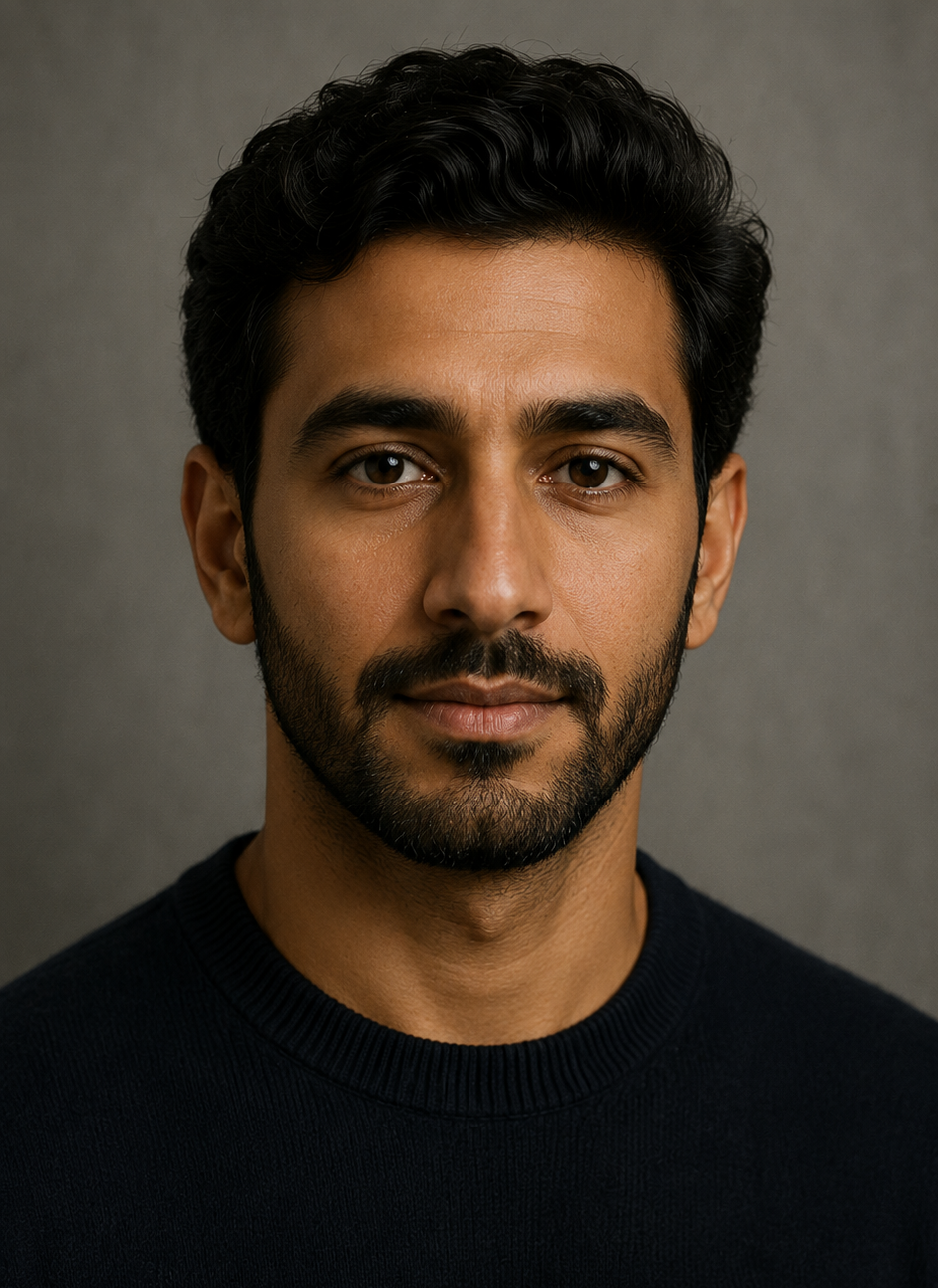
Written by
Khalid Al-Rashidi
Gulf & Middle East Correspondent · Emerging & Strategic Wealth
Khalid covers the family offices, luxury operators, and strategic capital moving across the GCC and wider Arab world — often before the rest of the region notices. He's spent years tracking how Gulf wealth structures itself for the next generation, from residency programmes to private aviation. Based between Dubai and Riyadh. Reach out at khalid.al-rashidi@theplatinumcapital.com.