

Private Aviation in the Gulf: The Charter Operators Flying the Wealthy
The Gulf's private aviation sector has quietly evolved into one of the world's most sophisticated ecosystems for ultra-high-net-worth travel, with charter operators across Dubai, Riyadh and Doha now commanding fleets that rival those of small national carriers in both scale and opulence. Fuelled by surging demand from family offices, sovereign wealth principals and a new generation of Gulf entrepreneurs, the region's leading operators are reshaping global expectations of bespoke air travel while competing fiercely for a clientele that treats the sky as an extension of the boardroom.…
The Runway to Riches: Gulf Private Aviation Enters Its Most Competitive Era
When a Riyadh-based family office needed to shuttle its principal between Jeddah, Dubai, and Doha three times in a single week earlier this year, the booking didn't go to an international operator. It went to Saudia Private Aviation, which had positioned a Gulfstream G650ER specifically for the route cluster. The transaction, worth approximately $285,000, was completed via a WhatsApp message to a dedicated concierge. That tells you everything about private aviation in the Gulf in 2026: hyperlocal, increasingly sophisticated, and growing at a pace that has turned the region into the world's most contested market for charter operators.
The numbers back it up. According to WingX Advance data, private jet movements across the six GCC states rose 14.2 per cent year-on-year in the first quarter of 2026, outpacing every other global region including North America, which managed just 3.1 per cent growth over the same period. The UAE alone recorded more than 9,400 business aviation departures in Q1, with Saudi Arabia close behind at approximately 7,800. That last figure would have been unthinkable five years ago, when the Kingdom's private aviation infrastructure was comparatively nascent.
The Operators Jockeying for Altitude
The competitive field has thickened considerably. Dubai-headquartered Jetex, founded by Adel Mardini, has expanded its fixed-base operator network to 38 locations globally, with particular emphasis on its Al Maktoum International Airport facility, which now handles ultra-long-range aircraft including the Bombardier Global 7500 and the Dassault Falcon 10X. The company reported revenues exceeding $420 million in 2025, a figure it expects to surpass comfortably this year, driven by a membership programme that has attracted more than 1,200 high-net-worth individuals across the Gulf.
Empire Aviation Group, also based in Dubai, manages a fleet of approximately 30 aircraft and has positioned itself as the operator of choice for family offices seeking managed ownership rather than outright charter. CEO Paras Dhamecha told The Platinum Capital that managed aircraft utilisation rates in the company's Gulf fleet now exceed 900 hours annually per airframe — well above the global industry average of roughly 650 hours. "The demand is structural, not cyclical," Dhamecha said. "Vision 2030, the entertainment economy in Saudi Arabia, the diplomatic calendar — these are generating consistent movement patterns that didn't exist a decade ago."
Saudi Arabia's own Saudia Private Aviation, a subsidiary of Saudi Arabian Airlines, has invested heavily in fleet modernisation, adding four new Gulfstream aircraft in the past eighteen months. The operator is understood to be targeting revenues of SAR 1.2 billion ($320 million) in 2026, capitalising on the extraordinary growth of Riyadh as a financial and diplomatic hub. Qatar Executive — the private aviation arm of Qatar Airways — continues to leverage its fleet of 18 aircraft, including Gulfstream G700s, to serve a clientele that skews towards sovereign wealth principals and senior government officials.
The Saudi Factor: A Market Redrawn
You cannot talk about Gulf private aviation without reckoning with the gravitational pull of Saudi Arabia's economic transformation. The Kingdom's General Authority of Civil Aviation has issued new regulations streamlining foreign operator permits, and the $147 billion NEOM project, alongside the Red Sea Global tourism developments, has generated a new category of demand: construction executives, consultants, and investors who require repeated access to remote sites poorly served by commercial airlines. Few outside the region have noticed.
King Khalid International Airport in Riyadh completed its dedicated private aviation terminal expansion in late 2025, tripling handling capacity to approximately 150 movements per day. The facility now rivals Dubai's Al Maktoum and Sharjah's terminal in terms of infrastructure quality. Abu Dhabi-based Royal Jet, historically associated with the Abu Dhabi ruling family, has quietly opened a Riyadh office and stationed two Boeing Business Jets in the Kingdom to capture this demand. That is a significant shift.
The emergence of NEOM Bay Airport, expected to handle its first private aviation flights in late 2026, will add yet another node to the Gulf's increasingly dense private aviation network. Operators are already negotiating ground handling contracts, aware that early positioning in NEOM could prove enormously lucrative as the megaproject matures.
Membership Models and the Fractional Frontier
The Gulf's private aviation market is also evolving in its commercial architecture. Pure ad hoc charter — once the dominant model — is giving way to membership and fractional ownership structures imported from the American market but adapted for regional preferences. XO, the digital marketplace backed by Vista Global (which itself is headquartered in Dubai), reported a 41 per cent increase in Gulf-based membership programme sign-ups in 2025, with the average annual spend per member reaching approximately $1.8 million.
Smaller entrants are finding niches. Fly Aqar, a Bahrain-registered platform launched in 2024, operates a technology-driven brokerage model connecting aircraft owners with charter clients across the GCC. The company claims to have facilitated over 600 flights in its first full year of operation, with an average transaction value of $47,000 — positioning it firmly in the light-jet and midsize segment that serves wealthy professionals rather than ultra-high-net-worth principals.
This segmentation matters. The Gulf's private aviation market is no longer monolithic. At one end sit the head-of-state-level operations managed by Royal Jet and Qatar Executive. In the middle, family offices and C-suite executives rely on Empire and Jetex. And then there's an emerging tier of affluent but not billionaire travellers who are discovering that turboprop and light-jet charter can be cost-competitive with first-class commercial on certain intra-Gulf routes. That last group barely existed three years ago.
Sustainability, or the Absence of It
One area where Gulf operators lag conspicuously is environmental accountability. European and North American charter companies have adopted sustainable aviation fuel programmes and carbon offset schemes — often under regulatory pressure. Gulf operators have been notably slower. Jetex introduced a voluntary SAF blending option at its Dubai facility in early 2026, but uptake has been minimal, with fewer than 8 per cent of departures opting in. Industry sources say the surcharge, typically 15 to 20 per cent on fuel costs, meets resistance from clients who see little commercial or reputational incentive to pay it.
This may change as international regulatory frameworks tighten. The International Civil Aviation Organization's Carbon Offsetting and Reduction Scheme for International Aviation now applies to all cross-border flights, and Gulf operators serving European and Asian routes will increasingly face compliance costs that could reshape pricing structures. For now, though, the market's growth trajectory remains essentially unconstrained by environmental considerations — a reality that draws criticism from sustainability advocates but barely registers in the booking patterns of the region's wealthiest travellers.
What's clear is that the Gulf's private aviation sector has crossed a threshold. It is no longer a peripheral service industry attached to hydrocarbon wealth. It is a sophisticated, multi-operator ecosystem generating billions in annual revenue, attracting global capital, and reshaping how the region's most powerful individuals move. The operators who thrive will be those who understand something simple: in this market, discretion, speed, and presence in the right cities matter far more than the glossiest marketing brochure.
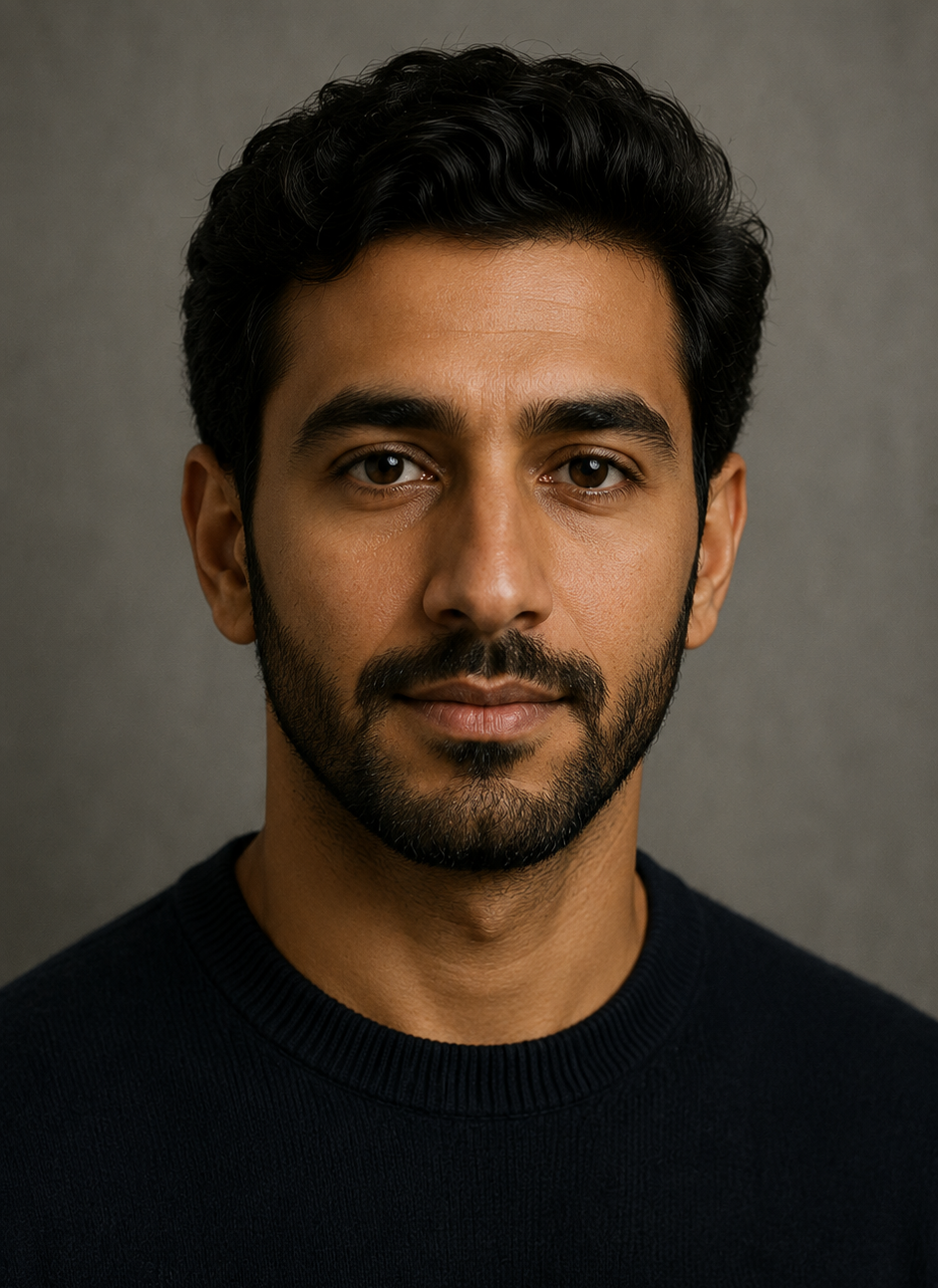
Written by
Khalid Al-Rashidi
Gulf & Middle East Correspondent · Emerging & Strategic Wealth
Khalid covers the family offices, luxury operators, and strategic capital moving across the GCC and wider Arab world — often before the rest of the region notices. He's spent years tracking how Gulf wealth structures itself for the next generation, from residency programmes to private aviation. Based between Dubai and Riyadh. Reach out at khalid.al-rashidi@theplatinumcapital.com.