UAE's Impact Investors: Profit With Purpose in the Gulf
The United Arab Emirates is quietly reshaping the landscape of impact investing in the Middle East, channelling sovereign wealth and private capital into ventures that demand measurable social and environmental returns alongside robust financial performance. This deliberate fusion of commercial discipline with developmental ambition positions the Gulf state as an emerging force in a global movement that refuses to treat profit and purpose as mutually exclusive pursuits.…
UAE's Impact Investors: Profit With Purpose in the Gulf
When Sheikh Mohammed bin Rashid Al Maktoum launched the Dubai Future Foundation's impact investment mandate in late 2025, pledging $1 billion toward climate-resilient infrastructure across the Global South, it was more than a sovereign gesture of goodwill. It confirmed what family offices and institutional allocators across the Gulf have been quietly engineering for several years: the United Arab Emirates has become the world's most ambitious laboratory for impact investing at scale.
By the first quarter of 2026, the UAE's impact investment ecosystem had grown to an estimated $28 billion in committed capital, according to figures from the Gulf Impact Investing Forum. That number looks modest against the $1.6 trillion global impact market tracked by the Global Impact Investing Network. But the growth rate — nearly 40 percent year-on-year — outpaces every other jurisdiction in the world. The question is no longer whether profit and purpose can coexist in the Gulf. It's how rapidly the model can be exported.
Family Offices Lead the Charge
The driving force behind the UAE's impact surge is not sovereign wealth — though Abu Dhabi's Mubadala and the Abu Dhabi Investment Authority have both carved out dedicated sustainability mandates — but rather the dense concentration of ultra-high-net-worth family offices that have made Dubai and Abu Dhabi their operational base. An estimated 450 single-family offices now operate in the UAE, up from roughly 250 in 2023. Many were drawn by the Dubai International Financial Centre's regulatory clarity and zero-tax environment.
Among the most visible is the Al Ghurair family's Abdulla Al Ghurair Foundation, which in February 2026 expanded its education-focused impact portfolio to $750 million, directing capital into ed-tech ventures across Egypt, Jordan, and Pakistan. The foundation reported a blended return of 9.2 percent across its impact vehicles in 2025. That number has quieted skeptics who long argued that impact mandates necessarily erode financial performance.
The Olayan Group, with deep roots in Saudi Arabia but significant UAE operations, has similarly expanded its impact allocation, committing $500 million to healthcare infrastructure in Sub-Saharan Africa through a co-investment vehicle structured in Abu Dhabi Global Market. The deal, announced in March 2026, pairs commercial-rate returns with measurable health outcomes, including a target of 2 million additional patient visits annually by 2030. Few outside the region have noticed.
ADGM and DIFC as Regulatory Architects
The institutional scaffolding matters as much as the capital. Abu Dhabi Global Market's Sustainable Finance Regulatory Framework, updated in January 2026, introduced the region's first comprehensive taxonomy for impact investments. Fund managers must now report against both financial and impact key performance indicators on a quarterly basis. The framework draws heavily from the EU's Sustainable Finance Disclosure Regulation but is deliberately calibrated for emerging-market asset classes — a distinction that has attracted managers who found European regulation overly prescriptive for frontier-market deployment.
DIFC, for its part, launched its Impact Fund Accelerator in late 2025, providing regulatory sandbox access and seed capital of up to $5 million per fund to early-stage impact managers. By April 2026, eleven funds had graduated from the program, collectively managing $1.3 billion. Among them is Crescent Climate Capital, a Dubai-based fund targeting renewable energy projects across Southeast Asia, which closed its debut fund at $320 million in March — oversubscribed by 60 percent. That is a significant shift.
These regulatory innovations have positioned the UAE as the preferred domicile for impact funds targeting the arc of emerging economies stretching from North Africa through South and Southeast Asia — precisely the geographies where capital gaps are widest and where Gulf investors have historical commercial and cultural ties.
The Blended Finance Model Gains Traction
Pure commercial impact investing tells only part of the story. The UAE has also become a proving ground for blended finance structures that combine concessional capital from development finance institutions with commercial capital from private investors. The Mohammed bin Rashid Innovation Fund, restructured in 2025 under a new blended finance mandate, has deployed $400 million in first-loss tranches designed to de-risk private investment in water security, sustainable agriculture, and affordable housing across the MENA region.
This approach has drawn partnerships with the International Finance Corporation, the Asian Infrastructure Investment Bank, and the European Bank for Reconstruction and Development, all of which have established or expanded Gulf-facing teams in Abu Dhabi and Dubai. The IFC's Dubai office, which opened in 2024, facilitated $1.1 billion in co-investments with UAE-based private capital in 2025 alone.
And these structures are not charity dressed in financial clothing. The commercial tranches in blended deals originated from the UAE have delivered median net returns of 7.8 percent, according to data compiled by Convergence, the blended finance data platform. Conventional emerging-market private credit returned approximately 8.4 percent over the same period — a spread narrow enough to make impact allocation a rational portfolio decision rather than a philanthropic concession.
Generational Shift and Strategic Calculus
Behind the capital flows lies a demographic reality that Gulf wealth advisors describe with increasing frankness: the next generation of Gulf family wealth holders is demanding purpose-aligned investment strategies. A 2026 survey by Lombard Odier, conducted across 120 Gulf-based family offices, found that 67 percent of next-generation principals — those under 40 who are assuming decision-making authority — ranked impact measurement as equally important to financial returns. Among the current generation, that figure was 31 percent. Read that again.
This generational pressure is reshaping advisory mandates. Firms including Emirates NBD Private Banking, Mashreq Private, and the UAE operations of UBS and Julius Baer have all launched dedicated impact advisory desks since 2024. Emirates NBD reported that its impact-aligned discretionary mandates grew by 55 percent in assets under management during 2025, reaching $3.2 billion.
There is also a harder strategic logic at work. As the UAE accelerates its economic diversification beyond hydrocarbons — a process given fresh urgency by the government's target of deriving 80 percent of GDP from non-oil sectors by 2031 — impact investing offers a mechanism for building commercial relationships, expertise, and influence in the high-growth economies that will define the next century of global trade. Every dollar of impact capital deployed in an African fintech company or an Asian clean energy project creates not just a financial return but a strategic foothold.
What Remains Unresolved
For all its momentum, the UAE's impact sector faces genuine tensions. Impact measurement standards remain fragmented despite ADGM's taxonomy, with fund managers applying varying methodologies that make cross-portfolio comparison difficult. The risk of impact washing — overstating social or environmental outcomes to attract capital — is real, and the Securities and Commodities Authority has announced a planned enforcement framework for the second half of 2026.
Then there's the question of scale relative to need. The United Nations estimates that achieving the Sustainable Development Goals across the MENA region alone requires $500 billion annually through 2030. The UAE's $28 billion impact market, while growing rapidly, remains a fraction of what is required. Closing that gap will demand not just more capital but more sophisticated intermediation — more managers, more structures, and more willingness to accept the complexity that impact investing in frontier markets inevitably entails.
Yet the trajectory is unmistakable. The UAE has constructed, in remarkably short order, the regulatory infrastructure, the capital base, and the strategic intent to become the world's most consequential hub for impact investing targeting the emerging world. Whether that ambition fully delivers on its promise will be one of the defining financial stories of this decade.
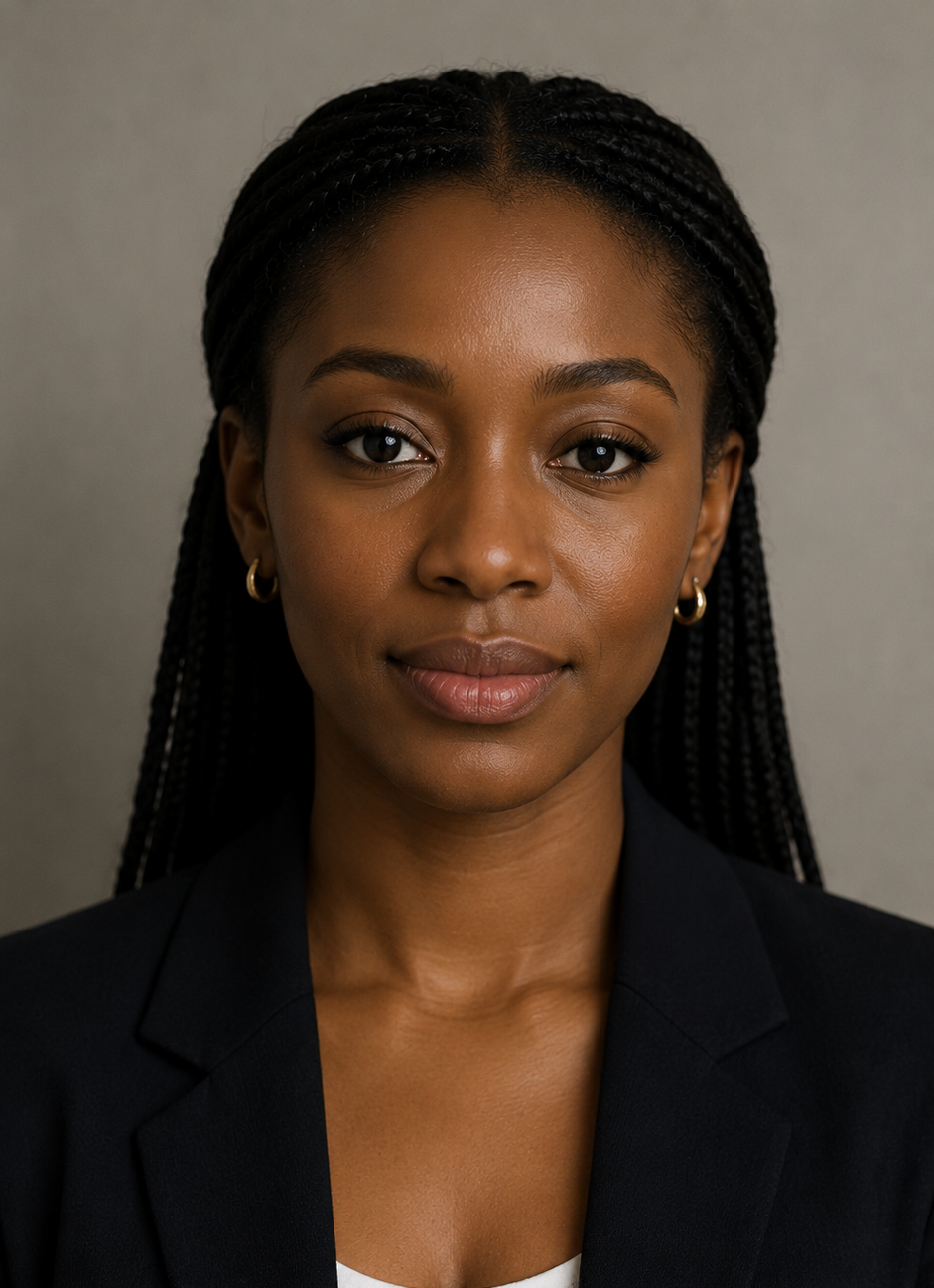
Amara Osei is a senior journalist at The Platinum Capital, covering philanthropy and impact capital flows.
Written by
Amara Osei
Africa & Emerging Markets Correspondent · Philanthropy & Next Generation
Amara covers the philanthropists, foundation founders, and next-generation leaders building wealth and influence across Africa, Southeast Asia, and Central Asia. She has a particular eye for the family businesses handing the reins to a generation educated abroad and building at home. Based in Nairobi. Reach out at amara.osei@theplatinumcapital.com.