Gulf Philanthropy Beyond Zakat: Family Foundations and Global Impact
The rise of institutionalised family foundations across the Gulf states represents a decisive shift from traditional charitable giving toward strategic, impact-driven philanthropy that now rivals the influence of its Western counterparts on the global stage. Powered by sovereign wealth and an increasingly sophisticated approach to measurable social outcomes, these foundations are quietly reshaping development agendas from sub-Saharan Africa to Southeast Asia, challenging long-held assumptions about where philanthropic leadership originates.…
Gulf Philanthropy Beyond Zakat: Family Foundations and Global Impact
When the Al Maktoum Foundation quietly committed $400 million to climate adaptation projects across Sub-Saharan Africa in early 2026, it barely registered in Western media. Few outside the region noticed. Yet the pledge represented something far more significant than a single charitable act: the maturation of Gulf philanthropy from obligation-driven giving into a sophisticated, institutionalised force reshaping global development finance.
For decades, philanthropic activity across the Gulf Cooperation Council states was understood primarily through the lens of zakat — the Islamic obligation to give 2.5% of one's wealth annually. Zakat remains foundational, generating an estimated $80 billion globally each year according to the Islamic Development Bank. But a new architecture of structured giving has emerged from Riyadh to Abu Dhabi to Doha. Family foundations, endowment vehicles, and impact-oriented trusts now channel billions into education, healthcare, technology access, and environmental resilience — with a strategic intentionality that mirrors the region's broader economic transformation.
The Institutional Turn: From Personal Charity to Perpetual Vehicles
The shift from informal, personality-driven philanthropy to institutionalised foundations has accelerated sharply since 2023. Saudi Arabia's new Civil Society Law, enacted in 2024 and fully operational by mid-2025, provided the regulatory scaffolding for private foundations to register, operate, and invest with unprecedented clarity. The result: a proliferation of family-backed entities designed for multigenerational impact.
The Olayan Group's charitable arm, historically focused on Saudi educational initiatives, expanded its mandate in 2026 to include a $150 million global health fund targeting neglected tropical diseases in partnership with the Wellcome Trust. The Alghanim family in Kuwait established a $200 million perpetual endowment for STEM education across the Arab world, structured through a Luxembourg-domiciled vehicle with governance standards that would satisfy any European regulator. In Bahrain, the Kanoo family — one of the Gulf's oldest merchant dynasties — formalised its century-old tradition of community support into a foundation with a dedicated investment office managing $300 million in endowment assets.
These are not vanity projects. They represent a deliberate professionalisation of giving, complete with impact measurement frameworks, independent boards, and transparent reporting. Pearl Initiative, the Gulf-based corporate governance body affiliated with the United Nations, reported that the number of GCC family foundations publishing annual impact reports tripled between 2023 and 2025, reaching 47 entities. That is a significant shift.
Strategic Alignment with Vision Programmes
Gulf philanthropy does not operate in a vacuum. It is increasingly synchronised with national development agendas — sometimes by design, sometimes by convergence of interest. Saudi Arabia's Vision 2030 explicitly calls for an expanded role for the non-profit sector, targeting 5% of GDP contribution by 2030, up from less than 1% a decade ago. The Kingdom's National Transformation Programme has allocated advisory support and co-investment mechanisms to encourage private foundations to work alongside sovereign development funds.
The UAE's approach has been characteristically pragmatic. The Mohammed bin Rashid Al Maktoum Global Initiatives reported total spending of $1.9 billion across 2025, spanning 100 countries, with particular emphasis on digital infrastructure in developing economies. Abu Dhabi's Mubadala, while primarily an investment vehicle, has structured a growing portfolio of concessional investments through its social impact division, blending commercial returns with measurable development outcomes in markets from Egypt to Indonesia.
Qatar Foundation, endowed with assets exceeding $35 billion, remains perhaps the most visible example of this model. Its 2026 commitment to fund 10,000 scholarships for displaced students — announced at the World Economic Forum in Davos — drew direct lines between Qatari soft power strategy and humanitarian need. Critics may question the entanglement of statecraft and charity. Fair enough. But the operational results are difficult to dismiss.
The Global South Focus: Where Gulf Capital Meets Unmet Need
What distinguishes Gulf philanthropy from its Western counterparts is its geographic orientation. American and European foundations have historically concentrated their international giving through multilateral institutions. Gulf family foundations are doing something different — building direct bilateral relationships with recipient communities, particularly across Africa, South Asia, and Southeast Asia.
The AMANAT Holdings-backed education initiative, launched in partnership with Kenya's Ministry of Education in January 2026, deployed $75 million to build and staff 120 secondary schools in underserved counties. The programme's governance structure places Kenyan educators in decision-making roles — a departure from the top-down models that have drawn criticism of Western development aid.
The Majid Al Futtaim Foundation took a similar approach, committing $50 million in 2025-2026 to water security projects in Jordan and Egypt, working directly with local municipalities rather than through international NGOs. The foundation's managing director, Alya Al Mulla, described the approach as "proximity philanthropy" — a term gaining traction among Gulf giving circles that emphasises cultural affinity, religious solidarity, and shared developmental experience as comparative advantages over institutional distance.
Data from the Centre for Strategic Philanthropy at Cambridge Judge Business School, published in March 2026, estimates that GCC-origin philanthropic flows to Sub-Saharan Africa reached $4.2 billion in 2025 — a 60% increase from 2022. Much of this remains unreported in OECD development assistance databases, creating what researchers call a "shadow development finance" stream. It is substantial, and it is poorly tracked.
Governance Gaps and the Road Ahead
For all its momentum, Gulf philanthropy faces structural challenges that could constrain its long-term effectiveness. Start with succession planning. Many foundations are still led by first-generation founders whose personal authority substitutes for institutional governance. A 2026 survey by Strategy& Middle East found that only 31% of Gulf family foundations had formal succession plans for leadership transition, compared with 78% among comparable European entities.
Transparency, while improving, remains inconsistent. No regional equivalent exists to the US Form 990 or UK Charity Commission reporting framework, which means aggregate data on Gulf philanthropic spending is largely estimated rather than verified. The Saudi National Centre for Non-Profit Sector Development has signalled its intention to introduce standardised reporting requirements by 2027 — a move that would bring the Kingdom's foundation sector closer to international norms.
Then there is the question of coordination. With dozens of major family foundations now operating across overlapping geographies and thematic areas, duplication of effort is a growing concern. The establishment of the GCC Philanthropy Forum in Riyadh in late 2025, convening 60 family foundations under a shared knowledge-exchange platform, represents a tentative step toward collective strategy. But participants acknowledge that competitive instincts among founding families remain a barrier to genuine collaboration. Old habits die hard.
What is unmistakable, though, is the scale and seriousness of the transformation underway. Gulf philanthropy has moved decisively beyond the mosque collection box. It is now a multi-billion-dollar enterprise with global reach, professional infrastructure, and — critically — the patient capital to sustain commitments across decades. For development practitioners, policymakers, and fellow philanthropists worldwide, the Gulf's family foundations are no longer peripheral players. They are principals.
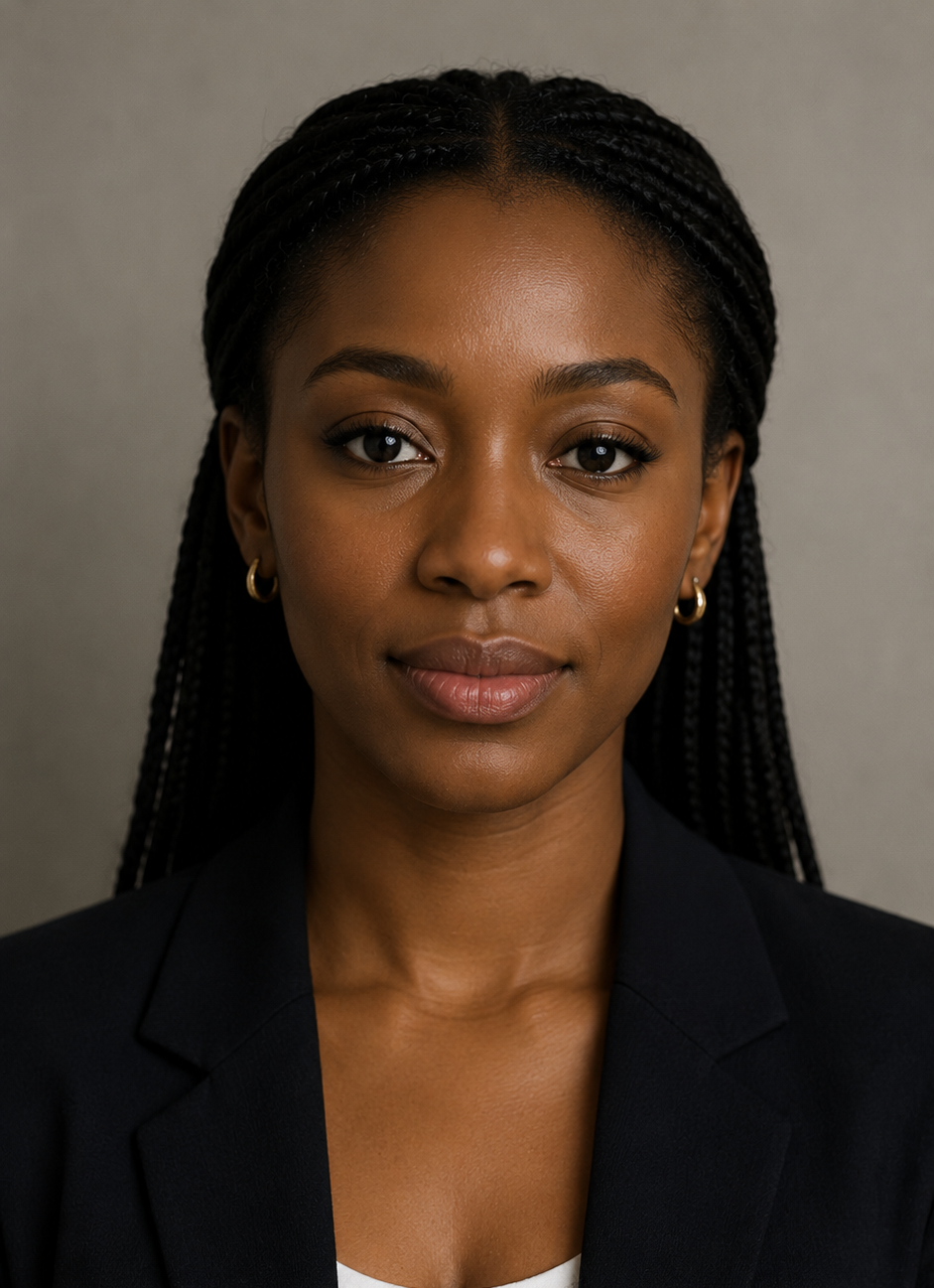
Written by
Amara Osei
Africa & Emerging Markets Correspondent · Philanthropy & Next Generation
Amara covers the philanthropists, foundation founders, and next-generation leaders building wealth and influence across Africa, Southeast Asia, and Central Asia. She has a particular eye for the family businesses handing the reins to a generation educated abroad and building at home. Based in Nairobi. Reach out at amara.osei@theplatinumcapital.com.