

Dubai's Ultra-Luxury Real Estate Developers: Who Builds for Billionaires
Behind the gilded facades of Palm Jumeirah penthouses and Bvlgari-branded residences lies a fiercely competitive ecosystem of developers such as Omniyat, Select Group and Dar Al Arkan, each vying to outdo the other with increasingly rarefied amenities that cater to a global elite demanding private marina berths, in-residence Rolls-Royce fleets and dedicated art concierges. As sovereign wealth reshapes the emirate's skyline, these firms have transformed Dubai into the world's fastest-growing ultra-prime market, where transactions exceeding 100 million dirhams have become not anomalies but defining features of a maturing luxury landscape with few credible rivals.…
The Architects of Excess: Dubai's Ultra-Luxury Developers and Their Billionaire Clientele
When a Saudi family office wired $180 million for a penthouse at Dorchester Collection Residences on Palm Jumeirah in early 2026, the transaction barely registered as exceptional. Dubai's ultra-luxury residential market has entered a phase where nine-figure deals constitute a distinct asset class, and the developers engineering these properties operate less like construction firms and more like private concierges to the global ultra-high-net-worth elite. The question for wealth advisors and family offices is no longer whether Dubai merits allocation. It's which developer best serves the specific demands of capital preservation, privacy, and prestige.
Omniyat: The Quiet Powerhouse Behind $500 Million Addresses
No developer has more decisively captured Dubai's billionaire segment than Omniyat. Founded by Mahdi Amjad, the firm has effectively redefined what "super-prime" means in the Gulf. Its Dorchester Collection Residences, developed in partnership with the Brunei Investment Agency's hotel brand, delivered units in late 2025 that have already traded at premiums exceeding 40 per cent above launch prices. The flagship penthouse — spanning approximately 30,000 square feet across multiple floors — was reportedly acquired by a family connected to Gulf sovereign wealth.
Omniyat's 2026 pipeline includes The Lana Residences, a Dorchester Collection-branded tower on Marasi Bay, where entry prices start at AED 25 million ($6.8 million) and the top-floor configurations breach AED 200 million. The developer's strategy is surgical: limited inventory, obsessive material sourcing — Italian marble, Japanese joinery, bespoke Poliform kitchens — and a buyer vetting process that would feel familiar to admissions committees at Geneva private banks. Amjad has publicly stated that Omniyat turns away approximately 60 per cent of prospective purchasers who do not meet its profile criteria. That is not a developer talking. That is a gatekeeper.
For family offices deploying capital into Dubai residential, Omniyat properties have demonstrated the strongest capital appreciation trajectory in the emirate's ultra-prime category. Knight Frank data from Q1 2026 showed year-on-year gains of 18.7 per cent for its completed inventory.
Select Group and the Branded Residences Arms Race
The branded residences phenomenon — where hotel operators lend their name, design standards, and service infrastructure to residential towers — has become the dominant format for billionaire-grade development in Dubai. Select Group, led by Rahail Aslam, has planted itself at the centre of this trend with Six Senses Residences on Palm Jumeirah, a 60-storey tower where the penthouse collection launched in 2025 at prices exceeding AED 300 million ($81.7 million).
The development sold 85 per cent of its inventory within four months of launch. Buyers came predominantly from India, Russia, and the GCC states. Select Group reported that the average transaction value for Six Senses units exceeded AED 40 million, making it among the highest average-price developments globally. The firm's 2026 project — a collaboration with an undisclosed European luxury house on a beachfront site in Dubai Islands — is expected to push entry-level pricing above AED 50 million.
What sets Select Group apart is its integration of wellness and hospitality infrastructure. Six Senses residents gain access to longevity clinics, Ayurvedic programmes, and cryotherapy suites — amenities that reflect the growing convergence of real estate investment and health-span optimisation among ultra-wealthy buyers. This is not mere marketing. Several Gulf-based family offices have reportedly classified these acquisitions under their "lifestyle asset" allocation rather than traditional real estate. That is a significant shift in how private capital thinks about bricks and mortar.
DAMAC and the Versace-Cavalli Vertical
Hussain Sajwani's DAMAC Properties occupies a unique position in Dubai's developer hierarchy: simultaneously mass-market and ultra-luxury, with a fashion house partnership strategy that has proven remarkably effective at capturing emerging-market wealth. The company's collaborations with Cavalli, de Grisogono, and Versace have produced a vertically integrated luxury ecosystem. Its 2026 project — DAMAC Riverside, a AED 30 billion master-planned community — includes a dedicated "Couture District" where branded villas start at AED 35 million.
DAMAC's publicly listed shares (DFM: DAMAC) rose 34 per cent in 2025, reflecting investor confidence in the branded model. The company reported revenue of AED 22.5 billion for fiscal year 2025, with its ultra-luxury segment contributing approximately 28 per cent of total revenue but an estimated 45 per cent of gross margin. For institutional investors and family offices evaluating Dubai's developers through public markets, DAMAC offers the most direct exposure to the emirate's luxury residential thesis.
Then there's Sajwani himself. His personal connections — he maintains relationships with political figures and sovereign wealth principals across the Gulf and beyond — give DAMAC deal-flow advantages that purely institutional developers simply cannot replicate. The company secured a 10 million-square-foot land bank on Dubai's coastline in 2025 at prices that analysts at Aldar Securities estimated were 20 per cent below comparable transactions. Few outside the region have noticed how much that land bank alone changes DAMAC's forward economics.
The Boutique Contenders: Alpago and Aldar's Dubai Ambitions
Below the headline names, a tier of boutique developers has emerged that specifically targets the $50 million-plus buyer. Alpago Properties, which developed the record-breaking Palm Jumeirah mansion that sold for AED 750 million ($204 million) in 2024, has commenced its next project: a collection of six waterfront estates on the World Islands, each priced between AED 200 million and AED 500 million. The firm operates with a staff of fewer than 50 people and maintains no sales office. Transactions occur exclusively through private introductions. If you need to ask how to buy one, you're not the buyer.
Meanwhile, Abu Dhabi's Aldar Properties has signalled aggressive expansion into Dubai's ultra-luxury tier. Following its 2025 acquisition of a prime Jumeirah Bay site, Aldar announced in February 2026 a collaboration with Aman Resorts for branded residences that will compete directly with Omniyat's Dorchester properties. Aldar's balance sheet — AED 45 billion in total assets as of Q4 2025 — gives it firepower that few Dubai-native developers can match. Its entry has introduced genuine competitive pressure at the market's summit.
What This Means for Private Capital
Dubai's ultra-luxury developers are no longer simply building apartments. They are constructing financial instruments wrapped in Carrara marble. For family offices and private wealth managers, the assessment framework has shifted from location and square footage to developer track record, brand partnership durability, and — increasingly — the secondary market liquidity of specific buildings.
The data supports continued allocation. According to Savills' Q1 2026 Global Prime Residential Index, Dubai's super-prime segment delivered total returns of 22.3 per cent over the trailing twelve months, outperforming London (4.1 per cent), New York (6.8 per cent), and Singapore (9.2 per cent). Add the UAE's zero-income-tax regime, ten-year Golden Visa provisions tied to AED 2 million property investments, and a regulatory environment that has dramatically improved transparency since the Dubai Real Estate Regulatory Agency's enhanced disclosure requirements took effect in 2025 — and the structural case remains hard to argue against.
The developers profiled here are not interchangeable. Omniyat offers the purest expression of design-led exclusivity. Select Group delivers wellness-integrated living for health-conscious principals. DAMAC provides scale, brand diversification, and public-market liquidity. Alpago and Aldar represent, respectively, the bespoke and the institutional ends of the boutique spectrum. The billionaires choosing among them are, in effect, selecting not merely a home but a thesis about what Dubai's next decade will reward.
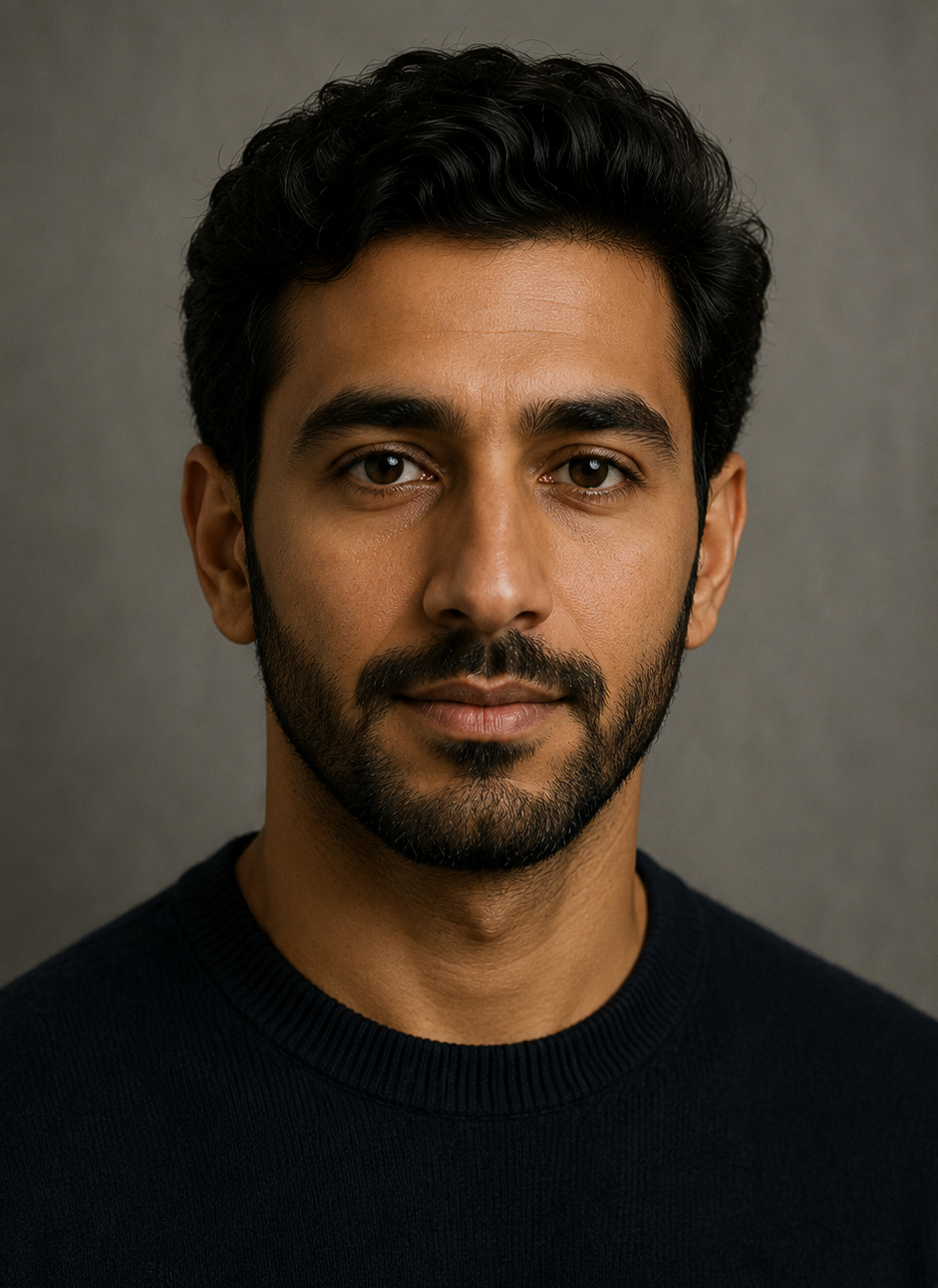
Written by
Khalid Al-Rashidi
Gulf & Middle East Correspondent · Emerging & Strategic Wealth
Khalid covers the family offices, luxury operators, and strategic capital moving across the GCC and wider Arab world — often before the rest of the region notices. He's spent years tracking how Gulf wealth structures itself for the next generation, from residency programmes to private aviation. Based between Dubai and Riyadh. Reach out at khalid.al-rashidi@theplatinumcapital.com.