

Private Residences and Branded Apartments: The Gulf's New Status Asset
The convergence of ultra-luxury hospitality brands and residential real estate across the Gulf has created an entirely new asset class, one where a Bulgari or Dorchester Collection address functions as both a wealth preservation vehicle and a signal of rarefied social standing. Developers report that branded residences in Dubai and Riyadh now command premiums of 30 to 50 percent over comparable non-branded properties, reflecting a buyer class for whom the imprimatur of a global luxury house matters as much as the square footage itself.…
Private Residences and Branded Apartments: The Gulf's New Status Asset
A four-bedroom penthouse bearing the Bulgari name sold for $40 million in Dubai's Jumeirah Bay earlier this year. It barely made headlines. Across the Gulf Cooperation Council states, branded residences have evolved from a niche curiosity into a full-blown asset class — one that family offices and ultra-high-net-worth individuals now treat with the same seriousness they once reserved for trophy commercial real estate or blue-chip equity portfolios.
The numbers back up the fervour. Savills' 2026 Global Branded Residences Report puts the worldwide pipeline at over 1,100 schemes, with the Gulf accounting for roughly 28 per cent of all new supply. Dubai alone hosts more than 90 branded residential projects either completed or under construction — a figure that has nearly doubled since 2022. Riyadh, Jeddah, and Muscat are accelerating to close the gap.
The Economics Behind the Premium
Branded residences in the Gulf command price premiums of 25 to 55 per cent over comparable non-branded properties, according to Knight Frank's 2026 Wealth Report. In prime Dubai locations such as Palm Jumeirah and Downtown, that premium has compressed slightly as supply increases. But in nascent markets like Riyadh — where Aman, Armani, and Raffles are all developing their first Saudi residential offerings — the premium stretches toward the higher end of the range. That is a significant gap.
The arithmetic works for everyone in the chain. Developers such as Omniyat, DAMAC Properties, and Dar Al Arkan attach a luxury hospitality or fashion brand to a tower, which accelerates sell-through rates and justifies construction costs that frequently exceed $800 per square foot. Brands pocket licensing fees — typically 3 to 5 per cent of gross sales revenue plus ongoing management fees — collecting high-margin income with minimal capital outlay. Buyers get part lifestyle assurance, part wealth preservation: these units have historically shown lower volatility in downturns and stronger rental yields than their unbranded counterparts.
Dar Al Arkan's partnership with Missoni for a 200-unit tower on Dubai's Arjan district illustrates the formula neatly. The project broke ground in late 2025 with a development value of $350 million. Units were 70 per cent sold within six weeks of launch, with Saudi, Kuwaiti, and Indian family offices comprising the dominant buyer cohort.
Saudi Arabia: The New Frontier
The most consequential shift is happening not in Dubai but 1,400 kilometres southeast, in Saudi Arabia. Vision 2030's aggressive urbanisation targets and the kingdom's pivot toward tourism and culture have created a vacuum that luxury operators are rushing to fill. The $1.5 trillion pipeline of giga-projects — NEOM, The Red Sea, Diriyah Gate, and Jeddah Central — each contains substantial branded residential components. Few outside the region have noticed just how fast this market is moving.
Aman's development at AMAALA, part of the Red Sea mega-project, will deliver 25 private villas priced from $8 million, targeting a clientele accustomed to the brand's properties in Bali and Tokyo. Ritz-Carlton Residences are under development at both Diriyah Gate and King Abdullah Financial District in Riyadh, with completion dates staggered through 2028. Rosewood has committed to a 120-unit residential scheme within the Diriyah masterplan, where the Public Investment Fund serves as anchor developer.
What sets the Saudi market apart is the depth of domestic demand. Dubai's branded residence market runs overwhelmingly on international buyers — Russian, Indian, and Chinese capital has dominated since 2022. Saudi Arabia's market draws substantially from local family offices repatriating capital and a new generation of Saudi entrepreneurs seeking residences that signal global sophistication without requiring relocation. Strategy& estimates that Saudi family offices collectively hold $800 billion in investable assets, with real estate allocations climbing from 18 per cent to an estimated 24 per cent between 2023 and 2026. That is real money chasing a finite number of marquee addresses.
Evolving Buyer Profiles and the Family Office Calculation
The Gulf's branded residence buyer in 2026 bears little resemblance to the speculative investor of a decade ago. Conversations with wealth advisors at UBS, Julius Baer, and local firms such as The Family Office in Bahrain reveal a more deliberate calculus. Buyers increasingly view branded apartments as multi-functional assets: a primary or secondary residence, a vehicle for golden visa qualification, a hedge against currency depreciation in their home markets, and a legacy asset for intergenerational wealth transfer. The speculator has given way to the strategist.
Dubai's ten-year golden visa programme, which requires a minimum property investment of AED 2 million ($545,000), has been a powerful catalyst. At the upper end, Indian industrialists and Nigerian business families are acquiring $5 million to $15 million branded units as much for residency optionality as for the asset itself. A senior advisor at a Dubai-based multi-family office, speaking on condition of anonymity, estimated that 40 per cent of branded residence purchases by their clients in 2025 were motivated primarily by residency and succession planning rather than yield.
The rental economics, however, remain compelling on their own terms. Branded residences on Palm Jumeirah managed by operators such as Dorchester Collection, Atlantis, and Six Senses generate gross yields of 6 to 8 per cent when placed in hotel rental pools — comfortably above the 4 to 5 per cent typical of conventional luxury apartments in the same locations. For family offices benchmarking against fixed income returns, that spread matters.
Supply Saturation: A Legitimate Risk
The obvious question is whether the Gulf, and Dubai in particular, is courting oversupply. More than 22,000 branded residential units are expected to hit the UAE market by 2028, according to data compiled by Cushman & Wakefield Core. Absorption rates will be tested. And not every brand partnership carries equal weight. There is a meaningful distinction between a Four Seasons Private Residence with dedicated concierge services and a fashion label lending its name to a mid-market tower with minimal operational involvement.
Selectivity will determine outcomes. Projects anchored by operators with genuine hospitality infrastructure — Aman, Six Senses, Mandarin Oriental — tend to hold value more robustly than those riding on brand cachet alone. Developers who conflate a licensing agreement with a genuine service proposition risk diluting the very exclusivity that justifies the premium. Some of those bets will go badly.
For now, though, demand from the Gulf's expanding pool of centimillionaires, combined with sustained capital inflows from South Asia, sub-Saharan Africa, and Central Asia, suggests the market has room to grow before it encounters a serious correction. The branded residence is no longer an indulgence. In the Gulf's wealth ecosystem, it has become infrastructure.
Khalid Al-Rashidi is a senior journalist at The Platinum Capital covering luxury markets, private wealth, and prestige real estate across the Gulf and emerging economies.
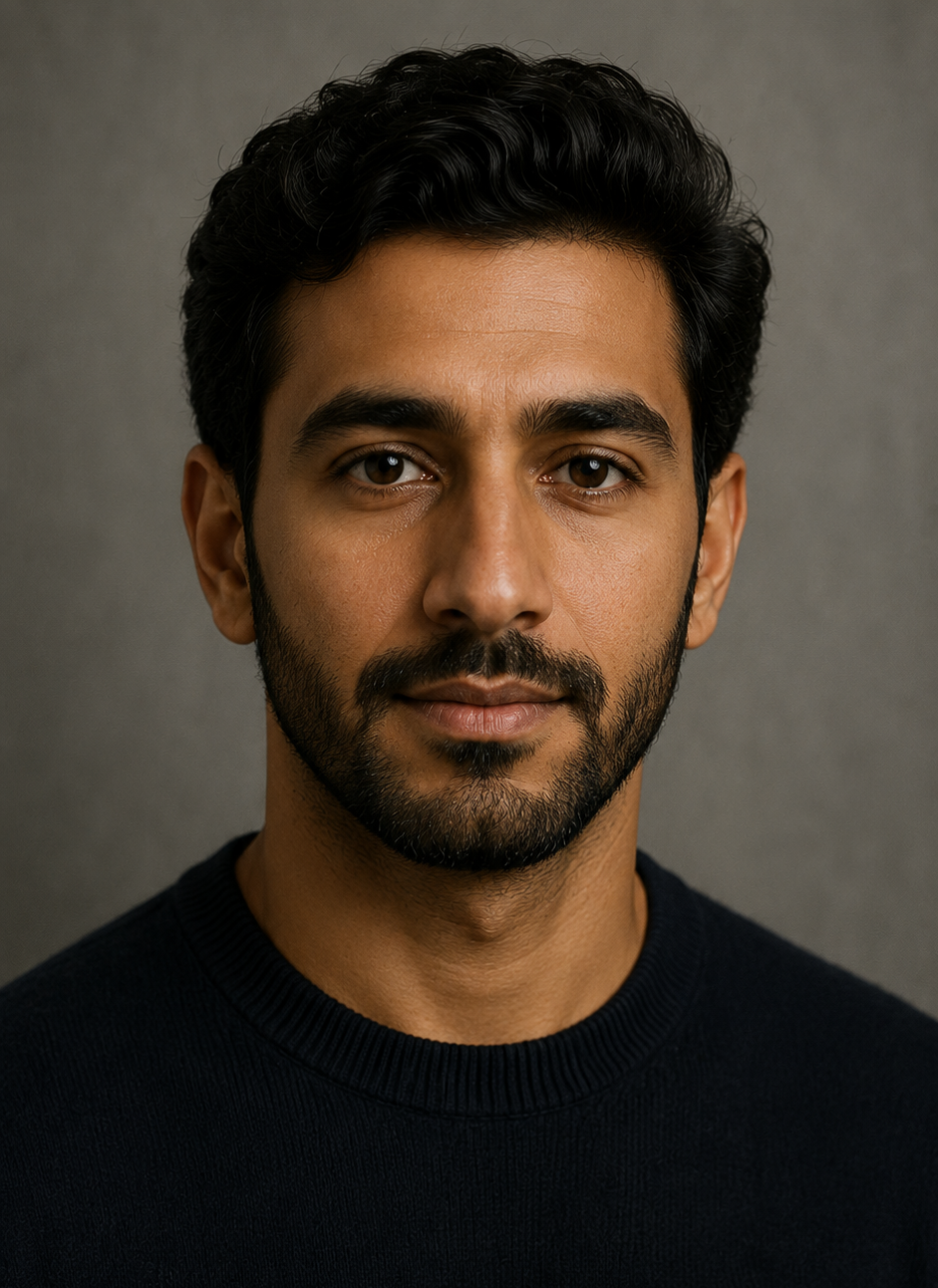
Written by
Khalid Al-Rashidi
Gulf & Middle East Correspondent · Emerging & Strategic Wealth
Khalid covers the family offices, luxury operators, and strategic capital moving across the GCC and wider Arab world — often before the rest of the region notices. He's spent years tracking how Gulf wealth structures itself for the next generation, from residency programmes to private aviation. Based between Dubai and Riyadh. Reach out at khalid.al-rashidi@theplatinumcapital.com.