

What Hormuz Deal Talks and a Two-Month Oil Low Mean for Gulf Markets
Brent rebounded on 11 November 2026 from a two-month low as Hormuz diplomacy and tanker attacks pulled in opposite directions, leaving Gulf equities, insurers and importers pricing a range rather than a trend.…
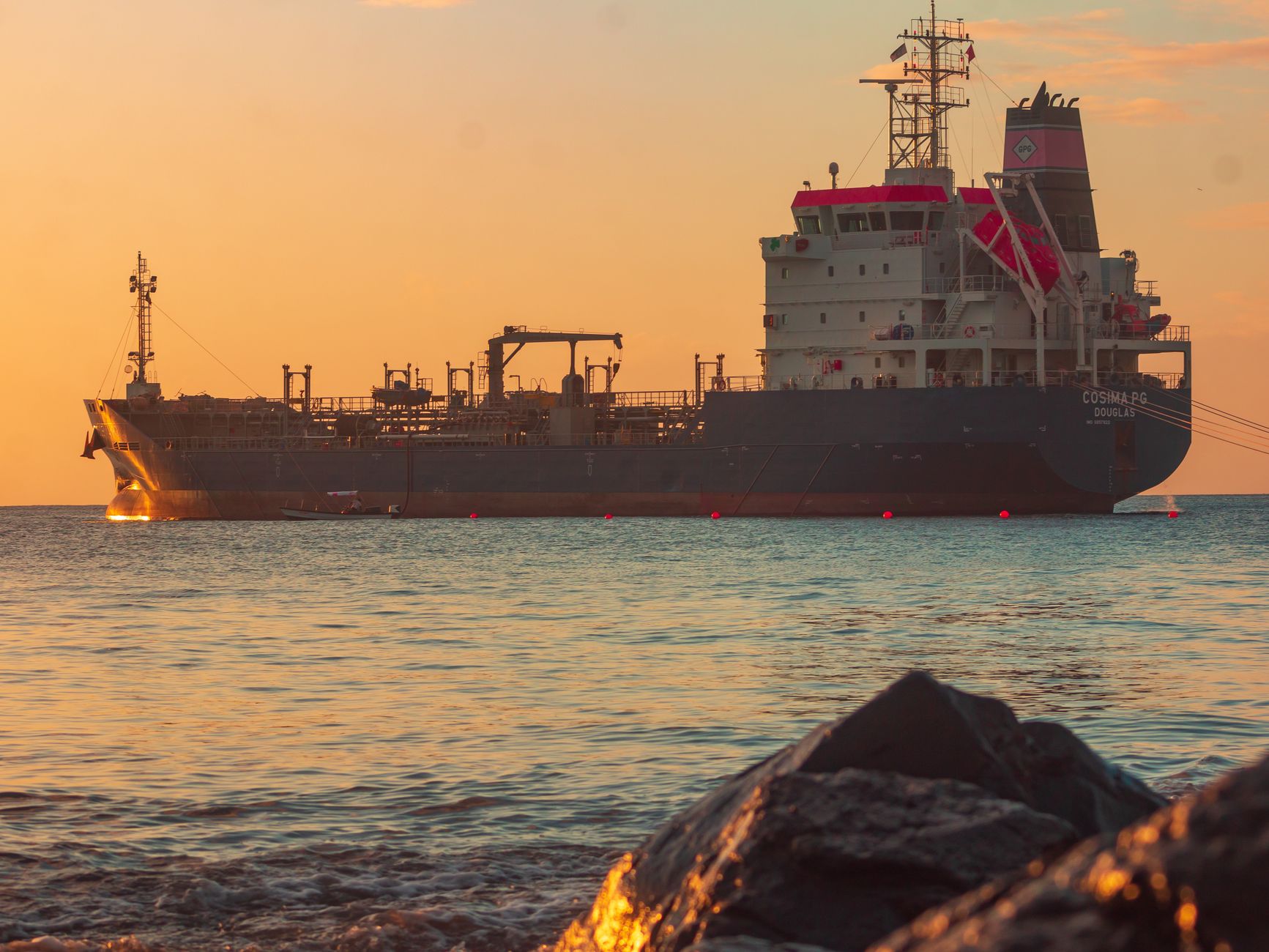
Photo: G.isle px. / Pexels
As of 11 November 2026. This page reports business and market effects only. It takes no position on the events and makes no predictions. We update or remove it when the facts change.
Context: Business Recorder, carrying Reuters, reported on 11 November 2026 that oil rose after two-month lows as markets weighed hopes of de-escalation in the Iran war against attacks on shipping in the Strait of Hormuz, while Middle East Monitor reported on 10 November 2026 that Iran's top security official denied talks with Washington even as Qatar said it had received positive responses from both sides to its mediation. (Business Recorder (Reuters), 11 November 2026; Middle East Monitor (Anadolu), 10 November 2026)
Oil rebounds from the low, and the move is already two-way
Business Recorder, carrying Reuters, reported on 11 November 2026 that Brent futures rose 71 cents, or 0.78%, to $92.20 a barrel by 0119 GMT, while US West Texas Intermediate rose 49 cents to $86.53. The day before, Reuters reported on 10 November 2026 that Brent had fallen $1.93, or 2.1%, to $90.64 at 10:28am New York time and WTI to $85.41, putting both benchmarks on track for their lowest closes since 28 August. (Business Recorder (Reuters), 11 November 2026; Business Recorder (Reuters), 10 November 2026)
Reuters reported on 11 November 2026, via TimesLIVE, that prices initially fell by more than $3 a barrel on Tuesday after US officials downplayed the need for further military action, then recovered some of the loss after an Iranian security official said no talks were taking place. The Press Association reported on 9 November 2026, via Yahoo Finance UK, that Brent had come down from highs of more than $115 a barrel late in October. (TimesLIVE (Reuters), 11 November 2026; Yahoo Finance UK (PA), 9 November 2026)
Blockonomi reported on 11 November 2026 that Brent briefly traded below $90 on Tuesday for the first time since August, and that physical Brent's discount to futures reached $2.12 a barrel on Monday, its weakest against futures in about five months, according to S&P Global Commodity Insights. Reuters, via Business Recorder on 11 November 2026, cited American Petroleum Institute figures, from market sources, showing US crude stocks up by 9 million barrels in the week to 6 November. (Blockonomi, 11 November 2026; Business Recorder (Reuters), 11 November 2026)
Gulf equities price de-escalation; property data lags
Reuters reported on 9 November 2026, via MarineLink, that Gulf bourses closed mostly higher on Monday. Dubai's index rose 1% to 6,087, with developer Emaar Properties up 2.4%; Abu Dhabi rose 1% to 9,483; Saudi Arabia's index rose 0.9% to 10,107, with Al Rajhi Bank up 1.9%; and Qatar's index rose 0.9% to 10,108, with Qatar National Bank up 1.5%. (MarineLink (Reuters), 9 November 2026)
MarketScreener, carrying Reuters, reported on 11 November 2026 that most Gulf markets rose early on Wednesday as sentiment reflected both hopes of a pause in the war and worries over Hormuz shipping. Reuters reported on 9 November 2026, via MarineLink, that Sky Links Capital Group's Daniel Takieddine said shipping disruption remains a drag but resilient regional economic data is keeping investors buying, and that a senior Emirati official warned the region should prepare for a long period of uncertainty. (MarketScreener (Reuters), 11 November 2026; MarineLink (Reuters), 9 November 2026)
The sources reviewed on 11 November 2026 did not include Dubai Land Department figures for October, so the developer rally is a market-pricing move not yet confirmed by registry data. The most recent dated registry-based analysis found, published by Gulf Business on 3 April 2026, put March transaction value at Dhs53.4bn, down 29.2% from February, with ready-property value excluding land at Dhs10.5bn, down 43.5%, and off-plan sales described as the market's main engine. (MarketScreener (Reuters), 11 November 2026; Gulf Business, 3 April 2026)
Insurance and freight still carry the attack risk
The Boston Report, on 18 October 2026, reported that brokers told the Financial Times in early October that tanker war-risk premiums for a Hormuz transit were 6% to 10% of hull value, and cited Lloyd's List as saying Gulf premiums were clustered between 0.15% and 0.25% before the strikes. On the report's own arithmetic, that range equals $6 million to $10 million for a $100 million hull; The National reported on 17 July 2026 that premiums then ran between 3% and 10% of hull value. (The Boston Report, 18 October 2026; The National, 17 July 2026)
The Boston Report, on 18 October 2026, quoted WTW's Reason as saying rates correlate with events in the preceding 24 to 48 hours, and quoted Neil Roberts of the Lloyd's Market Association, via Insurance Business, as saying capacity remains sufficient and cover is available for a price. Premiums therefore track the incident count as much as the diplomatic calendar. (The Boston Report, 18 October 2026)
Reuters reported on 11 November 2026 that the Washington Institute for Near East Policy counted 37 ships attacked in the Strait of Hormuz and surrounding waters in October, the highest monthly total since the war began, with 10 more recorded so far in November. LSEG Oil Research said in a 10 November 2026 note, cited by Reuters, that even with a deal, higher flows would depend on mine clearance, insurance costs and shipowners' willingness to take the risk. Blockonomi reported on 11 November 2026 that tanker freight rates have started to ease after months of disruption, without giving a figure. (Business Recorder (Reuters), 11 November 2026; TimesLIVE (Reuters), 11 November 2026; Blockonomi, 11 November 2026)
Importers, exporters and what family offices can track
Reuters reported on 9 November 2026, via MarineLink, that Egypt notified fertiliser producers of a further 33% cut to gas supplies as part of a push to reduce reliance on costly LNG imports, and that Abu Qir Fertilizers fell 2.7% and Misr Fertilizers Production 2.6%. Reuters reported on 10 November 2026 that two Ras Laffan cargoes were transferred ship to ship off Oman's Sohar anchorage, one onto a vessel bound for South Korea and others delivered to Pakistan, according to Kpler data. (MarineLink (Reuters), 9 November 2026; Business Recorder (Reuters), 10 November 2026)
Reuters reported on 10 November 2026, citing S&P Global Energy, that 31 laden LNG tankers exited the strait in October, the most since February and up from 23 in September, and S&P's Eric Yep said the UAE was back to pre-war transit levels while Qatar was at over 30%. Kpler data cited in the same report put Ras Laffan loadings at 35 cargoes, above 2.7 million tons, against nearly 6.2 million tons exported by Qatar in February. No finance ministry or IMF estimate of the revenue effect of the latest price move was found in the sources reviewed, so for exporters the published evidence is on volumes and prices rather than budgets. (Business Recorder (Reuters), 10 November 2026)
Reuters reported on 11 November 2026, via TimesLIVE, that Sparta Commodities' June Goh named the extent to which Iran comes to the table with US demands as the top driver for oil. Reuters reported on 10 November 2026 that investors saw higher-than-expected US consumer price data as making a half-point Federal Reserve rate rise in December more likely, a development they said could reduce oil demand, and that senior US and Gulf officials had cast doubt on the chances of an imminent deal. Engine reported on 11 November 2026 that official US Energy Information Administration inventory data was due later that day. (TimesLIVE (Reuters), 11 November 2026; Business Recorder (Reuters), 10 November 2026; Engine, 11 November 2026)

Written by
TPC Editorial Desk
The Platinum Capital editorial desk
Articles on The Platinum Capital are produced by the TPC editorial desk with the assistance of AI tools, and edited before publication. Profiles are based on information provided by the subject and checked against public sources. Reach out at info@theplatinumcapital.com.


