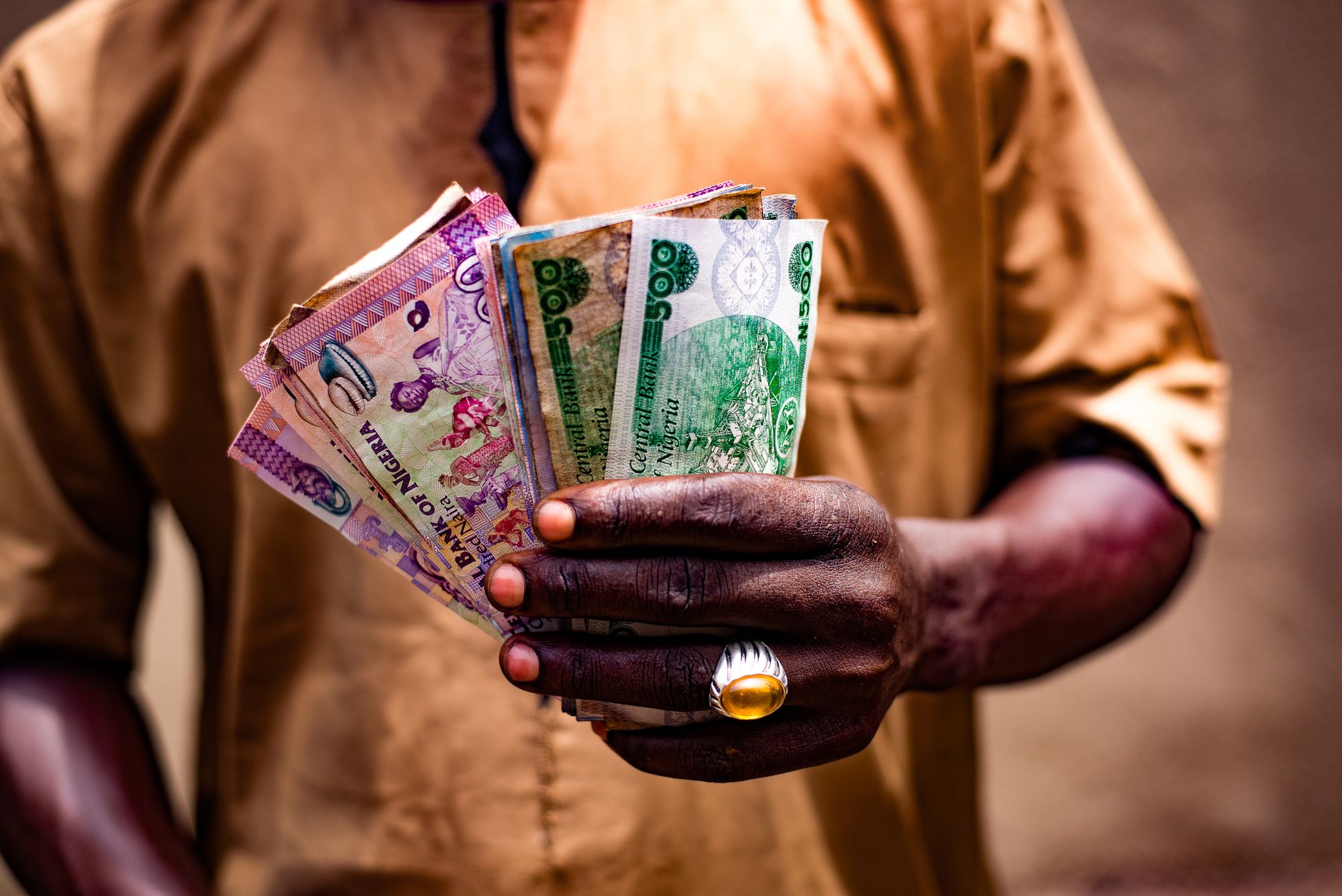

Fiscal Stimulus vs Austerity: The Policy Debate of 2026
As governments worldwide face mounting pressure to reconcile sluggish growth with ballooning sovereign debt, the 2026 policy landscape has thrust the age-old tension between fiscal expansion and budgetary restraint into sharper focus than at any point since the post-2008 reckoning. For family offices, institutional investors, and sovereign decision-makers navigating this divide, the stakes extend far beyond academic debate — the trajectory of interest rates, asset valuations, and geopolitical stability will hinge on which doctrine commands the corridors of power.…

The oldest argument in macroeconomics is back — and in 2026, the stakes have a price tag attached. Oil supply chains are convulsing from geopolitical shocks. Central banks are holding rates at restrictive levels. Emerging market governments are watching debt servicing costs balloon. The debate between fiscal expansion and fiscal restraint has left the academic journals and entered the cabinet rooms, from Riyadh to Nairobi. What governments decide in the next eighteen months will not merely move headline GDP figures. It will shape the generational trajectory of wealth creation across the developing world.
The Case for Stimulus: Growth Momentum Demands Fuel
The World Bank's June 2025 Gulf Economic Update offered a striking illustration of what deliberate public investment actually produces. GCC-wide GDP growth is projected to reach 4.5% in 2026. Saudi Arabia comes in at 4.6%. The UAE holds a sustained 4.9% — numbers that most OECD finance ministers would frame as aspirational in their budget speeches. These are not oil price windfalls dressed up as policy success. Non-oil GDP in Saudi Arabia is expected to grow at a steady 3.6% average between 2025 and 2027, a direct result of Vision 2030's capital deployment discipline. The Public Investment Fund grew from approximately $150 billion in assets in 2015 to over $700 billion today. Since late 2025, it has executed more than ten significant MENA-focused deals, building anchor positions across sectors from entertainment to advanced manufacturing. That is stimulus in its most sophisticated form — not deficit-funded transfers, but sovereign capital deployed with structural intent.
Then there is the Iran supply shock. The IEA characterised the disruption triggered by the U.S.-Israeli military campaign as the largest oil supply disruption in modern history. Governments across the Gulf and Central Asia are sitting inside a genuine paradox: hydrocarbon revenues for some producers are spiking, while supply-chain inflation is simultaneously pressuring non-oil import costs. In that environment, strategic fiscal expansion — targeted at infrastructure, energy transition, and digital systems — can pull private capital in rather than push it out. The Masdar-TotalEnergies $2.2 billion joint venture, signed in April 2026 and covering onshore renewables across nine Asian markets, makes the point cleanly. Abu Dhabi did not simply write a government cheque. It co-invested alongside a global energy major, using sovereign credibility to attract private risk capital at scale. There is a meaningful difference between those two things.
The Austerity Counterargument: Debt Is Not Neutral
The stimulus narrative has serious challengers. For every Gulf sovereign fund deploying patient capital, there are ten emerging market governments running fiscal deficits they cannot comfortably sustain. Egypt entered 2026 with a public debt-to-GDP ratio above 90%, servicing costs consuming a staggering share of tax revenues, and an IMF extended fund facility still providing the structural discipline that Cairo's government is politically reluctant to acknowledge in public. Nigeria faces analogous pressures. Fuel subsidy removal has freed fiscal space, but naira instability and infrastructure deficits continue to repel the private investment that stimulus alone cannot generate without credible institutional reform behind it.
The austerity camp's strongest argument is not ideological. It is actuarial. When sovereign borrowing costs rise — as they have across frontier markets through 2025 and into 2026 — every dollar of deficit spending crowds out private credit at the margin. Kenya has faced street protests over proposed tax measures. Its IMF program has required painful expenditure restraints. The political economy of austerity is visibly bruising there. Yet analysts at the Institute of International Finance have noted that Kenya's external debt sustainability measurably improved in the quarters following fiscal consolidation measures, even as near-term growth disappointed. The medicine is unpleasant. The question is whether governments have the institutional strength to finish the course — or whether political pressure forces them to stop halfway, capturing the pain without the recovery.
Sovereign Wealth as a Third Path
The most instructive development of 2026 may be that the binary framing of stimulus versus austerity is simply the wrong frame for capital-rich emerging markets. Consider Mubadala Investment Company's acquisition of a significant minority stake in Power Factors — a San Francisco-based software platform used by 70% of the world's 50 largest renewable energy producers. Neither Keynesian nor Austrian economists fully anticipated this model. Abu Dhabi is not spending today's tax revenues on current consumption. It is not cutting services to balance a budget. It is converting hydrocarbon wealth into technology equity that will generate returns across energy transition cycles measured in decades. That distinction matters enormously for anyone trying to read these moves through a conventional fiscal lens.
Kazakhstan and Azerbaijan are watching closely. Both nations have sovereign vehicles — Kazakhstan's Samruk-Kazyna and SOFAZ in Azerbaijan — that their governments are repositioning from passive commodity reserve managers into active co-investors alongside Gulf counterparts. Conversations at the Astana International Finance Centre in early 2026 centred on how Central Asian sovereigns can participate in GCC-anchored deals rather than simply benchmark against them. Few outside the region have been tracking this convergence of sovereign capital strategies. They should. For wealthy family offices and private investors, it represents a structural shift in where deal flow originates and who controls access to it.
What This Means for Private Capital in 2026 and Beyond
For family offices and private investors operating between the $10 million and $1 billion range, the fiscal policy divergence across regions is not a macroeconomic curiosity. It is a direct determinant of asset quality, currency risk, and deal flow. In jurisdictions pursuing credible, investment-backed fiscal expansion — the UAE, Saudi Arabia, and increasingly Vietnam and Indonesia — the private capital environment is genuinely opening up. Foreign ownership rules in Saudi Arabia have been liberalised meaningfully. PIF's regional deal activity is generating co-investment opportunities that were structurally inaccessible to private allocators five years ago. The pipeline is real.
In markets where fiscal pressure is forcing asset sales or debt restructuring — certain African sovereigns, parts of emerging Europe — the opportunity profile looks entirely different. Distressed, higher risk, but potentially extraordinary in return if entry timing and structural protections are calibrated correctly. Romania and Serbia present contrasting cases within the same regional block. Romania's fiscal deficit exceeded 8% of GDP in 2024 and corrective measures are now unavoidable. Serbia maintained comparatively tighter discipline and is seeing sustained FDI inflows as a direct consequence. Same neighbourhood, sharply divergent outcomes. The numbers tell a complicated story — but a readable one, for investors willing to do the work.
The resolution of the stimulus-versus-austerity debate will not arrive in a single policy announcement. It will show up gradually — in the bond spreads of frontier sovereigns, in the deal pipelines of sovereign co-investors, in the quarterly earnings of infrastructure operators who build what governments either fund or abandon. The investors who know which side of that divide each market occupies, and who position before consensus catches up, will find 2026 to be a year of uncommon opportunity. Everyone else will call it noise.

Written by
Amelia Rowe
Senior correspondent · Banking & Economy
Amelia spent eight years inside a sovereign wealth fund before deciding she'd rather write about institutional money than allocate it. She covers central banking, insurance, and the macro decisions that quietly choose which markets get the next decade. Sharp on monetary policy; impatient with anyone who confuses noise with signal. Based in London. Reach out at amelia.rowe@theplatinumcapital.com.