
Nigeria Economic Reform: Subsidies, Currency, and Confidence
Nigeria's sweeping economic reforms — from the removal of fuel subsidies to the liberalization of the naira — represent the most consequential structural shift the country has undertaken in decades, carrying profound implications for sovereign risk, capital allocation, and long-term investment positioning across the continent. For sophisticated investors and policymakers navigating this inflection point, understanding the interplay between fiscal discipline, currency stabilization, and institutional credibility is not merely an analytical exercise — it is a prerequisite for capitalizing on one of Africa's most consequential emerging market opportunities.…
Nigeria's economic transformation under President Bola Tinubu is entering its second, harder phase. The shock-and-awe reforms of 2023 — the abrupt removal of fuel subsidies, the unification of the naira exchange rate — were blunt instruments deployed at speed. Now comes the more difficult work: determining whether the structural pain inflicted on ordinary Nigerians will produce the kind of durable, investable growth that private capital has long withheld from Africa's largest economy. For family offices, sovereign-linked investors, and high-net-worth individuals with sub-Saharan exposure, the answer is beginning to take shape. It is more nuanced than either the optimists or the sceptics have allowed.
The Subsidy Removal: Costs Paid, Dividends Pending
When Tinubu declared on inauguration day in May 2023 that "the fuel subsidy is gone," the fallout was immediate and severe. Pump prices tripled almost overnight. Transport costs surged. Headline inflation climbed to a near three-decade high of 33.9% by April 2024. The implicit social contract between the Nigerian state and its citizens — cheap petrol as a de facto transfer payment to the poor — was severed in a single sentence.
Two years on, the fiscal arithmetic is unambiguous. The Central Bank of Nigeria estimates that subsidy removal freed up approximately ₦3.9 trillion ($2.4 billion) in annual government savings. The Nigerian National Petroleum Company Limited, now operating on commercial terms, has begun redirecting revenue toward upstream investment and refinery rehabilitation. And the long-delayed Dangote Refinery — nameplate capacity of 650,000 barrels per day — processed its first domestically produced crude in early 2024 and is progressively ramping output. If it delivers at scale, it could structurally reduce Nigeria's dependence on imported refined products and the foreign exchange haemorrhage that went with them.
For investors, the significance runs deeper than the fiscal numbers. A Nigeria that no longer bleeds $10 billion or more annually on fuel imports carries a materially different current account profile. That shift underpins the currency stabilisation argument — and the investment case that follows from it.
Currency Unification: Credibility in Progress
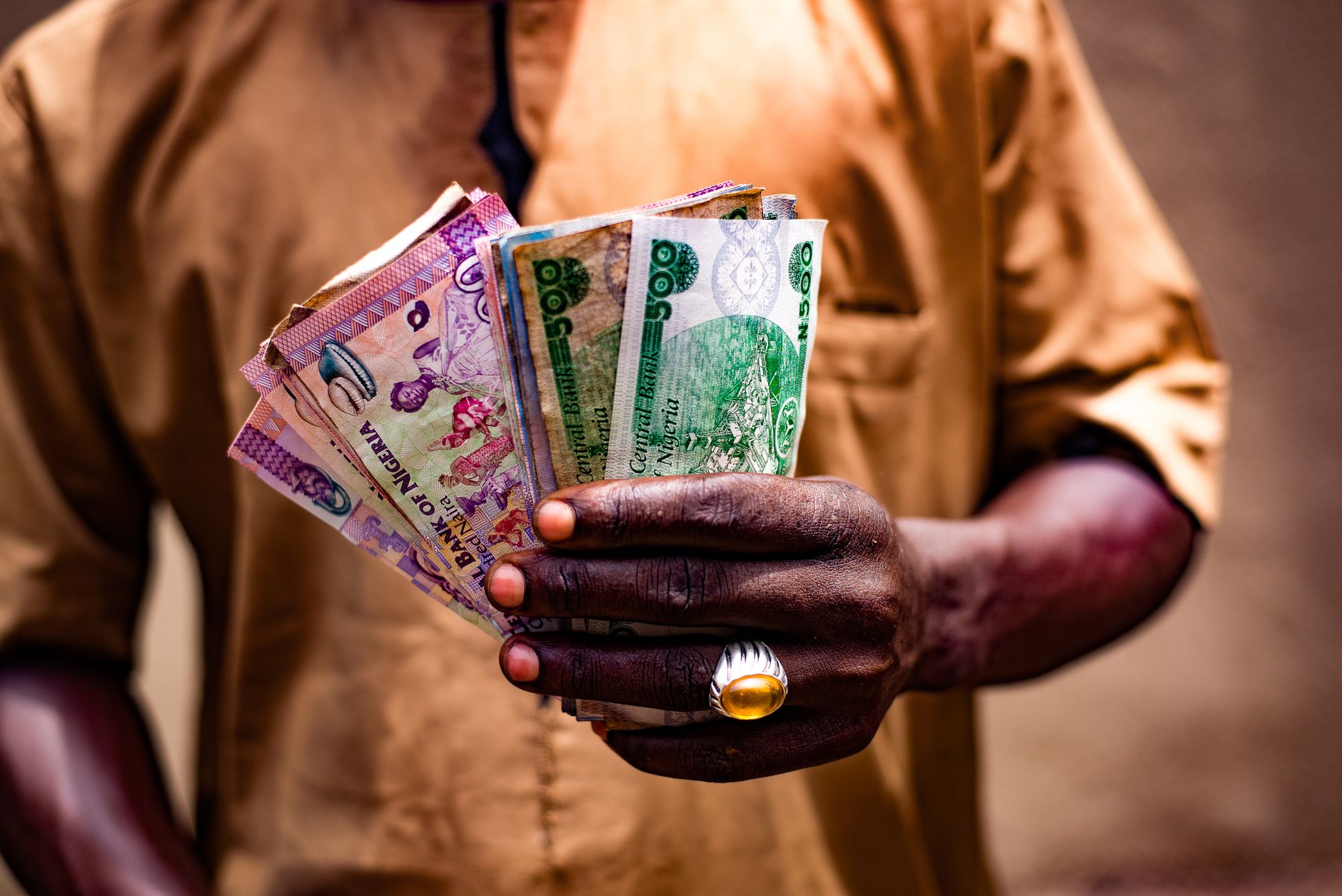
The naira's unification was the second pillar of the 2023 reform package. Its execution has been messier. The currency fell from roughly ₦460 per dollar at the point of unification to a trough exceeding ₦1,600 per dollar by early 2024, as years of suppressed demand flooded a market that had been artificially managed into dysfunction. The Central Bank of Nigeria, under Governor Yemi Cardoso — a former Citibank executive whose institutional credibility the market has taken seriously — responded with interest rate hikes, intervention sales, and the clearance of a reported $7 billion backlog in outstanding foreign exchange obligations to foreign investors and multinationals.
The results are meaningful, if incomplete. By mid-2025, the official rate had stabilised in the ₦1,500–₦1,580 range. The parallel market premium had narrowed to single digits. Foreign portfolio inflows into Nigerian treasury bills had resumed in volume. The CBN's benchmark rate reached 27.25% through a series of moves in 2024 — painful for domestic borrowers, but sufficient to offer real yields attractive enough to pull external capital back into the market. Both Morgan Stanley and JPMorgan flagged Nigerian fixed income as a high-yield opportunity within their emerging market coverage. That signal was not lost on regional family offices in Dubai and Abu Dhabi hunting for yield diversification.
Inflation, Consumption, and the Social Floor
The reform dividend has not been evenly distributed. Any credible investment analysis has to reckon with that honestly. Nigeria's National Bureau of Statistics recorded food inflation above 40% for much of 2024, compressing household purchasing power across every income segment below the upper middle class. Consumer-facing businesses — telecoms, fast-moving goods companies — reported volume contractions even as their naira-denominated revenues rose nominally. MTN Nigeria, one of the country's most closely watched corporate bellwethers, posted a net loss in its 2023 full-year results for the first time since listing. Foreign exchange revaluation losses dwarfed its operating performance. That is a striking data point.
The government's palliative response has been modest. Conditional cash transfers and food distribution programmes have reached a fraction of their intended beneficiaries, and implementation gaps remain wide. The World Bank, which approved a $1.5 billion development policy loan to Nigeria in 2024 partly in recognition of the reform effort, has continued pressing for more robust social protection architecture. Without it, the political sustainability of the reform programme carries real risk — and political sustainability, in Nigeria, is not an abstraction. It is the variable that has broken previous reform cycles.
Foreign Investment: Sentiment Is Shifting
Against all of this, the investment community's posture toward Nigeria is changing. Nigeria's foreign direct investment inflows fell to a multi-year low of $468 million in 2022, according to UNCTAD data. By 2024, that figure had recovered to an estimated $1.08 billion. Still far below the country's potential. But the direction matters. The Nigerian Exchange Group reported increased equity market capitalisation milestones through 2025, with the NGX All-Share Index delivering returns that outpaced most African peers in local currency terms.
The Gulf connection deserves particular attention. Few outside the region track it closely. They should. The UAE remains Nigeria's largest bilateral trade partner in the Middle East, and Emirati sovereign and family office capital has historically maintained quiet exposure to Nigerian real estate, agriculture, and financial services. The reform environment has prompted renewed due diligence activity, with several Abu Dhabi-based investment groups understood to be evaluating structured exposure to Nigerian agribusiness and renewable energy — sectors where the removal of price distortions has improved project economics considerably. Saudi Arabia's broader Africa strategy, partly channelled through PIF's emerging market mandate, has also identified West Africa as a region of growing interest within its 2026–2030 investment framework.
The Forward View: What Sophisticated Capital Is Watching
For family offices and private investors with meaningful emerging market allocations, Nigeria in 2026 presents a classic asymmetric opportunity wrapped in execution risk. The macro foundations are more credible than at any point in the past decade. The exchange rate is market-determined. The subsidy burden is gone. The central bank has institutional independence it has rarely chosen to exercise before now. A functioning large-scale refinery is online for the first time in a generation. These are structural shifts. Not cyclical ones.
Three variables demand close attention. First, whether inflation continues its descent toward the CBN's medium-term target range — which would create room for rate cuts capable of re-igniting domestic credit and consumption. Second, the pace of Dangote Refinery's ramp-up and its concrete effect on the fuel import bill and foreign exchange demand. Third, the 2027 electoral cycle. Historically, Nigerian elections bring fiscal loosening and pressure on the central bank. Whether Tinubu's administration holds its reform discipline as that moment approaches is the question that will define the investment story in the near term.
Nigeria has frustrated patient capital before. Repeatedly. But the reforms now underway differ in character from previous episodes of adjustment — in their breadth, their sequencing, and the external anchoring provided by the World Bank relationship and CBN's renewed credibility. Investors who position thoughtfully ahead of a genuine confidence inflection point have historically captured returns that later entrants simply cannot replicate. The window is not indefinite.

Written by
Amelia Rowe
Senior correspondent · Banking & Economy
Amelia spent eight years inside a sovereign wealth fund before deciding she'd rather write about institutional money than allocate it. She covers central banking, insurance, and the macro decisions that quietly choose which markets get the next decade. Sharp on monetary policy; impatient with anyone who confuses noise with signal. Based in London. Reach out at amelia.rowe@theplatinumcapital.com.