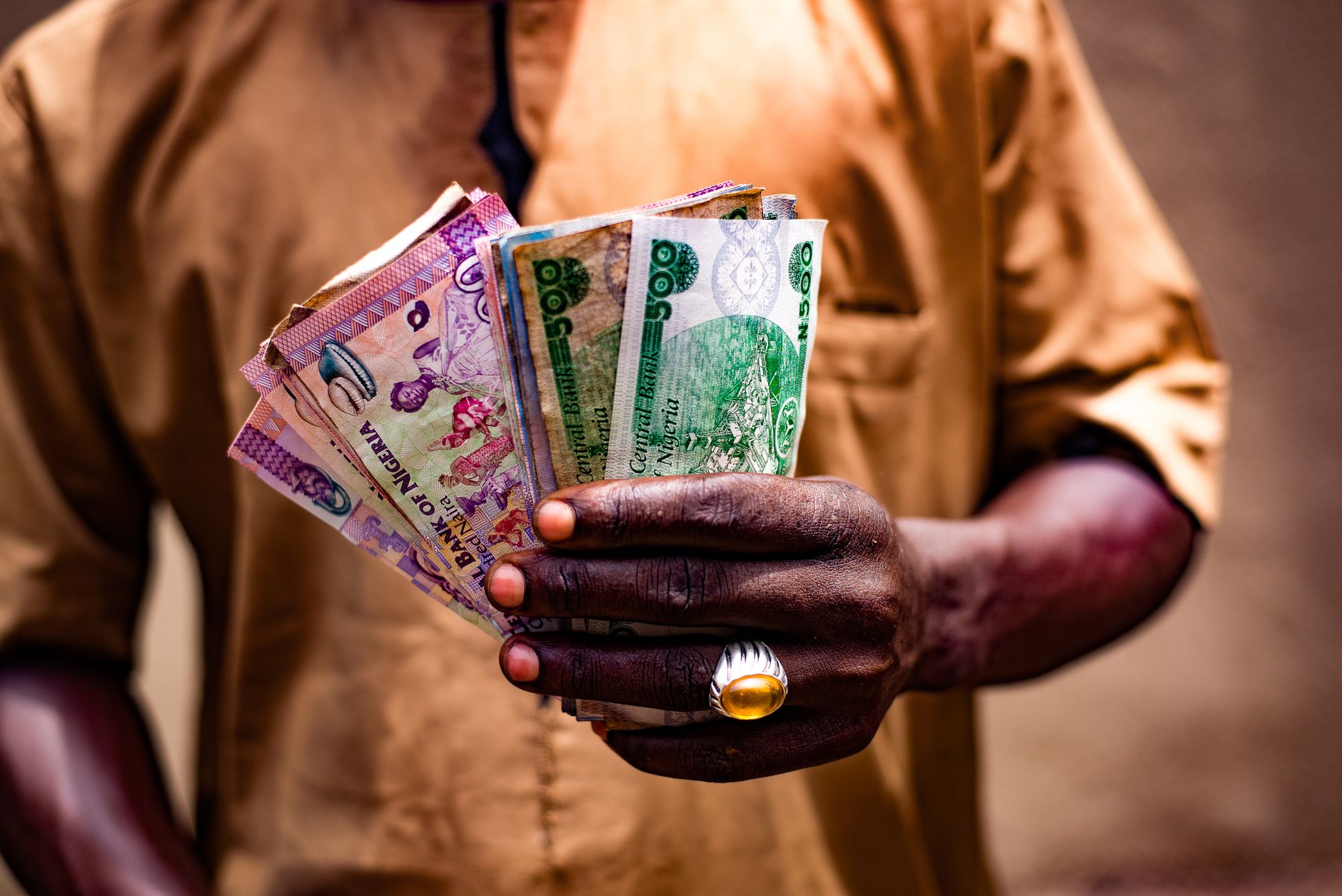

Inflation Persistence: Why Central Banks Are Still Cautious
Inflation, it turns out, is far more deeply embedded in the structural fabric of modern economies than early post-pandemic models predicted, forcing central banks to confront an uncomfortable truth: the tools that once tamed price pressures were designed for a world that no longer exists. For high-net-worth investors and sovereign decision-makers navigating this prolonged tightening cycle, the critical question is no longer when rates will fall, but how permanently elevated borrowing costs will reshape asset allocation, capital flows, and the long-term architecture of portfolio strategy.…

Three years into the most aggressive monetary tightening cycle in a generation, the world's major central banks are still hedging. The Federal Reserve held rates steady through the first half of 2026. The European Central Bank cut cautiously, then paused. The Bank of England signalled restraint even as UK growth stumbled. For wealthy investors, family offices, and sovereign-linked capital allocators across the Gulf and emerging markets, this prolonged period of elevated rates is no longer a temporary inconvenience. It is a structural condition. And it demands a hard rethink of how capital gets deployed, preserved, and protected.
The Inflation Problem That Refuses to Resolve
Headline inflation across most advanced economies has pulled back from its 2022 peaks. But the final mile has been brutal. In the United States, core PCE inflation — the Federal Reserve's preferred gauge — remained above 2.8% through Q1 2026, driven primarily by services, shelter costs, and a labour market that monetary tools are poorly designed to cool. In the eurozone, energy price volatility linked to the now third-month-old U.S.-Israeli conflict with Iran has reignited input cost pressures. The IEA has characterised the resulting supply disruption as the largest in global oil market history. That shock has put the ECB in an uncomfortable position — policymakers in Frankfurt must now weigh slowing growth against the very real risk of a secondary inflation impulse driven by energy and logistics costs.
What separates this cycle from prior inflationary episodes is the simultaneity of supply-side shocks and demand-side rigidities. Structural labour shortages in the US and Europe, layered on top of geopolitically fragmented supply chains, mean that traditional demand destruction — the blunt instrument rate hikes represent — cannot fully restore price stability on its own. Central banks know this. Their public communications have grown notably more qualified. Forward guidance has turned conditional. That epistemic humility is responsible. It is also a signal: rates will stay higher for longer than the market consensus priced in twelve months ago.
GCC Economies: Insulated, But Not Immune
The Gulf tells a different story — though not an uncomplicated one. The GCC's dollar-pegged monetary regimes mean regional central banks effectively import US monetary policy, yet their inflation profiles diverge sharply from what Western economies are experiencing. The World Bank's June 2025 Gulf Economic Update projected GCC GDP growth rising to 4.5% in 2026, with Saudi Arabia averaging 4.6% growth over 2026–2027 and the UAE reaching 4.9%. These are not the numbers of economies under monetary stress.
In Saudi Arabia, hydrocarbon GDP is expected to expand 6.7% in 2026 as OPEC+ production cuts are progressively unwound — though the geopolitical premium now embedded in crude prices following the Iran conflict has complicated the Kingdom's production planning in ways that weren't anticipated even six months ago. Non-oil GDP continues to grow at 3.6% annually, underpinned by Vision 2030's infrastructure, tourism, and entertainment mandates. In the UAE, non-oil sectors are growing at 4.9% in 2025, supported by public investment and expanding trade corridors. Domestic inflation in both countries has remained relatively contained. Import price pressures exist, but government subsidies and managed utility pricing dampen pass-through to consumers in ways simply unavailable to Western governments.
The risk for Gulf-based investors is not domestic. It is the spillover from sustained high global rates into asset valuations, real estate yields, and credit availability in the markets where GCC capital is increasingly deployed — from Southeast Asian infrastructure to Central Asian logistics to African banking equity. That exposure is growing. Few outside the region are tracking it carefully. They should be.
What Technology Investment Tells Us About Inflation Expectations
One of the more revealing data points in understanding how sophisticated capital is positioned right now is the scale of technology and AI investment commitments rolling out across the Gulf. These are inherently long-duration commitments, premised on a stable macroeconomic horizon. Saudi Arabia is targeting AI contributions of 12% of GDP by the end of the decade. The UAE has set the more ambitious target of AI accounting for 40% of GDP by 2031. These are not hedged, tentative allocations. They represent a strategic conviction about where the world is heading.
The Stargate UAE project — a 1-gigawatt compute cluster in Abu Dhabi, anchored by the AI Acceleration Partnership between the UAE and the United States, with capacity scaling to 5 gigawatts — and Saudi Arabia's parallel 6GW data centre pipeline targeted for 2030 both reflect a calculated bet that the inflation-and-rates cycle will resolve sufficiently to support the return profiles on capital-intensive, multi-year infrastructure programmes. That is a significant bet. For family offices and private investors watching these sovereign-level commitments, the signal is hard to miss: the Gulf's wealthiest institutions are not waiting for rate cuts before committing to transformational assets. They are pricing the macro risk in and investing through it.
Energy Transition Capital Flows in a Disrupted Market
The Iran conflict has introduced a new variable into global energy markets that simultaneously raises near-term oil revenues for Gulf producers and accelerates the longer-term case for diversification. The numbers tell a complicated story. In April 2026, Masdar — Abu Dhabi's state-backed renewables champion — signed a binding $2.2 billion 50/50 joint venture with France's TotalEnergies, merging their onshore renewable activities across nine countries in Asia. The transaction pairs Masdar's sovereign balance sheet resilience with TotalEnergies' operational expertise, producing a vehicle built to absorb the capital costs of renewable deployment even in a high-rate environment. That combination matters.
Mubadala, the Abu Dhabi sovereign wealth vehicle, has made parallel moves in the clean energy and infrastructure space. Strip away the ESG framing and what you see is straightforward capital allocation logic: inflation is, in part, an energy price story. Ownership of low-cost renewable generation at scale is a structural hedge against that story repeating. These institutions understand that. Their deployment decisions reflect it.
What Cautious Central Banks Mean for Private Capital
For the investors and family office principals that constitute TPC's readership, inflation persistence and corresponding central bank caution create a specific set of strategic imperatives. Fixed income, long shunned during the zero-rate era, now offers genuine carry — but duration risk remains elevated while rate cut timelines stay uncertain. Real assets — infrastructure, logistics, energy, productive land — continue to attract serious capital precisely because they offer inflation linkage that paper assets cannot replicate. The rotation into real assets is not a trend. At this point, it is a structural repositioning.
In the GCC, where government balance sheets are strengthened by elevated hydrocarbons revenues, the private investor's opportunity sits in co-investing alongside sovereign vehicles in sectors that carry structural protection: AI infrastructure, renewable energy, healthcare, and financial services targeting the region's rapidly expanding middle-income and high-net-worth populations. In Central Asia and Africa — markets where inflation has been more destructive and monetary credibility more fragile — selective exposure to hard-currency assets, dollar-denominated trade finance, and banking sector equity in underpenetrated credit markets remains the most defensible allocation logic available.
Central banks will eventually cut. But the investors who benefit most will not be those who waited for the signal. They will be the ones who built portfolios that work in the world as it is — not as it was in 2020.
Written by
Amelia Rowe
Senior correspondent · Banking & Economy
Amelia spent eight years inside a sovereign wealth fund before deciding she'd rather write about institutional money than allocate it. She covers central banking, insurance, and the macro decisions that quietly choose which markets get the next decade. Sharp on monetary policy; impatient with anyone who confuses noise with signal. Based in London. Reach out at amelia.rowe@theplatinumcapital.com.