

Office Market Restructuring: From Vacancy to Conversion
As vacancy rates in prime commercial districts continue to climb past historic thresholds, sophisticated capital is quietly repositioning itself at the intersection of distress and opportunity, targeting underperforming office assets ripe for adaptive reuse. The strategic conversion of Class B and Class C towers into mixed-use residential, hospitality, and life sciences facilities is no longer a niche arbitrage play — it has become one of the most consequential wealth-generation strategies available to institutional investors and family offices navigating the post-pandemic urban landscape.…
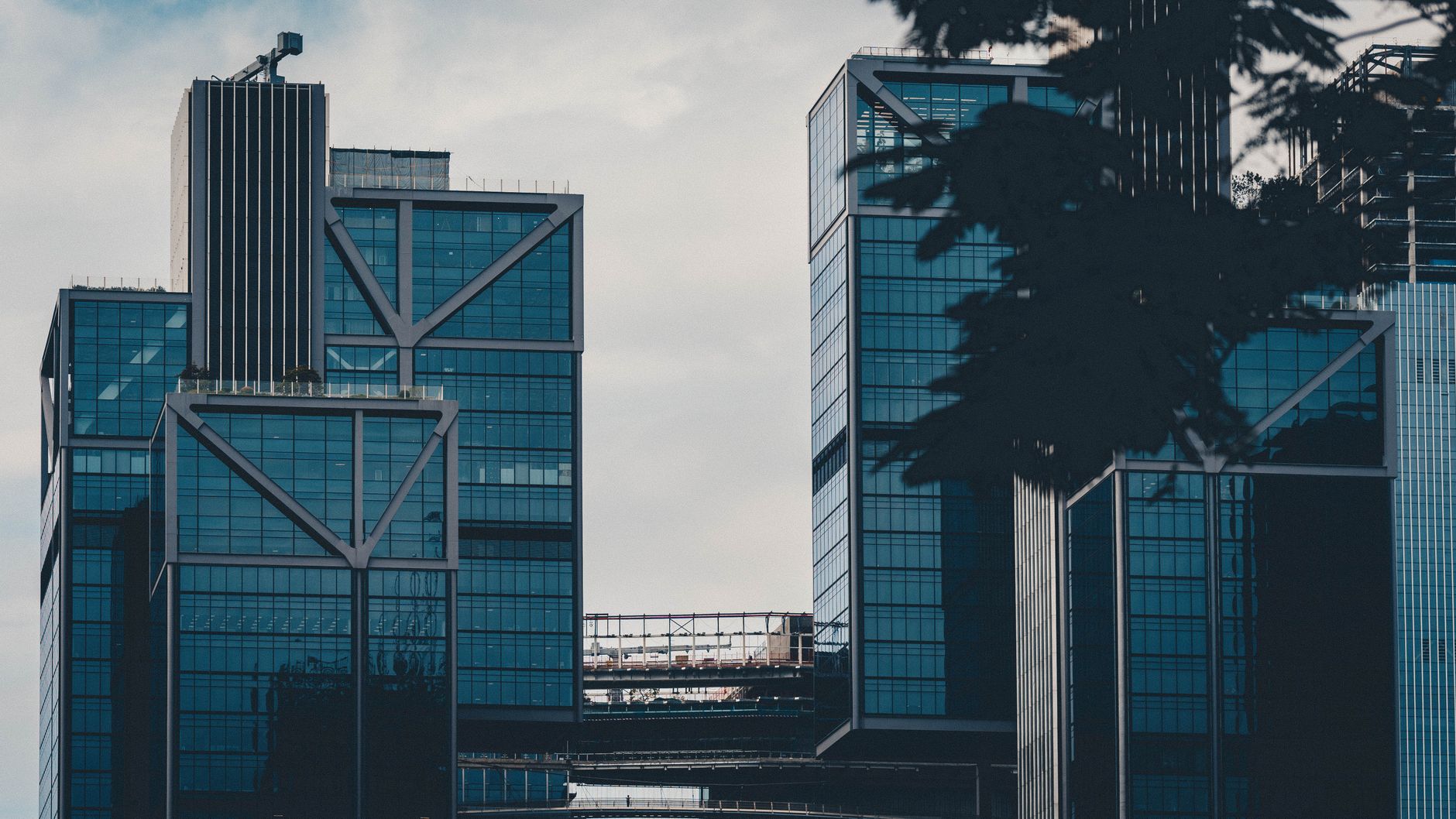
The global office market is going through the most significant structural reconfiguration in a generation. From London and New York to Dubai, Riyadh, and Kuala Lumpur, the question is no longer whether surplus office stock will be repurposed. It is how fast, by whom, and at what scale of return. For private investors, family offices, and developers operating in the Gulf and beyond, that question carries very real capital implications.
The Vacancy Problem Is Now a Conversion Opportunity
Post-pandemic shifts in working patterns have left a structural oversupply of office space across most major urban markets. Global office vacancy rates averaged between 16% and 19% across primary markets heading into 2026. Secondary and tertiary cities looked considerably worse. What once appeared to be a temporary demand slump has proven durable. Corporate footprints are not returning to 2019 levels, and developers who acquired or held office assets on the assumption of a full recovery are now reassessing. The smarter capital has already moved — away from passive holding and toward active conversion strategies that extract residential, hospitality, or mixed-use value from underperforming commercial stock.
In London, approximately 4.2 million square feet of office space sits in some stage of residential conversion planning. In New York, Mayor Adams' administration fast-tracked zoning changes enabling the transformation of obsolete midtown offices into more than 20,000 residential units. These are not niche experiments. They represent a structural reset of how cities allocate built space, and the financial logic is hard to argue with: repositioned assets in prime locations can achieve valuation uplifts of 30% to 60% over their prior office-use valuations, depending on jurisdiction and asset quality.
Gulf Markets Are Writing Their Own Conversion Playbook
The Gulf's approach to office repurposing looks nothing like the West's remediation strategy. In Dubai and Riyadh, the drivers are not vacancy-led distress. They are ambition-led restructuring — a proactive rethinking of how prime urban real estate serves a rapidly diversifying economy and an increasingly international population.
Dubai's Sheikh Zayed Road corridor illustrates this evolution in real time. AHS Properties, founded by Abbas Sajwani in 2021 and now one of the UAE's most aggressive ultra-luxury developers, acquired the Shangri-La Dubai hotel for Dhs1.1 billion in 2026. That transaction speaks directly to how trophy-location assets are being repositioned to serve elevated demand. The Shangri-La deal is a hospitality-to-mixed-use play rather than a pure office conversion, but the underlying logic is identical: extract maximum value from irreplaceable urban land by aligning its use with where demand is actually heading. AHS Properties' expanding footprint on Sheikh Zayed Road — encompassing AHS Tower and the recently announced AHS City development — signals a firm conviction that the corridor's future lies in branded ultra-luxury living and integrated mixed-use. Not legacy commercial office configurations.
Saudi Arabia's shift runs even deeper. On 22 January 2026, the Kingdom formally opened designated zones to non-resident international property investors for the first time — unlocking foreign participation across 170 geographic areas. Knight Frank's Destination Saudi 2026 report identified USD 6.3 billion in global capital actively awaiting deployment into the Saudi market. That capital does not arrive looking to acquire dated office stock at par. It arrives seeking repositioned assets, hospitality-linked residential, and mixed-use developments aligned with Vision 2030's urban ambitions. Developers and landowners sitting on underperforming commercial assets in Riyadh's secondary districts should read that incoming capital flow as both a pricing signal and a development mandate.
What Conversion Actually Requires — and What It Returns
Office-to-residential and office-to-hospitality conversion is not a simple process. Structural column grids, floor-plate depths, MEP configurations, and natural light ratios in most commercial buildings were never designed for residential habitation. Where planning authorities are cooperative, conversion costs typically run from USD 80 to USD 220 per square foot, depending on the depth of structural intervention required. Buildings constructed before the mid-1990s — smaller floor plates, operable windows — lend themselves far more readily to residential conversion than the deep-plan, post-millennium towers built for open-plan corporate tenancy.
The returns justify the complexity, in the right locations. A repositioned office building at a prime urban address can achieve residential exit values or rental yields that office income would never match under current market conditions. The numbers tell a complicated story in Dubai's favour. Prime districts have delivered capital appreciation of 12% to 18% annually through 2025 and into 2026, while grade-B office rents remain under sustained pressure. The March 2026 Jumeirah beachfront land transaction structured by Arabian Acres — covering more than 113,000 square feet with 160 metres of private Gulf frontage, targeting a gross development value exceeding Dh1 billion — shows precisely the premium that well-located, thoughtfully repositioned assets can command. Three ultra-luxury villas with private marina access represent exactly the kind of end-product that absorbs international UHNW capital efficiently. Few other asset classes do it as cleanly.
Emerging Markets Are Accelerating the Trend
This story does not begin and end in Western cities or Gulf megaprojects. Across Southeast Asia and Africa, mid-tier commercial markets are facing their own surplus reckoning, and the more sophisticated local developers are already acting. In Kuala Lumpur, Nairobi, and Lagos, office vacancy rates in secondary districts have exceeded 25%, while residential and hospitality demand in those same cities remains structurally undersupplied. Family offices operating across these markets — particularly those with construction and development capabilities — are identifying conversion plays that Western institutional capital has yet to price correctly. That window will not stay open indefinitely.
In Tashkent and Almaty, urban planning frameworks are being actively reformed. Government-sponsored renewal programmes are opening legacy commercial zones to mixed-use reclassification for the first time. For investors with regional networks and local execution capacity, these are first-mover opportunities of the kind that will not exist at the same value in three to five years. Few outside the region have noticed. They should.
The Strategic Outlook for Private Capital
The office market's restructuring is not a crisis narrative. It is a capital allocation story. The assets that will define the next decade of real estate returns are not the ones built for yesterday's economy — they are the ones being intelligently converted to serve tomorrow's. For family offices and private investors with the patience and execution capacity to manage repositioning risk, the spread between distressed office acquisition costs and repositioned residential or hospitality exit values represents one of the more durable arbitrage opportunities available in real estate today. That spread is real, and in certain markets it is still wide.
The developers and investors leading this shift — whether on Sheikh Zayed Road, in Riyadh's newly foreign-accessible zones, or in the underpriced secondary cities of Central Asia and sub-Saharan Africa — share one orientation: they are not waiting for markets to stabilise. They are deciding what those markets will look like when they do.
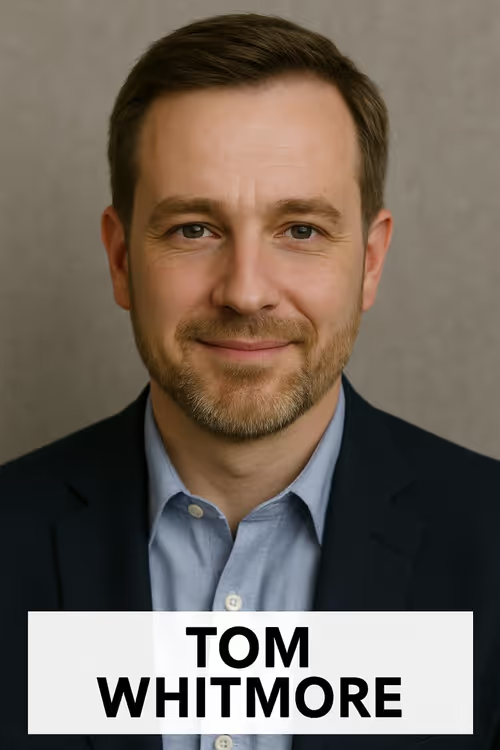
Written by
Tom Whitmore
Senior correspondent · Real Estate & Private Companies
Tom has interviewed most of the operators reshaping the Gulf skyline — and a few of the ones who tried and didn't. His beat is real estate, commodities, manufacturing, and the founder-led private companies that never bother to list. He knows which buildings and balance sheets survive a downturn before the spreadsheet does. Based in Dubai. Reach out at tom.whitmore@theplatinumcapital.com.