

Southeast Asia Hospitality Assets: The Capital Chasing Tourism Recovery
Southeast Asia's hospitality sector is commanding renewed attention from institutional capital and sovereign-aligned family offices, as post-pandemic travel demand accelerates beyond pre-2019 benchmarks across key gateway markets including Thailand, Vietnam, and Indonesia. For discerning investors positioning ahead of the next valuation inflection point, the convergence of undersupplied luxury inventory, favorable land acquisition conditions, and structural demographic tailwinds presents a rare and time-sensitive opportunity to acquire distressed or development-stage assets at a meaningful discount to replacement cost.…
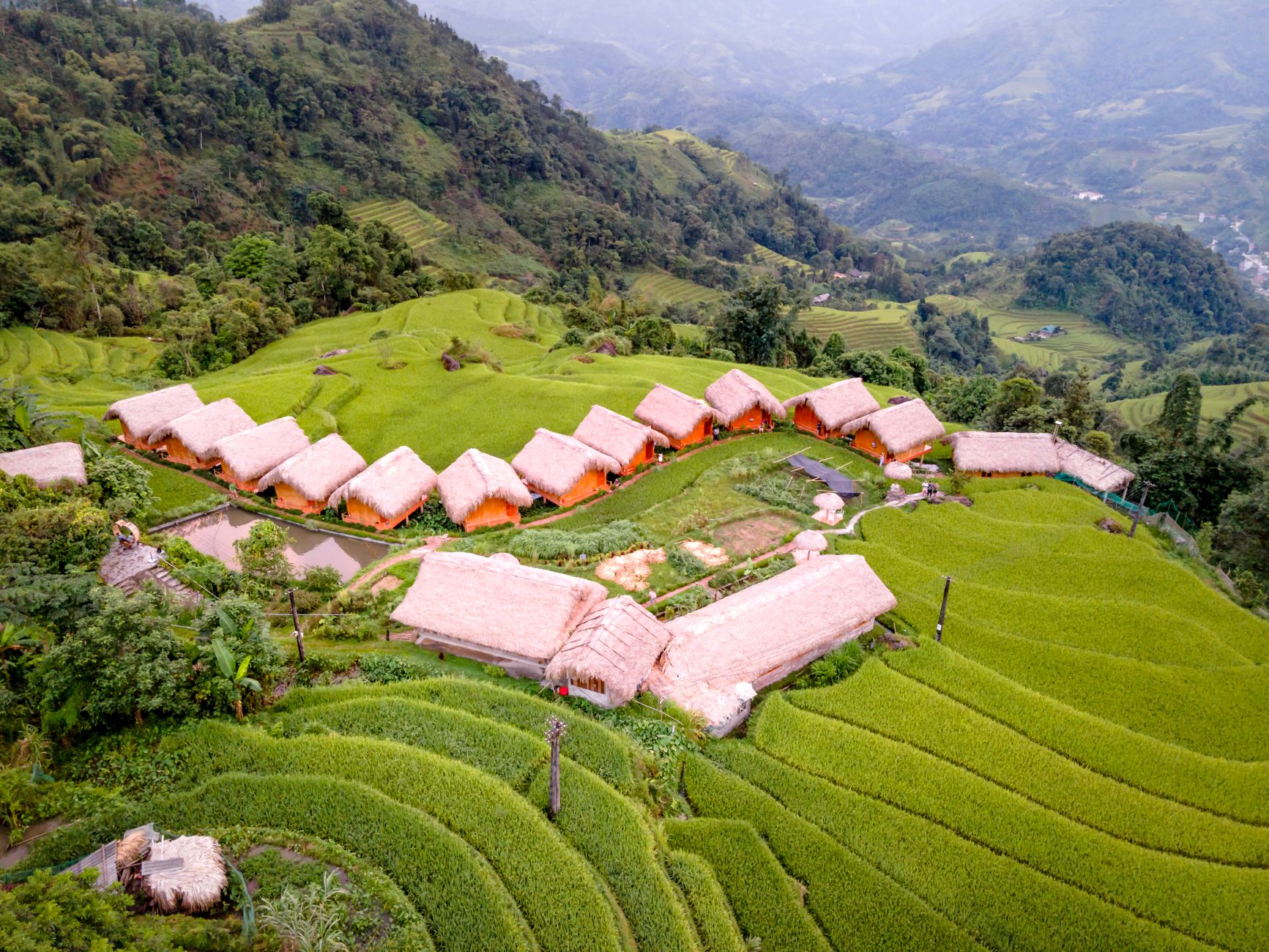
Capital from the Gulf, Central Asia, and East Africa is moving quietly but decisively into Southeast Asian hospitality assets. The pull factors are straightforward: a tourism recovery that has outpaced nearly every pre-pandemic forecast, and a development pipeline that still offers entry points before institutional pricing takes hold. From the river-facing boutique hotels of Vietnam's Mekong corridor to the integrated resort precincts rising along Indonesia's Lombok coastline, a cohort of private investors and family offices — many of them active in Dubai and the GCC — are repositioning leisure real estate as a core allocation rather than an opportunistic side bet.
The Recovery Has Already Become a Boom
Southeast Asia welcomed over 143 million international tourist arrivals in 2025, surpassing 2019 levels across Thailand, Vietnam, and the Philippines simultaneously for the first time. That is a significant milestone. Thailand alone recorded 39.8 million arrivals, generating THB 1.92 trillion in tourism receipts. Indonesia's Bali-Lombok corridor posted a 31% year-on-year increase in average daily rates across five-star inventory. Vietnam's coastal resort corridor from Da Nang to Phu Quoc saw occupancy rates hold above 74% for the full calendar year — figures that would be competitive in mature European leisure markets.
The structural driver here is not simply pent-up travel demand working its way through the system. A younger, wealthier, and increasingly mobile middle class across China, India, South Korea, and the Gulf states has recalibrated spending priorities toward experience and travel, creating a demand floor that simply did not exist at this scale before 2020. These are not tourists who will stop coming when the novelty fades. They are the market now.
Why Gulf Capital Is Looking East
The same investors who drove Dubai's record-breaking real estate cycle are beginning to deploy into Southeast Asian hospitality with a recognisable logic: regulatory clarity, yield premium, and long-duration asset appreciation. Dubai recorded over $5.1 billion in luxury home sales in H1 2026 alone, according to Knight Frank, with 296 transactions above the $10 million threshold — a 14% year-on-year increase in value. Engel and Völkers reported that Q1 2026 saw AED 180 billion in total residential and commercial sales across the emirate, including a 62.6% surge in ultra-luxury deals above AED 10 million.
The numbers tell a complicated story. Gulf-proximate private wealth is not sitting still — it is actively hunting yield-generative hard assets across time zones. For family offices that have already deployed into Dubai land and residential — among them the AED 400 million beachfront land acquisition closed by Arabian Acres CEO Issa Atiq in Jumeirah Coastline in March 2026 — Southeast Asian resort and hospitality assets offer a genuinely complementary risk profile. Dollar-denominated revenues. Lower entry valuations per key. And the growth asymmetry of an emerging-market leisure sector that remains structurally underbuilt relative to the demand now pressing against it.
Where the Deals Are Getting Done
The most active sub-markets for private capital in mid-2026 are Vietnam, Indonesia, and the Philippines. Each sits at a different stage of the investment cycle, and each rewards a different entry strategy.
Vietnam continues to attract opportunistic buyers, particularly in Phu Quoc and the emerging coastal town of Quy Nhon. Branded residences attached to four and five-star hotel flags can still be acquired off-plan at between $180,000 and $350,000 per unit, with rental pool structures projecting net yields of 6% to 8% annually. Those numbers attract attention.
In Indonesia, the focus has shifted from Bali's saturated south to Lombok's Mandalika Special Economic Zone, where the government embedded hospitality infrastructure alongside the MotoGP-calibre Pertamina Mandalika International Street Circuit. Land values in the SEZ have appreciated over 40% since 2023. Several regional developers are now in active discussions with Middle Eastern family offices for co-investment structures on branded villa clusters.
The Philippines, meanwhile, is running a sharp upgrade cycle across its northern Luzon and Palawan corridors. DOT-registered tourism estates offer long-term lease structures accessible to foreign investors under the country's updated Revised Corporation Code framework — a legal evolution that has quietly opened doors that were firmly shut a decade ago. Few outside the region have noticed. They should.
The Operator Equation and Brand Premium
One variable separating profitable hospitality investments from underperforming ones across this region is brand affiliation. Properties operating under globally recognised flags — Marriott, Six Senses, Aman, or regional operators such as Onyx Hospitality and Dusit International — commanded an ADR premium of between 22% and 38% over unbranded equivalents in comparable locations, according to STR Global data from 2025. That gap matters enormously at the net operating income line.
For private investors and family offices entering through branded residences or management leaseback arrangements, this premium flows directly into capitalisation rates at exit. Several Kazakh and Azerbaijani family offices that built significant positions in hospitality through Turkey and Georgia are now extending those same frameworks into Thailand and Malaysia, where condominium-hotel hybrid structures allow foreign freehold ownership and offer liquidity profiles that look more like residential than traditional commercial real estate. The playbook transfers well.
Risk Factors Sophisticated Buyers Are Pricing In
No allocation of this nature comes without complexity. Currency risk remains live: most Southeast Asian hospitality revenues price in USD for international guests, but operating costs run in local currency, creating a margin buffer that can erode when regional currencies strengthen. Political and regulatory risk varies sharply by market. Vietnam restricts foreign land ownership to 50-year leases. Thailand's condominium act caps the foreign quota at 49% of any individual development.
Investors entering through SPVs, joint ventures with local developers, or Labuan-domiciled structures in Malaysia are managing these constraints with increasing sophistication. The structures exist. Experienced regional counsel know how to deploy them.
ESG considerations have also entered the underwriting calculus in ways that were largely absent five years ago. Resorts with credible sustainability credentials — solar infrastructure, wastewater management, marine conservation commitments — are commanding measurable premiums from ESG-aligned institutional co-investors and pulling the specific demographic of high-spend, eco-conscious travellers that actually drives yield. Ignoring this dimension is no longer a viable position for serious capital.
A Window That Will Not Stay Open
The convergence of recovering tourism fundamentals, undervalued hospitality stock relative to other Asia-Pacific sub-markets, and a generation of Gulf and Central Asian investors actively diversifying beyond their home regions has produced a window for private capital. Experienced observers believe it will narrow significantly within 18 to 24 months.
The reasons are already visible. Singapore-listed REITs have signalled acquisition mandates for 2026 and 2027. Institutional funds from Japan and Australia are returning to Southeast Asian hospitality in force. When they arrive at scale, the pricing advantage currently available to nimble private buyers will compress — and compress fast.
Family offices and private investors with USD 5 million to USD 50 million in deployment capacity are best positioned to move at the speed and discretion this market rewards. The assets exist. The yields are real. The question is simply whether capital moves before the institutions do.

Written by
Tom Whitmore
Senior correspondent · Real Estate & Private Companies
Tom has interviewed most of the operators reshaping the Gulf skyline — and a few of the ones who tried and didn't. His beat is real estate, commodities, manufacturing, and the founder-led private companies that never bother to list. He knows which buildings and balance sheets survive a downturn before the spreadsheet does. Based in Dubai. Reach out at tom.whitmore@theplatinumcapital.com.