
Riyadh Housing: Supply, Prices and the Vision 2030 Projects
Riyadh's residential market has been fundamentally redrawn by the convergence of Vision 2030's homeownership targets, government-backed mortgage financing through the Real Estate Development Fund, and a sovereign-backed construction pipeline spanning affordable outer-ring housing to premium mixed-use urban districts, driving substantial price appreciation across established neighbourhoods including Al Malqa, Al Narjis and Hittin. Yet the market's most consequential tension lies in the gap between an ambitious development pipeline — many units still years from completion — and immediate demand being absorbed by secondary market stock, while the durability of this expansion ultimately depends on whether private sector confidence and international capital can sustain momentum beyond government-directed financing and Public Investment Fund-backed activity.…

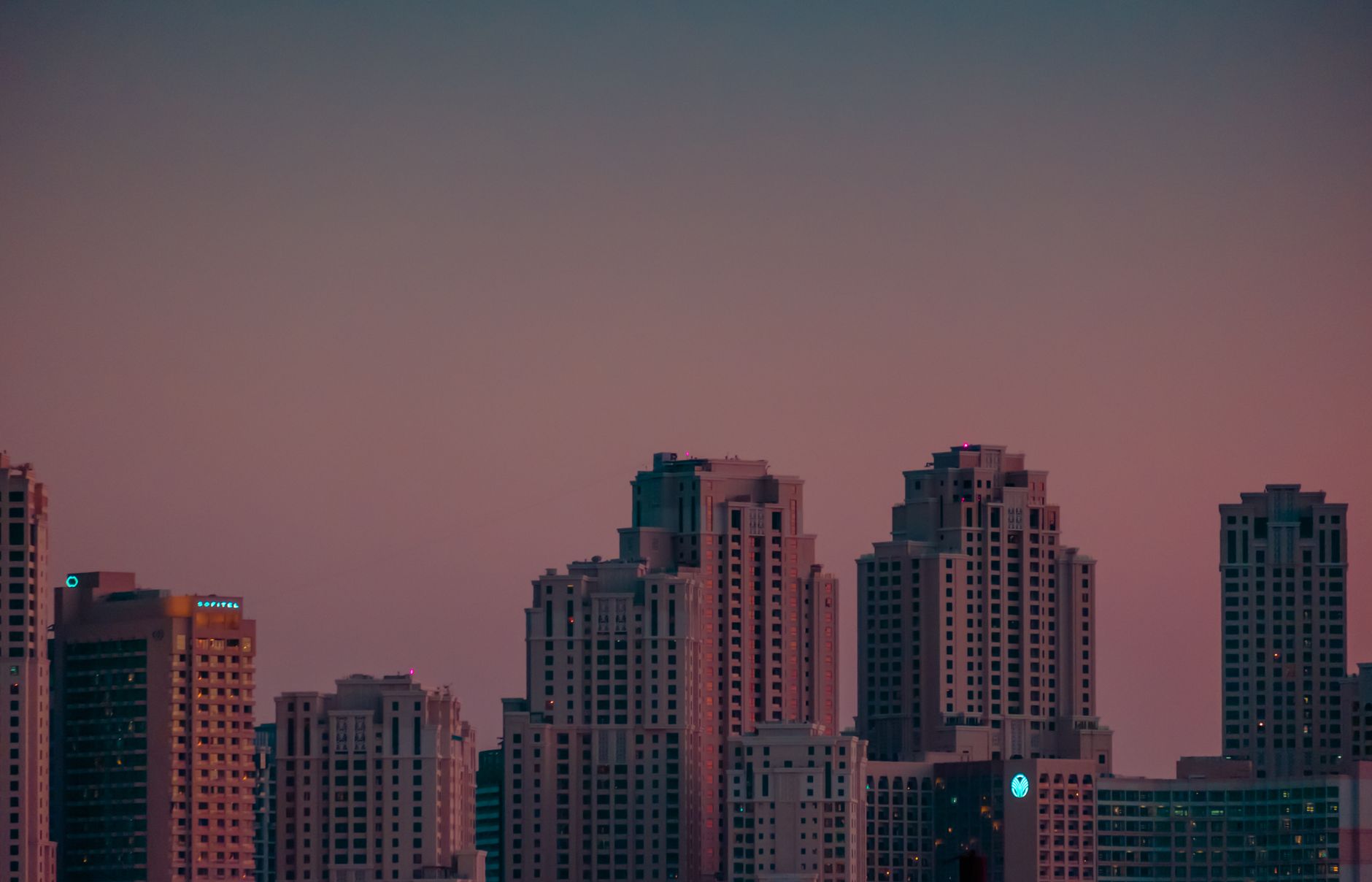
Photo: Warren Griffiths / Pexels
Few cities are transforming as fast, or as visibly, as Riyadh. A decade ago, the Saudi capital was defined by sprawling low-density suburbs and a residential market shaped almost entirely by expatriate demand and government employment cycles. Today it sits at the centre of one of the most ambitious urban development programmes in modern history. Demographic pressure, regulatory reform and sovereign-backed mega-projects have collectively rewritten the fundamentals of housing supply and pricing — and analysts are still catching up. To make sense of what is happening, you have to trace three converging forces: Vision 2030's social objectives, the Kingdom's evolving mortgage infrastructure, and the sheer volume of construction now underway across the metropolitan area.
A Market Remade by Demographics and Policy
Saudi Arabia's population is young, urbanising fast, and increasingly interested in owning rather than renting. The government's target of raising homeownership rates among Saudi nationals — a goal embedded within Vision 2030 — has been one of the most consequential policy drivers in the residential sector over the past several years. Before the reform era, homeownership among Saudi citizens lagged behind comparable Gulf economies. Younger households tended to rent, and affordable mortgage financing was hard to come by.
The Real Estate Development Fund, the government entity tasked with widening access to home financing for Saudi nationals, has been central to changing that. Its programmes — subsidised loans, down-payment support — have channelled substantial capital into the residential sector and helped sustain demand even as construction costs and land prices in Riyadh climbed. The results showed up in the data: mortgage origination volumes grew markedly through the early 2020s, though issuance has moderated more recently as global interest rates tightened.
Supply: Ambition Meets Execution
The scale of construction in Riyadh right now is hard to convey on paper. Cranes line the horizon across multiple districts simultaneously. Large-scale residential developments — many backed by the Public Investment Fund or affiliated entities — are either under construction or in advanced planning. The pipeline runs from affordable housing schemes in the city's outer rings to premium mixed-use communities closer to the urban core.
Among the most significant is the broader Diriyah development which, while primarily heritage and cultural in orientation, is reshaping the urban geography of the city's northwestern reaches. New urban districts tied to the King Salman Park project — one of the largest urban park developments anywhere in the world — are expected to create new residential catchment areas and alter commuter patterns across the metropolitan area. The so-called 2030 Projects are not simply real estate ventures. They carry social engineering ambitions, designed to create new districts with their own employment anchors, retail infrastructure and community facilities.
Delivery, though, has not been frictionless. Construction cost inflation, project prioritisation decisions and the sequential nature of large master-planned developments mean many units remain years from completion. In the meantime, secondary market stock has absorbed the bulk of demand, pushing rents and sale prices upward across established residential districts. That gap between pipeline and delivery is where much of the market tension lives right now.
Price Dynamics and the Affordability Question
Riyadh's residential prices have risen substantially over the past three to four years. Demographic growth and government-backed financing have driven structural demand, and the market has responded accordingly. Districts such as Al Malqa, Al Narjis and Hittin — historically premium northern suburbs — have seen considerable appreciation in villa and apartment values. More affordable segments in the city's southern and eastern corridors have drawn first-time buyers looking to make use of financing support.
The affordability problem is real, and policy circles are starting to say so openly. Land costs in desirable urban locations remain high, partly because strategic projects and infrastructure investment have concentrated in certain corridors. Developers have made the point bluntly: building affordable housing at meaningful scale requires either substantial land subsidies or a willingness to push new communities further from established employment centres. That is a trade-off every rapidly growing city eventually confronts, and Riyadh is no different.
Rental markets face parallel pressure. The expatriate community has expanded — a deliberate outcome of Vision 2030's economic diversification goals, which aim to attract international talent and investment — and demand for furnished short-term and mid-term rental accommodation has grown with it. That has introduced a new competitive dynamic between long-term residential rentals and the emerging short-stay market. The regulatory frameworks to manage that relationship are still being written.
The Role of Giga-Projects in Reshaping Demand Geography
NEOM sits hundreds of kilometres from Riyadh, but its effect on the capital's housing market is real. Project management, financing and corporate headquarters activity concentrate in Riyadh, meaning the city absorbs a significant share of the professional workforce supporting giga-projects across the Kingdom. That has created a class of highly mobile, relatively high-income residents — many of them Saudi nationals returning from international postings — whose housing preferences lean toward premium furnished apartments and serviced residences.
Closer in, the Qiddiya entertainment and sports destination on Riyadh's southwestern edge is expected to generate substantial residential demand once operational phases advance. Developers have already been acquiring land in the surrounding area, betting on spillover demand. Timelines, as with most projects of this scale, remain subject to revision.
Structural Strength, Cyclical Caution
The long-term case for Riyadh's residential market is straightforward. A young and growing national population, a government committed to homeownership as social policy, and a pipeline of employment-generating mega-projects all point toward sustained underlying demand. The city's expanding role as a regional headquarters hub — driven by government policy encouraging multinationals to locate their Middle East operations in the Kingdom — adds an international layer to what was historically a domestically driven market.
The more cautious read is also worth taking seriously. The market has been substantially supported by government-directed financing and sovereign-backed development activity. Whether private sector confidence holds, and whether international capital can be drawn into the residential segment on commercially self-sustaining terms, will determine whether this cycle represents a durable re-rating of Riyadh as a global residential market — or a policy-accelerated expansion that will need careful management as projects move from groundbreaking to delivery. Those are different outcomes, and the gap between them is not yet closed.
What is not in dispute is that Riyadh's housing market in 2026 is unrecognisable from what it was a decade ago — and that the forces reshaping it are only beginning to be fully felt.

Written by
TPC Editorial Desk
The Platinum Capital editorial desk
Articles on The Platinum Capital are produced by the TPC editorial desk with the assistance of AI tools, and edited before publication. Profiles are based on information provided by the subject and checked against public sources. Reach out at info@theplatinumcapital.com.