

Saudi Arabia's Philanthropic Families and the Causes They Champion
Saudi Arabia's most influential family dynasties are quietly reshaping the kingdom's social landscape, deploying vast private capital into education, healthcare, and cultural preservation with a strategic precision that mirrors their commercial empires. Understanding the philanthropic priorities of these families offers a rare and valuable lens into the values, networks, and long-term visions that ultimately drive their investment decisions.…
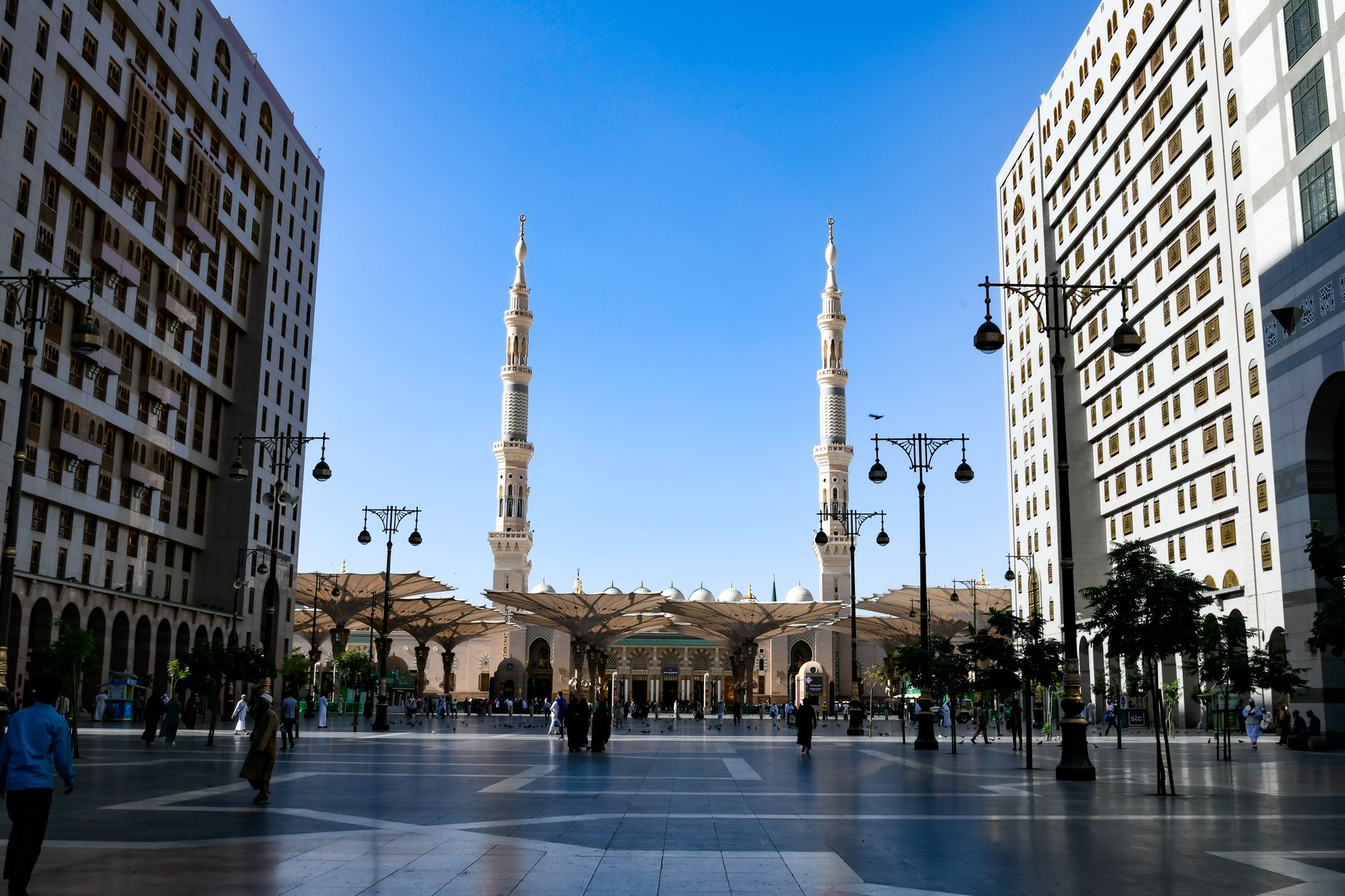
Saudi Arabia has long produced some of the Arab world's most consequential philanthropic dynasties — families whose giving has shaped educational institutions, healthcare infrastructure, and entrepreneurial ecosystems across the region and well beyond it. What is changing in 2026 is not the scale of that giving. It is the architecture. Where earlier generations favoured direct charitable endowments and mosque construction, today's leading Saudi philanthropic families are deploying capital through structured impact vehicles, family offices, and co-investment platforms that deliberately blur the line between generosity and strategic capital allocation. The result is a new class of giving — one that demands measurable outcomes, multiplied returns, and a legacy that survives the founding generation.
The Olayan Legacy: From Steel Pipes to Impact Venture
Few names carry more weight in Saudi private wealth than Olayan. The late Suliman Olayan built one of the Kingdom's most diversified conglomerates from the ground up, and his daughter Lubna — one of the most recognised businesswomen in the Arab world — has steered the family's influence into the twenty-first century with unmistakable intentionality. The direction of travel is worth watching closely.
In June 2026, Dara Holdings, the Olayan family office, confirmed its participation as an anchor investor in the first close of Anara Impact Capital's debut MENA fund, which reached $48 million against a $50 million target. Nafez Dakkak, Mohamed Hussain, and Nadia Moukaddam lead the fund, with Aramex founder Fadi Ghandour chairing the Investment Committee. The mandate focuses on Seed and Series A startups operating in learning, wellbeing, and climate across the Middle East and North Africa.
Dara Holdings joined KfW — the German development bank acting on behalf of Germany's BMZ and the European Commission — alongside ISSF and a cohort of regional family offices. That a Saudi family office would anchor a fund alongside European development finance institutions says something meaningful about where Saudi philanthropic capital is heading: away from passive endowments and toward blended finance structures that carry both reputational authority and hard social-impact metrics. For the Olayan family, this is not diversification. It is an extension of a philosophy that has always treated commerce and civic responsibility as inseparable obligations.
Cause Architecture: What Saudi Families Are Actually Funding
The causes championed by Saudi Arabia's leading philanthropic families cluster around four areas: education and human capital, health and medical research, youth entrepreneurship, and — with growing conviction — climate and environmental resilience. That last category is new. And it is accelerating.
Al-Waleed Philanthropies, chaired by HRH Prince Alwaleed bin Talal, remains one of the most globally recognisable Saudi philanthropic entities, having committed over $4 billion across more than 130 countries. Its programmes span tolerance and coexistence initiatives, women's empowerment, and disaster relief, anchored by major endowments to institutions including Harvard, Cambridge, and the London School of Economics. The footprint is genuinely global.
The Alireza family, rooted in Jeddah's mercantile aristocracy, has sustained decades of quiet investment in vocational training and cultural preservation. The Mohammed bin Rashid Al Maktoum Foundation's model across the UAE has since inspired several Saudi families to develop analogous knowledge-economy vehicles domestically. Meanwhile, the King Abdulaziz and His Companions Foundation for Giftedness and Creativity — known as Mawhiba — represents the state-family overlap that defines much of Saudi institutional philanthropy, drawing on partnerships with private wealth holders to identify and cultivate the Kingdom's most talented young people. Few outside the region have mapped this infrastructure carefully. They should.
Vision 2030 as Philanthropic Architecture
Saudi philanthropy does not operate in isolation from state ambition. It never has. But the relationship has grown more structured. Vision 2030 has given family giving a framework onto which capital can be deliberately mapped — and families have taken the signal seriously. The privatisation of social services, the push toward a knowledge economy, and the emphasis on sport, culture, and tourism have all opened new domains for private philanthropic engagement that carry implicit government endorsement.
Families who fund STEM education programmes, girls' sports infrastructure, or mental health platforms are not simply being generous. They are aligning with national priorities in ways that open commercial doors while building genuine social capital. That is a significant shift from the quieter, less codified giving of previous decades.
The Saudi Cultural Development Fund and the Misk Foundation — associated with Crown Prince Mohammed bin Salman and focused squarely on youth entrepreneurship and innovation — have attracted co-participation from private family offices that see proximity to these platforms as simultaneously civic and strategic. Saudi families managing wealth in the range of $200 million to several billion dollars are increasingly structuring their philanthropic arms to sit adjacent to these entities, creating hybrid models that blend grant-making with equity participation in high-growth sectors.
The Gulf Cross-Pollination Effect
Saudi philanthropic capital does not stop at the Kingdom's borders. The January 2026 launch of the Altérra Opportunity Fund — a $1.2 billion co-investment vehicle anchored by a $250 million commitment from BBVA and domiciled at ADGM in Abu Dhabi — illustrates how Gulf philanthropic and sovereign capital increasingly moves as a regional bloc. Altérra, the UAE's $30 billion climate fund launched as part of the COP28 package, is mobilising toward a $250 billion climate solutions target by 2030. Several Saudi family offices with established UAE operations have been in active dialogue about participation in Altérra-aligned vehicles, drawn by the fund's diversified mandate across climate-aligned infrastructure, private equity, and private credit.
The numbers tell a complicated story. This is not simply capital chasing returns. Saudi families with offices in Riyadh, Dubai, and London are engaging with East African clean energy projects, Southeast Asian microfinance platforms, and Central Asian education initiatives — deploying capital where impact density is highest, and where the Saudi name carries the weight of a trusted, long-term partner rather than a transactional investor. That distinction matters enormously to the communities receiving the capital. It is also beginning to matter to co-investors.
The Next Generation Is Rewriting the Terms
The most consequential shift in Saudi family philanthropy may ultimately be generational. The sons and daughters of the Kingdom's founding merchant families — many educated in the United States, the United Kingdom, or Singapore — are returning with frameworks borrowed from impact investing, ESG methodology, and systems thinking. They are asking harder questions of family foundations: not simply how much was given, but what changed, what was measured, and what will endure when the founders are gone.
The answers are reshaping internal governance structures, redefining success metrics, and pulling Saudi philanthropic capital into conversations it would not have entered a decade ago. That is not a soft trend. It is a structural reorientation with real capital behind it.
For family office principals and private investors watching this space, the signal is unambiguous. Saudi philanthropic capital in 2026 is structured, strategic, and global in its ambitions. Those seeking co-investment partners, advisory relationships, or ecosystem collaboration in education technology, climate finance, or health infrastructure should engage Saudi family foundations not as donors looking for causes — but as equals. Institutions with capital, credibility, and a generational mandate to build something that outlasts the balance sheet.
Written by
Amara Osei
Africa & Emerging Markets Correspondent · Philanthropy & Next Generation
Amara covers the philanthropists, foundation founders, and next-generation leaders building wealth and influence across Africa, Southeast Asia, and Central Asia. She has a particular eye for the family businesses handing the reins to a generation educated abroad and building at home. Based in Nairobi. Reach out at amara.osei@theplatinumcapital.com.