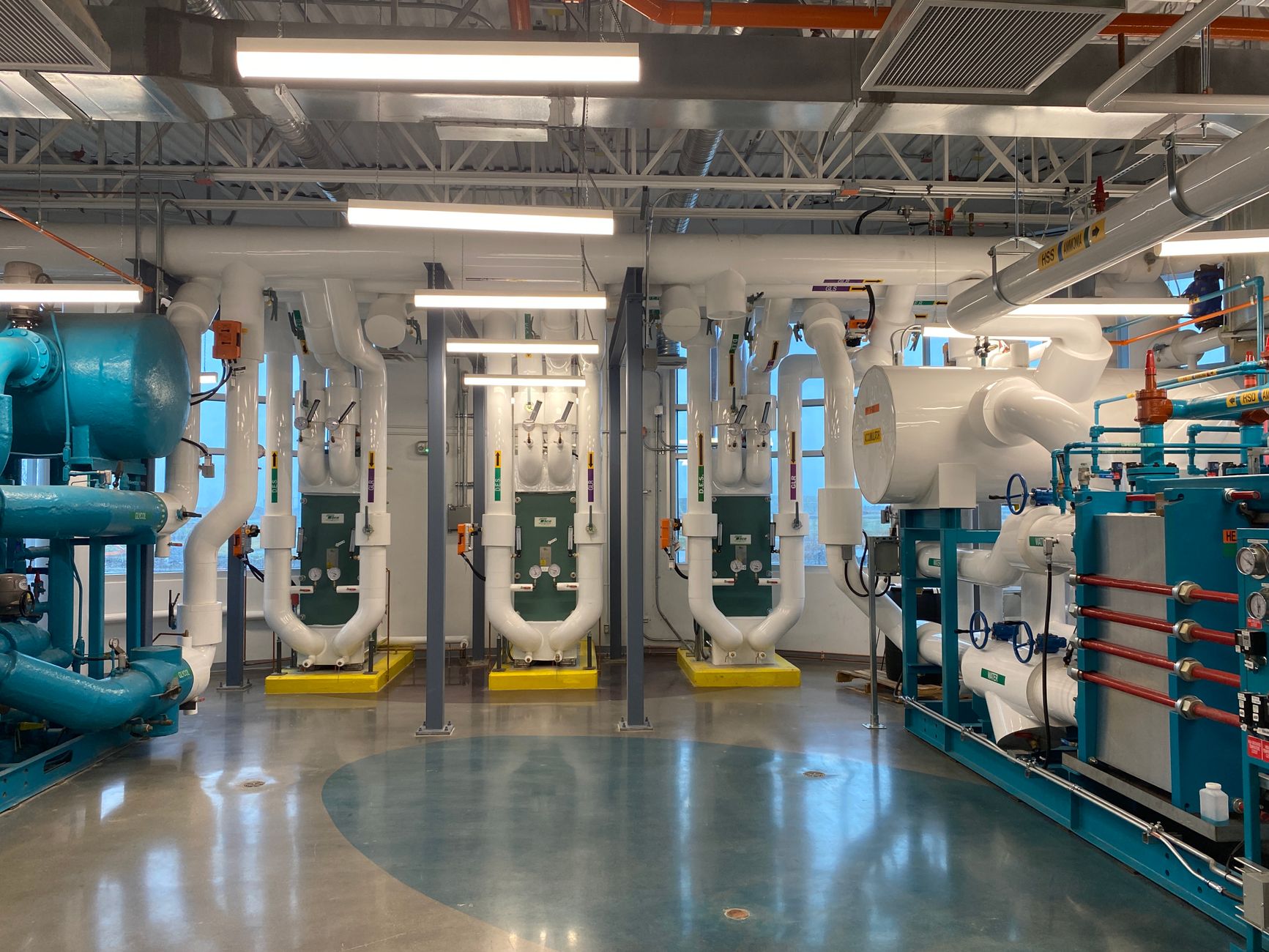

Turkey Family Conglomerates and Their Regional Reach
Turkey's most powerful family conglomerates have quietly engineered an economic footprint that stretches from the Balkans to Central Asia, leveraging decades of state relationships, cross-sector diversification, and an intimate understanding of frontier markets that no foreign institutional investor can easily replicate. For family offices and sovereign allocators seeking resilient exposure to one of the world's most strategically positioned economies, these dynastic business empires represent not merely investment targets, but indispensable partners in navigating a region where political capital and commercial advantage are inseparable.…

When Gulftainer — the Sharjah-based port and logistics group owned by the Bawan family — announced on July 7, 2026 what it called the most substantial transformation in its nearly five-decade history, boardrooms in Istanbul and Ankara took notice. Turkey's most sophisticated family conglomerates have spent decades building exactly this kind of integrated model: ports, shipping lanes, industrial zones, and technology-driven supply chains unified under single ownership. For several of Turkey's great private dynasties, that blueprint is not inspiration. It is already operational, and its reach now runs from the Bosphorus to the Gulf, Central Asia, and Sub-Saharan Africa.
Dynasties Built Across Generations, Not Quarters
Turkey's family-controlled conglomerates are not household names outside the region. They should be. Groups such as Koç Holding, Sabancı Holding, Doğuş Group, Eczacıbaşı, and Kalyon collectively generate revenues that rival the GDP of mid-sized nations, spanning energy, banking, construction, retail, automotive, and logistics. What sets them apart from publicly traded peers is not scale alone — it is time horizon. These families think in generations. That resonates deeply with the family office principals and sovereign-aligned investors who form their most natural counterparts across the Gulf and Central Asia.
Koç Holding alone posted consolidated revenues exceeding $45 billion in 2025, with meaningful international exposure through its energy arm Tüpraş and its Ford partnership via Ford Otosan. Sabancı's industrial and financial holdings generate revenues north of $20 billion annually. The numbers tell a complicated story — one about cross-sector integration executed over decades, not deal cycles. That same logic is now visible in Oman's Duqm Special Economic Zone, where $7.5 billion in fresh commitments signed in mid-2026 confirm that integrated industrial platforms are pulling the most serious capital in the region.
The Gulf as a Strategic Corridor, Not Just a Market
Turkish family conglomerates have long treated the GCC states as a primary axis of expansion, not a secondary market. Kalyon Group, the construction and energy giant controlled by the Kalyoncu family, has executed major infrastructure contracts across Saudi Arabia and Qatar, including projects tied directly to Saudi Vision 2030's giga-infrastructure pipeline. Its internal cement, steel, and project management subsidiaries give it a price-to-capability profile that few international contractors can match. That is a significant competitive edge, and Gulf procurement officials know it.
Saudi Arabia's port authority Mawani has been among the most aggressive institutional dealmakers in the region this year, signing approximately SAR 1 billion in logistics agreements at Jeddah Islamic Port — including partnerships with global e-commerce infrastructure players. For Turkish contractors and logistics operators targeting the Kingdom, Mawani's investment posture represents a direct opening. Turkish firms carry proven execution credentials from mega-projects in Qatar, Libya, and Central Asia. Their family ownership structures allow faster deal structuring than listed competitors weighed down by committee governance.
Doğuş Group, which the Sahenk family controls across automotive distribution, construction, media, and hospitality, has used its UAE presence as a regional anchor for broader Middle East operations. Dubai and Abu Dhabi serve as natural hubs — jurisdictions offering regulatory clarity, proximity to Gulf sovereign capital, and connectivity to South and Southeast Asia that complements Turkish groups' manufacturing and trade orientations. Few outside the region have mapped this positioning carefully. They should.
Central Asia: The Overlooked Frontier
The Gulf is the established corridor. Central Asia is where Turkish conglomerates hold a structural advantage that most outside observers miss entirely. Cultural and linguistic proximity to Kazakhstan, Uzbekistan, and Azerbaijan produces commercial relationships with genuine institutional depth — not transactional familiarity. Turkish construction firms have built highways, airports, and industrial parks across the region for thirty years. That legacy is now being monetised in more sophisticated forms.
Limak Holding operates Almaty's international airport through a long-term concession and holds similar infrastructure positions across Georgia and the Western Balkans. Its portfolio spans cement, energy, construction, and airport operations — a vertical integration model that mirrors what Gulftainer is now assembling across its Gulf port and logistics network. As Oman, Kazakhstan, and Uzbekistan each accelerate special economic zone development, Turkish family groups arrive as credible partners with operating track records, not simply financial sponsors looking for a seat at the table.
Azerbaijan deserves particular attention. With the Trans-Caspian corridor gaining political momentum and Baku's Alat Free Economic Zone drawing manufacturing investment, Turkish groups with established Azerbaijani relationships — including through the business networks of the Zorlu and Çalık families — are quietly building positions that could generate significant returns as Middle Corridor trade volumes grow through the latter half of this decade. This is patient capital working exactly as designed.
Africa and Southeast Asia: The Next Phase
Several of Turkey's leading family conglomerates have begun extending their reach into Sub-Saharan Africa and Southeast Asia, typically through construction contracts that seed longer-term commercial relationships. Turkish contractors have completed projects in Nigeria, Ethiopia, Senegal, and Mozambique. The construction footprint frequently opens trade finance relationships, local equity partnerships, and logistics arrangements that outlast any single contract. For family offices evaluating emerging market exposure, these groups offer something genuinely rare: a private vehicle combining on-the-ground execution capability with bilateral government relationships that took decades to build.
In Southeast Asia, supply chain restructuring away from single-country dependency has opened manufacturing opportunities for Turkish industrial groups in Vietnam, Indonesia, and Malaysia. Turkey's established credentials in white goods, textiles, and automotive components translate directly into manufacturing partnership discussions with governments actively diversifying their industrial base. The conversations are already happening.
What This Means for Investors and Family Offices
For private investors and family office principals deploying capital in the $50 million to $500 million range, Turkish family conglomerates represent a category of co-investment opportunity that remains materially underpriced in terms of attention. These groups are not seeking passive portfolio capital. They are actively structuring joint ventures, project-level partnerships, and co-development arrangements across the Gulf, Central Asia, and Africa. Their preference for discrete, relationship-driven capital over institutional fund structures makes them highly compatible with family office counterparts who operate by the same governance philosophy.
The direction of travel is not ambiguous. As regional infrastructure build-out accelerates — from Duqm's industrial zones to Jeddah's logistics corridors to Kazakhstan's free economic zones — Turkey's great family conglomerates are not peripheral participants. They are essential operators. Their decades of cross-border execution, their willingness to take long positions, and their structural independence from short-term market pressure make them the private sector's most underreported force in Eurasian trade and development. That will not stay underreported for long.
Written by
Tom Whitmore
Senior correspondent · Real Estate & Private Companies
Tom has interviewed most of the operators reshaping the Gulf skyline — and a few of the ones who tried and didn't. His beat is real estate, commodities, manufacturing, and the founder-led private companies that never bother to list. He knows which buildings and balance sheets survive a downturn before the spreadsheet does. Based in Dubai. Reach out at tom.whitmore@theplatinumcapital.com.