

The Facilities Management Giants Behind Gulf Infrastructure
As the Gulf region accelerates its trillion-dollar infrastructure ambitions across Vision 2030 and UAE Centennial projects, a select tier of privately held facilities management conglomerates has quietly emerged as the indispensable backbone of everything from mega-city developments to sovereign-grade assets. Understanding who controls the maintenance, operations, and lifecycle management of this infrastructure is no longer peripheral intelligence for serious capital allocators — it is central to identifying where durable, long-cycle returns are being systematically generated outside public market visibility.…
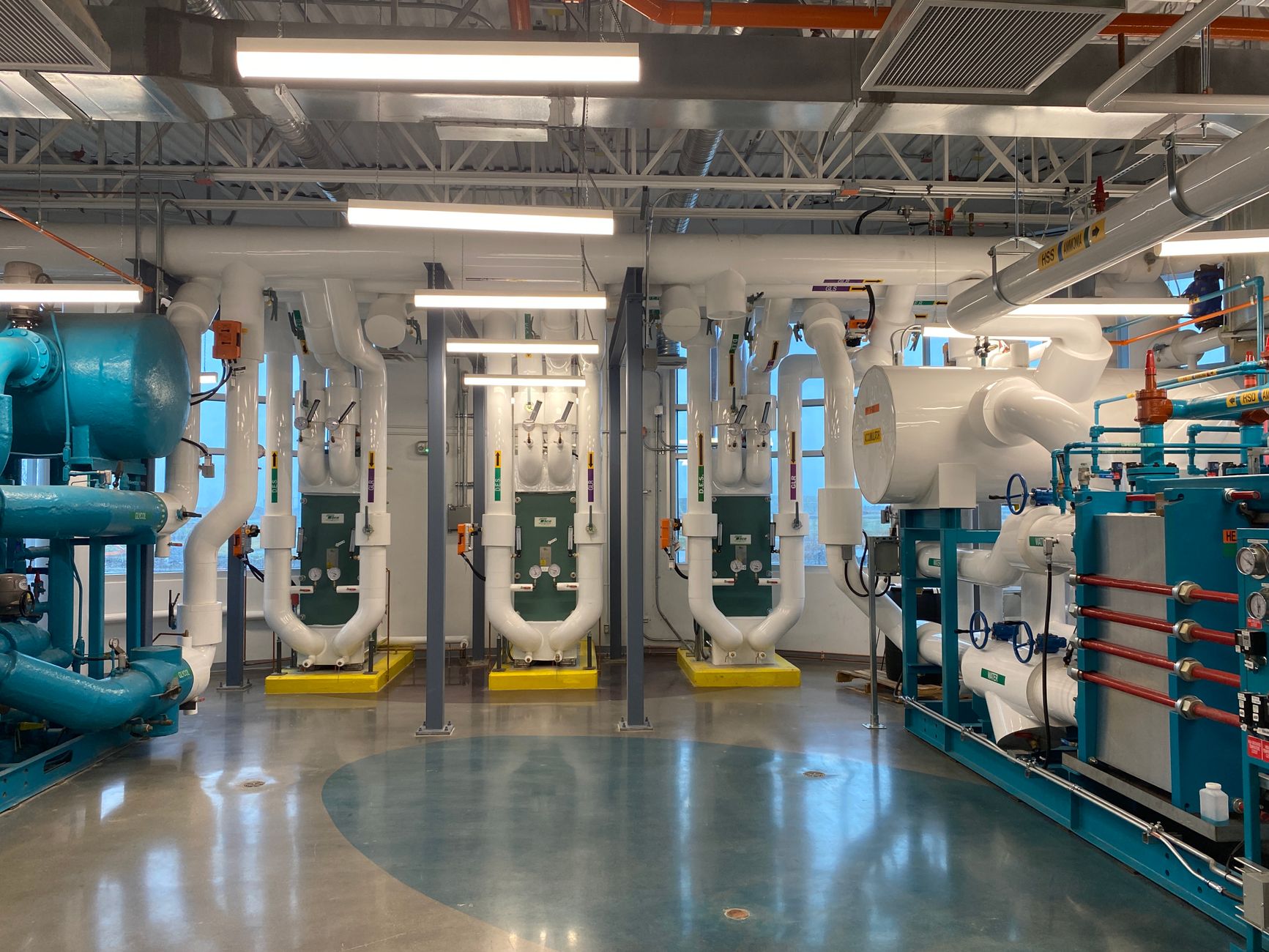
When a government ministry opens, when a new airport terminal welcomes its first passengers, or when a petrochemical complex runs at full capacity, the names in the headlines belong to developers, contractors, and ministers. The companies ensuring those same buildings stay clean, secure, operational, and compliant a decade later rarely get a mention. In the Gulf, that invisibility has become extraordinarily lucrative. The facilities management sector across the GCC is now valued at over USD 60 billion, expanding at a compound annual growth rate exceeding 9%, driven by the relentless pace of infrastructure build-out across Saudi Arabia, the UAE, and Qatar. The private companies inside it are quietly generating revenues, locking in long-term government contracts, and building asset bases that rival publicly listed peers — almost entirely beyond the gaze of mainstream financial media. Few outside the region have paid serious attention. They should.
The Infrastructure Boom Creating a Permanent Demand Base
You cannot tell the FM story in the Gulf without starting with capital expenditure. Saudi Arabia alone has committed over USD 1.3 trillion to Vision 2030 projects, a significant proportion of which will require integrated FM services for decades after the last contractor leaves the site. NEOM, Diriyah, the Red Sea Project — these are not construction plays. They are permanent urban environments that will demand mechanical and electrical maintenance, waste management, cleaning services, security operations, and asset lifecycle management from the moment they open their doors. The same logic applies in the UAE, where Yas Island's ongoing expansion and Abu Dhabi's Reem Island masterplans are adding millions of square metres of managed space every year.
The logistics sector is pulling demand further still. In January 2026, AD Ports Group announced the sale of KEZAD Logistics Park — Free Zone 3 in Abu Dhabi — to Mair Group for AED 295 million under a 50-year Musataha arrangement. Three months later, in April 2026, the group completed the sale of three further KEZAD warehouses to Aldar for AED 650 million, approximately USD 177 million. Together, those two transactions represent 65% of AD Ports Group's minimum AED 1 billion asset monetisation target for the year. The read-through for FM is direct. As institutional capital rotates into logistics real estate at scale, professional facilities management stops being a nice-to-have and becomes a prerequisite for attracting and retaining tenants — particularly multinationals and sovereign-linked operators who will not sign leases without it.
The Private Champions Operating Below the Radar
Some of the most formidable market positions in Gulf FM have been built without a single day on a stock exchange. Farnek Services, founded in the UAE, now manages over 160 million square metres of built space across the region. Deyaar-affiliated service entities operate across Dubai's residential portfolio. Both have constructed recurring revenue models that seasoned private equity investors would recognise immediately — long-term government and quasi-government contracts running five to ten years, delivering revenue visibility that most manufacturing or retail businesses simply cannot match. That is a significant structural advantage.
Emrill Services, a joint venture with roots in Abu Dhabi's social infrastructure, manages FM operations across healthcare, education, and aviation assets. These are sectors where a service interruption carries regulatory and reputational consequences severe enough that clients actively favour established, well-capitalised providers over cheaper alternatives. The competitive moat here has nothing to do with a proprietary product or a technology patent. It is built from institutional trust, compliance capability, and operational scale accumulated over years of consistent delivery. For family offices evaluating private company exposure in the Gulf, the combination of predictable cashflows, long contract tenors, and essential service positioning adds up to a risk-adjusted profile that warrants serious attention.
Egypt and East Africa: The FM Frontier
Professional FM standards are not staying inside GCC borders. Egypt's accelerating infrastructure development is generating parallel demand, and the institutional frameworks around it are maturing fast. Agility, the ADX-listed multi-business operator, signed an agreement on July 1, 2026 to develop and operate a logistics zone in Egypt's Suez Canal Economic Zone — a 53,000 square metre integrated hub expected to create approximately 400 direct jobs and serve as a regional distribution node connecting Asian, African, and European supply chains. This follows Agility's USD 25 million customs logistics centre inaugurated at the Sokhna Industrial Zone in February 2025. As assets of this scale come online, integrated FM services — security, HVAC, waste management, compliance — become embedded operating costs. The companies providing them inherit the same long-term contract structures that made the Gulf model so defensible.
East Africa tells a similar story, one chapter behind. Africa Logistics Properties listed East Africa's first industrial REIT on the Nairobi Securities Exchange in March 2026. That is a genuine milestone — not just for capital markets, but for operating standards. The REIT structure demands transparent cost reporting and enforceable service level agreements. Informal FM practices that have historically dominated East African commercial real estate will face displacement by professional operators. The UAE went through exactly this transition in the late 2000s and early 2010s. The firms that moved early captured durable market share. The same dynamic is now available in Nairobi. The window will not stay open indefinitely.
Technology Integration and the Premium Operator Advantage
The gap between commodity FM providers and premium operators in the Gulf is widening, and technology is the reason. Leading private companies are deploying building information modelling, IoT-enabled predictive maintenance, and AI-driven energy management platforms across their managed portfolios. The numbers make the case plainly: energy costs represent between 30% and 45% of total FM expenditure for large commercial assets. An operator who can demonstrate measurable energy savings through smart building management holds a genuine edge at contract renewal and in new tenders. That is not a marginal advantage — it compounds over multi-year contract cycles.
There is a second layer to this. FM companies that have invested in proprietary technology platforms are sitting on data assets — occupancy analytics, equipment failure patterns, energy consumption benchmarks — that carry independent commercial value. For any acquirer or investor building a thesis, that data layer is increasingly part of the conversation. The best operators have effectively made themselves harder to displace and more attractive to buy simultaneously.
The Investment Case for Private Capital
For family offices and private investors with meaningful allocation capacity, this sector presents an access question as much as a valuation question. The most attractive businesses — those with government-linked contract books, established compliance infrastructure, and technology-integrated service delivery — are rarely brought to market. The founders who built them did so through relationships, operational discipline, and decades of accumulated institutional trust. They are selective about capital partners. Full stop.
Entry points do exist. Succession planning creates them. Geographic expansion requiring balance sheet capacity creates them. Technology investment cycles that outpace organic cashflow create them. What does not create them is showing up with capital alone. Investors who bring strategic value alongside money — regional relationships, logistics network access, technology partnerships — will find more doors open than those who do not. In a sector that is structurally growing, contractually anchored, and operationally essential to every major infrastructure project across the Gulf and beyond, the opportunity for patient private capital remains considerably underexploited. The quiet ones usually are.
Written by
Tom Whitmore
Senior correspondent · Real Estate & Private Companies
Tom has interviewed most of the operators reshaping the Gulf skyline — and a few of the ones who tried and didn't. His beat is real estate, commodities, manufacturing, and the founder-led private companies that never bother to list. He knows which buildings and balance sheets survive a downturn before the spreadsheet does. Based in Dubai. Reach out at tom.whitmore@theplatinumcapital.com.