

Second Passports and Tax Residency: The Gulf Wealth Playbook
For ultra-high-net-worth individuals and sovereign family offices navigating an era of intensifying fiscal scrutiny, the convergence of Gulf citizenship-by-investment programs and zero-income-tax residency frameworks has emerged as one of the most powerful wealth preservation architectures available today. From Abu Dhabi's Golden Visa corridors to Bahrain's evolving domicile structures, the Gulf playbook is no longer a secondary consideration — it is the primary strategy redefining how generational capital is structured, protected, and transferred across borders.…
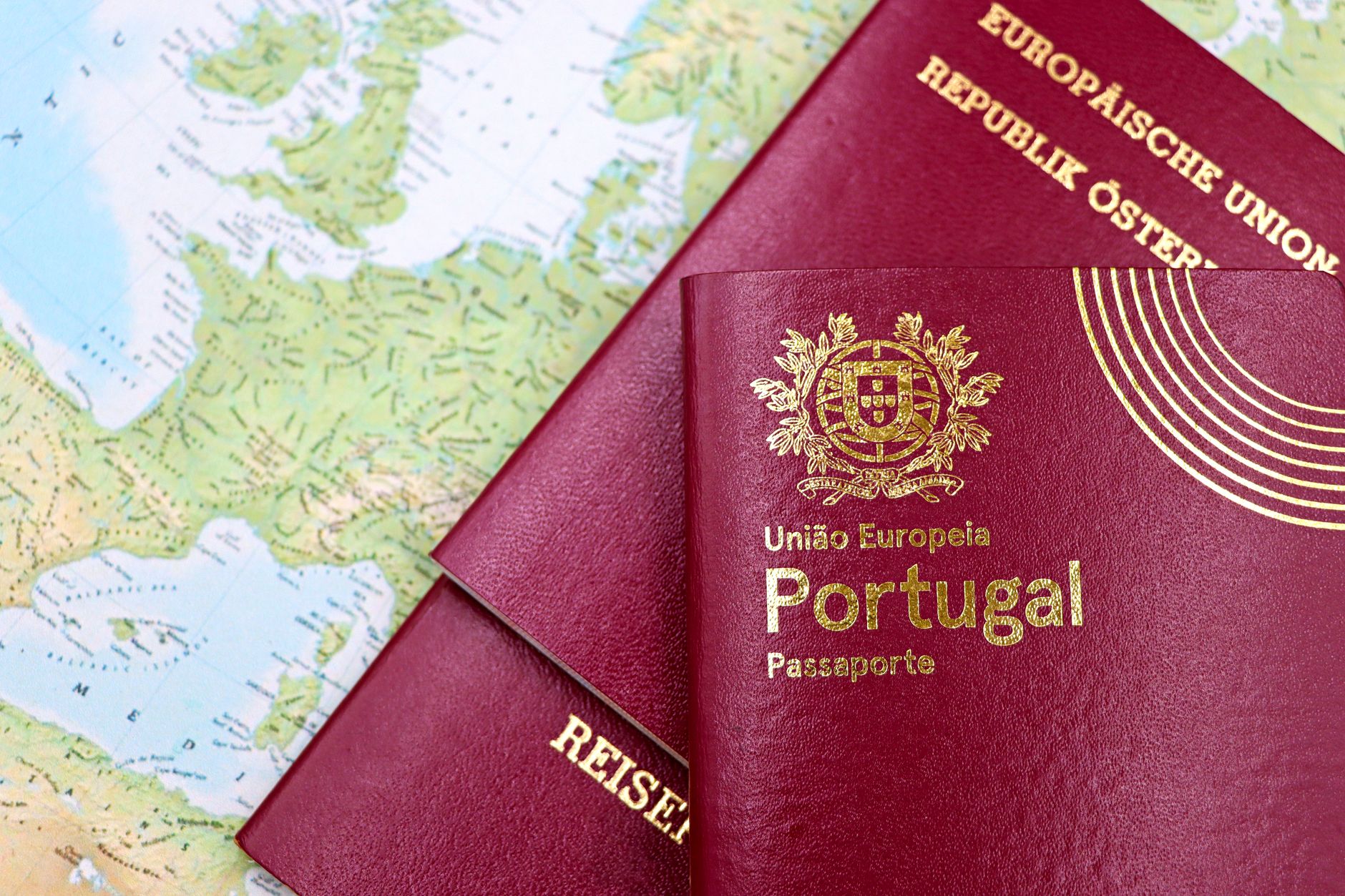
For the Gulf's wealthiest families, the question is no longer whether to hold a second passport or establish an alternative tax residency. It is which combination delivers the most strategic value — and how quickly it can be structured. Across Riyadh, Dubai, and Abu Dhabi, the playbook has grown considerably more sophisticated. What began as a contingency measure for geopolitical anxiety has become a core pillar of multigenerational wealth architecture, sitting alongside direct investment mandates, foundation governance, and succession planning.
Dubai Sets the Global Standard — Again
The numbers coming out of the Dubai International Financial Centre are difficult to ignore. DIFC now ranks as the world's second-largest family office hub, with its wealth-management entity count growing 33% in the past year alone. Q1 2026 added 158 new foundations to the DIFC register — more than double the same period in 2025 — and March alone produced 186% year-on-year growth in foundation registrations. The Centre hosts more than 1,289 family-related entities, with the top 120 families stewarding in excess of $1.2 trillion globally. That is a significant concentration of capital, and it keeps growing. A January 2026 survey by GDA Capital co-founder Michael Gord found that 73% of family offices managing $500 million or more intend to establish UAE operations within 18 months.
None of this is accidental. The UAE's zero personal income tax environment, its Golden Visa programme offering ten-year renewable residency, and the legal infrastructure of DIFC — which runs on English common law — have collectively made Dubai the anchor of choice for families from Lagos to Lahore. For a principal holding a Jordanian or Egyptian passport and managing assets across three continents, UAE tax residency alone reframes the entire conversation around global wealth exposure.
Saudi Arabia Raises the Stakes with a UHNW Track
Riyadh has traditionally moved carefully on foreign residency incentives. That caution is fading. In January 2026, Bloomberg reported that Saudi Arabia is drafting plans to expand its Premium Residency programme with a dedicated Ultra-High-Net-Worth track, anchored at a verified minimum net worth of $30 million. The Kingdom has also begun opening pathways to foreign property ownership in designated zones — a structural shift that removes one of the last serious barriers to long-term capital commitment by non-Saudi nationals.
The timing is deliberate. As Vision 2030 matures and Riyadh pushes multinationals to establish local presence by 2030, Saudi Arabia recognises that retaining mobile capital means competing directly with Dubai on residency terms, not just on deal flow. For Gulf families with substantial Saudi business interests, a formal residency anchor in the Kingdom could cut corporate structuring complexity while keeping them close to the region's largest consumer economy. Few jurisdictions can offer that combination.
The LNG Factor and the Singapore Model
Residency strategy follows investment flows. It always has. The July 2026 commitment by the Private Department of Sheikh Mohammed bin Khalid Al Nahyan — a $1.13 billion investment into MidOcean Energy alongside a strategic partnership with EIG — illustrates exactly how sophisticated Gulf family offices now operate across jurisdictions. MidOcean carries a balance sheet exceeding $5 billion, with LNG interests spanning Canada, Australia, and Latin America, administered through a marketing office in Singapore and a corporate office in London. The structure is deliberate: Singapore as the operational hub for Asian energy markets, London as the institutional interface, Abu Dhabi as the capital source.
Singapore's appeal to Gulf family offices runs deeper than tax efficiency. Its investor residency and citizenship pathways, combined with genuine rule of law, neutral geopolitical positioning, and direct access to Southeast Asian deal flow, make it a natural complement to UAE residency for principals with global mandates. Many senior advisors across the GCC now recommend a dual-anchor model: UAE as the primary tax residency and base for Middle East and African capital deployment, with Singapore serving Asia-Pacific interests. For families managing above $250 million, the cost of maintaining two structured residency anchors is marginal against the tax and estate-planning advantages realised over a decade.
Passport Optionality Across the Emerging World
For families based outside the Gulf — in Kazakhstan, Nigeria, Morocco, or the Philippines — second citizenship serves a different but equally pressing function: travel freedom and reduced friction when accessing Western financial systems. The EU Golden Visa programmes in Portugal, Greece, and Malta remain active reference points, though regulatory tightening has pushed many advisors to redirect clients toward Caribbean citizenship-by-investment programmes — St Kitts & Nevis, Antigua, and Grenada — for immediate passport issuance, with longer-term European residency pursued through separate routes.
Grenada's programme carries particular strategic value for non-US persons. As a signatory to the E-2 Treaty Investor visa with the United States, a Grenadian passport opens a US business visa pathway that bypasses the congested EB-5 route entirely. For a Nigerian or Egyptian principal who needs reliable US access without full immigration intent, this has become the quiet preference of several top-tier advisors in the region. Few outside that circle have noticed. They should. Meanwhile, the Jordanian and Turkish citizenship programmes — both accessible at investment thresholds of $300,000 to $500,000 — continue to attract buyers from Central Asia and the Levant seeking an Islamic-world passport with broad visa utility.
The Architecture of Sovereign Mobility
What separates the current era from even five years ago is the degree to which residency and citizenship decisions are being made proactively — embedded into family office governance frameworks rather than triggered by crisis or a sudden departure. The projection that family office AUM in the UAE will approach $740 billion by 2030 — up from roughly a quarter-trillion just two years prior — reflects not just capital moving to Dubai, but families restructuring around it: foundations registered in DIFC, holding companies in ADGM, operating businesses in Saudi Arabia, principals carrying two or three carefully selected travel documents.
The numbers tell a complicated story, but the direction is clear. For the next generation of Gulf wealth holders — younger principals who studied in London or Boston, who deploy capital across Africa and Southeast Asia, and who think in decades rather than fiscal years — the questions of where one is legally resident, which passport one carries, and how those choices interact with inheritance law, international tax treaties, and family governance are foundational. Not peripheral. The advisors, banks, and jurisdictions that serve this cohort most effectively will be those that treat sovereign mobility not as a product to be sold, but as a discipline to be mastered.

Written by
TPC Editorial Desk
The Platinum Capital editorial desk
Articles on The Platinum Capital are produced by the TPC editorial desk with the assistance of AI tools, and edited before publication. TPC Awards profiles are based on information provided in nominations and checked against public sources. Reach out at info@theplatinumcapital.com.