
What APEC Shenzhen Means for Asia-Pacific Trade Investors
China's $1.04 trillion surplus, a faltering trade truce deadline, bilateral tariff cuts and an FTAAP push reshape the capital and supply-chain calculus for every market in the region.…
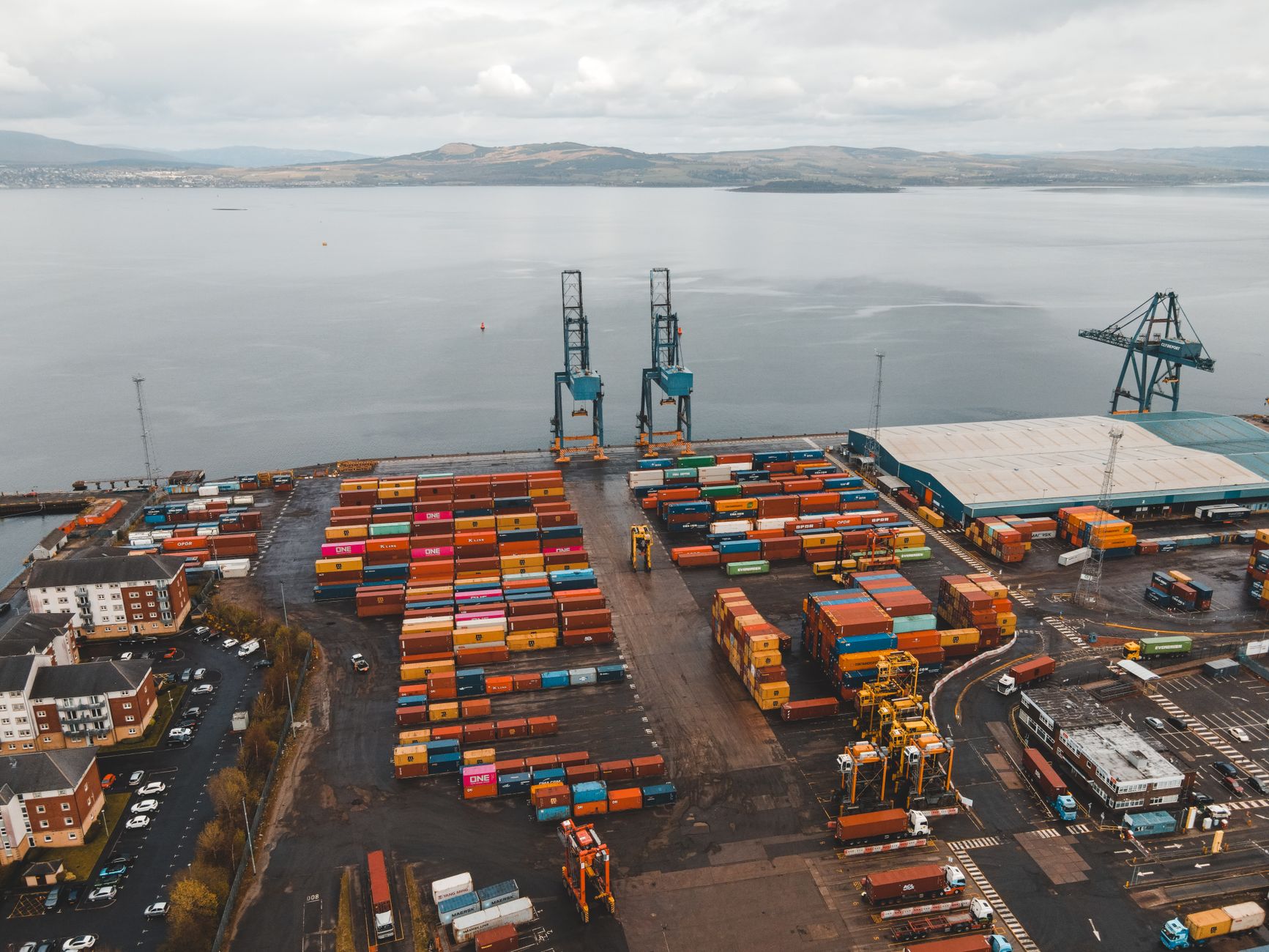
Photo: Ollie Craig / Pexels
As of 18 November 2026. This page reports business and market effects only. It takes no position on the events and makes no predictions. We update or remove it when the facts change.
Context: The 33rd APEC Economic Leaders' Meeting opened in Shenzhen on 18 November 2026, as Reuters reported on 17 November 2026, with 21 member economies representing more than 60% of global GDP gathered amid a US–China trade truce set to expire on 10 January 2027 and a bilateral meeting between the two largest economies scheduled for 19 November. (Reuters / GMA Network, 17 November 2026; Admirals Markets, 17 November 2026)
China's Record Surplus Lands at the Negotiating Table
China's General Administration of Customs released data on 10 November 2026 showing that the trade surplus for the first ten months of the year reached $1.043 trillion, as reported by the Associated Press on 10 November 2026 — the fastest the annual figure has ever crossed $1 trillion, according to CNBC on the same date. Exports surged 35.2% year on year in October to $412.33 billion, with semiconductors rising 137.1% by value, according to Trading Economics citing customs data published on 10 November 2026. CNBC reported on 10 November 2026 that the cumulative figure puts China on course to exceed the full-year record of approximately $1.19 trillion set in 2025. (Associated Press / KOCO, 10 November 2026; Trading Economics / General Administration of Customs of China, 10 November 2026)
Alicia García-Herrero, chief economist for Asia Pacific at Natixis, was quoted by the Associated Press on 10 November 2026 saying that overcapacity in many industries, excess domestic savings and weakened domestic demand are still leading China to export its goods abroad as some countries move to protect their own industries. Dave Chia, an economist at Moody's Analytics, said in the same report that he expected Chinese exports to stay strong for the rest of the year, led by electronics and autos, while adding that a slowdown in the AI boom could pose a material downside risk. China's 10-month trade surplus with the United States stood at $266.5 billion and with the European Union at more than $310 billion, according to customs data as reported by the Associated Press on 10 November 2026. (Associated Press / KOCO, 10 November 2026)
ASEAN became China's largest trading partner in 2025, with $1,056.4 billion in bilateral trade — an 8% year-on-year increase — representing 16.6% of China's total foreign trade, according to China's General Administration of Customs as cited by Cheung Kong Graduate School of Business (CKGSB) on 1 September 2026. Exports to ASEAN then accelerated above 20% year on year in the first quarter of 2026, the CKGSB report stated, underpinned by the China-ASEAN FTA 3.0 framework and RCEP. Despite this export outperformance, J.P. Morgan Private Bank noted in its 2026 Asia Outlook that the yuan had weakened by 4% on a trade-weighted basis even as China's surplus topped $1 trillion, with the bank forecasting a stable, range-bound trajectory for USD/CNH, arguing that the bar for significant appreciation is high. (CKGSB / General Administration of Customs of China, 1 September 2026; J.P. Morgan Private Bank, 1 January 2026)
The Truce Clock, the FTAAP Push and What Markets Are Pricing
The US–China trade truce, which reduced the US tariff on Chinese goods to 10% and paused Chinese retaliatory tariffs and export controls, was extended jointly by the United States and China in late September 2026, making 10 January 2027 the next expiry date. If the truce lapses, the suspended Chinese retaliatory tariffs on US goods would return on top of the remaining 10% rate and the pause on special port fees for US-linked ships would also end, the same report stated. A bilateral meeting between the two countries on 19 November was scheduled alongside a discussion of a "$30-billion-for-$30-billion" plan under which each side proposed approximately $30 billion of non-sensitive imports for tariff cuts, according to Admirals Markets on 17 November 2026. (Admirals Markets, 17 November 2026)
On markets, Admirals Markets reported on 17 November 2026 that the Hang Seng Index closed at 23,753.84 on 16 November, ending a three-day losing run, while the FTSE China A50 closed 0.95% lower at 12,780.69 on the same day. The yuan traded at 6.667 to the dollar on 16 November, according to Trading Economics cited in the same report. China is pushing APEC members to adopt an action framework for the long-stalled Free Trade Area of the Asia-Pacific (FTAAP), with Li Chenggang, China's international trade representative and vice minister of commerce, telling reporters on 16 November 2026 that a standalone FTAAP statement could be adopted at the Shenzhen leaders' summit and that the proposed outcome document would establish a "systematic and practical action framework", as reported by BigGo Finance on 17 November 2026. (Admirals Markets / ad-hoc-news / Trading Economics, 17 November 2026; BigGo Finance, 17 November 2026)
The APEC Policy Support Unit's November 2026 Regional Trends Analysis, published on 17 November 2026, projected the APEC region to grow by 3.4% in 2026, up from 3.3% in 2025, before moderating to 3.1% in 2027. The same analysis warned that as of the latest available 2025 data, APEC had 1,591 trade remedies and trade-restrictive measures in force — nearly three times the 562 trade-facilitating measures — and noted that sovereign bond yields in APEC economies had climbed further in recent months, with public debt projected to reach 108–112% of GDP in the near term. The IMF's October 2026 Regional Economic Outlook for Asia and the Pacific, as reported by Bloomberg on 15 October 2026, projected Asia-Pacific growth at 4.8% in 2026, moderating to 4.4% in 2027. (APEC Policy Support Unit, 17 November 2026; Bloomberg / IMF Regional Economic Outlook, 15 October 2026)
ASEAN Bilateral Deals Reshape Regional Supply-Chain Bets
On the sidelines of the ASEAN Summit in Manila on 17 November 2026, the United States and Thailand substantially concluded negotiations for an Agreement on Reciprocal Trade, signing a joint statement to that effect, according to the White House on 17 November 2026. Bloomberg reported the same day that Thailand had made concessions to preserve access to its largest export market, which buys approximately a quarter of the country's overseas shipments, and that the final agreement still requires domestic approval before it can enter into force. The deal follows earlier US reciprocal trade agreements concluded with other regional partners. (The White House, 17 November 2026; Bloomberg, 17 November 2026)
Canada and China announced further tariff cuts on 17 November 2026, as reported by AFP. Canada's Prime Minister said that Canada had restored market access for more than 90% of trade previously subject to tariffs, worth nearly CAN$7.5 billion ($5.2 billion) in Canadian exports, with the new measures including approximately CAN$116 million in frozen pork cuts and CAN$285 million in fish and seafood. In exchange, Canada agreed to extend by two years existing remission measures for certain Chinese steel and aluminium products currently set to expire at the end of 2026. Canada said it was "well ahead of schedule" to increase exports to China by 50% by the end of this decade. (AFP / Yahoo News, 17 November 2026)
The APEC Ministerial Meeting on 4 November 2026, co-chaired by China's Foreign Minister and Commerce Minister, called for stronger supply chain connectivity, improved port infrastructure and single-window customs systems, and acceleration of trade-documentation digitalisation, according to an APEC press release dated 4 November 2026. China's Commerce Minister warned at that meeting that shifting industrial supply chains and uneven progress in digital and green transformation risk widening economic disparities, stating that "risks of industrial supply chain fragmentation are on the rise." The APEC ARTA November 2026 noted that maritime freight volume had weakened, reflecting disruptions in the Middle East and Asia-Pacific, while air freight strengthened on demand for high-value technology products. (APEC, 4 November 2026; APEC Policy Support Unit, 17 November 2026)
Energy, Inflation and Fiscal Headroom for Regional Budgets
The APEC ARTA published on 17 November 2026 reported that since July 2026, crude oil prices had climbed 35.9%, liquefied natural gas prices had risen 40.2% and coal prices had increased 14%, adding to inflationary pressures across the region. Food prices for vegetable oils, cereals and sugar had also continued to rise, the analysis stated. APEC inflation is projected to rise to 3.2% in 2026 before easing to 2.8% in 2027 and 2.5% in 2028, according to the same APEC ARTA, with more than a third of APEC member economies having already raised benchmark interest rates in recent weeks to contain these pressures. (APEC Policy Support Unit, 17 November 2026)
Rising borrowing costs are compounding the fiscal constraints on APEC governments, as the APEC ARTA November 2026 stated: sovereign bond yields had climbed further in recent months, with public debt projected at 108–112% of GDP in the near term. The analysis warned that higher debt levels and interest payments could limit governments' ability to support growth and respond to future shocks. Carlos Kuriyama, director of the APEC Policy Support Unit, told Reuters on 17 November 2026 that all 21 APEC members had raised concerns about unnecessary trade restrictions and agreed on the need for trade to be "not only open, but also fair", with delegations working to agree a common communiqué text ahead of the 19 November summit close. (APEC Policy Support Unit, 17 November 2026; Reuters / GMA Network, 17 November 2026)
The Friday Digest
Enjoyed this? Get the week's top business stories, every Friday.
Free. One email a week. Unsubscribe in one click.

Written by
TPC Editorial Desk
The Platinum Capital editorial desk
Articles on The Platinum Capital are produced by the TPC editorial desk with the assistance of AI tools, and edited before publication. Profiles are based on information provided by the subject and checked against public sources. Reach out at info@theplatinumcapital.com.