
What the Brent Sell-Off Means for Gulf Sovereign Wealth
A third consecutive week of rising US crude inventories is compressing the fiscal cushion that Gulf sovereign wealth funds depend on, arriving just as Aramco and ADNOC are committed to some of their largest capital programmes on record.…

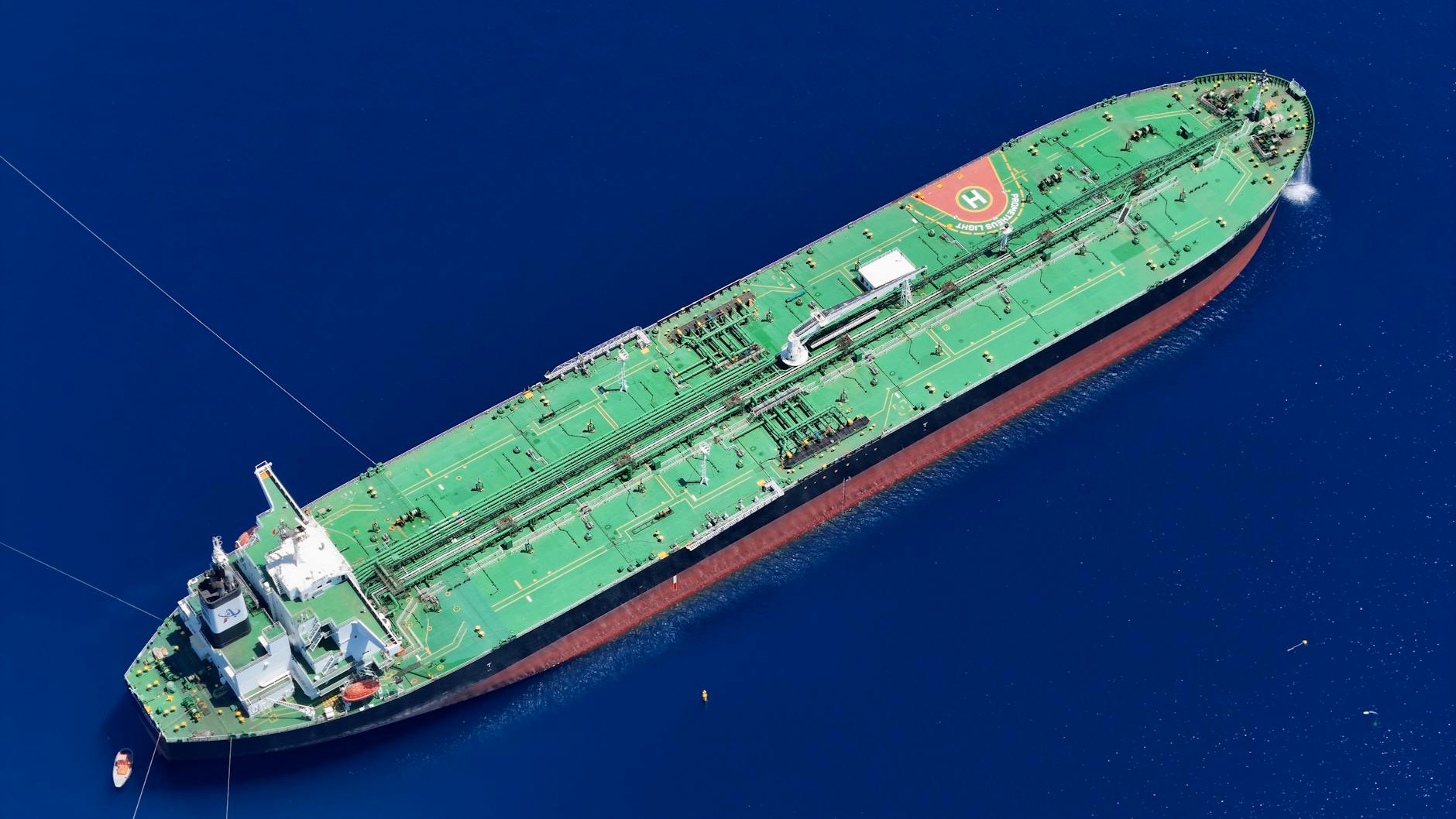
Photo: Erik Mclean / Pexels
As of 18 November 2026. This page reports business and market effects only. It takes no position on the events and makes no predictions. We update or remove it when the facts change.
Context: Brent crude fell 16% in the week to 6 November 2026 — its steepest weekly decline since the start of the Covid-19 pandemic, RTE reported on 6 November 2026 — as recovering Middle Eastern export flows, as reported by CNBC on 16 November 2026, unwound the supply-risk premium that had driven prices higher since mid-year; at 09:00 GMT on 17 November 2026, the front-month ICE Brent contract was trading at around $92 per barrel, according to Engine.Online. (RTE, 6 November 2026; CNBC, 16 November 2026; Engine.Online, 17 November 2026)
US Inventory Builds Test OPEC+ Discipline
The US Energy Information Administration's Weekly Petroleum Status Report, published on 12 November 2026 and covering the week ending 6 November, showed commercial crude inventories rose 4.7 million barrels to 414.4 million barrels — the largest single-week build since August, reversing five consecutive weeks of declines, according to Trading Economics. Oil & Gas Journal reported on 12 November 2026 that stocks remain 4% below the five-year average for this time of year, though that buffer is narrowing. (Oil & Gas Journal (citing US Energy Information Administration), 12 November 2026; Trading Economics, 12 November 2026)
The American Petroleum Institute's survey for the week ending 13 November 2026, published by OilPrice.com on 17 November 2026, estimated a further 5.3 million barrel crude build alongside a 5.1 million barrel gasoline build — a third consecutive week of accumulating supply. US crude production reached 14.013 million barrels per day in the week ending 6 November, a third successive weekly production record, OilPrice.com reported on 17 November 2026. (OilPrice.com (citing American Petroleum Institute), 17 November 2026)
The supply backdrop is complicated by OPEC+ member-level output running above formal quotas. Engine.Online reported on 17 November 2026 that total crude production by OPEC+ members averaged 41.23 million barrels per day in October, approximately 2.04 million barrels per day above September levels, with Saudi Arabia raising output to approximately 9.2 million barrels per day and Iraq to approximately 4.5 million barrels per day. The group's formal combined required production for November stands at 31.01 million barrels per day, Nairametrics reported on 5 October 2026, citing an OPEC+ statement following its monthly video conference; the gap between that figure and actual output is a standing question for quota discipline. Speculative positioning has reflected the bearish read: money managers sold more than 48,000 lots in the week to 10 November, reducing net-long positions in ICE Brent futures to approximately 133,000 lots, Engine.Online reported on 17 November 2026 citing ICE Futures Europe data. (Engine.Online, 17 November 2026; Nairametrics, 5 October 2026)
Gulf Fiscal Breakevens Come Under Pressure
The IMF places Saudi Arabia's fiscal breakeven oil price at $86.60 per barrel, Briefs.co reported in 2026, citing the Fund's methodology. Bloomberg Economics' estimate, also cited by Briefs.co, puts the figure closer to $94 per barrel once Public Investment Fund spending is included; with the full PIF programme factored in, the implied breakeven exceeds $110. At Brent's current level of approximately $92 per barrel, the central government sits above the IMF line but below the broader consolidated figure. (Briefs.co (citing IMF and Bloomberg Economics), 1 May 2026)
Saudi Arabia's Ministry of Finance projected a budget deficit of approximately SAR 165 billion, equal to 3.3% of GDP, in its FY2026 Budget Statement. Goldman Sachs, cited by Briefs.co, pegs the real deficit at 6% to 6.6% of GDP, equating to roughly $80–90 billion, against a borrowing plan sized for a world in which export flows were unimpeded. Saudi Arabia's first-quarter 2026 deficit reached $33.5 billion — consuming 76% of the official full-year target in 90 days — according to The GCC Edge's fund-by-fund analysis published on 27 June 2026. (Saudi Ministry of Finance (Budget Statement FY2026), 1 December 2025; Briefs.co (citing Goldman Sachs), 1 May 2026; The GCC Edge, 27 June 2026)
Kuwait's fiscal breakeven is estimated at $90.50 per barrel, putting the country at or below the current Brent price, while Bahrain's breakeven stands at $130 per barrel — far above prevailing spot — placing it in structural deficit territory at any crude price in the current range, according to The GCC Edge's June 2026 analysis. The UAE's budget carries a materially lower breakeven of $65 per barrel, giving Abu Dhabi considerably more room than its northern Gulf neighbours. (The GCC Edge, 27 June 2026)
Sovereign Funds Turn to Bond Markets and Capex Reviews
Saudi Arabia's Public Investment Fund, which manages approximately $900 billion in assets according to The GCC Edge, raised $7 billion in its largest-ever bond sale on 7 May 2026, AGBI reported. That followed a $2 billion bond placed on the London Stock Exchange in January 2026, AGBI reported on 23 January 2026. The PIF's accelerating use of debt markets is a direct function of reduced oil-linked cash inflows: Aramco's base quarterly dividend obligation of $21.89 billion exceeded the company's free cash flow of $18.6 billion in the first quarter of 2026, forcing Aramco to increase its gearing ratio by 1.0 percentage point to 4.8% in a single quarter, The GCC Edge reported. (AGBI, 7 May 2026; AGBI, 23 January 2026; The GCC Edge, 27 June 2026)
On the capital expenditure side, Saudi Aramco cut its third-quarter 2026 spending while maintaining full-year capex guidance of $50–55 billion, AGBI reported on 3 November 2026. ADNOC committed to awarding Dh200 billion ($55 billion) in project contracts over three years as part of a broader $150 billion capex plan, The National News reported on 3 May 2026. That commitment pre-dates the current price correction; any sustained move below $80 per barrel would narrow the fiscal headroom underpinning both programmes. The PIF separately approved a minimum 20% spending reduction across its portfolio of more than 100 companies in response to tighter oil revenues, The GCC Edge reported on 27 June 2026. (AGBI, 3 November 2026; The National News, 3 May 2026; The GCC Edge, 27 June 2026)
Energy Equities Bear the Immediate Market Cost
The oil sell-off has extracted a measurable toll on listed energy shares on both sides of the Atlantic. CNBC reported on 9 November 2026 that the S&P 500 energy sector was the only segment of the index recording losses that day, down 0.3%, extending a one-week loss of more than 8% — the index's worst-performing sector through the correction. Share Talk noted on 2 November 2026 that the FTSE 100 was trading broadly unchanged at midday despite falling oil prices weighing on heavyweight energy companies, with gains in consumer, defence and industrial shares providing an offset. (CNBC, 9 November 2026; Share Talk, 2 November 2026)
Investing.com reported on 10 November 2026 that the FTSE 100 edged lower as falling crude weighed on energy majors, noting that corporate declines in the sector tracked a broader liquidation across global energy exchanges. The directional pressure on petrodollar recycling flows — the mechanism by which Gulf oil revenues are reinvested in Western debt and equity markets — may also shift. KuCoin's analysis from April 2026 noted that oil revenues were increasingly moving toward Asian markets through trade ties and non-dollar settlement experiments; a lower price environment reduces the total pool available for outward investment regardless of its ultimate destination. Kuwait's KIA, managing $1.072 trillion in assets, provides the GCC's deepest external buffer, though S&P projected a potential 2% contraction in Kuwait's GDP for 2026, as reported by The GCC Edge on 27 June 2026. (Investing.com, 10 November 2026; KuCoin, 14 April 2026; The GCC Edge (citing S&P), 27 June 2026)
The Friday Digest
Enjoyed this? Get the week's top business stories, every Friday.
Free. One email a week. Unsubscribe in one click.

Written by
TPC Editorial Desk
The Platinum Capital editorial desk
Articles on The Platinum Capital are produced by the TPC editorial desk with the assistance of AI tools, and edited before publication. Profiles are based on information provided by the subject and checked against public sources. Reach out at info@theplatinumcapital.com.