
What the EU's 50-Bank Russia Sanctions Mean for Insurers and Traders
New EU asset-freeze listings, published on 16 November 2026, force European correspondent banks to cut or ring-fence ties to roughly 50 newly designated Russian lenders and push compliance costs further up the chain of tanker owners, marine insurers and Gulf commodity houses handling discounted Russian crude.…
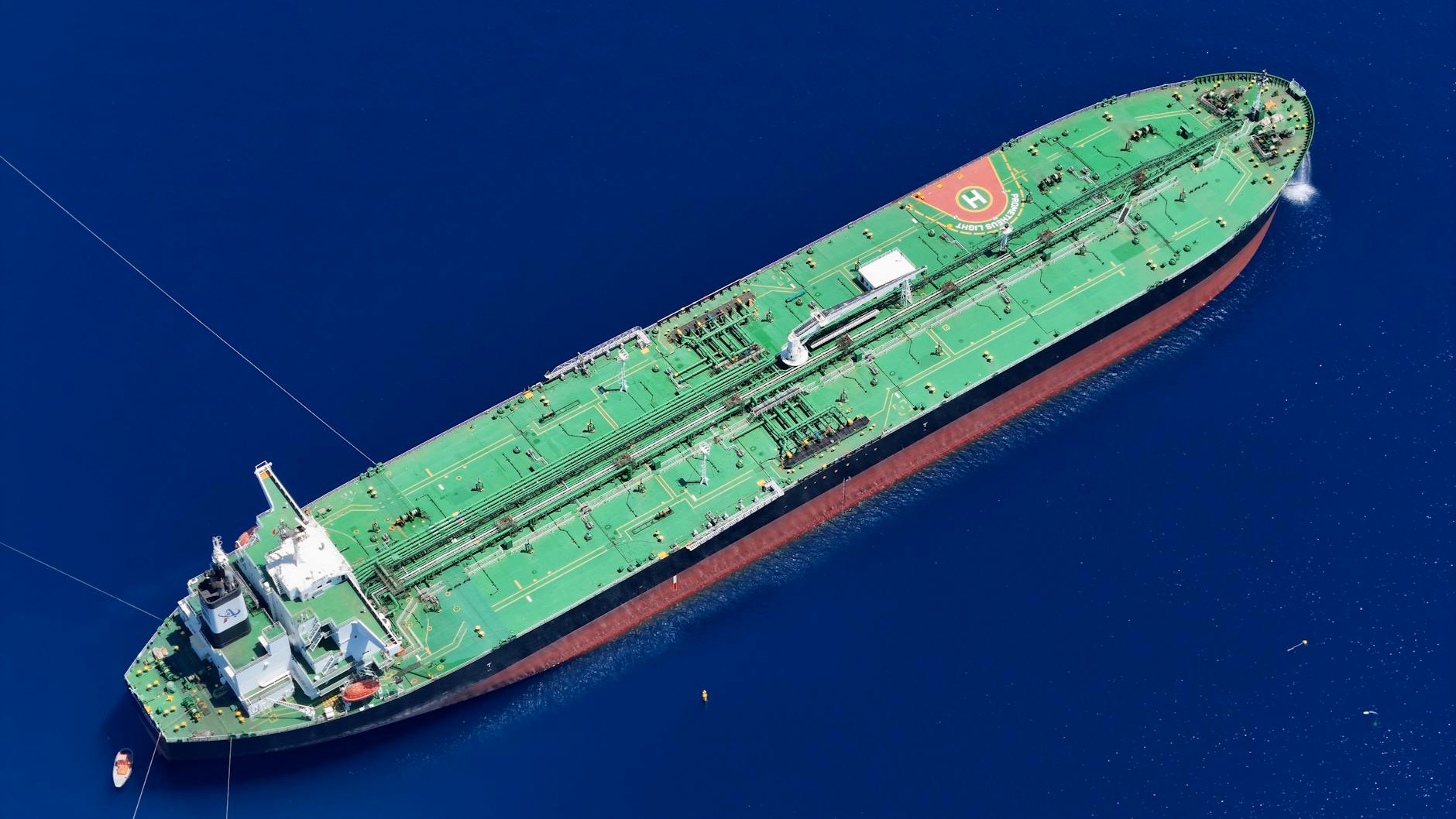
Photo: DeLuca G / Pexels
As of 18 November 2026. This page reports business and market effects only. It takes no position on the events and makes no predictions. We update or remove it when the facts change.
Context: The Council of the European Union on 16 November 2026 added 12 individuals and 101 entities to its asset-freeze list under Regulation (EU) 269/2014, covering approximately 50 Russian banks and financial institutions, Dubai-registered shadow-fleet managers and oil traders, the Moscow-based insurer Balance Insurance, and JSC Petersburg Oil Terminal; the designations took effect on publication in the EU Official Journal the same day, the European External Action Service reported. (European External Action Service (EEAS), 16 November 2026; Morgan Lewis, 17 November 2026)
The Correspondent-Banking Squeeze
Reuters, reporting via Yahoo Finance UK on 16 November 2026, noted that the new designations bring the number of Russian lenders subject to EU asset-freeze or transaction-ban measures to more than 100 of Russia's 213 internationally connected banks. The latest 50 include Bank 131, identified in the EU's Official Journal as a payment-system operator whose platform dengi.ru facilitates direct cross-border payments. For European banks with any residual correspondent ties to these institutions, the designations trigger an obligation to sever or ring-fence those relationships and to freeze any funds or economic resources held on their behalf. (Reuters (via Yahoo Finance UK), 16 November 2026)
The 21st EU sanctions package, adopted on 23 July 2026, had already extended the transaction ban to cover the use of financial messaging services and added 33 Russian credit institutions from 13 August 2026, Baker McKenzie's Global Sanctions and Export Controls blog reported on 29 July 2026. The cumulative effect of successive rounds is that dollar-clearing access for Russian energy exporters has narrowed substantially: each additional sanctioned bank that formerly acted as a correspondent node must now route payments through fewer and more distant intermediaries, with the NBER noting in working paper w35453 that each additional routing hop adds administrative processing, compliance and regulatory checks. Morgan Lewis advised on 17 November 2026 that EU operators must refresh sanctions screening not only against direct counterparties but also through ownership and control relationships. (Baker McKenzie Global Sanctions and Export Controls Blog, 29 July 2026; Morgan Lewis, 17 November 2026; National Bureau of Economic Research, 1 January 2025)
Marine Insurance: P&I Clubs and the Russian-Flag Shift
The designation of Moscow-based Balance Insurance — sanctioned for providing coverage to the tanker GARUDA, a vessel already subject to EU restrictions for high-risk shipping practices involving Russian crude — signals that Brussels is extending its reach beyond shipowners to their underwriters. gCaptain reported on 16 November 2026 that the listings expressly target the services that allow sanctioned tankers to remain operational even after individual vessels have been blacklisted. More than 670 vessels are already subject to EU port-access and maritime-services restrictions, DataPortuaria noted on 17 November 2026, with France and the United Kingdom scheduled to host a co-ordination conference in Paris on 4 December 2026. (gCaptain, 16 November 2026; DataPortuaria, 17 November 2026)
The insurance market is already absorbing structural change. Lloyd's List reported on 26 February 2026 that roughly a third of all oil tankers crossing the Baltic were presenting certificates from sanctioned Russian or Russian-linked insurers, reflecting a major shift away from International Group P&I cover. The Japan P&I Club disclosed in a circular published in December 2025 that the International Group increased its aggregated sub-limited reinsurance cover for Russia/Ukraine/Belarus excluded risks from US$100m in the 2025/26 policy year to US$125m for 2026/27, illustrating how reinsurers are pricing residual exposure. Windward's November 2026 shadow fleet intelligence report, published on 18 November 2026, found that nine of 41 unsanctioned shadow fleet tankers tracked loading Russian oil in October 2026 had no P&I cover from any International Group member at all, and that 88% of the remainder were insured by just two clubs. (Lloyd's List, 26 February 2026; Japan P&I Club, 18 December 2025; Windward, 18 November 2026)
Commodity Traders: Urals Discounts, Dubai Networks and the Price-Cap Ceiling
The simultaneous designation of Dubai-registered Lidoil DMCC, Spikoil DMCC, Tongoil DMCC, Lynx Ship Management, Stalwart Shipmanagement, Grace Shipmanagement, Greenlight Shipmanagement, and their Moscow-based financing affiliate Lead Capital — which Reuters described on 16 November 2026 as a network that 'actively raises funds on the Russian credit market' — removes a significant layer of UAE-registered capacity from the trading and chartering chain. The asset freeze prohibits EU persons and businesses from making funds or economic resources available to these entities, directly or indirectly, sharply curtailing their ability to access European trade finance. Singapore-based Alt Capital Pte Ltd and Hong Kong-registered Guron Trading also appear on the new list, Morgan Lewis noted on 17 November 2026, extending exposure-screening requirements to South-East and East Asian counterparties. (Reuters (via Yahoo Finance UK), 16 November 2026; Morgan Lewis, 17 November 2026)
The price environment compounds the trading friction. The Moscow Times reported on 13 November 2026, citing Argus data published by Kommersant, that Urals was offered at a $31-per-barrel discount to Brent at Russia's Baltic ports between 1 and 6 November — the steepest discount in more than three years — and at $33 per barrel at Novorossiysk. The Centre for Research on Energy and Clean Air (CREA), in its October 2026 monthly analysis published on 16 November 2026, calculated the average October Urals discount at USD 23 per barrel, or 19% below Brent. Russia's overall fossil fuel export revenues nonetheless rose 14% month-on-month in October to EUR 754m per day, the highest since December 2022, driven by higher oil prices rather than volume gains; seaborne crude revenues alone reached EUR 352m per day, the highest monthly level in CREA's data since January 2022. CREA also calculated that a USD 30-per-barrel crude price cap, if fully enforced, would have cut Russia's seaborne oil export revenues by 25%, or EUR 3.4bn, in October alone. (The Moscow Times, 13 November 2026; Centre for Research on Energy and Clean Air (CREA), 16 November 2026)
Gulf and Asian Buyers: Secondary-Sanctions Friction and the Next Package
CREA's October 2026 data, published 16 November 2026, showed India and China each recording their highest monthly purchases of Russian fossil fuels in CREA's data since January 2022, at EUR 6.4bn and EUR 10.7bn respectively. China's imports were heavily concentrated in ESPO-grade crude, which accounted for 64% of its Russian crude in October. Gulf and Asian commodity houses handling these cargoes now face elevated compliance friction: the asset-freeze designations on Dubai- and Singapore-registered entities mean that European correspondent banks financing their trade must screen the entire counterparty and ownership chain before processing letters of credit or settlement instructions, raising both processing time and cost. (Centre for Research on Energy and Clean Air (CREA), 16 November 2026; Morgan Lewis, 17 November 2026)
On 18 November 2026, European Commission President Ursula von der Leyen announced that the Commission would present a 22nd sanctions package against Russia the following week, UNN reported citing Interfax-Ukraine. With the shadow fleet now containing a UAE-based cluster of 20 unsanctioned tankers — 11 of which Windward reported on 18 November 2026 were sold by EU-owned companies during 2026 — and an Ajman-based shipmanager operating five further unsanctioned vessels with Chinese-registered ownership, the exposure chain running from Gulf trading houses through to European banks and re-insurers is set to widen before the next round of listings is finalised. France and the United Kingdom have scheduled an international co-ordination conference in Paris for 4 December 2026 to align enforcement, DataPortuaria noted on 17 November 2026. (UNN, 18 November 2026; Windward, 18 November 2026; DataPortuaria, 17 November 2026)
The Friday Digest
Enjoyed this? Get the week's top business stories, every Friday.
Free. One email a week. Unsubscribe in one click.

Written by
TPC Editorial Desk
The Platinum Capital editorial desk
Articles on The Platinum Capital are produced by the TPC editorial desk with the assistance of AI tools, and edited before publication. Profiles are based on information provided by the subject and checked against public sources. Reach out at info@theplatinumcapital.com.