

Bahrain's Financial Hub Ambitions and the Families Driving It
Bahrain's quiet ascent as the Gulf's most sophisticated financial center is no accident — it is the deliberate architecture of a handful of dynastic families who have spent decades weaving banking licenses, sovereign relationships, and cross-border capital into an ecosystem that larger neighbors are only now scrambling to replicate. For family offices and institutional investors seeking a regulatory environment that balances Islamic finance principles with international standards, understanding the patriarchs and boardrooms behind Bahrain's ambition is no longer optional — it is the prerequisite to competing in the Gulf's next era of wealth creation.…

Bahrain may be the smallest economy in the Gulf Cooperation Council, but in 2026, it is executing with the precision and ambition of a country that knows exactly what it wants to be. While Saudi Arabia accelerates Vision 2030 and the UAE consolidates its position as a global financial gateway, Bahrain is doing something distinct — building a specialist financial hub on regulatory sophistication, family capital, and a talent infrastructure that larger neighbours are increasingly struggling to replicate. The families who have long anchored this island kingdom's commercial life are not standing aside. They are investing, restructuring, and in several cases internationalising with a conviction that signals something much bigger than a local story.
A Small Market With Outsized Financial Architecture
Bahrain's financial services sector accounts for approximately 17% of GDP. That figure deserves a moment's pause. For an economy of this size, it reflects decades of deliberate institution-building — not accident. The Central Bank of Bahrain remains one of the region's most progressive regulators, and its FinTech Bay initiative has attracted over 120 licensed financial technology firms since inception. Through 2025 and into 2026, Bahrain processed regulatory approvals for several new family office structures and wealth management vehicles that had previously defaulted to Dubai or Riyadh as their domicile of choice.
That trend is shifting. Quietly, but meaningfully.
For family offices managing between USD 50 million and USD 500 million — the core audience for serious private wealth infrastructure — Bahrain's lower operating costs, English-language legal framework, and physical proximity to Saudi Arabia's burgeoning investor class add up to a genuinely competitive proposition. The Bahrain Economic Development Board reported in early 2026 that foreign direct investment commitments reached USD 1.3 billion in the first quarter alone, with financial services and professional advisory firms taking the largest share. Several of those commitments came from Gulf-based family conglomerates looking to establish regional treasury and investment functions in Manama rather than push further into an increasingly congested Dubai market.
The Families at the Centre of Bahrain's Ambition
You cannot tell Bahrain's commercial story without its merchant families. Names like Kanoo, Almoayyed, and Fakhro have operated across trading, real estate, logistics, and agency businesses for generations. What separates 2026 from previous cycles is the degree to which the next generation of these families is actively repositioning inherited wealth into structured investment platforms, private equity vehicles, and cross-border partnerships. The Yusuf bin Ahmed Kanoo Group — one of the Gulf's most storied family conglomerates, with operations spanning the UAE, Saudi Arabia, and beyond — has accelerated its diversification into logistics technology and energy transition assets in recent years. Bahrain's regulatory environment gives that strategy meaningful operational flexibility.
Several Bahraini family offices have also been quietly expanding their African exposure. The thesis driving that move is the same one behind headline transactions elsewhere in the region. The USD 4.2 billion fertilizer deal sealed in March 2026 between Dangote Group and China's GCL Group — structured as a 25-year gas supply agreement to power a urea complex in Ethiopia, with Dangote holding a 60% equity stake — sharpened Gulf investor attention on African industrial infrastructure considerably. Family offices in Manama and Riyadh are studying these structures carefully. The Belt and Road model Dangote is deploying offers a template for patient, long-duration capital that resonates directly with the multigenerational investment philosophy of Arab family wealth.
Capital Connectivity: Bahrain's Gulf and Africa Bridge
Bahrain's financial hub ambitions run well beyond its own borders. The kingdom has long served as an entry point for capital moving between the Gulf, South Asia, and increasingly Africa. In the current cycle, that Africa dimension is expanding fast. Gulf sovereign funds and family offices have tracked Aliko Dangote's continental ambitions with close attention — including his stated intention to build a refinery in East Africa at Tanzania's Tanga port, modelled on his 650,000-barrel-per-day Nigerian facility, and his plan to grow total refining capacity to 2.1 million barrels per day by 2030 as part of a USD 40 billion group investment programme. The scale of that Africa industrialisation thesis has pushed several Bahrain-based family investment offices to reassess their Africa allocations, with energy infrastructure and agricultural value chains emerging as priority sectors.
Then there is Tony Elumelu. French President Emmanuel Macron's decision to appoint him to lead the Africa France Impact Coalition — announced at the Africa Forward Summit in Nairobi in May 2026 — sent a signal that Africa's private sector leadership has arrived at the top table of global capital. Elumelu's simultaneous deployment of USD 16 million to 3,200 entrepreneurs through his foundation's 2026 cohort reinforced what many in the Gulf already suspected: Africa is generating institutional-quality deal flow. Bahrain's family offices, which tend to favour relationship-driven deal sourcing over transaction databases, see figures like Elumelu as natural bridge partners for African market entry. Few outside the region have fully registered this dynamic. They should.
Regulatory Depth as a Competitive Weapon
Here is where Bahrain's story gets genuinely interesting. The kingdom introduced its revamped family business governance framework in late 2025, providing legal structures for succession planning, shareholder agreements, and family constitutions that are enforceable under Bahraini law. That closed a gap that had historically pushed Gulf families toward English or Swiss law jurisdictions for complex wealth structuring. International financial commentary has largely missed this development. Gulf family office advisors and private bankers operating across the region have not.
The Central Bank of Bahrain's licensing framework for wealth management firms has also sharpened. Several European and Asian private banks that once treated Bahrain as a secondary outpost have elevated their Manama operations in 2025 and 2026 — responding to client demand from Saudi Arabia's expanding high-net-worth population and to Bahrain's streamlined licensing process. For family offices seeking a regulated, cost-efficient base with direct access to Saudi Arabia — physically connected via the King Fahd Causeway — the value proposition has become harder to ignore.
What This Means for Gulf Investors and Family Principals
For family office principals, private investors, and wealth advisors assessing their regional infrastructure, Bahrain in 2026 is an underweighted opportunity. The kingdom is not competing with Dubai on volume or with Riyadh on scale. It is competing on quality of structure, cost of operation, and regulatory predictability. That is a different game — and for the right type of capital, a more attractive one. Families managing multigenerational wealth who need a credible GCC domicile with genuine financial services depth, without the premium costs now attached to DIFC in Dubai, should be running active due diligence on what Bahrain is building.
The numbers tell a compelling story. So does the direction of travel. The families driving Bahrain's financial hub ambitions are showing something instructive for the wider Gulf: that legacy capital, intelligently restructured and strategically connected to global deal flow — whether in African industrial infrastructure, Asian private equity, or domestic FinTech — remains one of the most durable forces in emerging market wealth creation. Bahrain's moment is not approaching. For those paying attention, it has already begun.
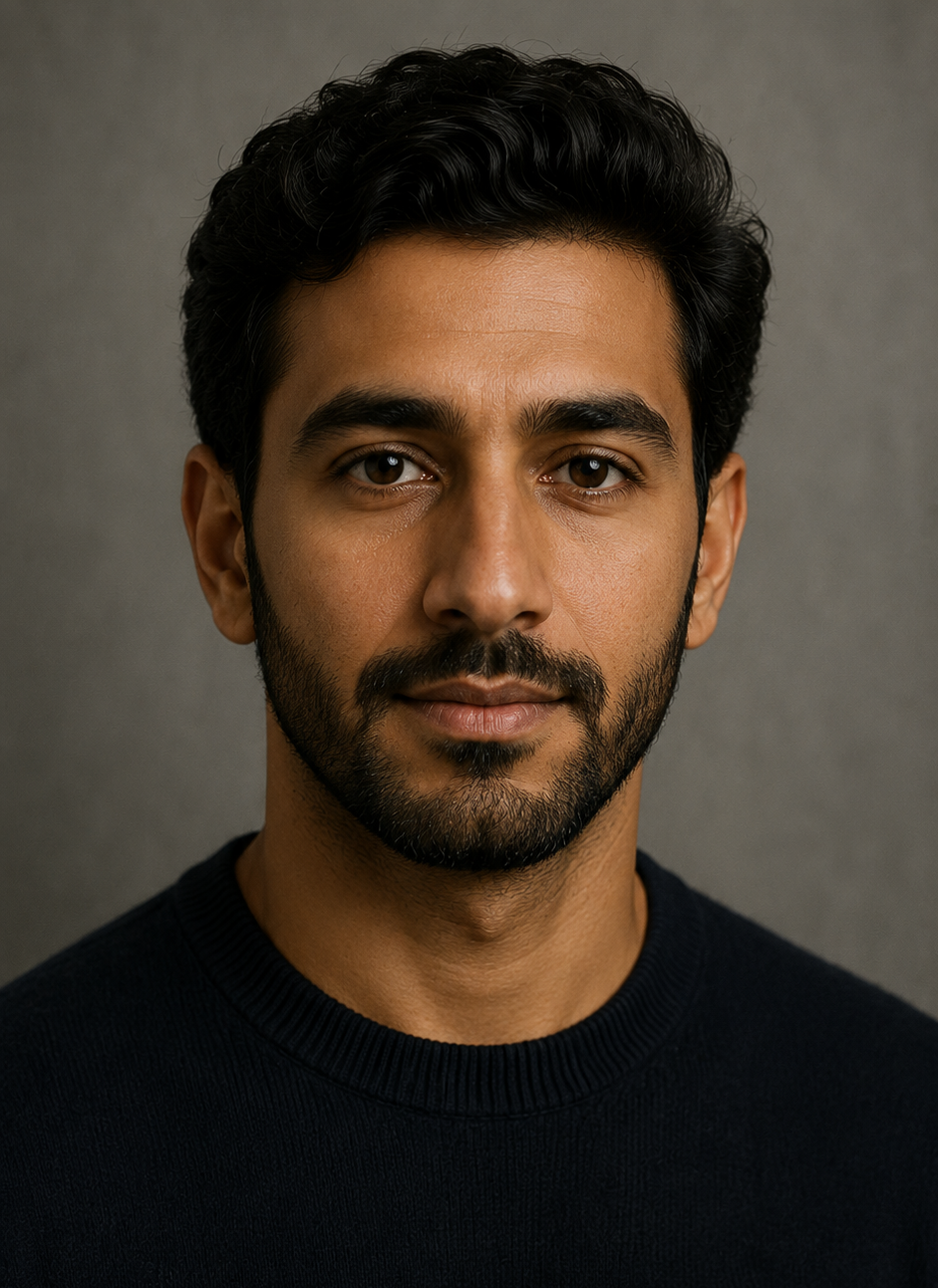
Written by
Khalid Al-Rashidi
Gulf & Middle East Correspondent · Emerging & Strategic Wealth
Khalid covers the family offices, luxury operators, and strategic capital moving across the GCC and wider Arab world — often before the rest of the region notices. He's spent years tracking how Gulf wealth structures itself for the next generation, from residency programmes to private aviation. Based between Dubai and Riyadh. Reach out at khalid.al-rashidi@theplatinumcapital.com.