

Citizenship by Investment and the Wealthy Families Choosing It
For the world's most financially sophisticated families, citizenship by investment has evolved far beyond a contingency plan into a deliberate cornerstone of multigenerational wealth architecture, offering not merely a second passport but sovereign-level optionality across taxation, residency, and asset protection. As geopolitical fragmentation accelerates and traditional wealth corridors face mounting regulatory pressure, the calculus driving ultra-high-net-worth households toward Caribbean sovereigns, European golden visa regimes, and Gulf residency frameworks has become less about privilege and more about structural financial resilience.…

For the world's wealthiest families, a second passport was once a contingency — something secured quietly, rarely discussed, and seldom used. That calculus has shifted decisively. Across the Gulf, Central Asia, Africa, and Southeast Asia, citizenship and residency by investment programmes are now central to family wealth strategy, discussed openly in family office boardrooms from Riyadh to Almaty and Lagos to Kuala Lumpur. The question is no longer whether to pursue alternative citizenship or residency. It is which jurisdiction best serves the family's capital, its children, and its next hundred years.
A Policy Window That Serious Families Are Not Ignoring
Saudi Arabia's January 2026 law permitting foreign nationals to own residential property in major cities — Riyadh, Jeddah, and the Eastern Province — is arguably the most consequential real estate policy shift the Kingdom has made in a generation. For families evaluating Saudi Arabia's Premium Residency Program, it removes a structural hesitation that had quietly killed interest for years: the inability to own the physical home in which you intend to build a life. That matters more than most programme brochures acknowledge.
The PRP now offers seven distinct pathways. At one end, the Permanent Residency route carries a one-time fee of SAR 800,000. At the other, the Entrepreneur Premium track sits at SAR 15 million for those committing to establish significant commercial operations. The Investor pathway, priced at SAR 7 million, is attracting particular attention from Egyptian, Jordanian, Pakistani, and Indian family principals — people who have run deep business operations inside the Kingdom for decades but lacked the residential anchoring that formal status would provide. As of early 2026, over 1,028 government entities and 3,484 private sector companies had received approval to support employee applications across various PRP tracks. That is institutional depth, not just policy ambition.
Vision 2030 supplies the underlying logic. Families who secure Saudi residency today are positioning themselves inside one of the largest non-oil economic transformations ever attempted in the Arab world — government targets pointing toward a USD 1 trillion GDP milestone, with wholesale reform running across entertainment, tourism, logistics, and finance. Residency, in this context, is a market access tool. The families who grasp that early will have the advantage.
Southeast Asia: The Quiet Reorientation of Gulf Capital
While Saudi Arabia consolidates its domestic appeal, Gulf family offices have been running a parallel strategy with far less fanfare: planting flags in Southeast Asia. Malaysia's Forest City Special Financial Zone, launched in September 2024 within the Johor-Singapore Special Economic Zone, has moved from concept to credible alternative with striking speed. By April 2026, the Securities Commission Malaysia had confirmed nine family offices received approval under the scheme, managing combined assets approaching RM 670 million — with the programme on track to surpass RM 2 billion in assets under management before year-end. Few outside the region have tracked this closely. They should.
The names emerging from Forest City are instructive. CMY Capital — the family office of billionaire Tan Sri Chua Ma Yu, widely known in Asian real estate circles for co-ownership of The St Regis Kuala Lumpur — and Yow Kee Family Office, controlled by Portcullis founder David Chong Kok Kong, are among the earliest formally incorporated participants. These are not speculative entrants testing a government pilot. They are established principals committing with genuine commercial conviction.
For Gulf families, the Forest City proposition anchors on a 0% tax rate on investment income for up to 20 years — a duration that comfortably accommodates a generational planning horizon. Singapore remains the primary entry point for Gulf capital flowing into Southeast Asia. Forest City offers something different: a lower-cost structure with meaningful proximity to Singapore's financial ecosystem. Family offices based in Dubai or Abu Dhabi exploring Southeast Asian diversification are beginning to treat Forest City not as a replacement for Singapore, but as a complementary position within the same corridor. The distinction matters.
What Families Are Actually Optimising For
Reducing this conversation to tax efficiency misreads what drives wealthy families at the decision-making level. Three factors consistently dominate: educational optionality for children, travel freedom, and the ability to hold assets in stable, neutral jurisdictions when regional conditions deteriorate. A Kazakh family principal with assets split across Almaty, London, and Dubai is not chasing a Grenadian passport for tax reasons. He is buying visa-free access to Europe and the United States — unrestricted professional mobility for adult children who cannot afford to be locked out of global markets by the wrong travel document.
The Caribbean programmes — Grenada, St Kitts and Nevis, Dominica, Antigua — remain among the most widely used globally for exactly this reason. Processing times can fall below four months. Investment thresholds sit within reach of families carrying USD 10 million to USD 50 million in net worth. Vanuatu continues to draw clients from West Africa and parts of the Middle East who put speed above all else. Portugal's Golden Visa, restructured in 2023 to redirect capital away from residential property toward funds and research, has held sustained interest from Nigerian and South African families seeking EU residency despite the revised terms. Total approved applications under the restructured programme exceeded 1,100 in 2025, with sub-Saharan African applicants claiming a growing share. The numbers tell a complicated story about where global mobility anxiety now concentrates.
The Family Office as Citizenship Architect
The structural shift in 2025 and into 2026 is professionalisation. Decisions once delegated to immigration lawyers or private bankers are now driven from inside the family office itself, often with dedicated advisors embedded directly in the principal's core team. Firms including Henley & Partners, Arton Capital, and CS Global Partners report that mandate complexity has increased significantly. Families are no longer asking about a single programme. They are requesting structured analyses across three to five jurisdictions simultaneously, mapped against tax exposure, asset location, business travel patterns, and the nationalities of children born in different countries. The briefs arriving on senior advisors' desks today look nothing like they did five years ago.
The UAE's Golden Visa — ten-year renewable residency — continues to function as a foundational layer for families across the Arab world, South Asia, and East Africa who run Dubai as a regional hub. But it is increasingly paired with a second structure: a Caribbean citizenship for global mobility, or a European residency for family members pursuing education or careers on the continent. The strategy is almost never singular. One status rarely does the full job anymore.
The Decade Ahead: Residency as Architecture, Not Afterthought
The families who handle this best will be those treating residency and citizenship as architectural decisions — applied with the same rigour as a real estate acquisition or a private equity commitment, not purchased in a moment of anxiety. Saudi Arabia's Premium Residency opening, Malaysia's Forest City incentive window, and the sustained competitiveness of Caribbean and European programmes together produce an environment where the optionality available to a family carrying USD 20 million to USD 500 million in assets has never been broader or more deliberately structured by sovereign governments actively competing for their presence. The window is open. The real question is whether the family has the advisory infrastructure to walk through it with intent — or whether they will still be deliberating when the terms change.
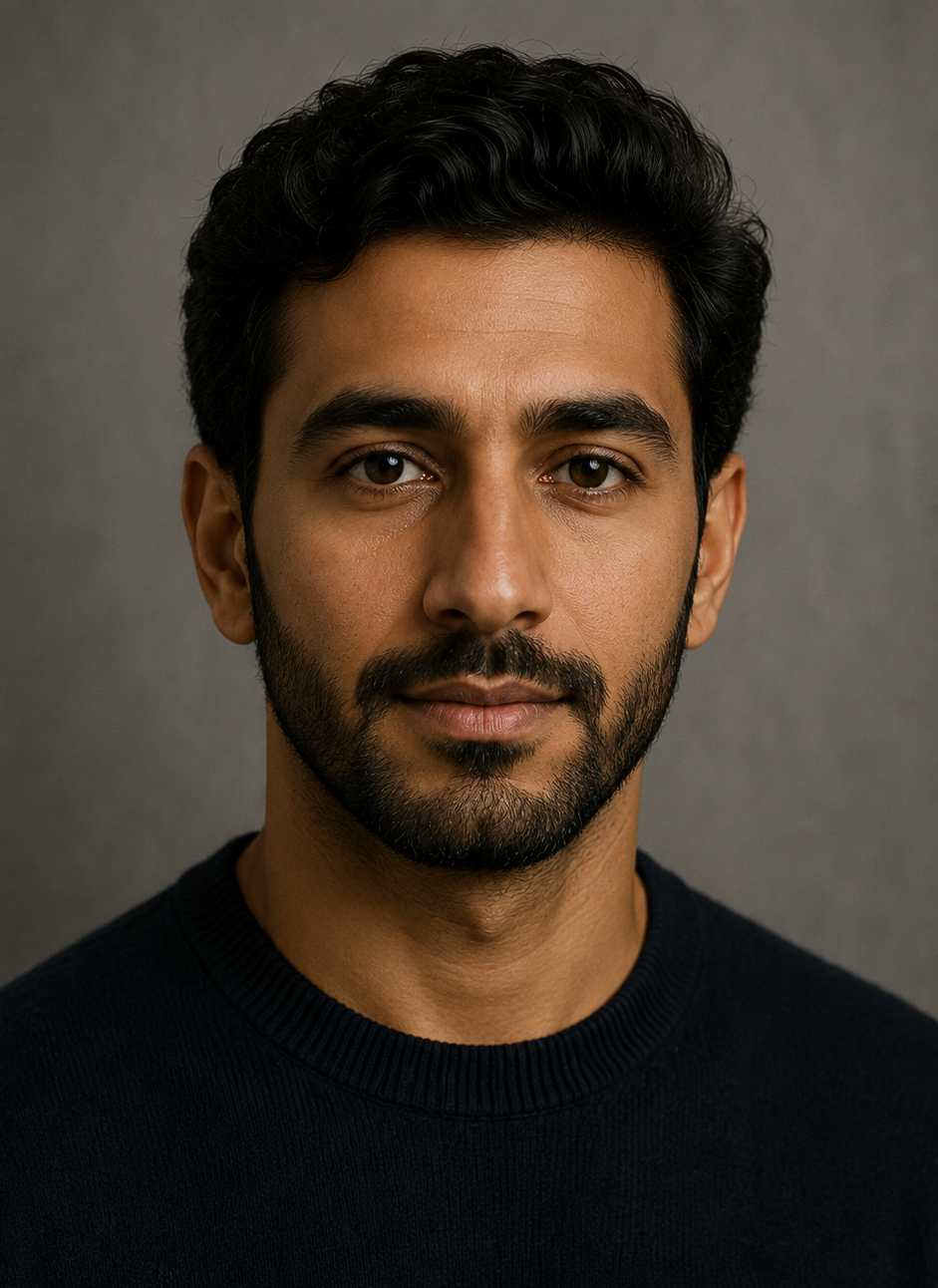
Written by
Khalid Al-Rashidi
Gulf & Middle East Correspondent · Emerging & Strategic Wealth
Khalid covers the family offices, luxury operators, and strategic capital moving across the GCC and wider Arab world — often before the rest of the region notices. He's spent years tracking how Gulf wealth structures itself for the next generation, from residency programmes to private aviation. Based between Dubai and Riyadh. Reach out at khalid.al-rashidi@theplatinumcapital.com.