

Data Centres as Real Estate: Demand Drivers and Valuations
As artificial intelligence workloads, cloud migration, and sovereign data localisation mandates converge, data centres have emerged as one of the most structurally resilient asset classes in modern real estate, commanding institutional capital at a pace that rivals traditional commercial property. For discerning investors and family offices seeking inflation-hedged, long-duration income streams, understanding the nuanced valuation frameworks — from power capacity metrics to hyperscaler lease structures — is no longer optional, but essential.…
When AHS Properties founder Abbas Sajwani paid Dhs1.1 billion for the Shangri-La Dubai hotel in early 2026, mainstream commentary fixed on the trophy asset and its Sheikh Zayed Road address. What drew far less attention was the due diligence question that now sits quietly at the back of every serious commercial real estate transaction in the Gulf: how close is the nearest carrier-neutral data centre, and what does that proximity actually do to long-term asset values? That question is no longer a technical footnote buried in an investment memo. It is a valuation driver — and in the markets where private capital is moving fastest right now, it is fundamentally changing how sophisticated investors think about real estate at every level of the capital stack.
The Infrastructure Layer Beneath the Property Cycle
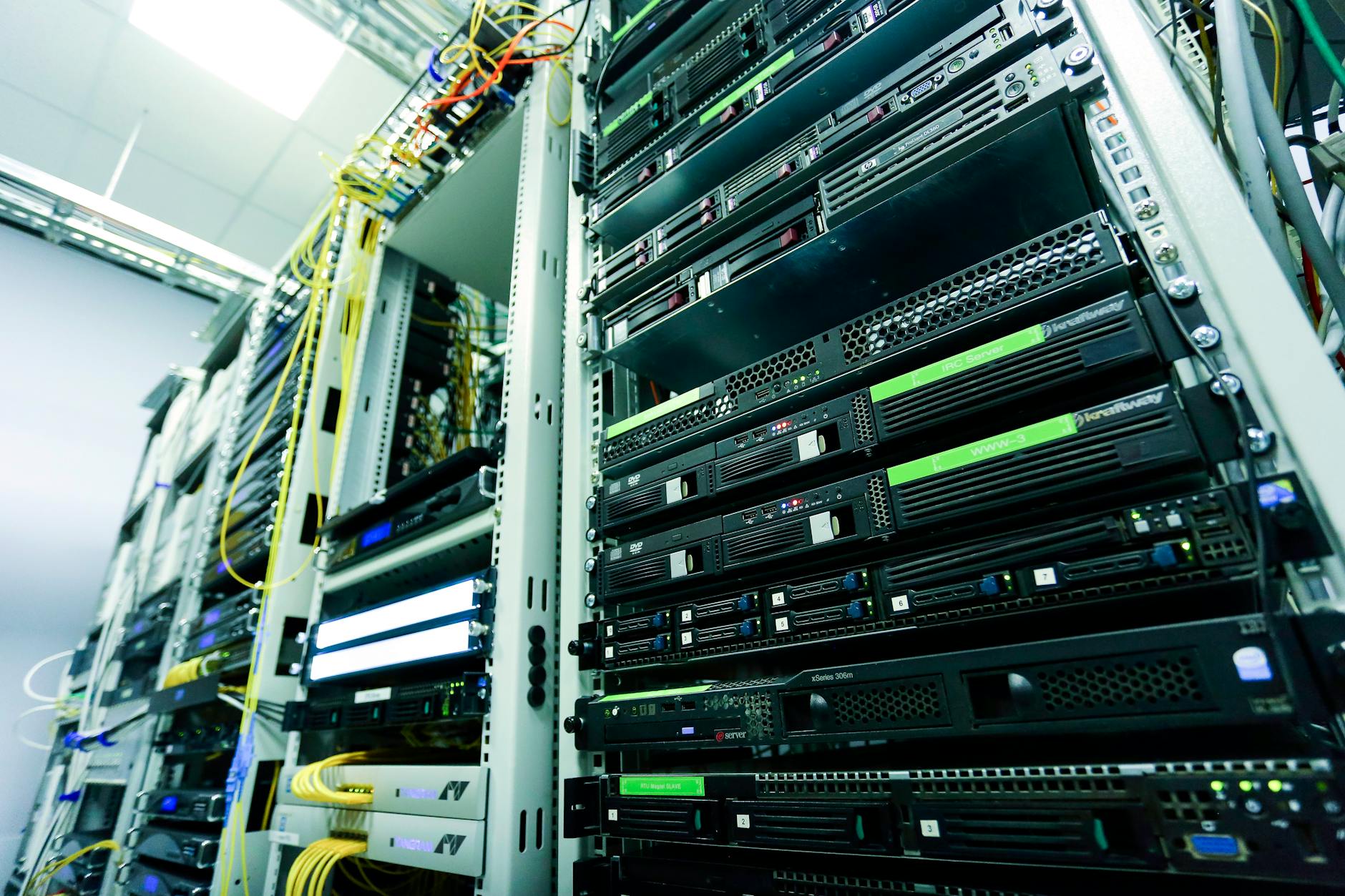
Data centres are, at their core, real estate. Purpose-built, land-intensive, capital-heavy, and increasingly governed by the same supply-demand mechanics that set pricing in any prime property market. What separates them is the nature of the tenant, the length of the lease, and the structural demand sitting behind both. A hyperscale facility leased to a cloud provider on a fifteen-year triple-net agreement is not a building in any conventional sense. It is an infrastructure bond with a physical address. That distinction matters enormously to the family offices, sovereign-adjacent funds, and UHNW investors who are now quietly rotating capital into the sector across the Gulf, Southeast Asia, and Sub-Saharan Africa.
Global data centre investment reached approximately USD 50 billion in 2024. By 2027, analysts project that figure will exceed USD 80 billion annually — driven by the compute demands of artificial intelligence, enterprise cloud migration, and the digital infrastructure requirements of fast-growing emerging markets. In the Gulf specifically, the numbers reflect something more deliberate: an accelerating programme of national digital sovereignty, the determination of states to keep data onshore, within jurisdictions they control.
Gulf Demand: Sovereign Ambition Meets Private Capital
Saudi Arabia's Vision 2030 agenda has placed data centre capacity at the centre of its non-oil economic model. The same Public Investment Fund backing the USD 63 billion Diriyah development — where Dar Global and the Trump Organisation launched a landmark luxury residential and golf project in January 2026 — is also a significant indirect driver of digital infrastructure demand. As Diriyah and comparable giga-projects absorb tens of thousands of international residents, workers, and visitors, the supporting data, connectivity, and cloud infrastructure requirements scale in direct proportion. Real estate and digital infrastructure are no longer parallel investment themes in Saudi Arabia. They are co-dependent, and investors still treating them as separate conversations are already behind.
In the UAE, data centre capacity has been expanding at roughly 20 to 25 percent annually. Microsoft, Google, and AWS have all committed material capital to the market. Dubai Internet City and Abu Dhabi's Hub71 ecosystem have pulled in regional headquarters that generate sustained colocation and cloud demand. For investors already active in Dubai's commercial property market, the shift is becoming visible in pricing. Data centre-adjacent assets — logistics facilities with sufficient power supply, commercial land with dual-feed utility infrastructure, mixed-use sites within carrier hotel corridors — are beginning to command premiums that simply did not exist three years ago.
Valuation Mechanics: What Drives the Premium
Pricing data centres requires fluency in three metrics that have no equivalent in conventional real estate: critical IT load measured in megawatts, power usage effectiveness, and annualised revenue per cabinet. A well-leased, carrier-neutral facility in a constrained market — Dubai, Nairobi, Lagos, or Jakarta — will typically trade at EBITDA multiples between 20 and 30 times. That places it well above the cap rate logic governing office or retail assets. In markets where new supply runs into hard limits — power grid capacity, regulatory land allocation — those multiples compress yields further still. The numbers tell a complicated story, but the direction is consistent.
The Arabian Acres transaction in March 2026, which closed a Dh400 million Jumeirah beachfront land deal projected to deliver a gross development value exceeding Dh1 billion, illustrates a related principle: scarcity commands a structural premium regardless of asset class. The same logic applies to data centre sites carrying licensed power capacity above ten megawatts in markets where grid access is genuinely constrained. In Nairobi, Casablanca, and Ho Chi Minh City, the gap between licensed capacity and actual demand is already generating pre-development asset premiums that closely resemble land banking dynamics in mature residential markets.
Emerging Market Opportunity: Africa and Southeast Asia
For investors with real appetite for higher-growth exposure, the data centre opportunity across Sub-Saharan Africa and Southeast Asia is arguably more compelling than anything comparable in conventional property. Nigeria's internet economy is projected to reach USD 88 billion by 2030. Kenya's Konza Technopolis is attracting anchor tenants. In Indonesia and Vietnam, domestic cloud adoption among financial institutions and state enterprises is accelerating fast enough to outpace existing carrier-neutral supply by a significant margin. Few outside the region have paid serious attention. They should.
The critical variable in these markets is not demand — demand is there. It is reliable power. Investors who structure transactions to include captive power generation, whether through diesel backup, solar microgrid, or long-term utility agreements, effectively build a moat around assets that would otherwise be commoditised. Family offices and private investors with prior experience in African or Southeast Asian infrastructure are finding that the due diligence skills carried over from toll roads and power purchase agreements map almost directly onto data centre underwriting. The learning curve is shorter than most assume.
Where Private Capital Should Position
For UHNW investors and family offices deploying in the USD 50 million to USD 500 million range, direct ownership of hyperscale facilities is rarely the right entry point. The capital requirements, technical management demands, and customer concentration risk make that model the domain of institutional platforms. The accessible opportunities sit at three distinct levels: land and shell development in high-growth markets with structurally constrained supply; mezzanine or preferred equity positions alongside experienced operators building out regional colocation networks; and exposure through listed or unlisted real estate vehicles with genuine data centre weighting rather than the token allocations increasingly used to dress up conventional portfolios.
Abbas Sajwani's Dhs1.1 billion Shangri-La acquisition and Dar Global's Saudi luxury programme share one underlying logic: the Gulf's most active private developers are thinking in decades, not cycles. That is a significant shift. The investors who define the next phase of real estate wealth creation in the region — and well beyond it — will be those who grasp that the buildings serving AI compute, cloud workloads, and national digital infrastructure are not a niche corner of the market. They are the foundational real estate of the digital economy. And in the markets that moved first, their scarcity is already priced accordingly.

Written by
Tom Whitmore
Senior correspondent · Real Estate & Private Companies
Tom has interviewed most of the operators reshaping the Gulf skyline — and a few of the ones who tried and didn't. His beat is real estate, commodities, manufacturing, and the founder-led private companies that never bother to list. He knows which buildings and balance sheets survive a downturn before the spreadsheet does. Based in Dubai. Reach out at tom.whitmore@theplatinumcapital.com.