

Dubai's Luxury Real Estate Boom: Who Is Really Buying
Dubai's luxury real estate market has evolved far beyond its reputation as a playground for speculative buyers, attracting a sophisticated wave of capital from European family offices, South Asian industrialists, and Russian ultra-high-net-worth individuals repositioning wealth in a politically neutral jurisdiction. What was once driven by short-term yield chasing has quietly transformed into a long-term strategic allocation, with prime districts such as Palm Jumeirah and Emirates Hills now functioning less as lifestyle assets and more as cornerstone holdings within diversified global portfolios.…
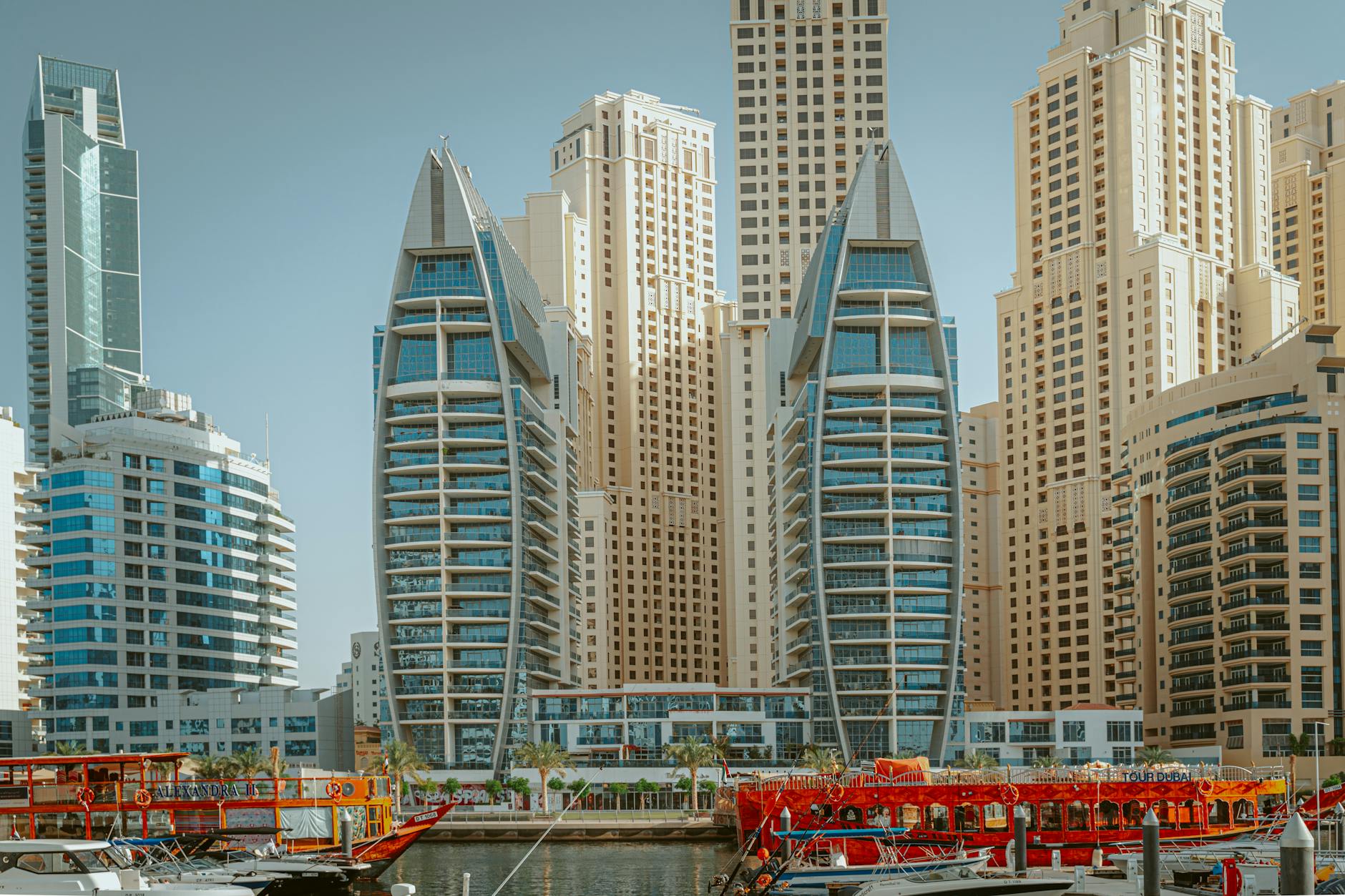
Dubai's luxury property market has never lacked for superlatives. But the numbers coming out of 2026 have quieted even the most stubborn sceptics. According to Knight Frank's 20th Annual Wealth Report, published in April 2026, Dubai recorded a 25.1% increase in luxury values over the past year — the highest of any major global city — and has firmly established itself as the world's leading market for transactions above US$10 million. This is no longer a speculative momentum story, or a post-pandemic migration narrative. Something more structural is happening. Dubai is repositioning itself as a core pillar of global private wealth allocation, sitting alongside London, New York, and Singapore in the portfolios of the world's most discerning investors.
The Buyers Behind the Headlines
Move beyond the familiar narrative — Russian oligarchs, British expatriates — and the real picture of Dubai's upper-tier buyer pool is considerably more interesting. Three distinct profiles dominate today's super-prime market. The first is the Gulf-based family office or business dynasty, increasingly confident deploying capital domestically as Saudi Arabia and the UAE deepen their financial ecosystems in parallel. The second is the high-net-worth individual from emerging markets — Nigeria, Kazakhstan, Egypt, Indonesia — for whom Dubai represents a politically neutral, legally transparent, dollar-linked safe haven. The third profile is arguably the most consequential: the founder-led private company owner from South and Southeast Asia who has generated real liquidity through trade, manufacturing, or technology, and wants a credible second-home jurisdiction with real estate as the anchor. These are not trophy hunters. They are making calculated, long-horizon capital allocation decisions, and they are doing so with increasing sophistication.
Institutional Capital Is Reshaping the Supply Side
Few transactions in recent Dubai history are as instructive as AHS Properties' acquisition of the Shangri-La Dubai for Dhs1.1 billion in early 2026. Abbas Sajwani founded AHS Properties in 2021 and has moved at remarkable speed to assemble a portfolio spanning Palm Jumeirah, Emirates Hills, and some of the emirate's most defensible prime addresses. The Shangri-La deal — one of the largest single-asset real estate transactions Dubai has recorded in recent years — signals something that deserves attention. Serious private capital is now pursuing hospitality-linked real estate not simply for yield, but for brand control, long-term positioning, and appreciation tied to Dubai's expanding international profile. AHS Properties is founder-led and privately held. It operates with the conviction of an owner-operator, not a fund manager working against a five-year mandate. That distinction matters enormously — in how decisions get made, in what gets built, and in what gets held.
Equally significant: the Dh400 million beachfront land acquisition completed in March 2026, structured by Arabian Acres as exclusive broker for both buyer and seller. The site covers more than 113,000 square feet along the Arabian Gulf, with 160 metres of private beachfront, and carries a projected gross development value exceeding Dh1 billion across three ultra-luxury villas with direct beach access and private marina docking. Transactions of this nature — discreet, off-market, broker-mediated — represent the true heartbeat of Dubai's super-prime segment. They rarely surface in aggregate statistics. The buyers rarely announce themselves publicly. That is precisely the point.
Riyadh Enters the Equation
Dubai has owned the Gulf real estate conversation for the better part of two decades. That changes in 2026. Riyadh is asserting itself not as a distant secondary market but as a genuine counterpart — and the capital flows are beginning to reflect it.
In May 2026, Riyad Capital, Naif AlRajhi Investment Company, and Princess Munira bint Abdullah bin Faisal Al Saud formalised the establishment of the Dar Al Salam real estate fund — a US$400 million vehicle targeting a 32,000 square metre mixed-use development located 250 metres from Al-Takhassusi Metro Station in the Saudi capital. Riyad Capital CEO Abdullah Abdulrahman Alshwer positioned the project explicitly within the objectives of Saudi Vision 2030, with a stated focus on urban development and quality-of-life improvement. The involvement of a senior member of the Al Saud family as a co-signatory investor is not incidental. It signals institutional confidence at the highest level of the Saudi establishment — and it will catalyse further private capital into the Kingdom's real estate sector. That much is predictable.
For family offices and private investors evaluating Gulf real estate allocation, ignoring Riyadh in 2026 is simply no longer defensible.
What the Wealth Data Reveals About Motivation
Knight Frank's 2026 Wealth Report delivers more than price growth statistics. It maps a genuine shift in why wealthy individuals are buying in Dubai. Residency optionality — through the Golden Visa programme — remains a primary driver, particularly for buyers from markets where passport strength is limited or political risk is real. Morocco, Pakistan, Egypt, and several Central Asian republics appear consistently among origin markets for buyers seeking long-term residency anchoring. The numbers tell a complicated story, and not all of it is about yield.
Increasingly, buyers are motivated by what might be called legacy infrastructure — the desire to establish a credible, recognised base from which the next generation can operate, educate, and build its own wealth. Dubai's international school ecosystem, its geographic proximity to both Europe and Asia, and its zero income tax environment make it structurally compelling for multigenerational planning in a way that very few cities can replicate. For a family office principal based in Lagos, Almaty, or Ho Chi Minh City, a freehold villa on Palm Jumeirah is not just real estate. It is a jurisdictional anchor. The distinction matters.
Where Serious Capital Goes Next
Three converging forces will shape Dubai's luxury market through the remainder of this decade. Supply constraints in genuinely prime locations — beachfront, waterfront, landmark-adjacent — will continue to support price floors even as broader market volumes fluctuate. That dynamic is structural, not cyclical. Second, Gulf real estate is gradually institutionalising. Vehicles like Dar Al Salam, and the growing sophistication of Dubai-based family offices deploying capital through structured funds rather than direct purchases, are bringing transparency and depth to a market that has historically rewarded those with proprietary networks. Third, the broadening buyer base from Africa, Southeast Asia, and Central Asia will sustain demand at the mid-to-upper tier — even if European and North American buyers pull back on discretionary asset allocation.
The data from 2026 makes a direct argument: Dubai has moved beyond emerging market premium into something more durable. Private investors and family offices evaluating where to position real estate capital over the next decade should take that seriously. This is not a market on the way up. It is a market that has arrived.
Written by
Tom Whitmore
Senior correspondent · Real Estate & Private Companies
Tom has interviewed most of the operators reshaping the Gulf skyline — and a few of the ones who tried and didn't. His beat is real estate, commodities, manufacturing, and the founder-led private companies that never bother to list. He knows which buildings and balance sheets survive a downturn before the spreadsheet does. Based in Dubai. Reach out at tom.whitmore@theplatinumcapital.com.